



Okayama University's Synecoculture Project Aims to Revitalize Abandoned Farmland Using Advanced Technology
Okayama University's Synecoculture Project Initiates Abandoned Farmland Revitalization
On July 10, 2025, Okayama University officially launched its Synecoculture Project, an initiative aimed at rejuvenating abandoned farmland and promoting sustainable community development through innovative agricultural practices. The project is led by students and aligns with the government's Regional Core University Innovation Creation initiative.
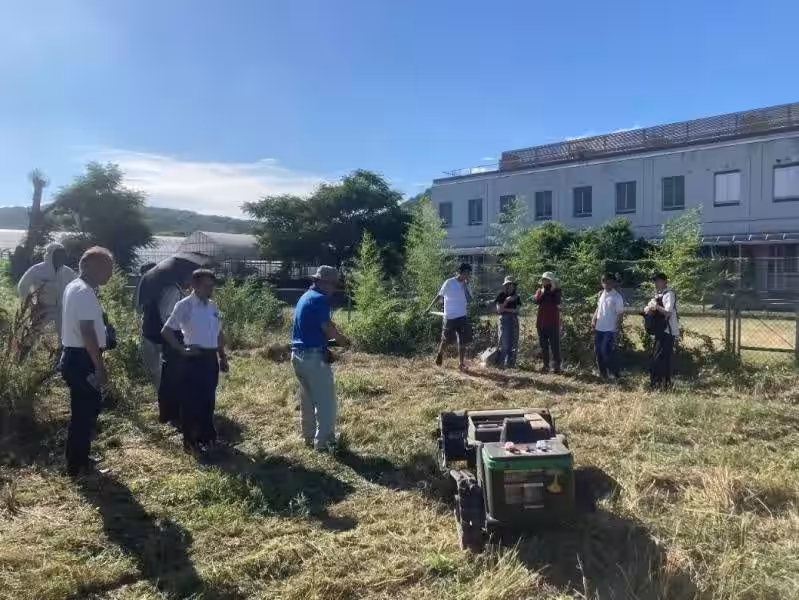
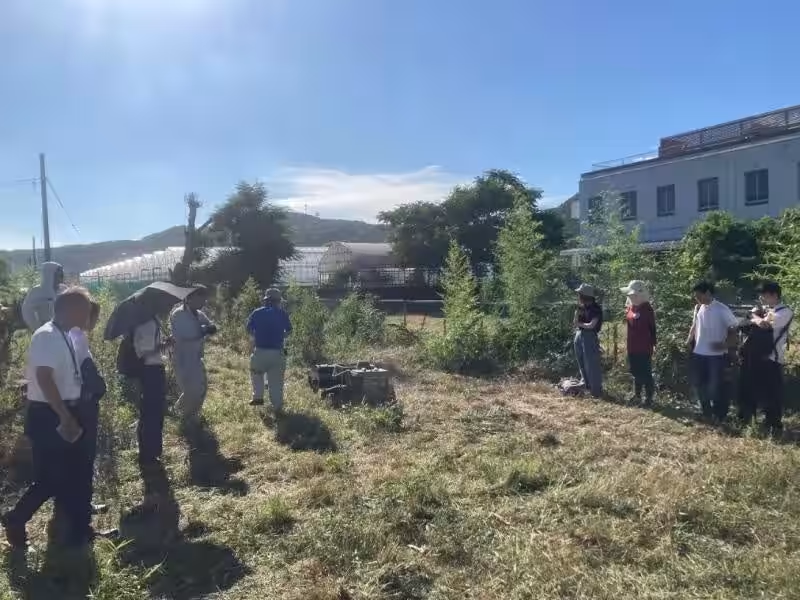
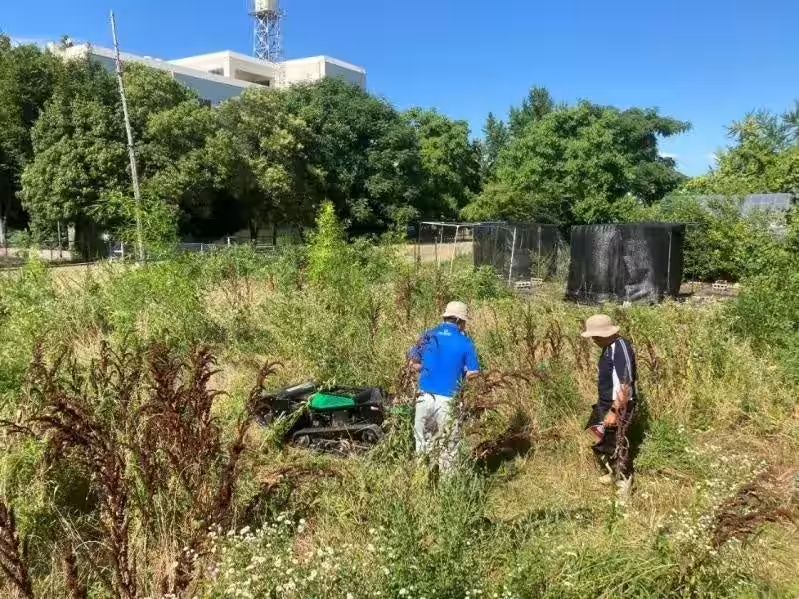
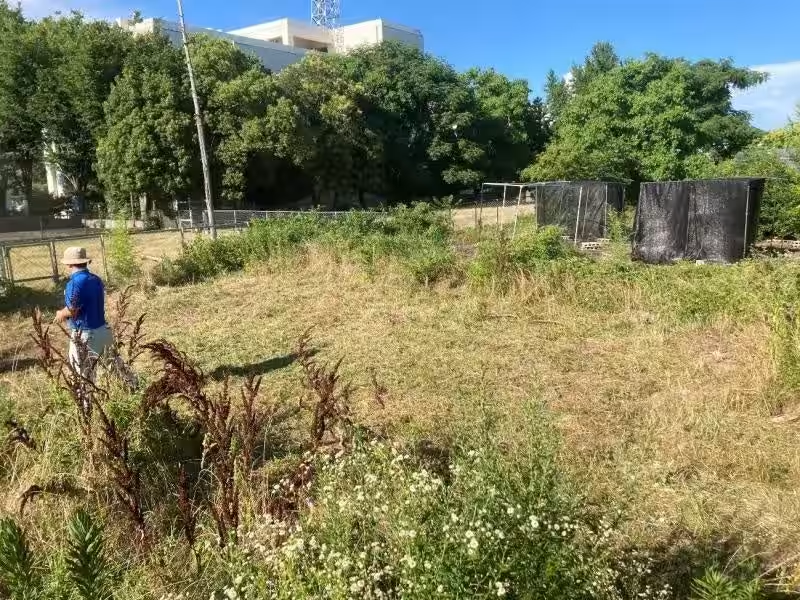
The inaugural task of the project involved the cutting of grass in designated experimental fields, with around 30 participants including students from the Faculty of Agriculture, Engineering, Economics, and the Resource Plant Science Institute, as well as faculty members and representatives from the collaborating company, Okanetsu Industrial Co., Ltd.. The grass cutting was performed using a remote-controlled grass cutter named AIRAVO, developed in a partnership between the university and Okanetsu. Notably, AIRAVO significantly reduces the physical strain traditionally associated with manual grass cutting and has the added benefit of finely shredding the cut grass. This shredded material can be utilized as mulch or compost, promoting eco-friendly practices in agriculture.
The project underscores a collaboration between Okayama University, Okayama University of Science, Okanetsu Industrial Co., and the venture company TechSword, with the goal of creating a Digital Innovation Platform—OI-Start—which focuses on integrating autonomous technology in agriculture. This forward-thinking approach positions the AIRAVO as a next-generation agricultural machine, holding promising potential for smart farming.
As part of the project, students actively observed the local vegetation and soil conditions before and after the grass cutting to facilitate discussions on future vegetation design. The vision is to foster an ecosystem where diverse plant species coexist, aligned with the principles of synecoculture, which advocates for a sustainable farming method that minimizes human intervention. This method avoids tillage, fertilizers, and pesticides while encouraging the cohabitation of various plants to enhance the soil and ecosystem's innate capabilities.
Furthermore, the project aims to develop applications that utilize generative AI and image recognition technology to recognize crops and wild plants while fostering new agricultural models through the integration of ICT and robotics. Okayama University remains committed to sustainable environmental development through collaborative efforts among academia, industry, and government entities while providing practical learning experiences for students.
Understanding Synecoculture
Synecoculture is a sustainable agricultural approach inspired by natural ecosystems, which seeks to cultivate crops with minimal human intervention. By refraining from tillage and utilizing no fertilizers or pesticides, this method aims to unlock the inherent power of the soil and ecosystem. This philosophy encourages the natural inclusion of weeds and insects as part of the biodiversity in the environment, resulting in minimal ecological impact and sustainable farming in the long term.
Collaborative Future
The innovative endeavors of the Synecoculture Project at Okayama University reflect a broader commitment to sustainable practices aligned with the United Nations' Sustainable Development Goals (SDGs). As the university continues to push boundaries in research and innovation, it anticipates building a community that nurtures the relationship between technology, agriculture, and environmental stewardship—one that could set a precedent for future initiatives in sustainable farming.
To stay updated on ongoing activities and collaboration opportunities, please visit the Okayama University Research and Innovation Co-Creation Organization website and explore additional resources highlighted on their digital platforms. This engagement is crucial for fostering an innovative community that can navigate the complexities of today's agricultural challenges intelligently and sustainably.



Topics Consumer Products & Retail)
【About Using Articles】
You can freely use the title and article content by linking to the page where the article is posted.
※ Images cannot be used.
【About Links】
Links are free to use.