



Oxford Economics Analyzes the Double Shock to Industries from Trump's New Tariffs and Middle East Tensions
Impact of Trump's Tariffs and Middle East Tensions on Global Industries
Recent global events, particularly the introduction of new tariffs by the Trump administration and escalating tensions in the Middle East, have prompted Oxford Economics to publish a comprehensive analysis titled "From the Iran War to Tariffs: How Global Shocks Impact Industry". This report sheds light on how these dual shocks will affect different sectors globally, aiming to equip businesses with timely insights for strategic decision-making alongside their operational adjustments.
Key Insights from the Analysis
1. Trump's New 15% Tariff Policy
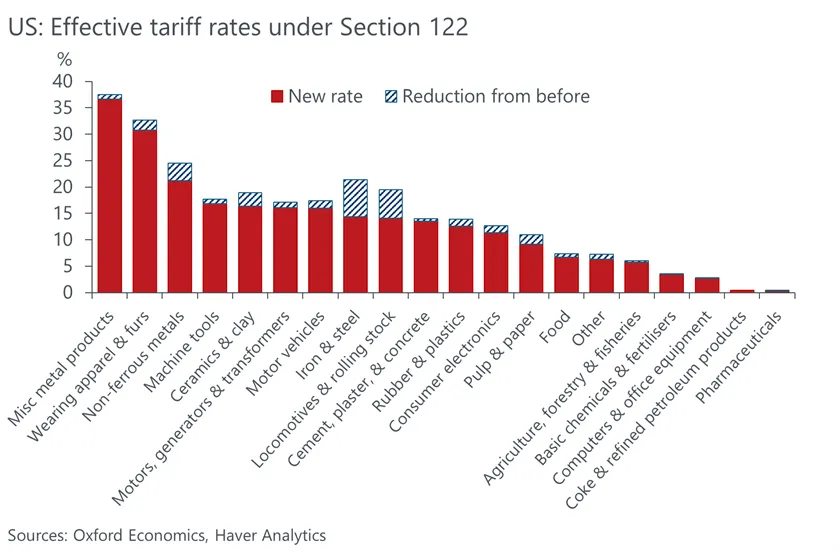
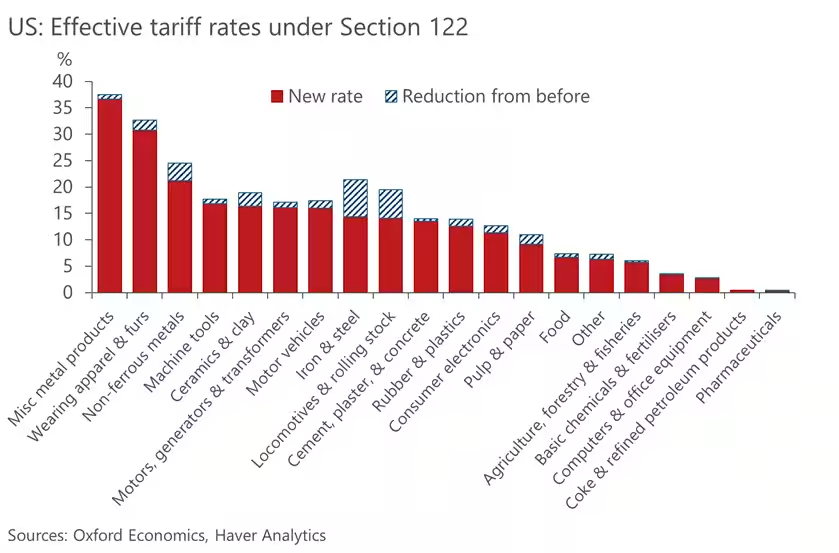
The proposed enactment of a uniform 15% tariff could have varying implications across different industrial sectors. Contrary to a broad-based impact, some sectors may experience significant advantages or disadvantages based on their specific characteristics and market positioning.
Cost Reduction Opportunities
Certain sectors, including leather, apparel, and textiles, are expected to benefit from the new tariff regime. Previously high tariffs exceeding 30% are now anticipated to decrease to 15%. Such reductions may particularly favor producers in Asian countries, as their competitiveness could increase in the U.S. market.
Investment Suppression Risks
On the flip side, concerns have emerged regarding the potential suppression of long-term capital investments due to the uncertainty introduced by the expiring tariff legislation. The loss of a stable framework might create hesitance for businesses to commit to substantial investments.
[Insert Diagram: Predicted Changes in Effective Tariff Rates by Sector]
2. Middle East Tensions and Energy Crises
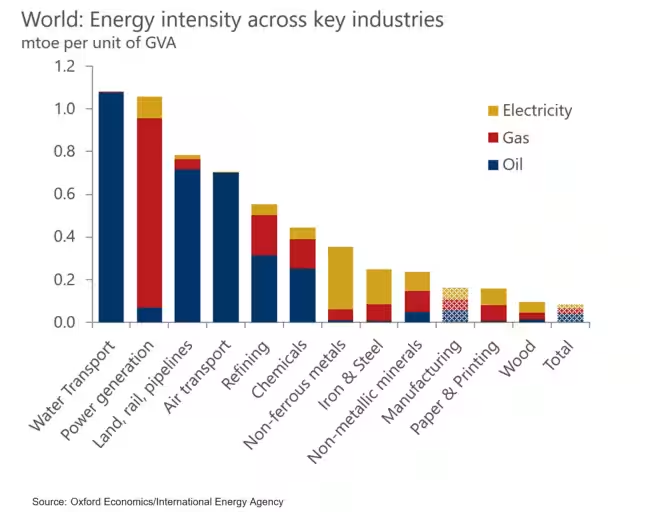
The rising costs of crude oil and natural gas due to escalating conflict in the Middle East pose a significant threat, especially to gas-intensive industries. The unpredictability surrounding energy prices is a looming issue for many sectors.
Impact on the Chemical Industry
The chemical sector stands to be most adversely affected, given its reliance on natural gas not just as an energy source but also as a key raw material. This reliance can lead to significant increases in operational costs, particularly when compared to other manufacturing sectors.
Shifts in Regional Competitiveness
As European and Asian markets struggle under these rising energy costs, countries like China, which utilize coal-based raw materials, may experience a less pronounced impact. Likewise, the U.S. chemical industry may also be less affected, enjoying relatively stable price fluctuations and lower energy costs.
[Insert Diagram: Energy Intensity by Major Sector and Fuel Composition]
Monthly Updates on Global Industry Forecasts
In response to the escalating volatility in global events, Oxford Economics has enhanced the frequency of their global industry forecasts to a monthly schedule. This adjustment aims to provide clients with updated data that reflects rapid changes in the global economy.
Features of the Monthly Updates
- - Advanced Demand Forecasting: Utilizes extensive historical data dating back to 1980 across more than 100 sectors in 77 countries and the Eurozone, offering monthly forecasts extending up to 2060 covering production volume, investments, revenues, profits, energy demands, and emissions.
- - Risk Scenario Planning: Analyses the impact of significant macroeconomic risks on supply chains, presenting various scenarios for the upcoming five years.
- - Rapid Response to Shocks: Ensures that critical developments such as tariff policies and geopolitical events are quickly integrated into predictive models, keeping industry forecasts current.
Trial Offer
For businesses interested in leveraging these insights, a two-week free trial of the updated service is available. Organizations are encouraged to inquire further for details on features and pricing.
About Oxford Economics
Founded in Oxford, UK, Oxford Economics stands at the forefront of macroeconomic analysis. With a formidable team of over 450 economists, they provide long-term economic forecasts across 200 countries, 8,000 cities, and 100 sectors based on proprietary global economic models. Their commitment to delivering timely and relevant economic insights is evident in their ongoing work to support clients in navigating the complexities of the global economic landscape.
For further information, please visit their websites or reach out via email or phone.
- - Japanese Website: Oxford Economics Japan
- - English Website: Oxford Economics
- - Contact: Japan office - Tel: 03-4588-2798, Email: [email protected]
Topics Business Technology)
【About Using Articles】
You can freely use the title and article content by linking to the page where the article is posted.
※ Images cannot be used.
【About Links】
Links are free to use.