




Embracing Learning: Reports on Free Tutoring and Support Programs for Children in Shin-Yokohama
Embracing Learning: Support Programs in Shin-Yokohama
On June 13, a significant event was held at Space Oruta in Shin-Yokohama, where the Kanagawa Yumemi Social Welfare Foundation showcased the invaluable support it provides through free tutoring and mentoring programs aimed at children facing educational challenges. The foundation, under the leadership of Junko Fujita, has been at the forefront of fostering educational opportunities and lifting the burden of economic constraints on families.
A Unique Journey of Support
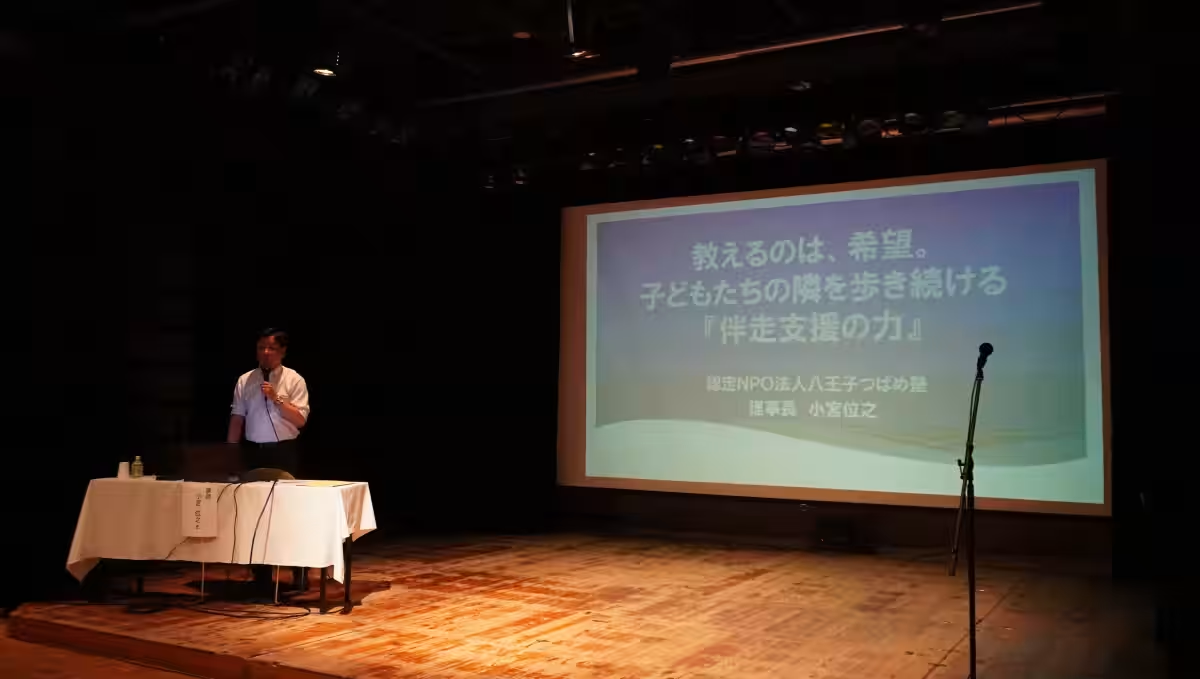
The event featured Takayuki Komiya, who has been running a free tutoring initiative known as Hachioji Tsubame Juku for 14 years. His program caters to children from families that struggle to secure adequate learning environments. Komiya has dedicated his work to offering free one-on-one lessons, alongside providing nutritional support and scholarships to families in need.
Many children from relative poverty backgrounds find it challenging to attend paid tutoring schools due to the high fees, often close to a quarter of their family's income. Public schools lack the extensive support that private institutions offer, leading to a divide in educational outcomes based on a family's financial situation. As Komiya points out, many children question the relevance of pursuing high school education due to the absence of educational role models at home, thus highlighting that not everyone starts from the same line.
The average tuition fees for private universities in 2024 have skyrocketed to 860,000 yen, drastically rising from 180,000 yen back in 1975. Even with the rising living costs, families find it increasingly burdensome to afford education. Many children attending Tsubame Juku come from single-parent households or families with non-regular employment, often with several siblings, and Komiya emphasizes that factors like personal effort and family responsibility alone cannot level the playing field for educational opportunities.
Walking Together Towards Hope
Initially formed as a voluntary organization in 2012, Tsubame Juku has now become an accredited NPO. Currently, 28 students attend classes across three locations in the city, facilitated by an enthusiastic team of 35 volunteer tutors. From the 350 graduates, nine have returned as tutors themselves, showcasing a cycle of support and growth. Volunteers come as far as two hours away from Chiba, offering their time without any compensation in community centers or cafes that kindly provide venues for the tutoring sessions.
Criteria for admission to the tutoring program includes financial hardship and an eagerness to learn. While maintaining a level playing field in terms of academic ability, the foundation fosters a supportive environment where students are encouraged to take steps forward, believing that the tutors will run alongside them during their academic journey. This approach stands distinct from for-profit learning institutions as it emphasizes companionship and solidarity over competition.
Tutors are encouraged to observe and understand the emotional needs of their students, building trust and conveying hope through their positive attitudes. Komiya expresses the vision that, even if they cannot meet every single need, being a stepping stone of hope for these children is a crucial aspect of their work.
Komiya also brings attention to the stark reality of educational support in Japan, noting that while children’s cafeterias have burgeoned to over 12,000 nationwide, free tutoring programs remain limited to just 300 locations. He shares encouraging examples of high school students who have initiated their own tutoring groups and calls for increased recognition and support for free educational initiatives across the country.
The aspiration is not only for students to improve academically but to foster a mindset of wanting to contribute positively to society. Komiya expresses that it is vital to plant seeds that encourage students to act for others, much like a swallow returning to its nest after flight.
Engaging Young Helpers and University Students
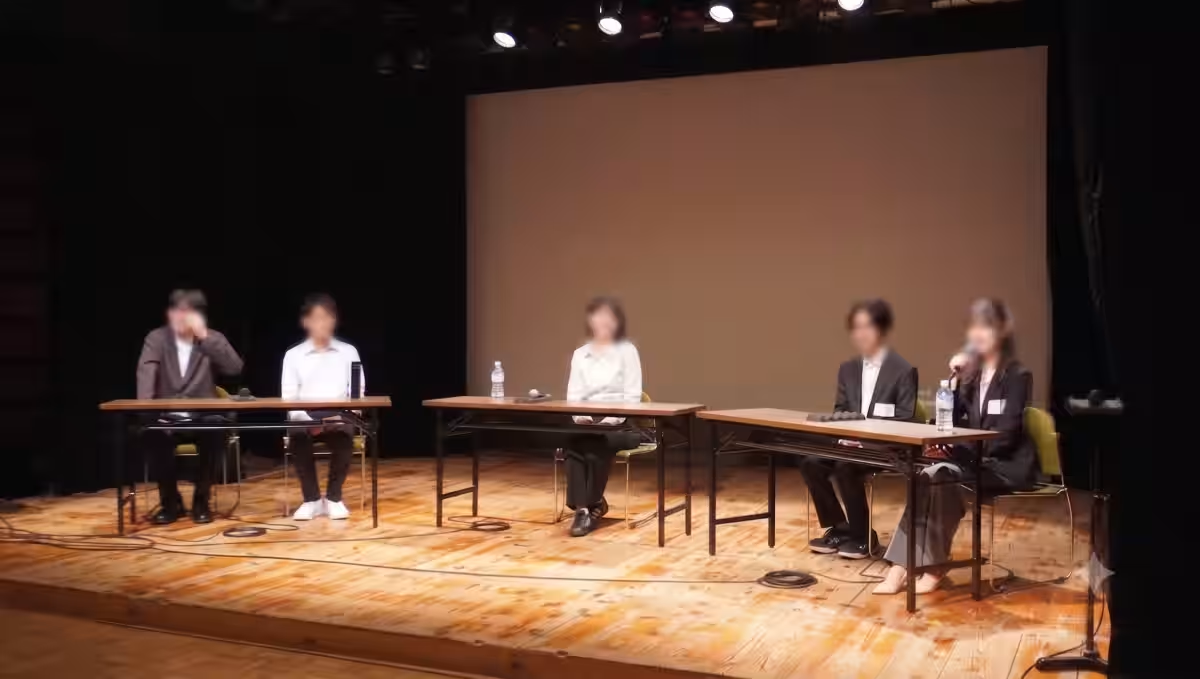
The event also featured a talk from five university student volunteers who are actively participating in the Kanagawa Yumemi Foundation's initiatives, particularly in their program called Manabireji, aimed at supporting scholarship students. Here, students teach their subjects of expertise, funded by a cash-strapped scholarship program that requires no repayment.
Several volunteers shared their motivation for joining the program, with one former scholarship recipient mentioning how he struggled in public high school to grasp complex topics like mathematics. His experience prompted a desire to help others learn, in the same way he had been helped.
Interactions with students during lunchtime provide a vital opportunity for informal discussions that can lead to learning and sharing of advice concerning higher education and other academic pursuits. Activities at Manabireji extend beyond academics, creating spaces for social interaction, fostering relationships that encourage both students and volunteers to feel supported and engaged.
Some volunteers reflected on the delicate balance of connecting with students while respecting their boundaries and challenges. They emphasized the importance of being a constant source of support without imposing solutions but rather being there to listen and guide them toward the right resources when necessary.
Their hope lies in creating a ‘safe zone’ where students can freely share their struggles and aspirations, preparing them for future challenges while nurturing their potential.
A Call for Collective Support
The Kanagawa Yumemi Social Welfare Foundation aims to continue promoting these programs, having started offering scholarships to high school students in 2018. They hope to grant scholarships to 137 students by the end of the 2025 fiscal year, including 20 new recipients this year. Each student receives monthly stipends and fresh opportunities for educational guidance and broader cultural experiences.
The foundation's efforts rely significantly on the goodwill of 4,049 individuals participating as supporters, contributing small monthly donations to sustain these initiatives. Their call to action for further support can also be found on the foundation's website.
Pal System Kanagawa, the parent organization, remains committed to collaborating with various stakeholders to create a society where every child can thrive and achieve their potential.


Topics People & Culture)


【About Using Articles】
You can freely use the title and article content by linking to the page where the article is posted.
※ Images cannot be used.
【About Links】
Links are free to use.