



The Current State of Pre-Assignment Training for Japanese Overseas Employees: Insights from the 29th Bizmates Survey
Exploring the Reality of Pre-Assignment Training for Japanese Employees
The Bizmates Corporation, known for its online English conversation services tailored for business, recently conducted a comprehensive survey aimed at uncovering the current state of pre-assignment training for Japanese employees dispatched abroad. The study focused on 400 HR and training managers from Japanese companies with over 500 employees, revealing crucial insights into the training practices, the value placed on cultural understanding, and the overall willingness of employees to work internationally.
Key Findings
Insufficient Mandatory Training
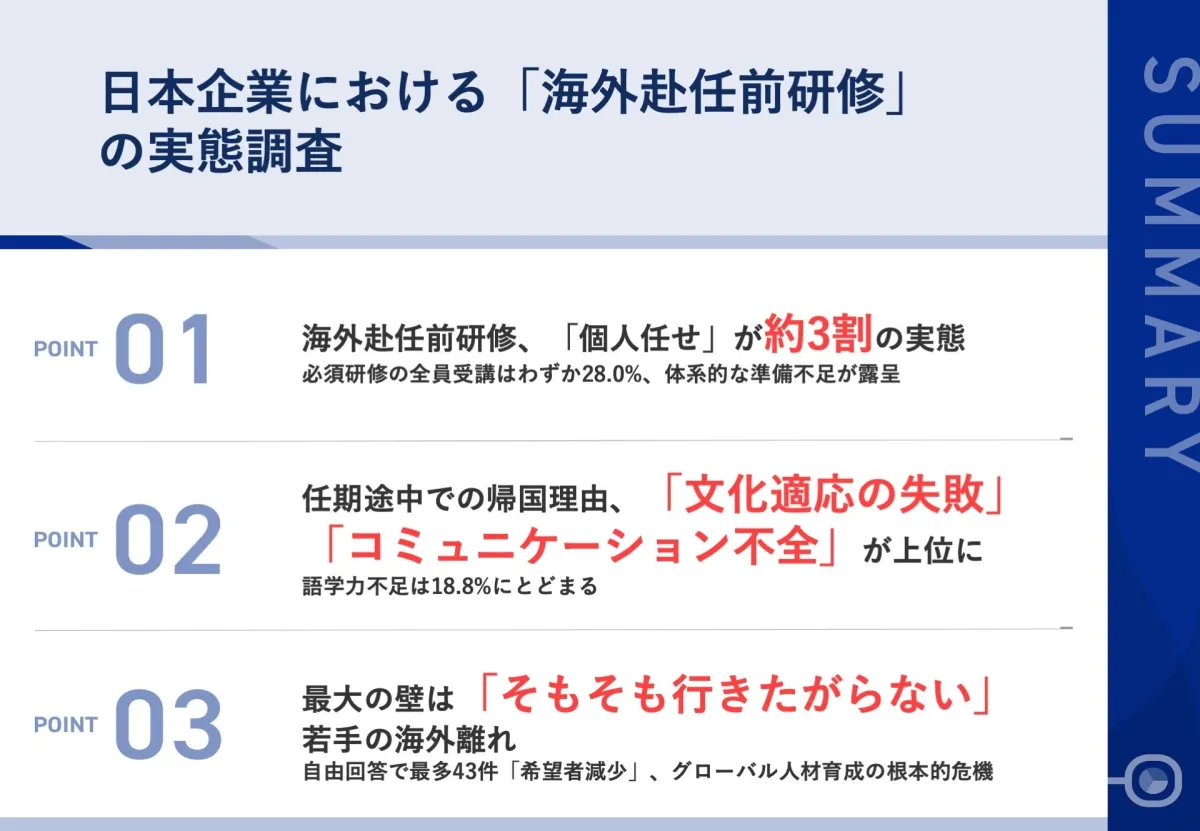
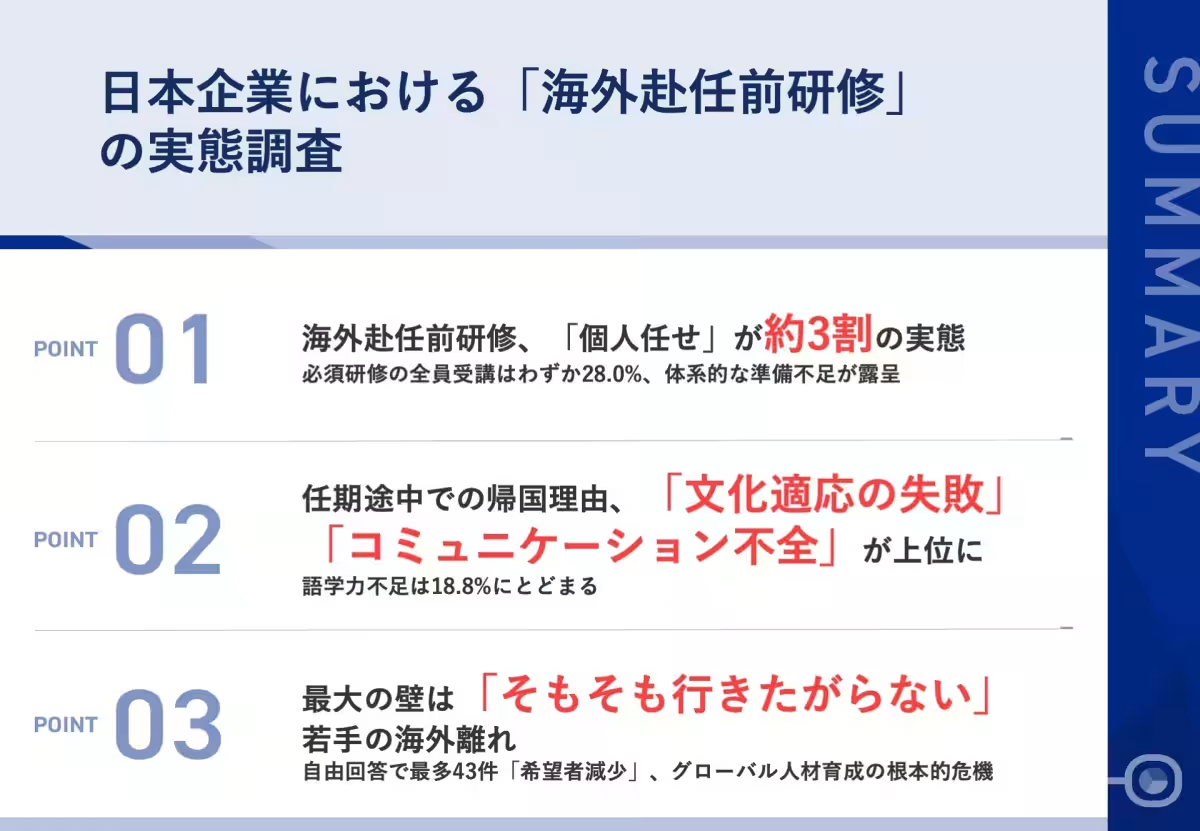
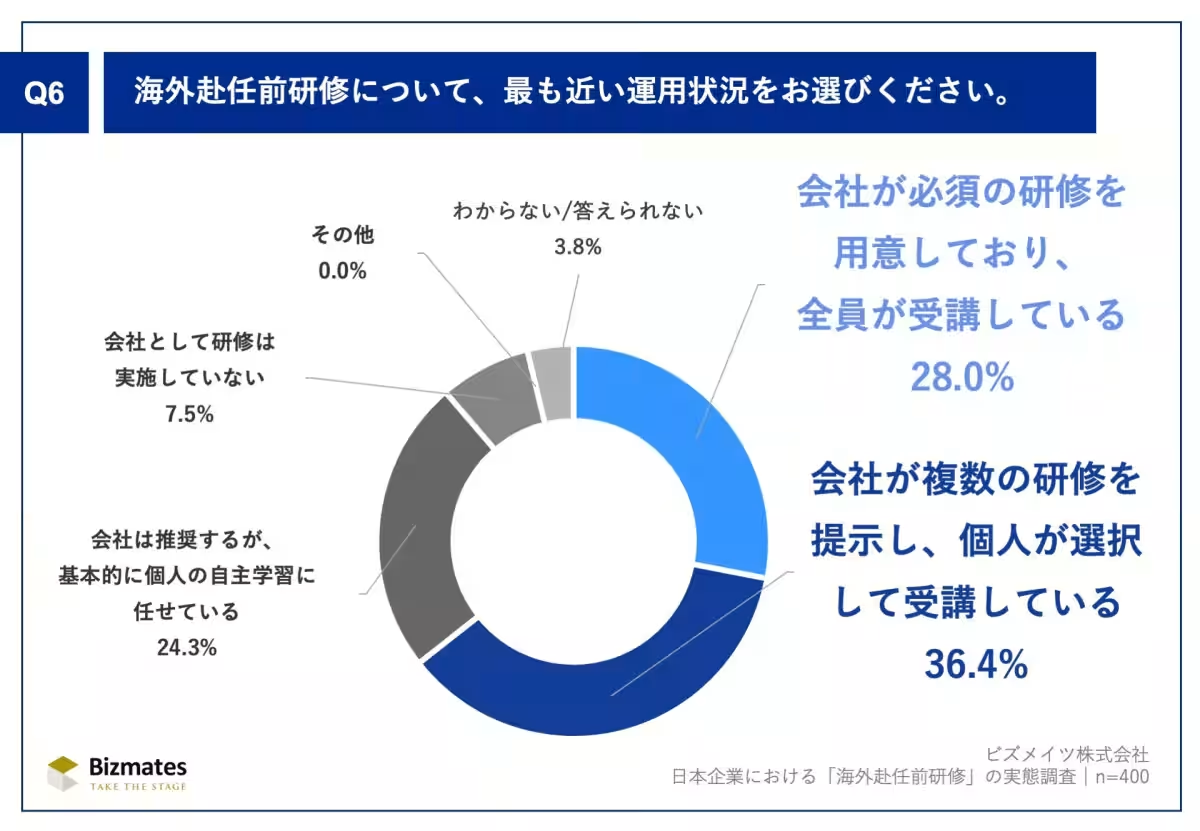
According to the survey, less than 30% of companies mandate that their employees undergo training before being assigned overseas. Alarmingly, over 30% of the organizations have either left training up to individuals or have not provided any training at all. This inconsistency indicates a significant divide in how Japanese companies approach training for employees preparing for international assignments.
Early Returns Are Common
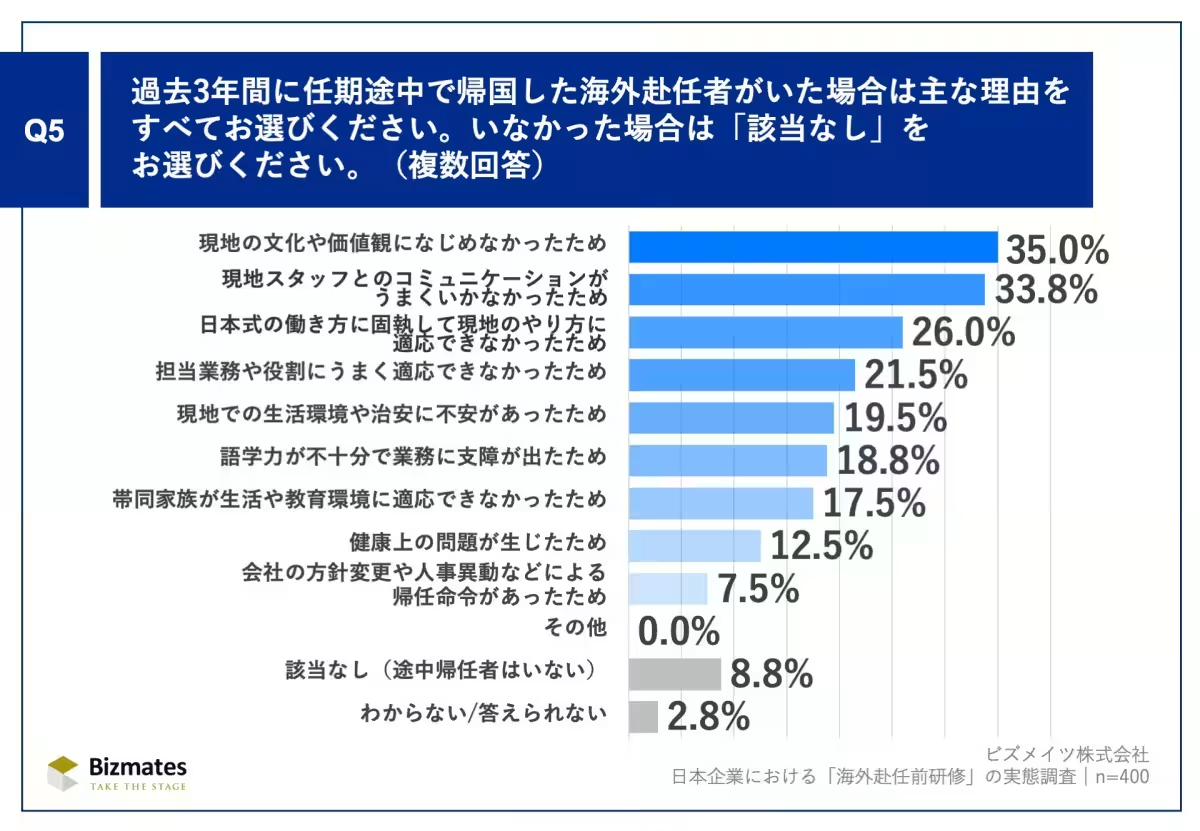
Furthermore, the survey revealed that over 90% of companies have experienced early returns of their overseas employees. The primary reasons cited for these premature returns are not language barriers, but rather failures in cultural adaptation and communication difficulties with local staff.
Shift in Young Talent's International Aspirations
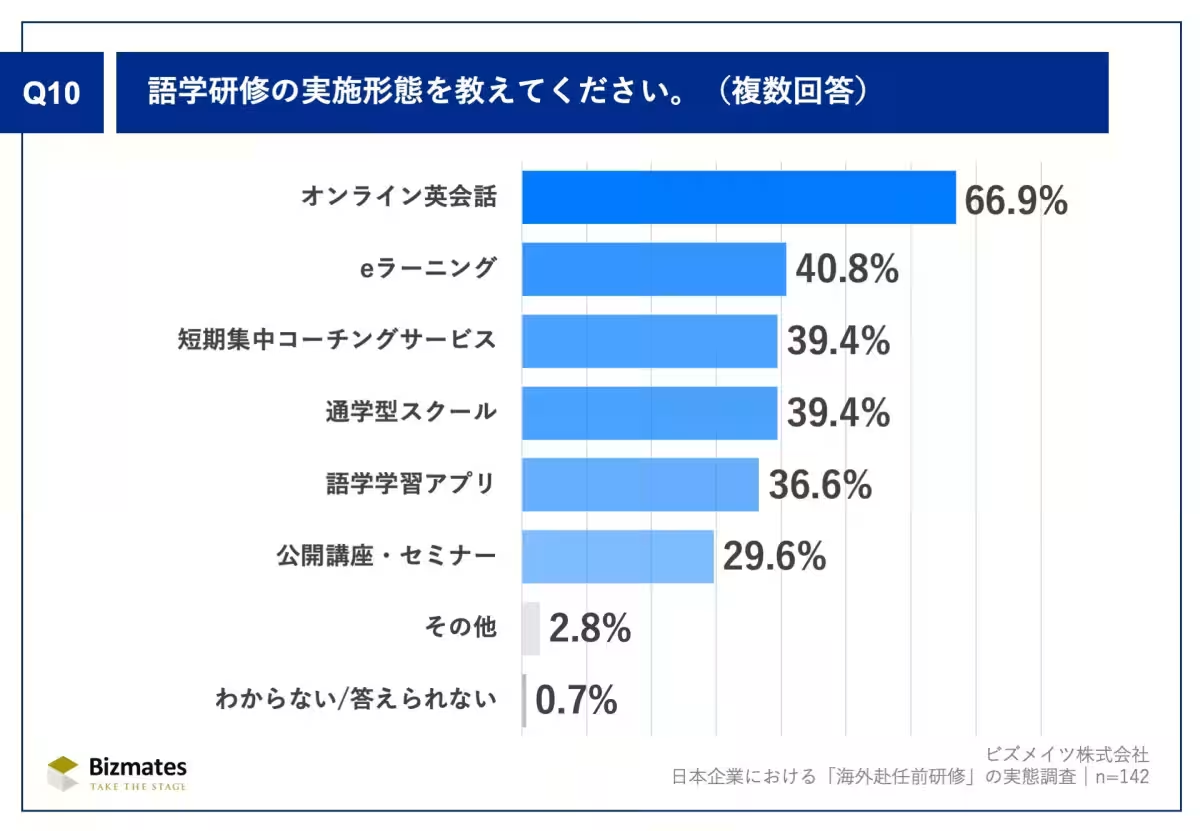
Recruiters have also noted a decline in interest among younger employees in taking up overseas posts, with cultural education and adaptation training highlighted as essential areas needing improvement. Traditional language training is now seen as inadequate for meeting the challenges of a global work environment.
Importance of Cultural Understanding
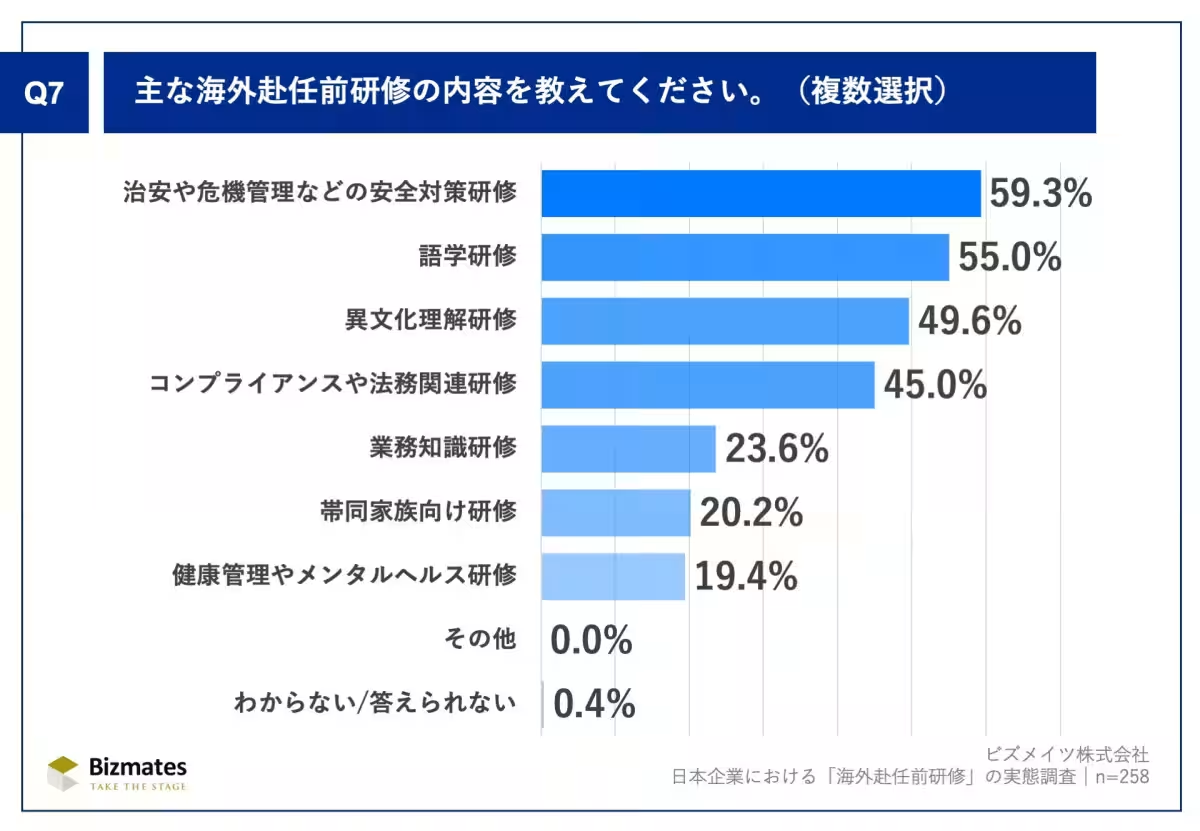
The results of the survey emphasize the need for practical training focused on cross-cultural understanding. Companies must establish training frameworks that address the real challenges faced by employees in foreign environments and position overseas assignments as attractive career progression opportunities.
Statistical Insights
Annual Overseas Assignment Rates
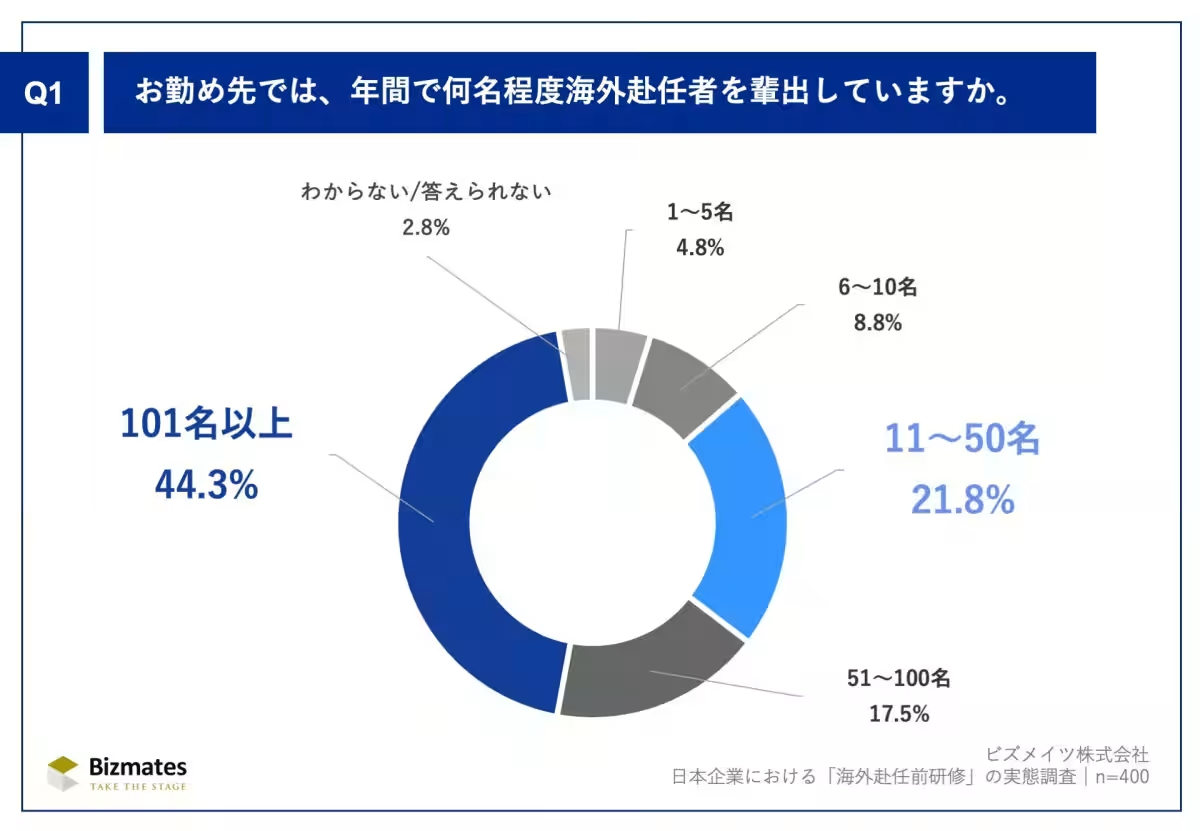
The survey also indicated that over 44% of companies send more than 100 employees abroad annually. Once exclusive to large corporations, international assignments are becoming a common practice across various sectors.
Average Assignment Duration
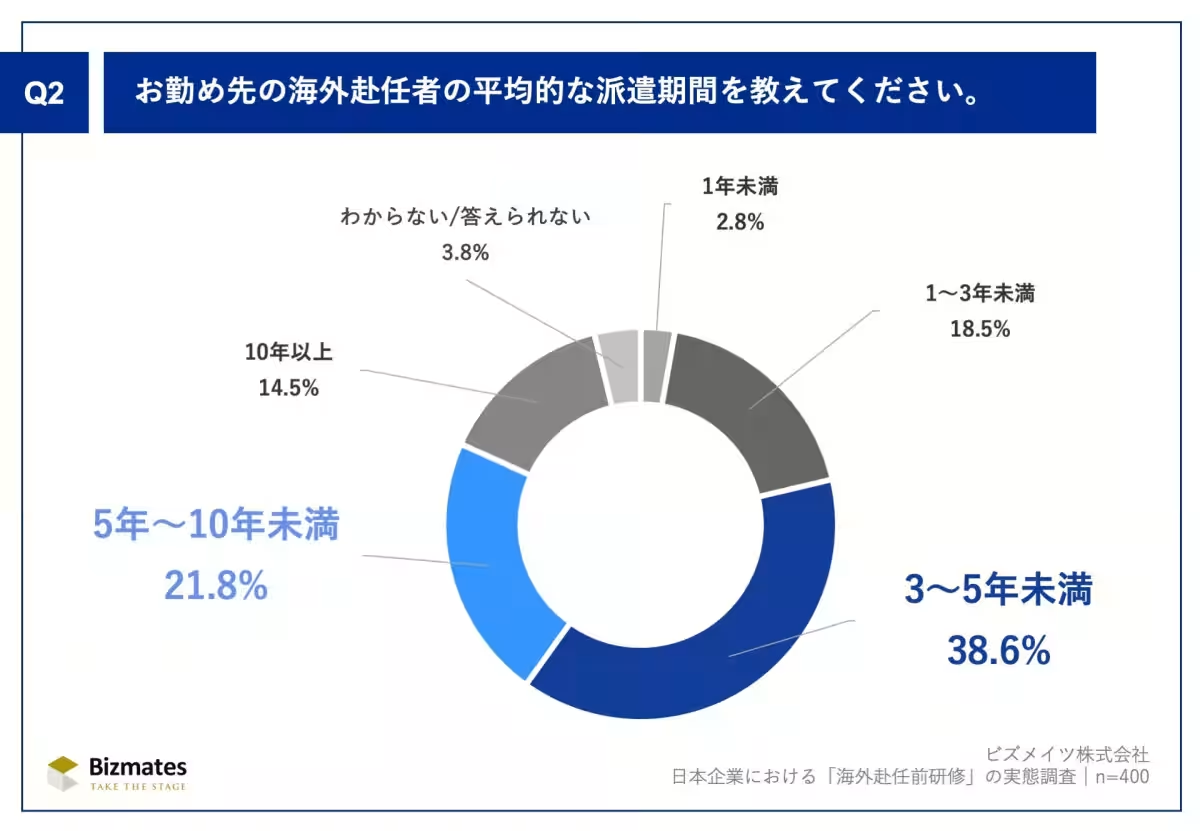
Most companies report an average assignment period of three to five years, highlighting the expectation of an immersive experience that supports both business growth and talent development. The willingness to invest in extended assignments reflects a commitment to building sustainable international operations.
Selection Criteria for Overseas Assignments
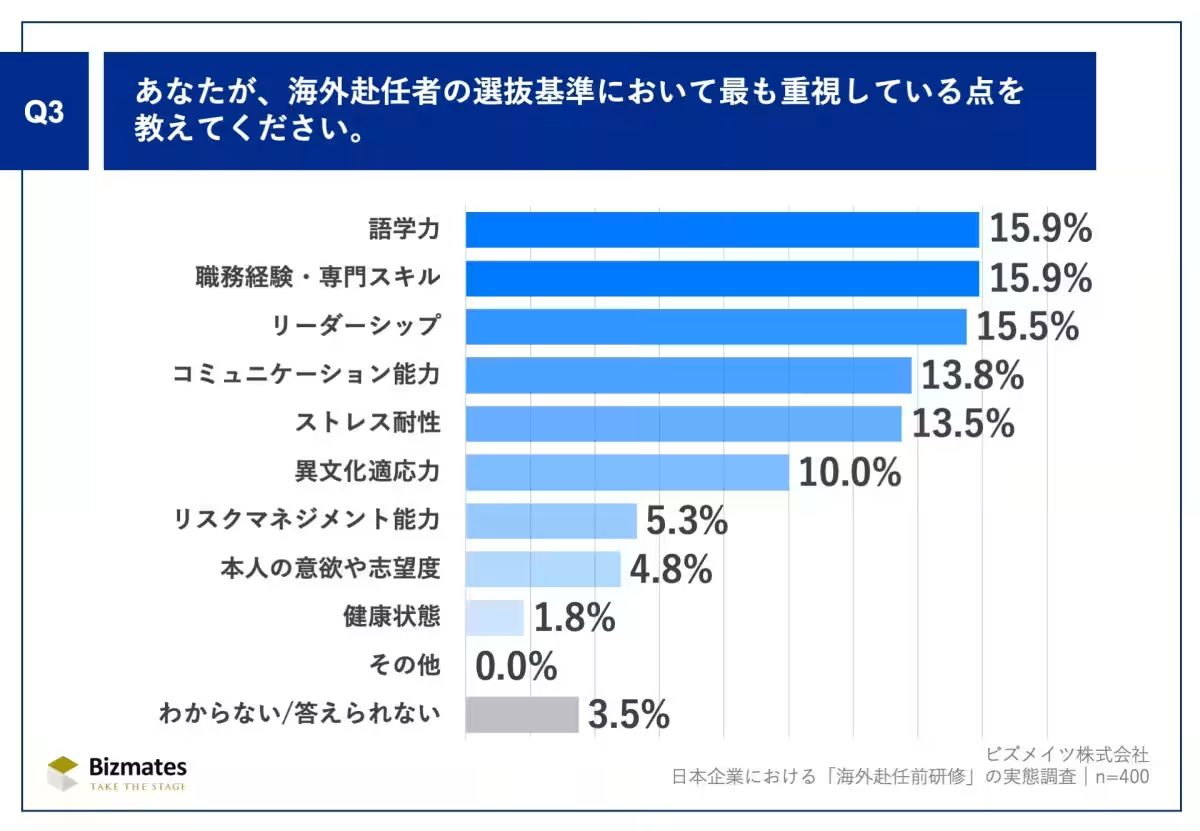
When identifying potential candidates for overseas assignments, companies prioritize language skills, professional experience, and leadership qualities almost equally. Candidates are expected to possess a broad skill set that transcends mere language proficiency.
Essential English Skills
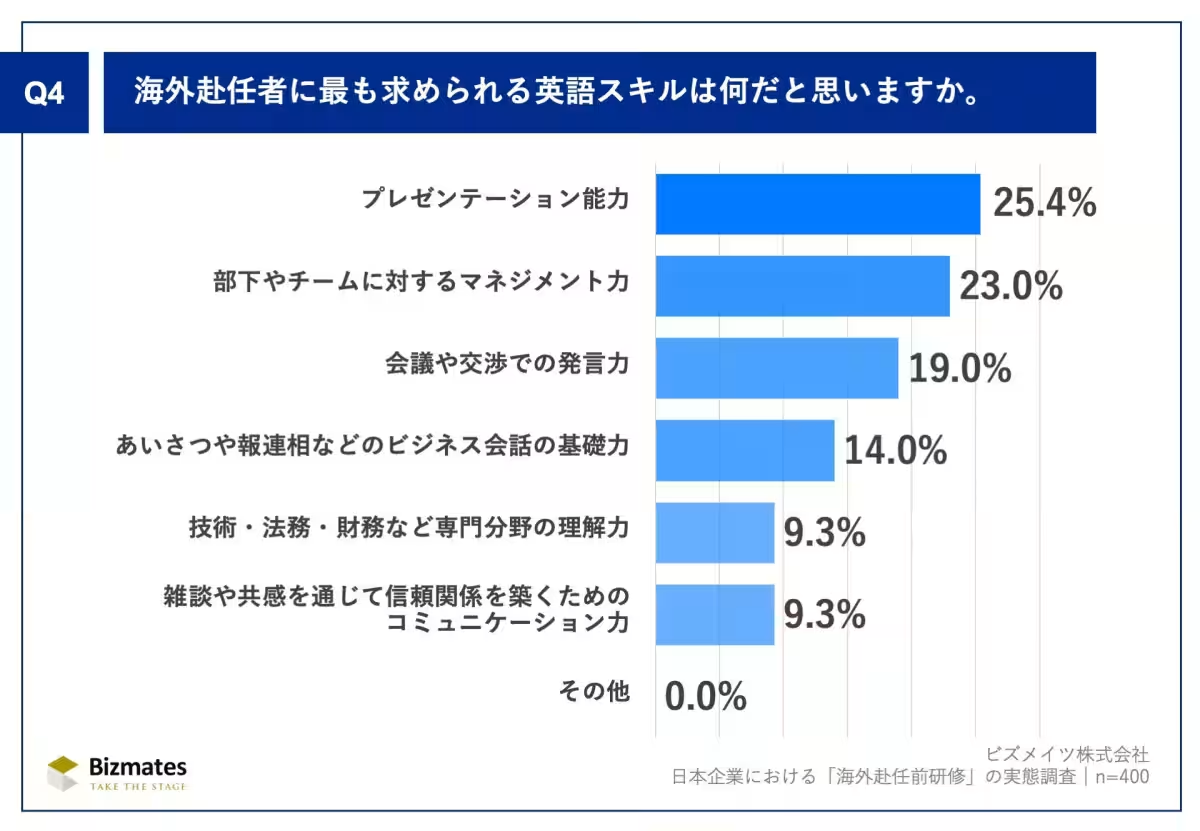
Participants identified presentation skills as the most crucial English proficiency requirement, followed by management capabilities and negotiation skills. These findings underscore the necessity for employees to demonstrate functional language skills that drive business success in multicultural environments.
Challenges to Overcome
Survey participants emphasized several barriers in the hiring and training of overseas employees, the most significant of which involves maintaining high enthusiasm and engagement for international assignments amongst staff.
As companies move towards a more globalized workforce, they face increasing challenges related to cultural adjustment and interpersonal communication.
Conclusion
The Bizmates survey has provided valuable insights into the current tendencies and challenges related to pre-assignment training for Japanese companies sending employees abroad. It is clear that organizations need to approach this training not just as a box to check before an assignment but as a necessary investment in their employees' potential for success in international roles.
Going forward, companies must embrace training programs that focus on cultural understanding, interpersonal skills, and provide support systems for both employees and their families. By fostering an environment that highlights the potential for personal and professional growth through international experience, organizations can better equip their teams for the complexities of global assignments, thereby enhancing their overall international success.
Additional Reference
For further details on the survey and its implications, you may visit Bizmates' website.
Topics Business Technology)
【About Using Articles】
You can freely use the title and article content by linking to the page where the article is posted.
※ Images cannot be used.
【About Links】
Links are free to use.