



Empowering Future Leaders: The Universal Disaster Prevention Message from Kansai, Japan
Empowering Future Leaders: The Universal Disaster Prevention Message from Kansai, Japan
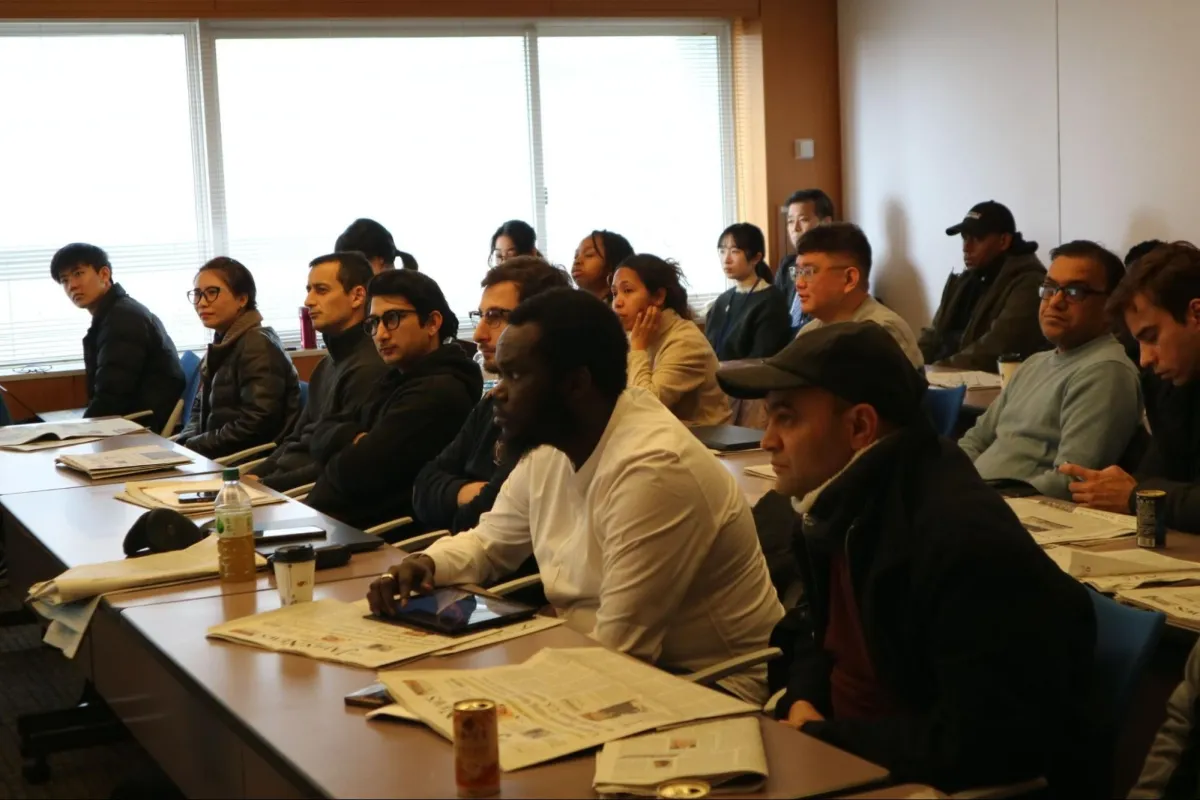
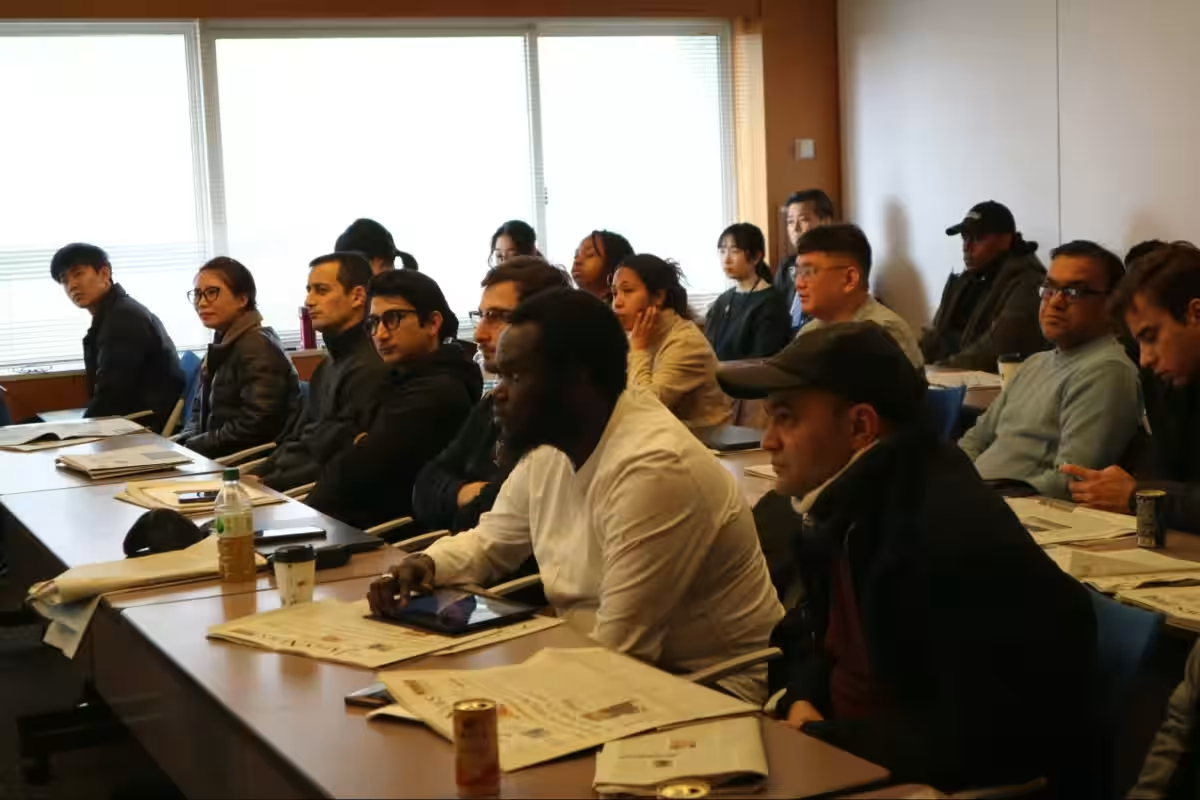
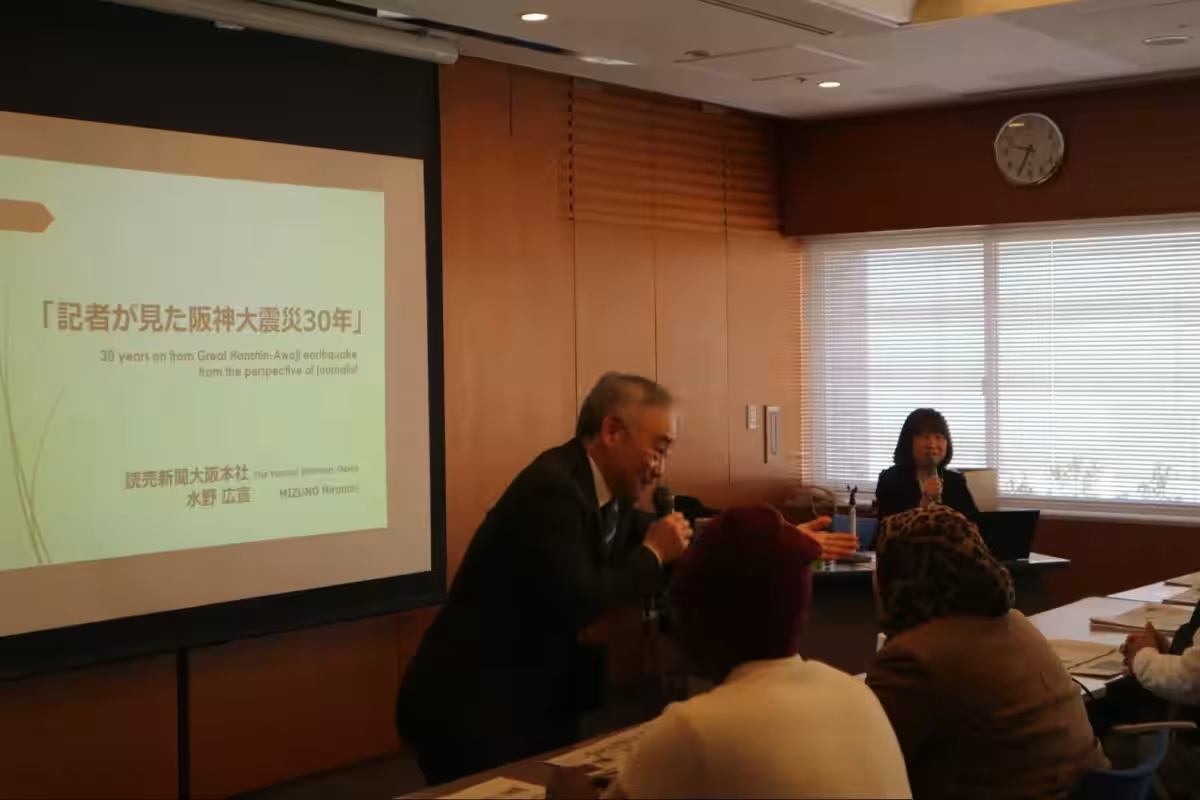
As the 31st anniversary of the Great Hanshin-Awaji Earthquake approaches, the Kansai region of Japan is committed to sharing its disaster resilience knowledge with the world. From March 2 to 4, 2026, the Japan International Cooperation Agency (JICA) Kansai Center will host a special program aimed at about 20 international students studying in Japan. This initiative, titled "Understanding Our Region: Recovery from the Hanshin-Awaji Earthquake," emphasizes the importance of disaster education on a global scale.
The impact of the Great Hanshin-Awaji Earthquake still resonates today, as the previously afflicted areas have transformed their painful experiences into a foundation of knowledge in disaster prevention education. The participants in this program will have the opportunity to learn from experts; they will engage with university students from the Kyoto Student Fire and Safety Team (FAST) and experienced faculty members from the Disaster and School Support Team (EARTH), which is overseen by the Hyogo Prefectural Board of Education.
The participants of this program are JICA international students, who are future leaders in their home countries. During the three-day initiative, they will study the lessons learned from the earthquake and, inspired by these experiences, craft a universal disaster prevention slogan aimed at safeguarding their families and communities. This initiative serves a dual purpose: to propagate a message from Kansai to the world and to mitigate disaster impacts globally.
Background: Why Focus on the Kansai Region Now?
The United Nations Sustainable Development Goal (SDG) 1 emphasizes building resilience for marginalized communities to mitigate disaster risks. Disasters have the potential to exacerbate poverty, making proactive disaster preparedness imperative. For developing nations, weak infrastructure can mean one incident can threaten lives, disrupt livelihoods, and even reverse national development by decades (as highlighted by SDG 11 on Sustainable Cities and Communities). JICA's international students are poised to become distinguished leaders and policymakers in their home countries. Understanding Japan's recovery process and integrating disaster education into their experiences can significantly enhance global disaster resilience.
Highlights of the Program
1. Peer Learning through Experience: The program includes an interactive workshop led by the Kyoto Student FAST. Japanese university students will share their experiences and strategies on enhancing community awareness of disaster preparedness. This element encourages students to break language barriers and engage in a personal approach to disaster management.
2. Learning from Educational Experts: The EARTH team, formed by educators who lived through the earthquake, will conduct lectures detailing the roles that schools and communities should play in disaster prevention. Participants will not only learn essential knowledge but will also be inspired by the passion and methods for teaching future generations how to protect lives during disasters.
3. Final Presentation on Powerful Slogans: A significant outcome of this program is the creation and dissemination of impactful disaster prevention slogans. Participants will reflect on the question, "What do you want to convey to the people you cherish the most?" Throughout the three days, they will develop their slogans, which will then be shared on JICA Kansai's social media platforms to reach a wider audience.
Conclusion
As Japan gears up to commemorate the 31st anniversary of the Great Hanshin-Awaji Earthquake, this initiative symbolizes a remarkable blend of reflection and action by empowering future leaders from across the globe. By cultivating an understanding of disaster response and resilience, JICA aims to create a network of individuals who are prepared to face and mitigate disasters back in their home countries. Through knowledge sharing and collaborative efforts, Kansai continues to take strides in building a safer world for everyone.
Topics Policy & Public Interest)
【About Using Articles】
You can freely use the title and article content by linking to the page where the article is posted.
※ Images cannot be used.
【About Links】
Links are free to use.