



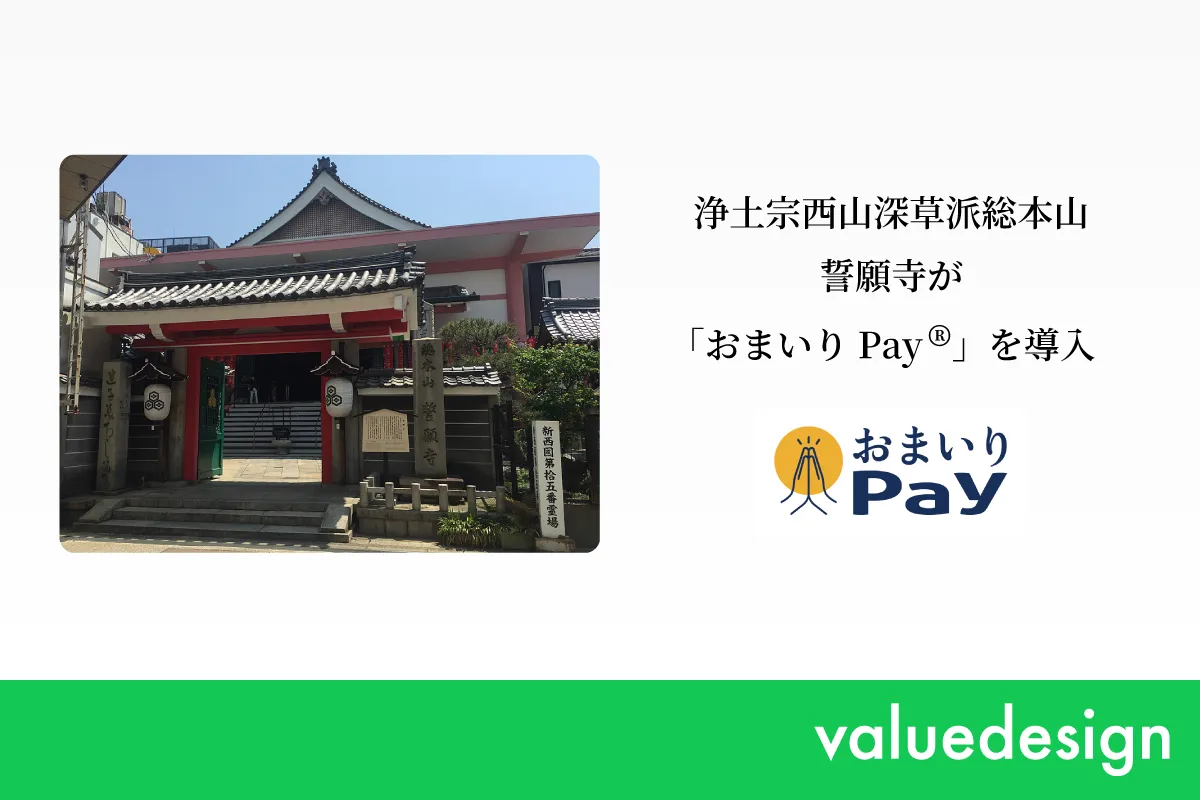
Seiganji Temple Introduces Innovative Cashless Payment System for Visitors
Seiganji Temple Introduces Omairi Pay®
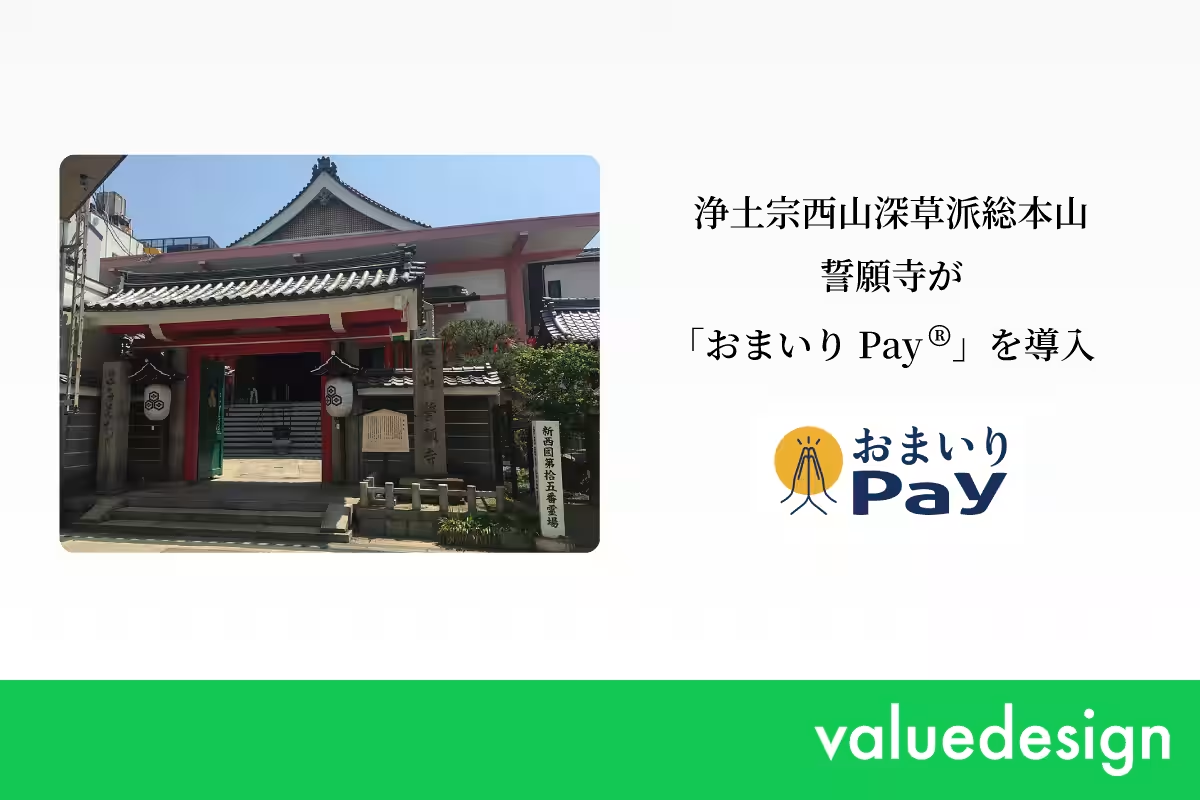
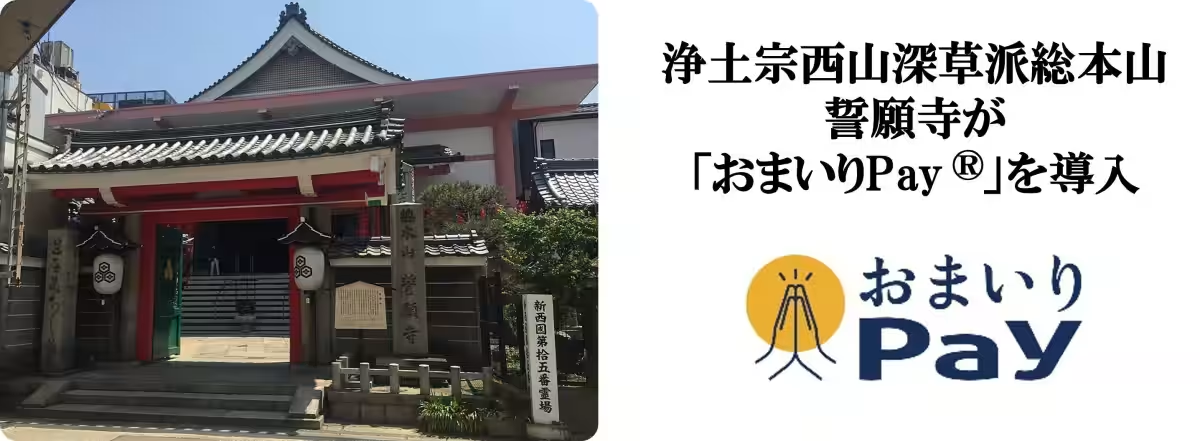
Seiganji Temple, the head temple of the Jodo-shu Nishi Hongan-ji denomination, has recently adopted an innovative cashless payment system known as 'Omairi Pay®'. This service, developed in collaboration with the Kyoto Buddhist Association by Value Design Co., Ltd., is designed specifically for temples and shrines, reflecting the ongoing shift towards cashless transactions in society.
Set to commence operations on August 17, 2026, 'Omairi Pay®' will allow visitors to make payments for various items, including temple memorabilia like goshuin (temple stamps) and other religious materials. As cashless payments continuously gain traction across different sectors, Seiganji Temple recognizes the necessity of this modern payment solution for enhancing visitor convenience.
Background of Seiganji Temple
Nestled in the bustling area of Shinkyogoku Street in Kyoto, Seiganji Temple has long been a venerated site. Since its founding in 667 AD, it has been a focal point for the Jodo-shu faith, tracing its lineage back to revered figures such as Honen and Nishi Hongan-ji founder, Shinran Shonin. The temple is not only a significant spiritual location but also a cultural one, attracting many visitors due to its historical connections with personalities like Seishonagon and Izumi Shikibu. Furthermore, it is recognized as the 'Temple of Women's Rebirth' and holds historical significance in the art of Rakugo, making it a cherished spot for many.
In recognizing the needs of a diverse array of visitors, including numerous foreign tourists, the temple's management aims to incorporate more accessible payment options. The implementation of 'Omairi Pay®' promises to streamline cashless transactions while enhancing operational efficiency within the temple's administrative tasks.
Overview of Omairi Pay® Implementation
- - Start Date: August 17, 2026 (Monday)
- - Eligible Payments: Payment for goshuin and religious materials
- - Payment Methods Accepted: Credit cards including JCB, American Express, Diners Club, Visa, and Mastercard
Commenting on this initiative, Chief Priest Masanori Ishikura stated, "Seiganji Temple has evolved through the ages since its establishment in the Asuka period. It has become a sanctuary for local beliefs and practices, increasingly welcoming visitors from various backgrounds. We have received requests for cashless payment options, and thus we decided to introduce the Omairi Pay® system to forge a more accommodating experience for all visitors. We aim to balance the temple's public benefit with the promotion of religious freedom while adapting to contemporary needs."
About Omairi Pay®
Developed under the supervision of the Kyoto Buddhist Association, 'Omairi Pay®' caters to specific operational requirements of temples and shrines while prioritizing the convenience of visitors.
Key Features:
1. Separation of Sacred and Secular: This service caters solely to temple-related transactions, ensuring it differs from standard commercial payment systems.
2. Preservation of Religious Freedom: Individual temple names remain confidential to payment providers.
3. Protection from Fraud: Utilization is restricted to designated temples, minimizing excessive transaction volumes.
4. Support for Operational Efficiency: The digitization of sales and payment management aids temples in improving administrative efficiency.
In recent years, the accelerated transition towards cashless transactions has created diverse payment options for consumers. However, temples and shrines have yet to universally implement these systems. Value Design is committed to expanding cashless payment infrastructure for religious institutions, thus supporting the sustainable operation and preservation of Japan's rich religious culture.
About Seiganji Temple
- - Address: 453 Shin Kyogoku Sakura-cho, Nakagyo-ku, Kyoto City, Kyoto Prefecture (down from Rokkaku on Shin Kyogoku Street)
- - Foundation Date: 667 AD
- - Official Website: Seiganji Temple
For further information, the Kyoto Buddhist Association, established post-war and formally recognized in 2018 as a general incorporated foundation, exemplifies a comprehensive group of local temples transcending sect affiliations to promote Buddhist events and community integration.
As part of its ongoing efforts, Value Design aims to enhance user experiences across Japan’s religious sites while simultaneously respecting the intangible cultural significance they embody.
Topics People & Culture)
【About Using Articles】
You can freely use the title and article content by linking to the page where the article is posted.
※ Images cannot be used.
【About Links】
Links are free to use.