



Okayama University Honors New Research Professors and Associates in Innovative Medical and Genetic Fields
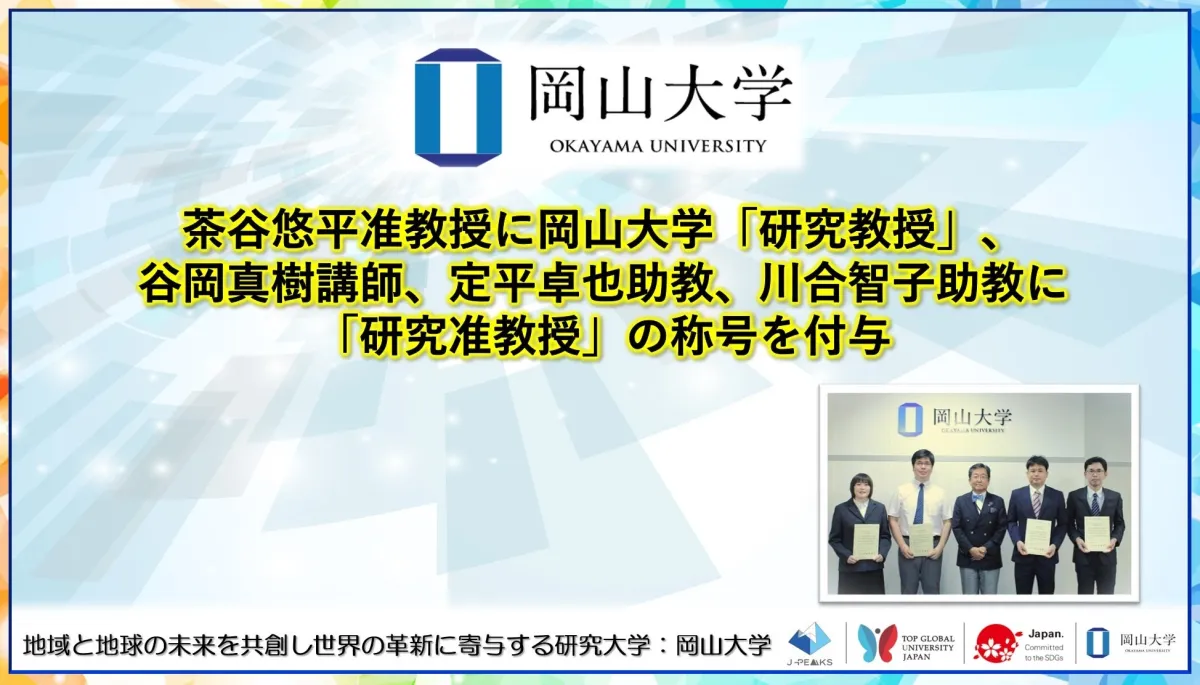
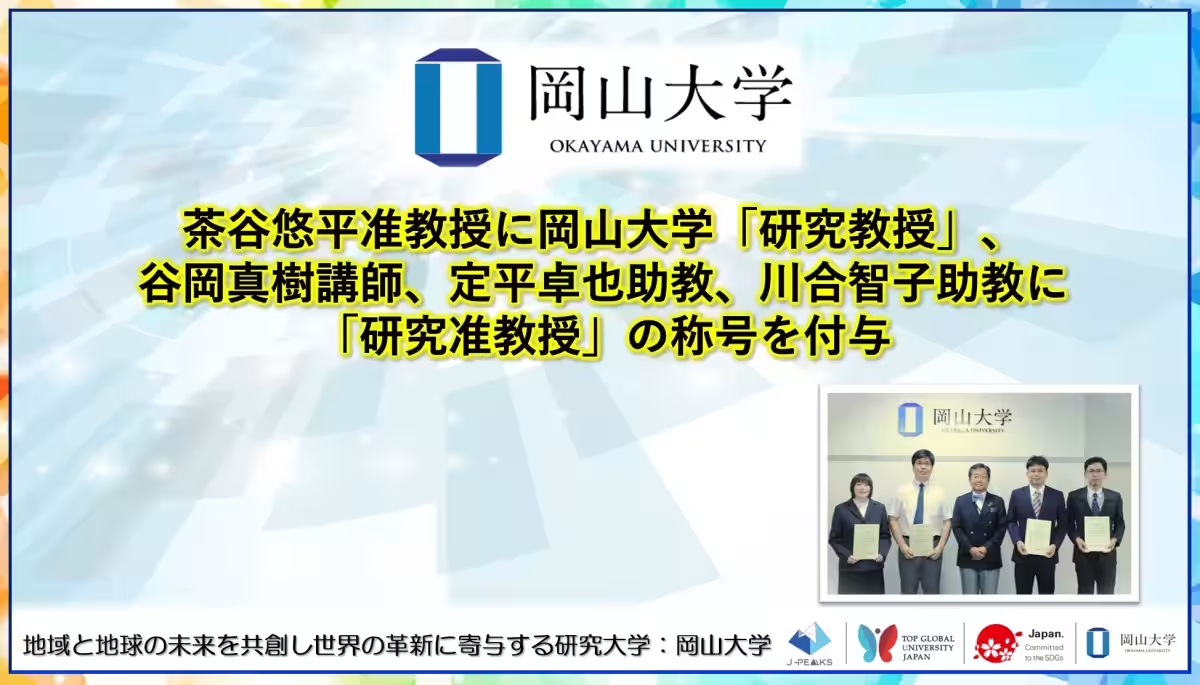
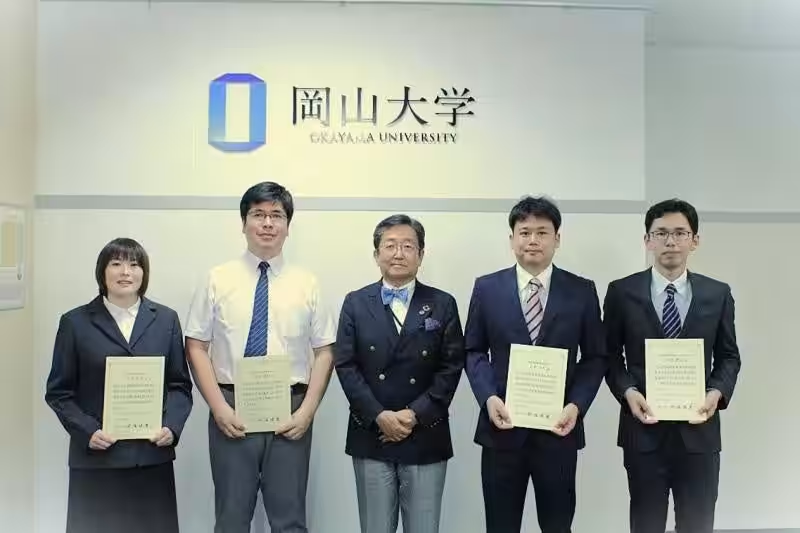
In a significant development for academic research, Okayama University, located in the heart of Okayama City, has conferred prestigious titles on distinguished faculty members within its various research fields. On July 22, 2025, an official ceremony was held at the Tsushima Campus, where Professor Yuhei Chadani was appointed "Research Professor," while Dr. Maki Tanioka, Dr. Takuya Sadahira, and Dr. Tomoko Kawai were awarded the title of "Associate Research Professor." The event was presided over by the university's president, Professor Yasuyuki Nasu, who presented the certificates of appointment and introduced the groundbreaking research undertaken by each of the professors.
Professor Chadani's work focuses on decoding and manipulating genetic information encoded not in DNA sequences, but rather in the amino acid sequences of proteins. This novel approach aims to overcome challenges that traditional technologies face. His research endeavors to create new translation-promoting factors that specifically act on "hard-to-translate sequences," which disrupt the normal functioning of the ribosome, a key player in protein synthesis. This innovation promises to enable unprecedented control over gene function and improve protein production efficiency, ultimately contributing to solutions for various societal issues.
Dr. Sadahira is dedicated to developing a new treatment method for refractory conditions like frequent urination and nocturia, termed Endoscopic Topical Application (ETA). He investigates the sensory nerve abnormalities present in the mucosa of the bladder's trigone region, which can lead to heightened perception of urgency. The ETA treatment involves using an endoscope to apply medication to the bladder's mucosa, aiming to alleviate excessive urinary urgency by acting on the faulty nerves, thereby opening a path for new therapeutic methods that tackle these conditions.
Dr. Tanioka's research employs "explainable" deep learning models to identify biomarkers linked with treatment responses to breast cancer medications such as CDK4/6 inhibitors. The significance of biomarkers lies in their ability to allow healthcare providers to predict disease states and treatment responses, yet there is currently a lack of biomarkers for these inhibitors in clinical settings. The advancement of this research is expected to enable personalized treatment plans for breast cancer patients, thus enhancing treatment efficacy.
Dr. Kawai focuses on reproductive medicine, exploring how physical environments and lifestyle factors influence reproductive cells. Utilizing a culture system that mimics physiological conditions, she aims to unravel the molecular basis of these influences, paving the way for clinical applications in diagnosis and treatment. Her investigations also delve into the impact of the autonomic nervous system on reproductive cells, aiming for early detection and preventive strategies against related disorders.
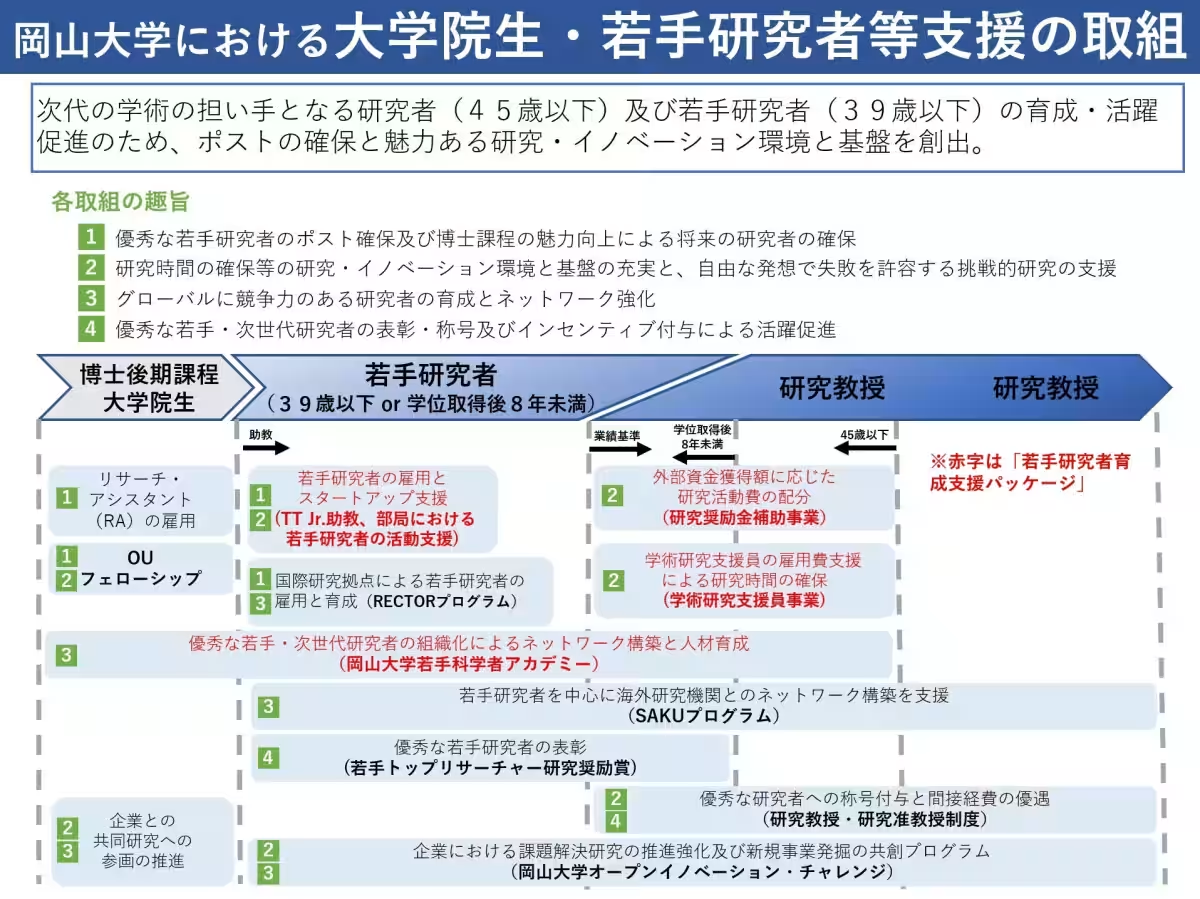
As it continues its mission as a developmentally focused university, Okayama University remains committed to supporting young researchers like Professor Chadani and his colleagues. Their groundbreaking work not only enriches the academic landscape but also holds the promise of significant advancements in medical and genetic research, addressing pressing societal needs.
For further insights into the innovative endeavors at Okayama University, you can explore more through the following resources:
1. Molecular Genetics Research Lab: Chadani Lab
2. Urology Research at Okayama University: Urology Institute
3. Breast Endocrine Surgery at Okayama University: Breast Surgery Institute
4. Medical Artificial Intelligence Program: AI Education
5. Okayama University Hospital: University Hospital
The appointment of these exemplary researchers marks a promising step towards fostering innovation and addressing healthcare challenges. As Okayama University champions significant advancements in research, we look forward to their contributions shaping the future of medicine and science.
Professor Chadani's work focuses on decoding and manipulating genetic information encoded not in DNA sequences, but rather in the amino acid sequences of proteins. This novel approach aims to overcome challenges that traditional technologies face. His research endeavors to create new translation-promoting factors that specifically act on "hard-to-translate sequences," which disrupt the normal functioning of the ribosome, a key player in protein synthesis. This innovation promises to enable unprecedented control over gene function and improve protein production efficiency, ultimately contributing to solutions for various societal issues.
Dr. Sadahira is dedicated to developing a new treatment method for refractory conditions like frequent urination and nocturia, termed Endoscopic Topical Application (ETA). He investigates the sensory nerve abnormalities present in the mucosa of the bladder's trigone region, which can lead to heightened perception of urgency. The ETA treatment involves using an endoscope to apply medication to the bladder's mucosa, aiming to alleviate excessive urinary urgency by acting on the faulty nerves, thereby opening a path for new therapeutic methods that tackle these conditions.
Dr. Tanioka's research employs "explainable" deep learning models to identify biomarkers linked with treatment responses to breast cancer medications such as CDK4/6 inhibitors. The significance of biomarkers lies in their ability to allow healthcare providers to predict disease states and treatment responses, yet there is currently a lack of biomarkers for these inhibitors in clinical settings. The advancement of this research is expected to enable personalized treatment plans for breast cancer patients, thus enhancing treatment efficacy.
Dr. Kawai focuses on reproductive medicine, exploring how physical environments and lifestyle factors influence reproductive cells. Utilizing a culture system that mimics physiological conditions, she aims to unravel the molecular basis of these influences, paving the way for clinical applications in diagnosis and treatment. Her investigations also delve into the impact of the autonomic nervous system on reproductive cells, aiming for early detection and preventive strategies against related disorders.
As it continues its mission as a developmentally focused university, Okayama University remains committed to supporting young researchers like Professor Chadani and his colleagues. Their groundbreaking work not only enriches the academic landscape but also holds the promise of significant advancements in medical and genetic research, addressing pressing societal needs.
For further insights into the innovative endeavors at Okayama University, you can explore more through the following resources:
1. Molecular Genetics Research Lab: Chadani Lab
2. Urology Research at Okayama University: Urology Institute
3. Breast Endocrine Surgery at Okayama University: Breast Surgery Institute
4. Medical Artificial Intelligence Program: AI Education
5. Okayama University Hospital: University Hospital
The appointment of these exemplary researchers marks a promising step towards fostering innovation and addressing healthcare challenges. As Okayama University champions significant advancements in research, we look forward to their contributions shaping the future of medicine and science.
Topics Health)
【About Using Articles】
You can freely use the title and article content by linking to the page where the article is posted.
※ Images cannot be used.
【About Links】
Links are free to use.