



Growth Property Launches New Subleasing Model for Foreign Tenants Without Screening Failures
Growth Property's Innovative Subleasing Model
In a groundbreaking initiative, Growth Property, based in Shinagawa, Tokyo, has launched a new subleasing model specifically designed to address the challenges faced by foreign tenants in Japan. This model aims to revolutionize the rental market by ensuring that foreign clients are able to secure leases without the usual screening failures often caused by language barriers or restrictive guarantees.
Understanding the Problem
Despite their financial capability, many foreign professionals in Japan, including high-income executives and expatriates, frequently find themselves unable to secure rental agreements. Reasons such as failure to pass guarantor screenings or issues stemming from newly established Japanese corporations have created an alarming trend where potential tenants are turned away.
These screening obstacles have led to noticeable losses in lucrative high-rent opportunities, which in turn has become a widespread issue within the real estate sector. The inability to cater to this demographic not only restricts growth for real estate agencies but also limits economic contributions from these international clients.
Introducing the Solution
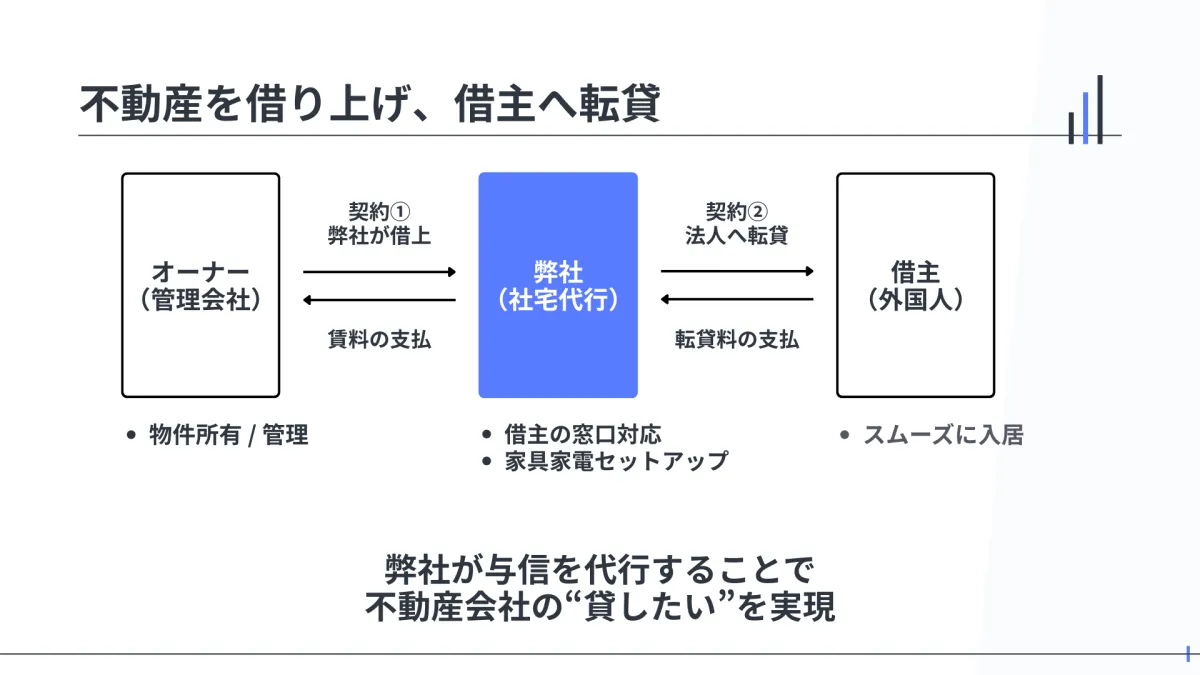
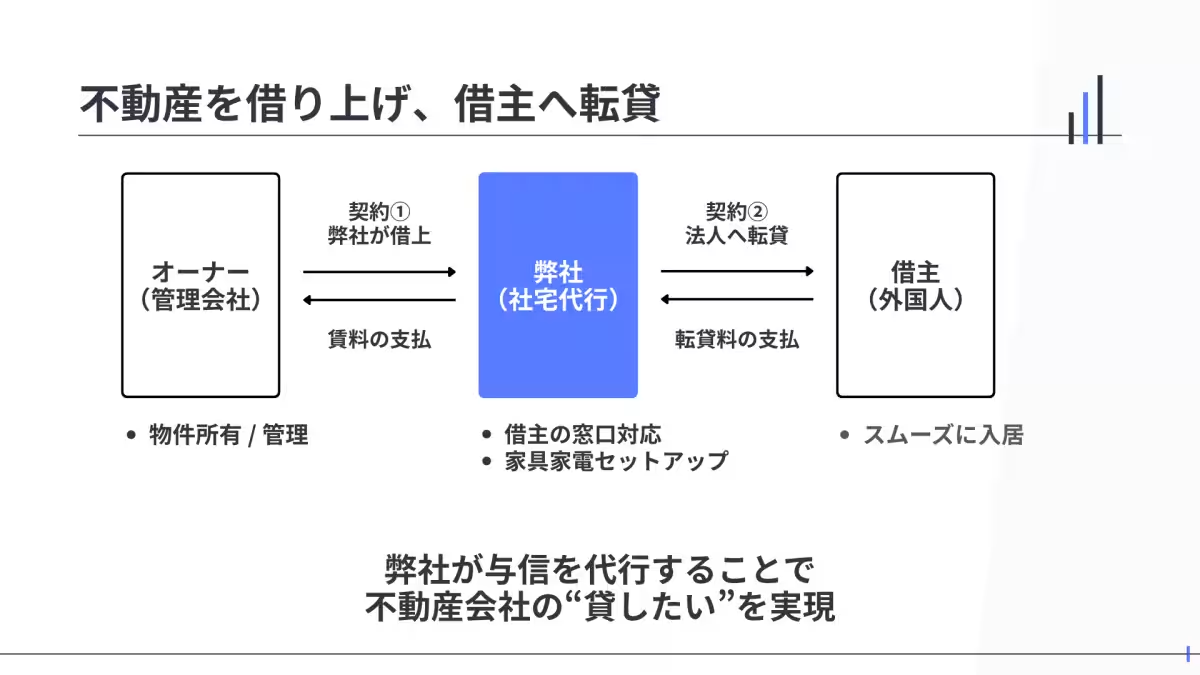
In response to these challenges, Growth Property has introduced the corporate subleasing model. Under this innovative setup, Growth Property acts as the primary lessee, leasing properties directly from landlords and subsequently subleasing them to foreign tenants. This compliance-based model enables the firm to bypass traditional screening processes, allowing them to accept clients who might otherwise be deemed unqualified due to their lack of Japanese credit history or guarantors.
This approach empowers real estate agencies to convert previously rejected high-income foreign applicants into legally binding contracts, ultimately enhancing their business viability during a time when the market is struggling.
Key Features of the Service
Transparency and Security
Under the corporate subleasing model, Growth Property provides a transparent framework where the leasing details of the foreign tenants—both individuals and corporations—are shared with landlords, promoting trust and transparency in transactions. Additionally, the properties are tailored to meet the preferences of foreign clients, often coming with ready-set furniture and appliances.
Long-term Contracts
The model typically bases agreements on long-term leases of one year or more. This stability not only ensures consistent revenue for property owners but significantly mitigates risks associated with rental defaults. The partnership structurally relies on rental guarantee companies, which minimizes the likelihood of payment issues, providing additional peace of mind to landlords.
Target Areas and Property Ranges
Focusing primarily on Tokyo’s upscale neighborhoods, including Minato, Shibuya, and Meguro, Growth Property primarily caters to properties with monthly rents exceeding 200,000 yen. They are additionally expanding their reach to cover other areas like Yokohama and Chiba.
Benefits for Real Estate Agencies
For real estate agents, the primary allure of this model lies in its potential to convert foreign rental applications—which were previously dismissed—into successful agreements. This increase in high-rent placements is set to elevate agency revenues and allows for a collaborative partnership through flexible proposals and referrals.
Management firms also benefit significantly, as they can rely on Japanese companies as lessees, thus reducing the risks associated with tenant defaults and linguistic barriers. This ultimately leads to an improved vacancy rate and an increase in property values, contributing to a flourishing real estate market.
Insight from the CEO
Keiji Kashiyama, the President of Growth Property, shares his perspective: “It’s disheartening to see high-income individuals unable to rent simply due to administrative barriers. This model is designed to empower real estate agencies in addressing these issues, transforming foreign tenant challenges into attractive opportunities. Our goal is to work together towards a future wherein foreign leasing is not a risk but rather a chance for growth.”
Future Directions
Growth Property is actively working on expanding its partnerships with real estate agencies that are interested in catering to foreign tenants. Moreover, they are strengthening their collaboration with Japan Property, a multilingual portal that disseminates Japanese real estate information in English, Chinese, and Thai. This strategic alignment aims to efficiently connect overseas inquiries to domestic partners.
How to Reach Growth Property
For more information, Growth Property can be contacted at:
- - Email: [email protected]
- - Phone: 03-4563-9965
- - Website: Growth Property
In conclusion, Growth Property’s innovative corporate subleasing model is set to change the landscape for foreign tenants and create mutually beneficial relationships in the real estate market.

Topics Consumer Products & Retail)
【About Using Articles】
You can freely use the title and article content by linking to the page where the article is posted.
※ Images cannot be used.
【About Links】
Links are free to use.