



Survey Reveals That Nearly Half of New Car Buyers Exceed Their Budget, With Compact Cars Leading the Pack
Overview of the Auto Purchase Budget Survey
In a recent survey conducted by Kuruka, more than half of new car buyers have exceeded their initial budget during their purchase. The study, which gathered insights from 1,076 individuals who bought new vehicles within the last three years, especially sheds light on several categories of cars. The analysis targeted differences between intended budgets and actual spending, highlighting how compact cars, SUVs, and minivans are significantly impacted.
Key Findings
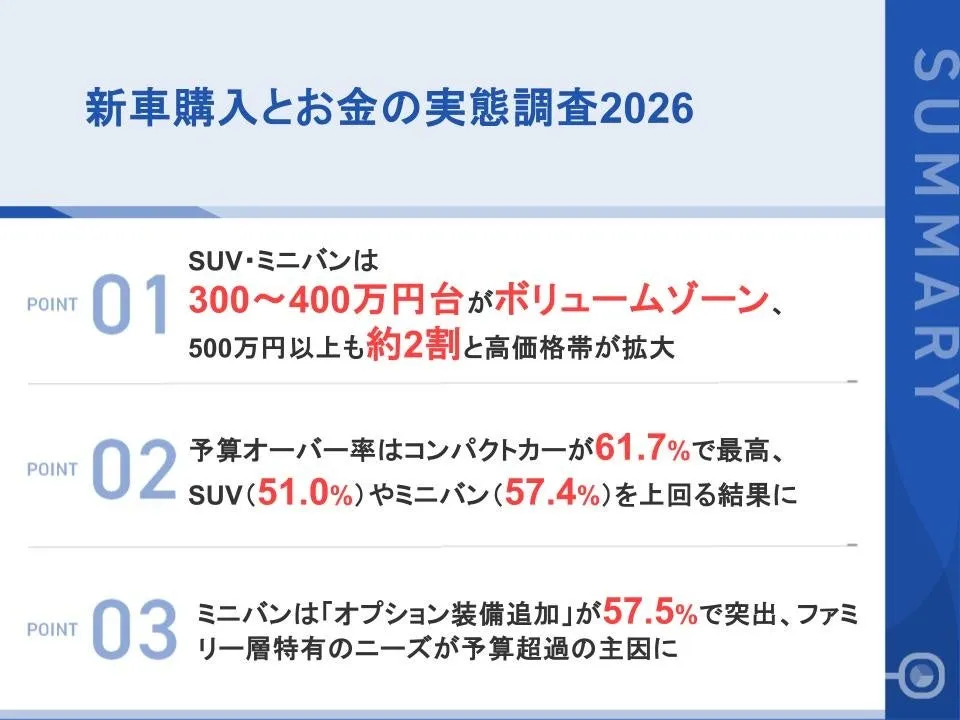
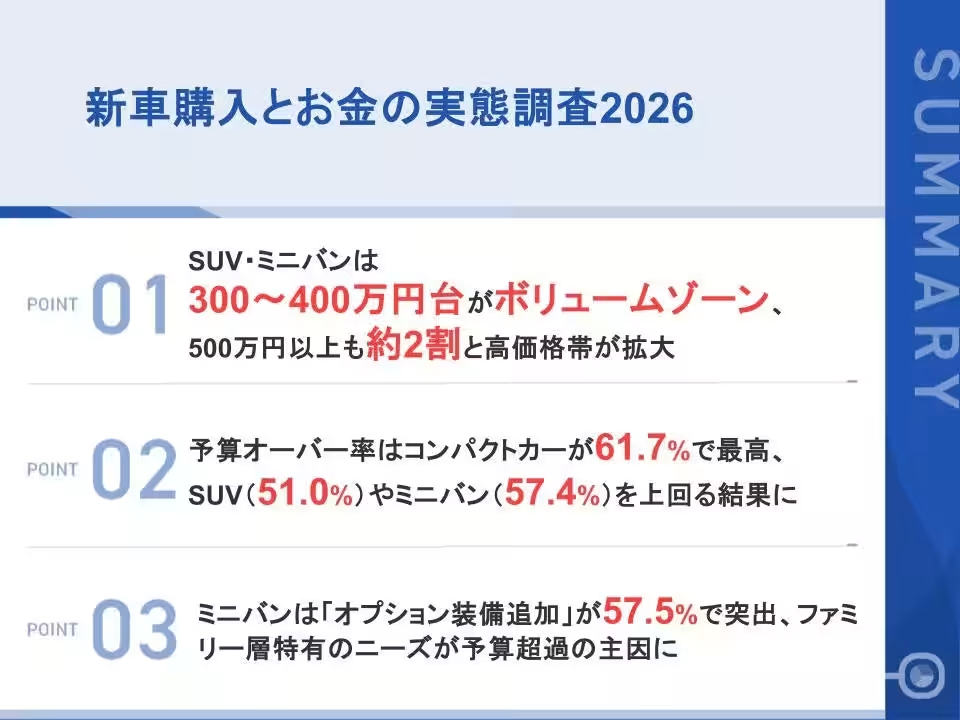
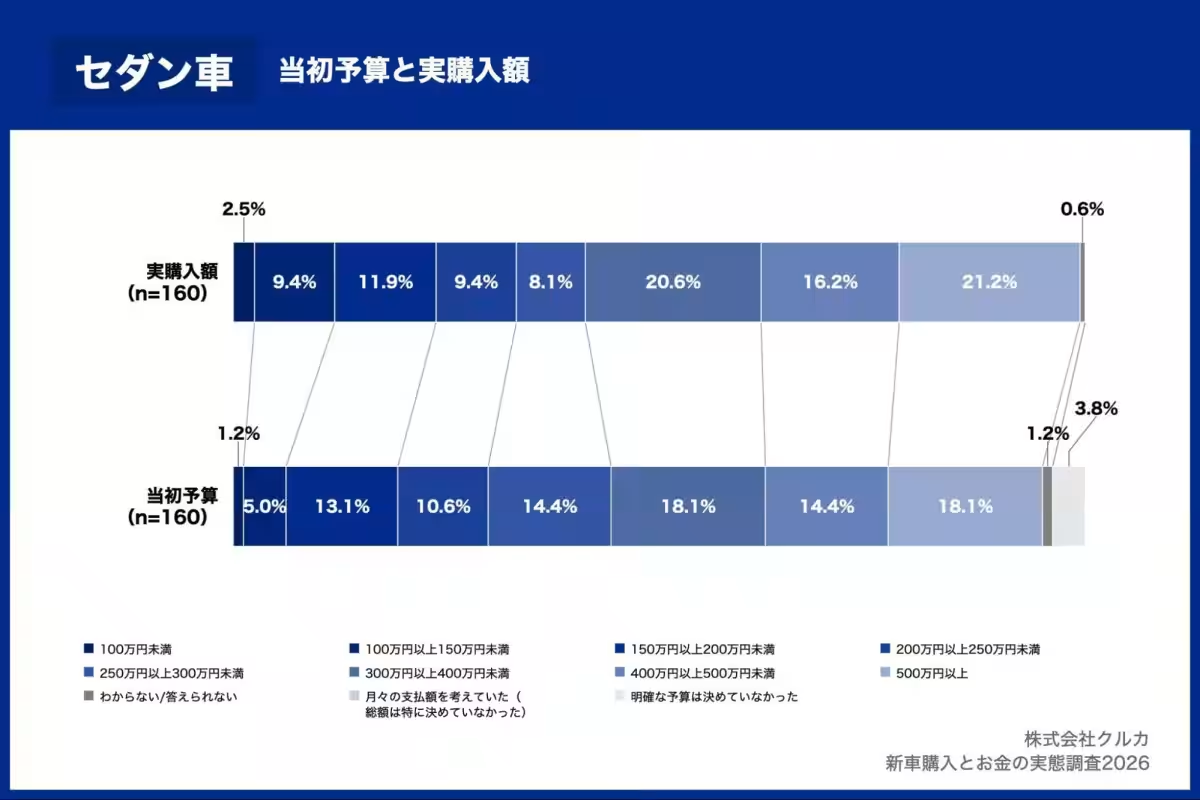
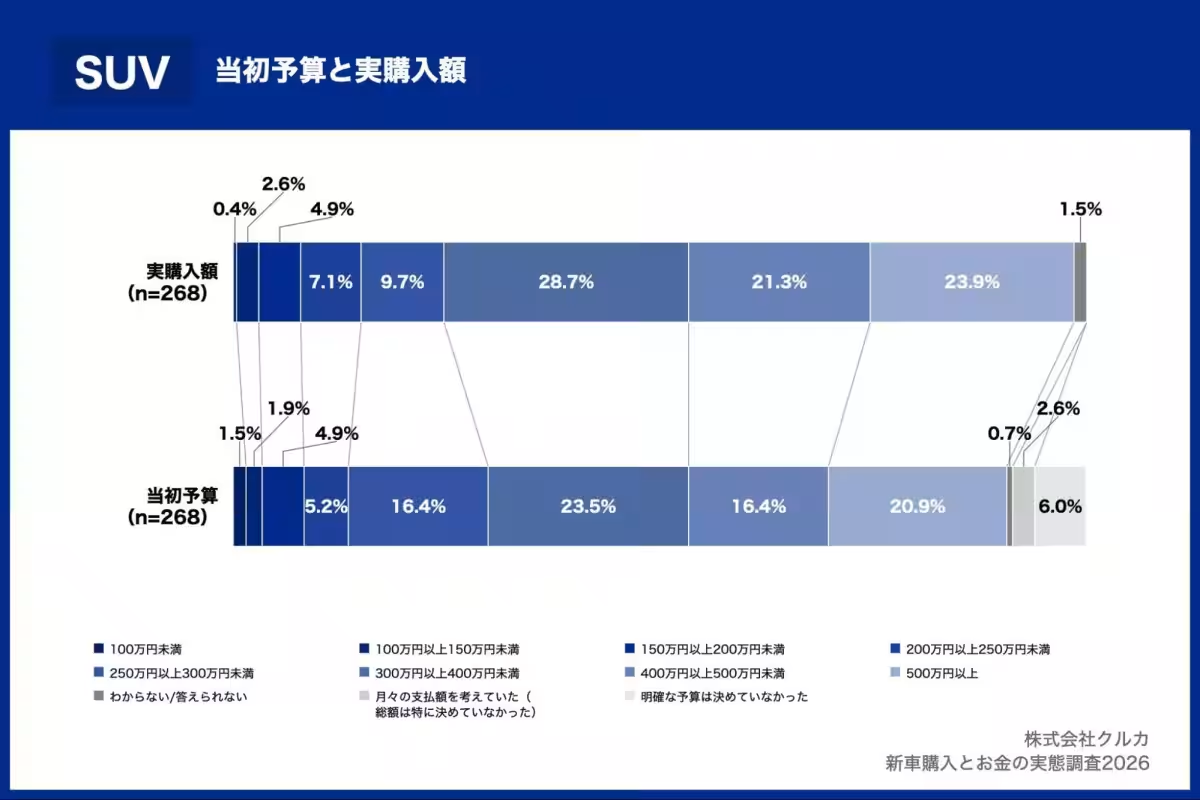
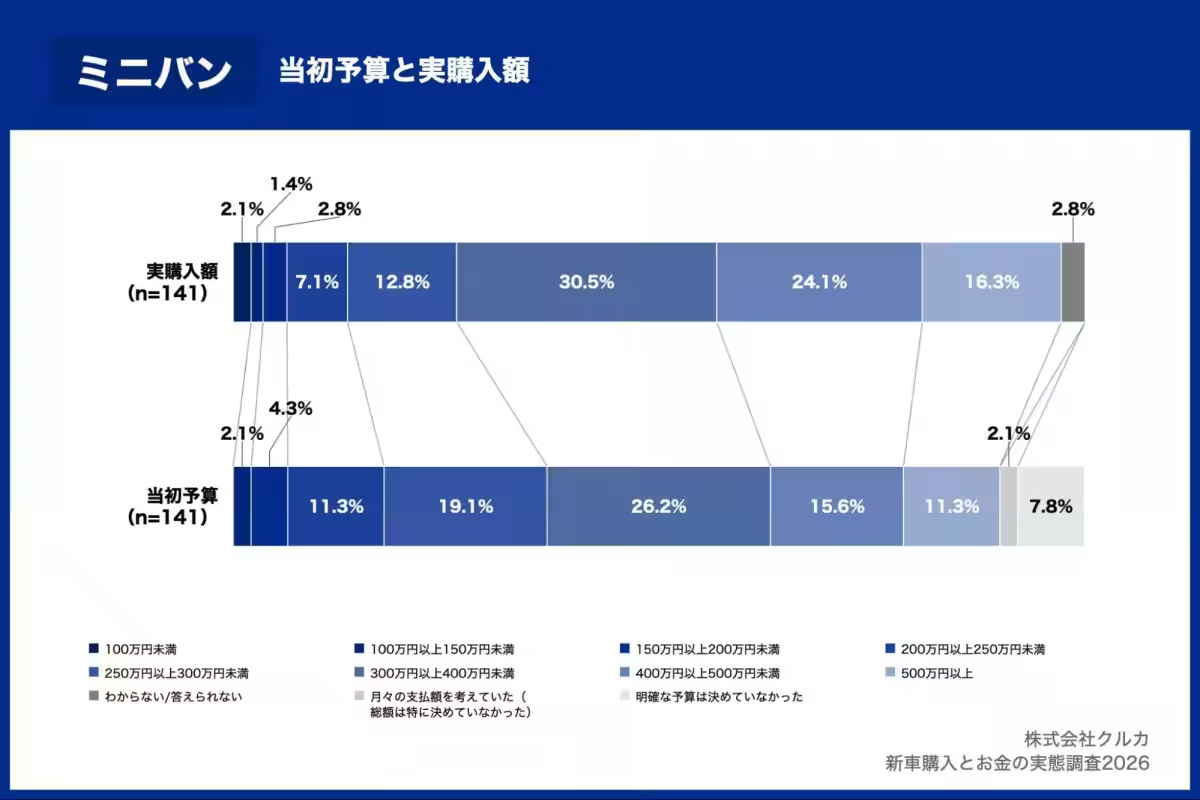
1. Price Ranges: The survey revealed that most consumers tend to gravitate towards vehicles in the price range of 3 to 4 million yen for SUVs and minivans. Interestingly, around 20% also ventured into the high-end market, spending over 5 million yen.
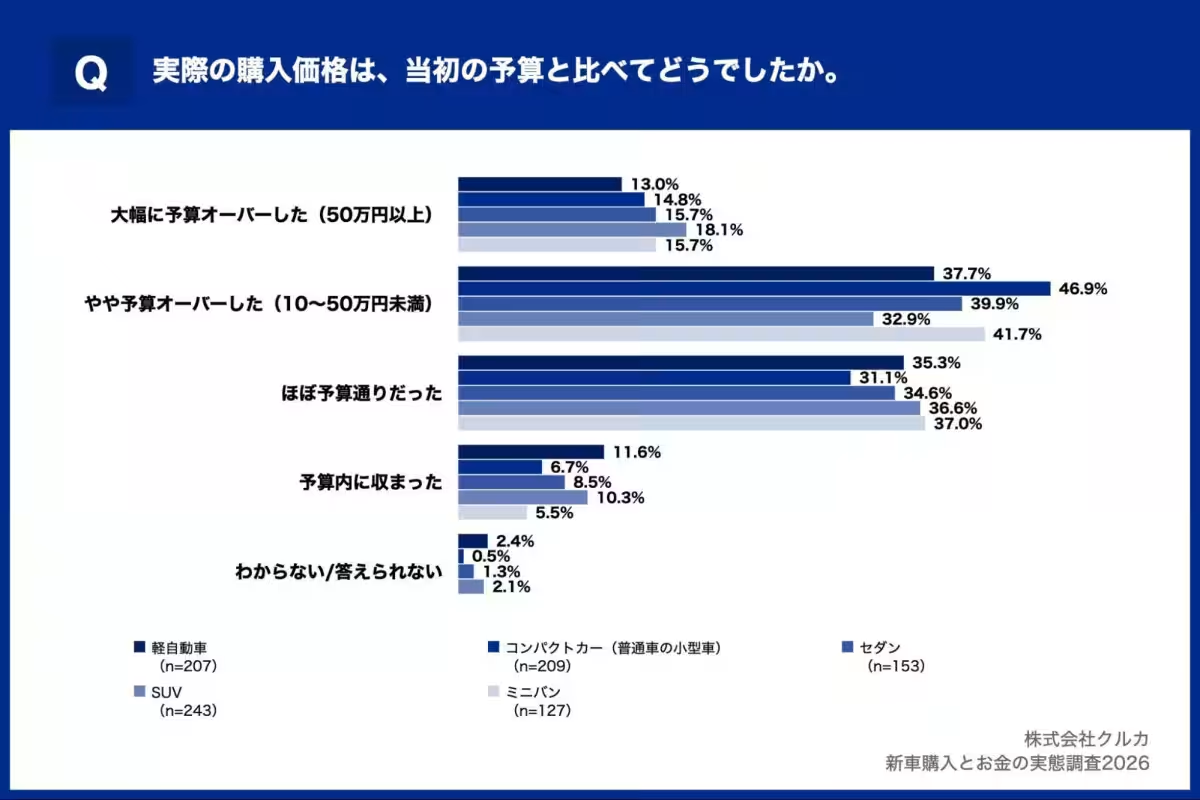
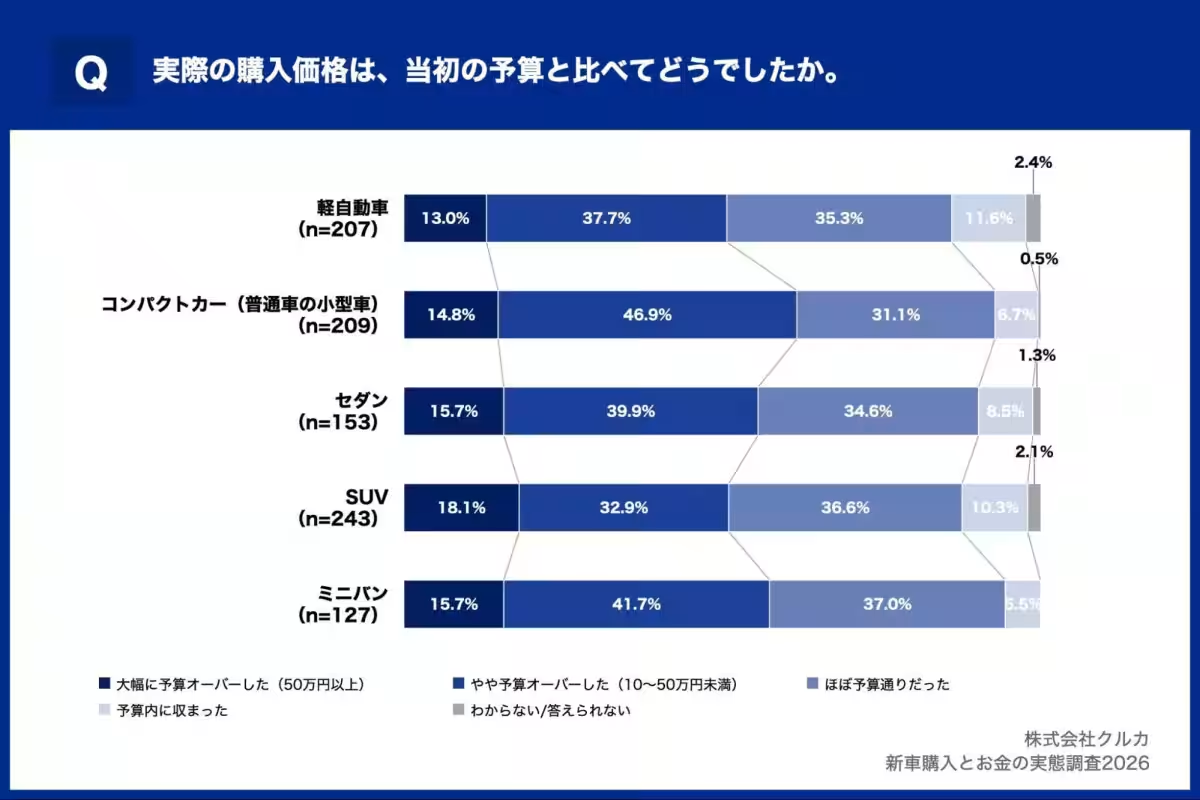
2. Budget Overrun Rates: Compact cars emerged as the frontrunners for exceeding budgets, with 61.7% of buyers reporting this issue. SUVs came next at 51%, followed by minivans at 57.4%.
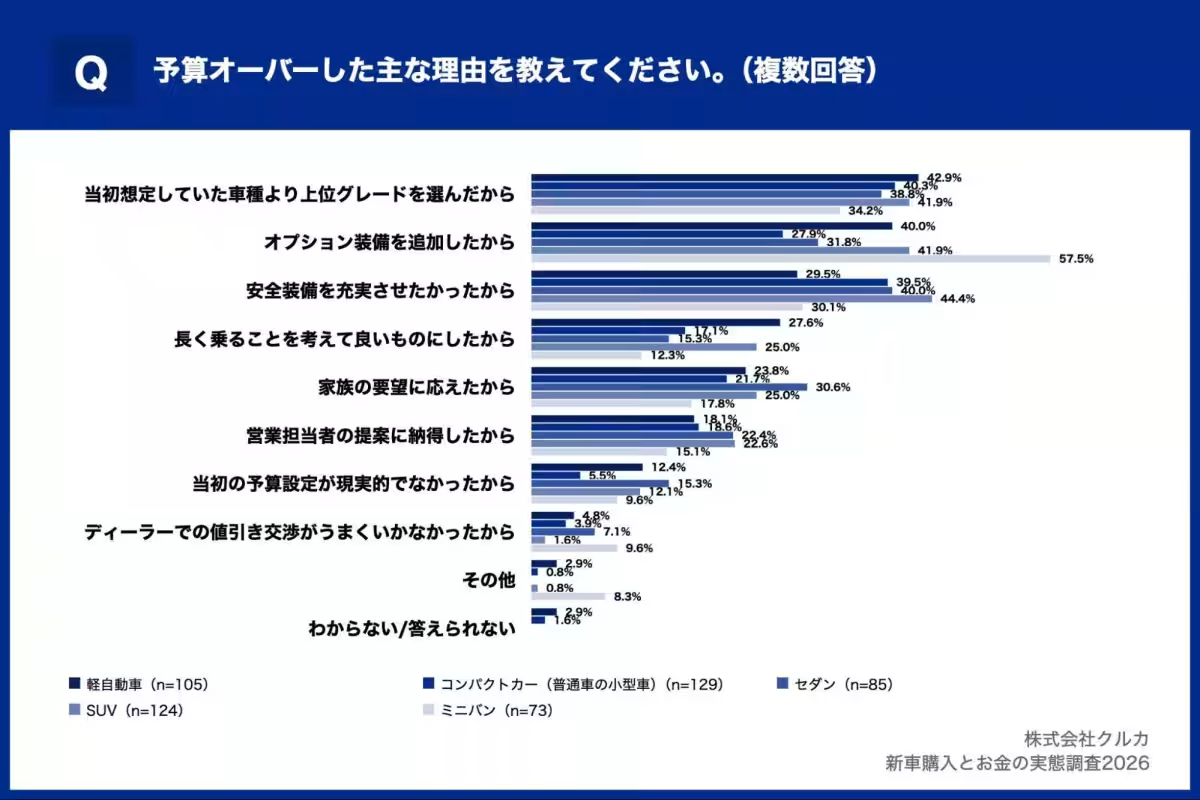
3. Reasons for Budget Overruns: When it comes to minivans, the biggest culprit for exceeding budgets was the addition of optional features, which resonated with family-oriented needs (57.5%).
Survey Methodology
The study, dubbed the "New Car Purchase and Financial Reality Survey 2026," was executed using an internet-based research tool provided by IDEATECH. The survey was conducted over a two-day period from December 4 to December 5, 2025.
Categories Analyzed
The respondents were broken into several categories: light cars, compact cars, sedans, SUVs, and minivans. An examination of how initial budgets compared to actual spending revealed unique trends for each category.
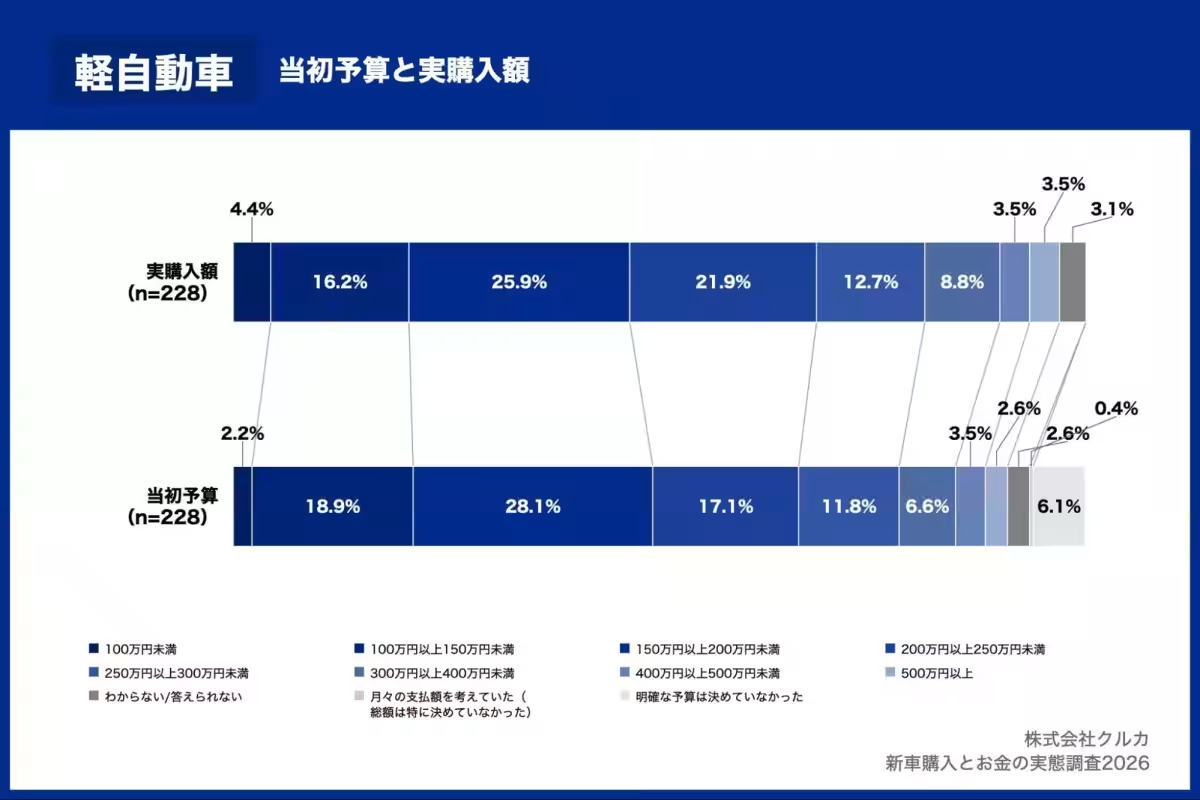
- - Light Cars: The main price bracket was identified as 1.5 to 2 million yen. The buying patterns indicated that a significant portion of buyers ended up spending more than they initially planned.
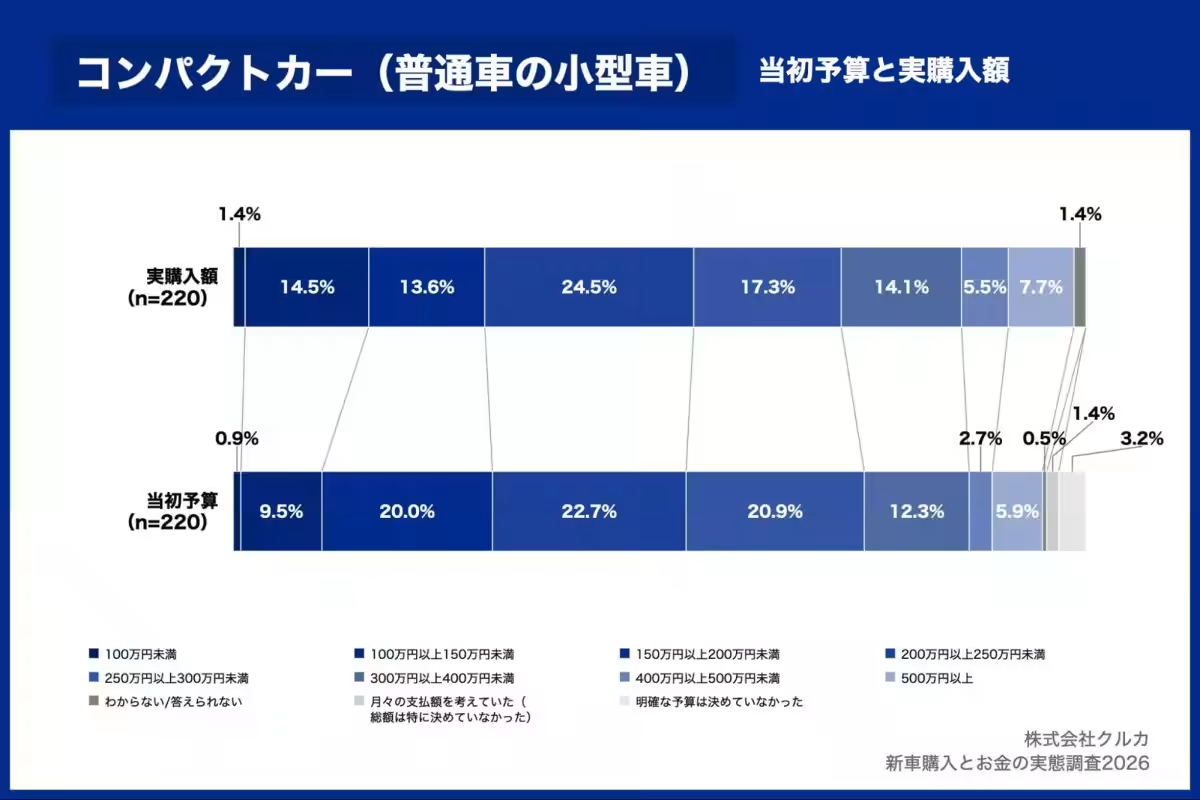
- - Compact Cars accounted for substantial overruns, particularly as they became popular among budget-conscious consumers opting for higher models.
- - Sedans showed a similar trend, as buyers often prioritized safety features, leading to increased spending.
- - SUVs and Minivans displayed a notable shift towards higher price points, with buyers choosing added features that contributed to budget overruns.
Reasons Behind Budget Exceedance
The qualitative aspects of the survey revealed varied reasons for spending more than first planned. For compact cars, many respondents indicated that the choice of higher-tier models contributed to overruns, with 40.3% acknowledging this choice. Safety features were paramount for sedans and SUVs, where around 40% of buyers opted for enhanced safety equipment. Conversely, in the case of minivans, the addition of optional features critically shaped spending decisions, catering to unique family demands.
Insights and Recommendations
The revelations from this survey provide important insight into the evolving tendencies of car buyers. A total of 61.7% of compact car buyers overshot their financial plans, showing a trend that needs addressing, especially for future buyers. As consumers look to purchase vehicles, it is crucial to prioritize what features matter most and simulate potential total costs to avoid unexpected outlays.
In summary, much work remains to ensure that car buyers better manage their budgets. This survey represents just one part of an ongoing investigation into car-buying trends; future publications will delve deeper into how family dynamics influence vehicle budgets.
For more information about flexible new car leasing options, visit Kuruka at New Car Lease.
Topics Consumer Products & Retail)
【About Using Articles】
You can freely use the title and article content by linking to the page where the article is posted.
※ Images cannot be used.
【About Links】
Links are free to use.