



Innovative Method for Rapid Insertion of Genes into Koji Mold Shows Promise for Bio-Manufacturing
Enhancing Bio-Manufacturing with Rapid Gene Insertion into Koji Mold
Overview
The advancement of biotechnology often hinges on innovative methods to improve productivity in the production of valuable secondary metabolites derived from fungi and plants. A collaborative research team from the National Institute of Advanced Industrial Science and Technology (AIST) has successfully developed a technique that streamlines the process of inserting lengthy biosynthetic genes into koji mold, scientifically known as Aspergillus oryzae.
Koji mold is a valuable organism traditionally used in the production of sake, soy sauce, and miso due to its high metabolic activity and safety. However, the conventional methods for gene insertion require extensive time and manipulation, posing challenges in the efficient production of secondary metabolites essential for medicines, pesticides, and functional materials. This article outlines the innovative technique and its implications for future bio-manufacturing processes.
The Methodology
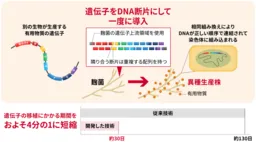
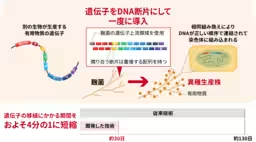
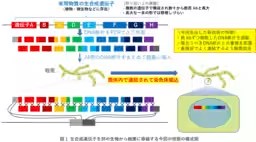
The research team, led by Koichi Tamano, Haruka Takayama, and other esteemed researchers, focused on developing a simplified insertion method for lengthy biosynthetic genes. The gene in question comprised approximately 63,000 base pairs, which was divided into 24 smaller DNA fragments. These fragments were prepared using Polymerase Chain Reaction (PCR) and were able to be introduced into the cells of koji mold simultaneously. Remarkably, this approach has yielded successful reconstitution of the full-length gene in 13 out of 42 colonies tested.
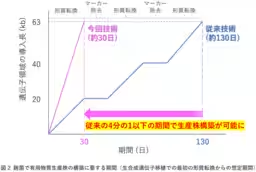
Traditionally, inserting such long and complex genes into koji mold involved intricate cloning processes and multiple rounds of gene transformation, taking around 130 days before genetic integration could even begin. The new technique dramatically reduces this period to approximately 30 days — a reduction to about one-fourth of the original time required. This advancement presents a significant leap towards improving productivity and efficiency in bio-manufacturing.
Implications of the Research
This breakthrough not only allows for faster gene insertion but also eliminates the need for multiple transformations and cloning, streamlining the entire process significantly. As the world increasingly turns to biotechnology for sustainable alternatives in medicine and agriculture, efficient production of secondary metabolites using koji mold becomes a practical solution. The safety of koji mold, which does not produce harmful toxins, further enhances its viability as a host for genetic manipulation.
The broader implications of this technique extend to various industries, enabling the easier and cost-effective production of essential compounds previously difficult or expensive to synthesize chemically. In essence, this method will contribute to a more sustainable and efficient manufacturing paradigm for pharmaceuticals and agrochemicals. As the research progresses, there is potential for enhancing production yields and expanding the types of useful compounds that can be produced with koji mold.
Future Directions
Planned future research will focus on employing this novel gene insertion technique to target other valuable substances requiring long biosynthetic genes. Once the production mechanisms are established, efforts will also be made to enhance the efficiency and yield of these substances in koji mold. The potential applications are vast, and the researchers anticipate exciting developments in the field of biomanufacturing.
Conclusion
In conclusion, the development of this rapid gene insertion method not only addresses the challenges faced in current biosynthetic processes but also paves the way for innovation in producing a variety of useful compounds. The implications of this research promise a transformative effect in the biotechnology realm, ushering in a new era of efficient biomanufacturing practices.
Topics Consumer Products & Retail)




【About Using Articles】
You can freely use the title and article content by linking to the page where the article is posted.
※ Images cannot be used.
【About Links】
Links are free to use.