



Analysis of 2026 National and Public University Application Trends in Japan Amidst Rising Difficulty Levels
In light of the challenges posed by the recent university entrance common test, Kawai Juku has published an insightful report analyzing application trends for the 2026 national and public university entrance exams. The report, aimed at educators, is available on the Keinet Plus website and reveals a notable shift in student preferences influenced by the test's increasing difficulty.
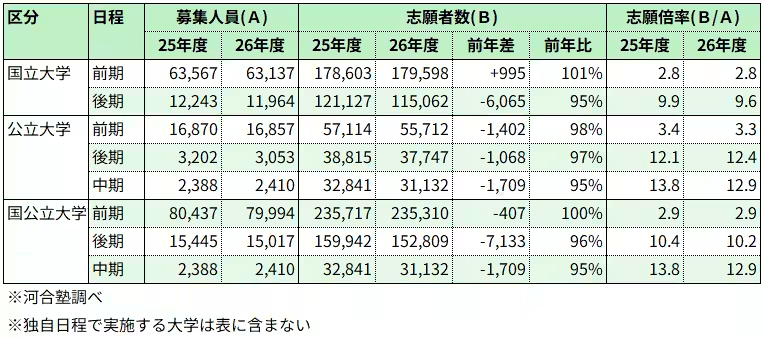
The application period for national and public universities will commence on February 25, and the number of applicants for the first-choice exam remains steady, with a recorded 235,310 candidates matching the previous year's numbers. The application ratio remains constant at 2.8 times. However, a decline in the number of applicants is evident for the middle- and latter-stage examinations, which saw decreases to 96% and 95% compared to last year, respectively. This trend suggests that the increased difficulty of the common test is causing potential candidates to shy away from applying to the typically more competitive middle- and latter-stage exams, which often hold high application ratios in previous years.
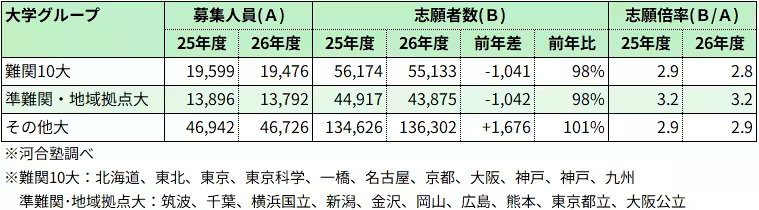
When examining application trends by university group based on entrance difficulty, both the top ten most competitive universities and regional hub universities have reported a slight reduction in applicants, down to 98% compared to last year. Conversely, other universities, which do not fall into these competitive categories, experienced an uptick in applications. This change in dynamics indicates that students who are uncertain of their performance in the entrance common test are seeking out options with higher acceptance rates, demonstrating a clear inclination towards safer choices.
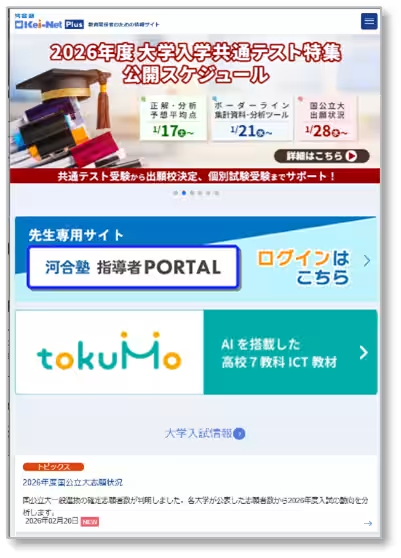
Specifically regarding the ten most competitive national universities, the number of first-choice applicants totaled 55,133, representing 98% when compared to the previous year. The Tokyo Institute of Technology saw the most significant decline in applicants, dropping to 87%. In contrast, other institutions, such as Osaka University and Hitotsubashi University, reported increases in their applicant numbers, at 103% and 104%, respectively. The decline in applicants at the Tokyo Institute of Technology can be attributed to the adjustments in the first stage selection forecast ratios, contributing to concerns among prospective students about their chances of passing to the second stage exam. Furthermore, certain medical fields within this university also faced a decrease in applicants.
For detailed analyses of applicant trends at the ten most competitive universities, as well as breakdowns by region and academic department, educators and other interested parties can visit the Kawai Juku information site, Keinet Plus. The organization also welcomes inquiries regarding comments on these trends. Please feel free to reach out for further information.
Visit the links below for more comprehensive analysis reports on the ongoing 2026 entrance examinations:
We kindly ask media representatives to credit the source as "Kawai Juku Kei-Net Plus" when quoting or reproducing this content.
Overview of Application Trends
The application period for national and public universities will commence on February 25, and the number of applicants for the first-choice exam remains steady, with a recorded 235,310 candidates matching the previous year's numbers. The application ratio remains constant at 2.8 times. However, a decline in the number of applicants is evident for the middle- and latter-stage examinations, which saw decreases to 96% and 95% compared to last year, respectively. This trend suggests that the increased difficulty of the common test is causing potential candidates to shy away from applying to the typically more competitive middle- and latter-stage exams, which often hold high application ratios in previous years.
Shift Toward Safety in Choices
When examining application trends by university group based on entrance difficulty, both the top ten most competitive universities and regional hub universities have reported a slight reduction in applicants, down to 98% compared to last year. Conversely, other universities, which do not fall into these competitive categories, experienced an uptick in applications. This change in dynamics indicates that students who are uncertain of their performance in the entrance common test are seeking out options with higher acceptance rates, demonstrating a clear inclination towards safer choices.
Detailed Insights from Top National Universities
Specifically regarding the ten most competitive national universities, the number of first-choice applicants totaled 55,133, representing 98% when compared to the previous year. The Tokyo Institute of Technology saw the most significant decline in applicants, dropping to 87%. In contrast, other institutions, such as Osaka University and Hitotsubashi University, reported increases in their applicant numbers, at 103% and 104%, respectively. The decline in applicants at the Tokyo Institute of Technology can be attributed to the adjustments in the first stage selection forecast ratios, contributing to concerns among prospective students about their chances of passing to the second stage exam. Furthermore, certain medical fields within this university also faced a decrease in applicants.
For detailed analyses of applicant trends at the ten most competitive universities, as well as breakdowns by region and academic department, educators and other interested parties can visit the Kawai Juku information site, Keinet Plus. The organization also welcomes inquiries regarding comments on these trends. Please feel free to reach out for further information.
Visit the links below for more comprehensive analysis reports on the ongoing 2026 entrance examinations:
- - 2026 National University Application Trends Report
- - Kei-Net Plus
- - Analysis of Common Entrance Test Conditions
We kindly ask media representatives to credit the source as "Kawai Juku Kei-Net Plus" when quoting or reproducing this content.
Topics Other)
【About Using Articles】
You can freely use the title and article content by linking to the page where the article is posted.
※ Images cannot be used.
【About Links】
Links are free to use.