




Survey Reveals Urgent Need for Financial Education Among Parents
Understanding the Financial Education Gap
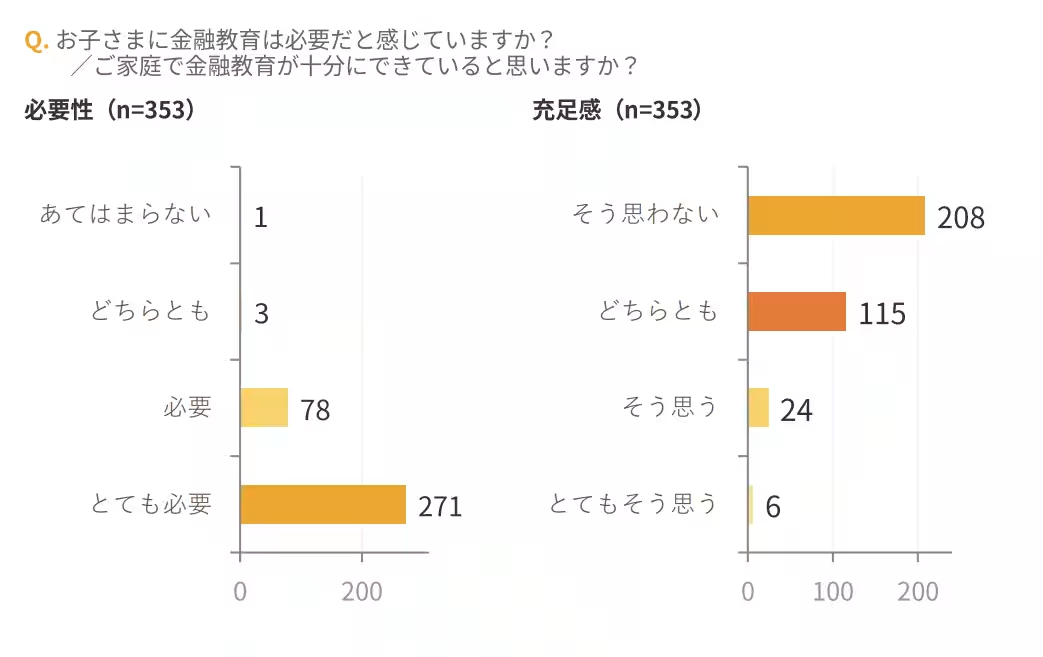
A recent report from the Kids Money School, under the auspices of the Japan Children's Resilience Development Association, illuminates a pressing issue in modern parenting. In a survey of 353 parents, an overwhelming 98.9% acknowledged the necessity of financial education for their children. However, the stark reality is that 91.5% of these parents admitted to not providing sufficient financial training, indicating a significant gap between awareness and action.
The Dual Perspectives of Awareness and Practice
The survey's findings presented several key insights:
1. Necessity vs. Satisfaction: Although parents understand that financial education is crucial, they often feel ill-prepared to implement it effectively. This dissonance suggests a widespread recognition of financial literacy's importance against a backdrop of inadequate practical application at home.
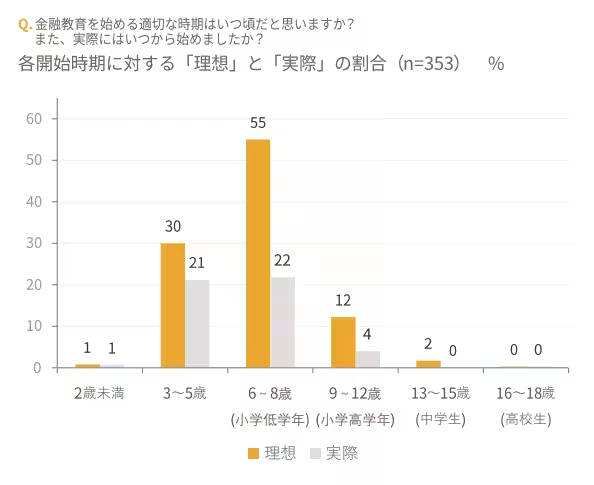
2. Ideal vs. Actual Initiation: The desire to begin financial education early is echoed by 85.8% of parents who wish to start this education by the early elementary years. Yet, the data show that nearly half of these families have yet to take any steps toward this goal.
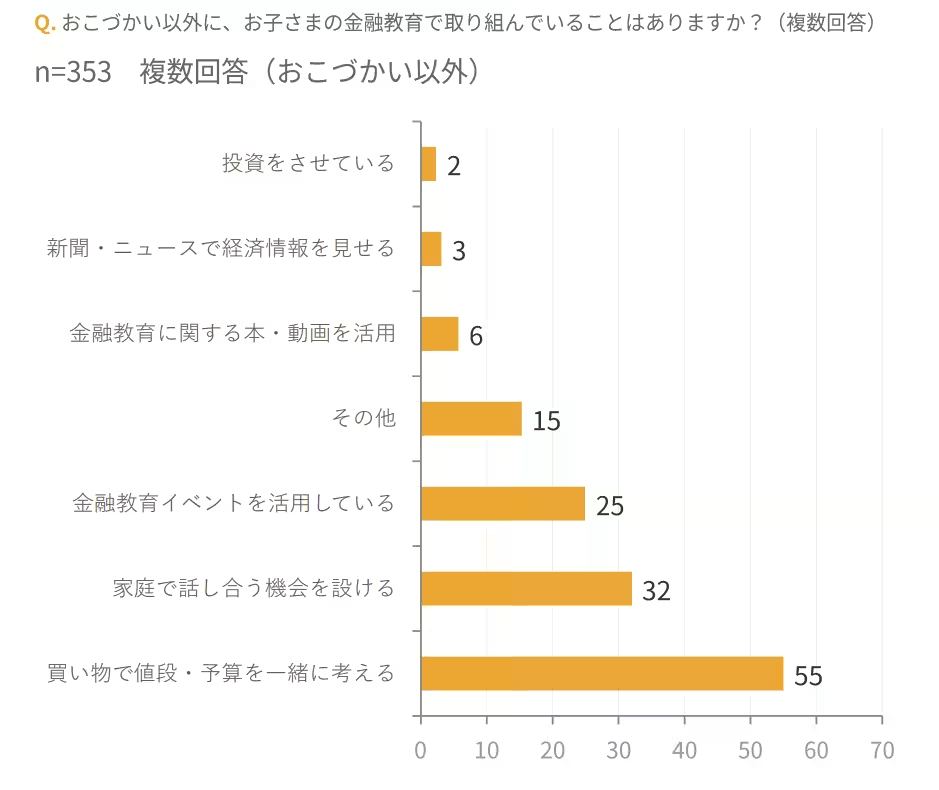
3. Concrete Steps in Financial Education: The report emphasizes the lack of accessible methods and resources, which leaves parents hesitant about initiating such education. Many parents find themselves unsure about where to start, indicating a further need for structured guidance and support.
Strategic Changes in the Financial Education Landscape
Recent developments in Japan's educational framework, including the mandatory integration of asset formation classes in high school curricula starting in April 2022, signify a shift toward a stronger emphasis on financial literacy for children. Additionally, proposed reforms to the Junior NISA aimed for fiscal year 2026 promise greater accessibility to financial tools for young learners.
Nevertheless, despite these institutional changes, the survey highlights that personal financial literacy among parents remains low. The combination of insufficient knowledge and lack of practical techniques contributes significantly to the reluctance many feel about embarking on teaching their children.
Bridging the Gap with Kids Money School
In response to these findings, the Kids Money School initiative aims to provide practical solutions to this educational shortfall. The association sees the survey results as an indicator of a critical societal issue needing attention and resolution. The goal is to empower parents and foster an environment where children can learn about the significant realities of handling money early in their lives.
The Kids Money School offers participatory events that engage both parents and children in fun, interactive learning experiences about finance. Such programs not only aim to bridge the critical gap identified in the survey but also cultivate a more financially literate generation.
During the summer break, these sessions will take place across various locations nationwide, providing necessary tools and strategies for families to take their first steps in financial education.
For those interested in more details about the upcoming schedules for the Kids Money School, you can visit Kids Money School Schedule.
For media inquiries or further information, please reach out to our office as we are open to accommodating requests from journalists and journalists alike.


Topics Other)







【About Using Articles】
You can freely use the title and article content by linking to the page where the article is posted.
※ Images cannot be used.
【About Links】
Links are free to use.