




Building a Dataset for VTLA Model through Manufacturing Site Data Collection
Construction of a Dataset for the VTLA Model
In an innovative move, Kawasaki Heavy Industries, Osaka University, Fanuc, FingerVision, and Yaskawa Electric Corporation have joined forces to develop a dataset aimed at establishing a new VTLA (Vision-Tactile-Language-Action) model. This initiative has received approval from Japan's Ministry of Economy, Trade and Industry and NEDO (New Energy and Industrial Technology Development Organization) as part of their research and development project focusing on strengthening post-5G information communication infrastructure and data ecosystem formation.
Project Overview
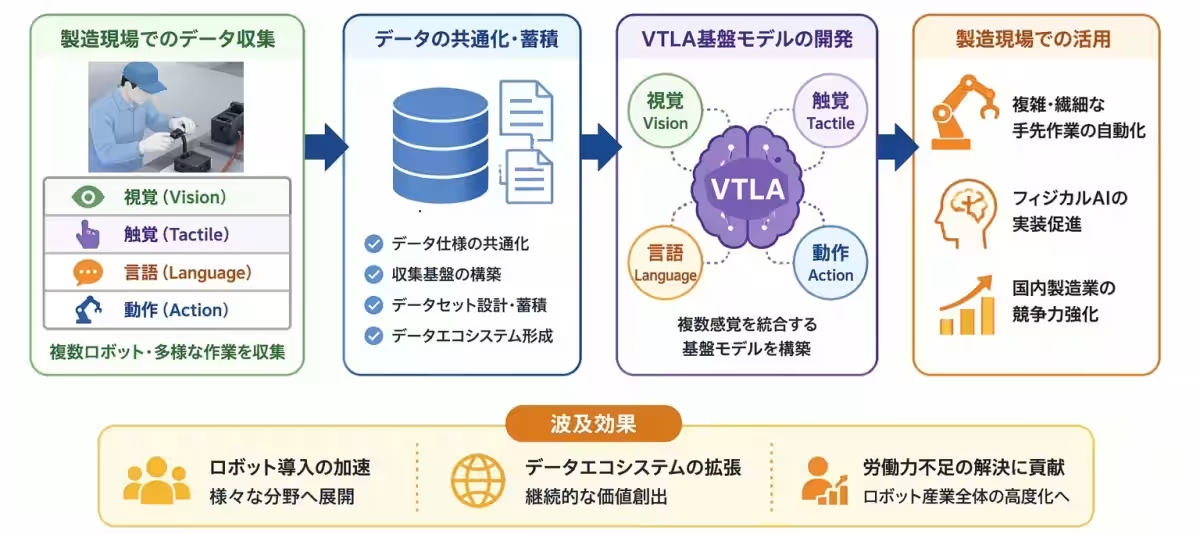
This project intends to accelerate the implementation of Physical AI in manufacturing environments, addressing the challenges posed by the dwindling number of skilled workers and the need for advanced automation solutions. By integrating data related to vision, tactile feedback, language, and actions into the VTLA model, the collaboration aims to facilitate the automation of complex, delicate manual tasks that have been traditionally resistant to automation technologies.
Between August 2026 and July 2027, the project will involve collaboration with various organizations, including ABEJA and the National Institute of Advanced Industrial Science and Technology. The main objective is to gather and analyze data comprehensively, paving the way for advanced foundational technologies in robotics and AI.
Challenges in Japanese Manufacturing
Currently, Japan's manufacturing sector is grappling with various challenges, including a shortage of skilled labor and the need for more sophisticated and varied production methods. Traditional automation technologies struggle to keep pace with these requirements, and there is an increasing demand for AI applications that incorporate non-visual sensory information, such as touch and force. This rising expectation can potentially unlock new capabilities in automation, transforming how tasks are performed in manufacturing settings.
International Competitive Landscape
As the competition accelerates in the AI and robotics sectors globally, leveraging Japan's long-standing accumulation of high-quality and reliable manufacturing data is becoming crucial to enhancing industrial competitiveness. This project seeks to develop a data foundation and model technology that can synthesize multiple sensory inputs—like vision and touch—to achieve the seamless automation of complex tasks in manufacturing.
Key Points of the Project
1. Common Data Standards: Three leading robot manufacturers will collaboratively establish a standard for data collection, ensuring that the dataset can be utilized across various robots and devices.
2. Rapid Development: Conscious of the fast-evolving nature of technology, the project aims to develop the VTLA model and its dataset quickly to foster an early data ecosystem.
3. Collaboration with Experts: The initiative will engage with startups and academic institutions to validate the VTLA model, particularly focusing on tactile information domains.
By unifying the efforts of the robotics industry, this project aims to boost robot deployment not only in manufacturing but across various sectors, contributing to solutions for societal challenges such as decreasing labor forces. Even after its completion, there will be ongoing efforts to extend the data ecosystem developed through this initiative, enhancing the overall sophistication of the robotics industry.
Conclusion
The establishment of the VTLA model through the collaboration of these organizations heralds a new era in automation and AI in manufacturing. By addressing key challenges related to skill shortages and production complexity, this project is poised to provide vital advancements that drive the future of robotics and its applications in various fields.
For more information, you can find the official press release from Japan's Ministry of Economy, Trade, and Industry here. For inquiries related to this project, please contact Kawasaki Heavy Industries or the relevant parties mentioned in the details provided.


Topics Consumer Technology)
【About Using Articles】
You can freely use the title and article content by linking to the page where the article is posted.
※ Images cannot be used.
【About Links】
Links are free to use.