



Exploring Marketing Growth Strategies in the AI Era: Insights from Marketing Agenda 2026
Marketing Growth Strategies at the Marketing Agenda 2026
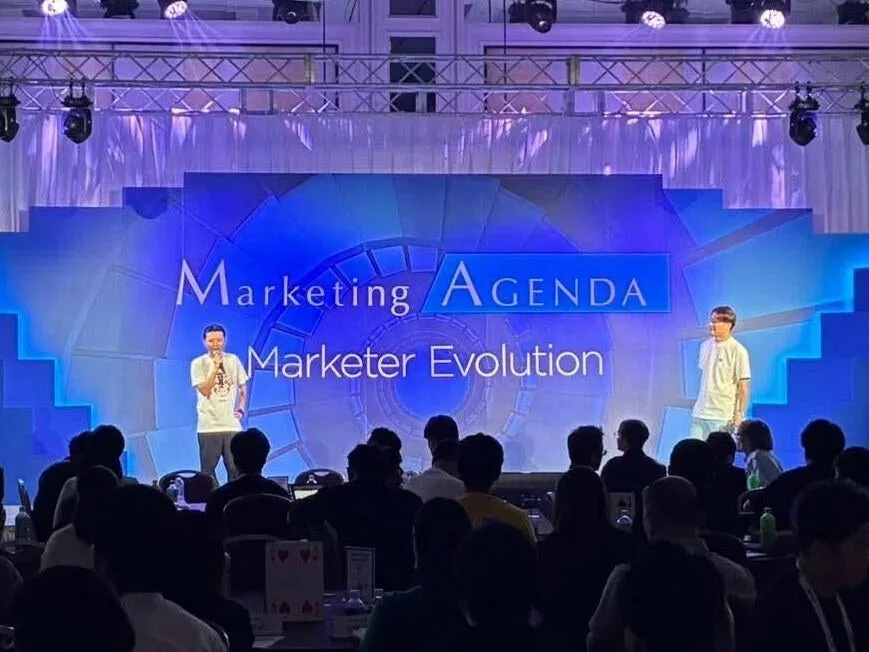
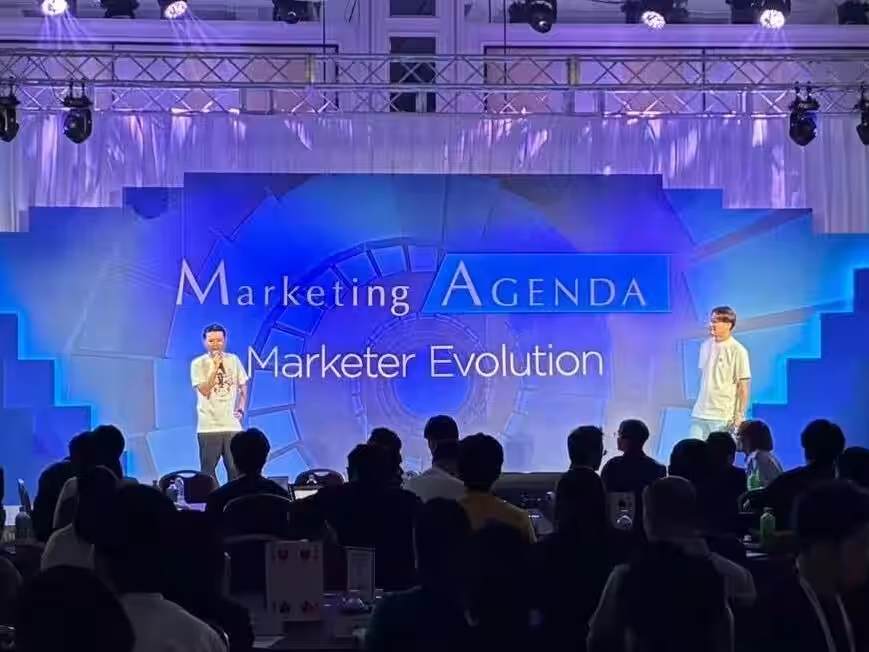
The latest Marketing Agenda 2026 conference took place from June 2 to June 4 in Japan, bringing together some of the finest minds in the marketing industry. One of the highlights was the presentation by Kenta Fujiwara, CEO of Macbee X, a subsidiary of Macbee Planet, alongside Yukiyuki Tanabe from Monex Securities. Their session, titled "Marketing Growth Strategies Utilizing Data and AI," emphasized the crucial connection between marketing efforts and business growth amidst the evolving landscape of digital marketing.
The Changing Landscape of Digital Marketing
In recent years, the environment surrounding digital marketing has undergone significant changes. High advertising expenses, modifications in tracking due to cookie regulations, and increasingly diverse consumer touchpoints mean that traditionally evaluating marketing performance by individual channels, such as Cost Per Acquisition (CPA) or Return on Ad Spend (ROAS), has become inadequate for assessing marketing investment effectiveness.
Moreover, the advent of generative AI is altering consumer behavior. Rather than individually comparing search results, people are increasingly relying on AI to provide synthesized answers and insights. Companies must now go beyond merely tracking inbound numbers and clicks; they need to understand how consumers remember, compare, and choose their brands across multiple touchpoints.
Redefining Evaluation Metrics in Marketing
The session discussed Monex Securities' growth strategies, focusing on comprehensive discussions involving advertising management, data infrastructure, long-term value (LTV) assessments, and information design in the age of AI. The nature of marketing is evolving — it should now be viewed as directly contributing to business growth rather than merely improving advertising operations.
Internal Capability vs. External Partnerships
A pivotal topic was designing the marketing framework within businesses. Organizations grapple with the decision of how much of their marketing operation should be in-house versus outsourced. Tanabe highlighted that while Monex Securities values in-house capabilities, it's often impractical to rely solely on internal resources, especially in sectors like AI and data tracking that demand rapid adaptability and specialized knowledge.
Fujiwara elaborated that Macbee X engages in not only advertising operations but also in developing tracking methodologies and data analytics, emphasizing a holistic approach to marketing performance. By clarifying the strategic decisions organizations must retain internally while leveraging external expertise in specific areas, companies can create a system that adds value exceeding their initial output.
Shift from Channel-centric to Comprehensive ROAS Optimization
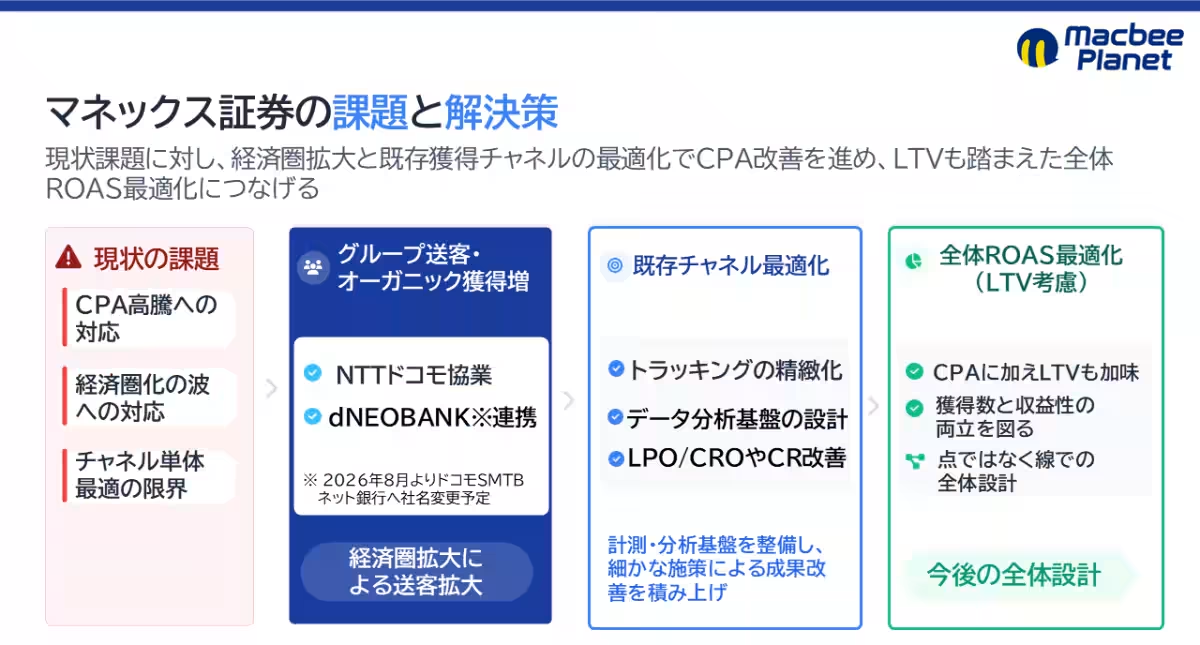
The session progressed to discuss the challenges faced by Monex Securities regarding customer acquisitions and the design of future marketing strategies. Tanabe stressed the difficulty of controlling CPA, noting that factors like the recent changes following the introduction of the new NISA program and the influence of AI searches are altering traditional customer acquisition pathways.
Monex is now actively exploring collaborative opportunities, such as partnering with NTT Docomo, to expand customer engagement fronts within a broader economic framework. The session pointed out the limitations of evaluating performance solely on individual channels, raising the importance of understanding the collective ROAS — how various channels can work together to improve overall performance and profitability.
The Necessity of Data Infrastructure for ROAS and LTV Management
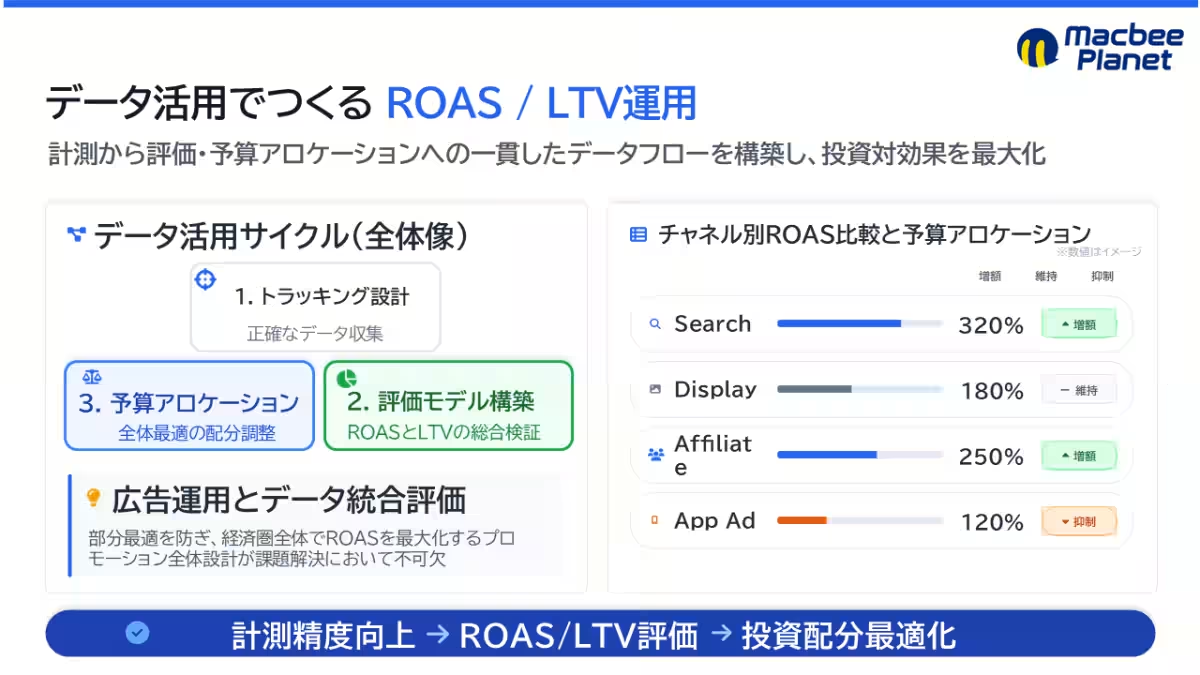
Effective management of ROAS and LTV requires a foundation of accurate data collection and evaluation readiness. Tanabe pointed out the complexities of LTV design in the finance sector, where account closure is rare, and customer reinvigoration can take considerable time. Hence, creating an ideal definition for LTV is not straightforward.
Companies frequently face data fragmentation and measurement challenges, and as Fujiwara outlined, it is integral to establish a robust data warehouse and customer data platform (CDP) to overcome these hurdles. The shift in focus must not only lie in ad performance metrics but also encompass the strategic design of tracking and evaluation methodologies.
AI Marketing: Balancing Broadening and Narrowing Strategies
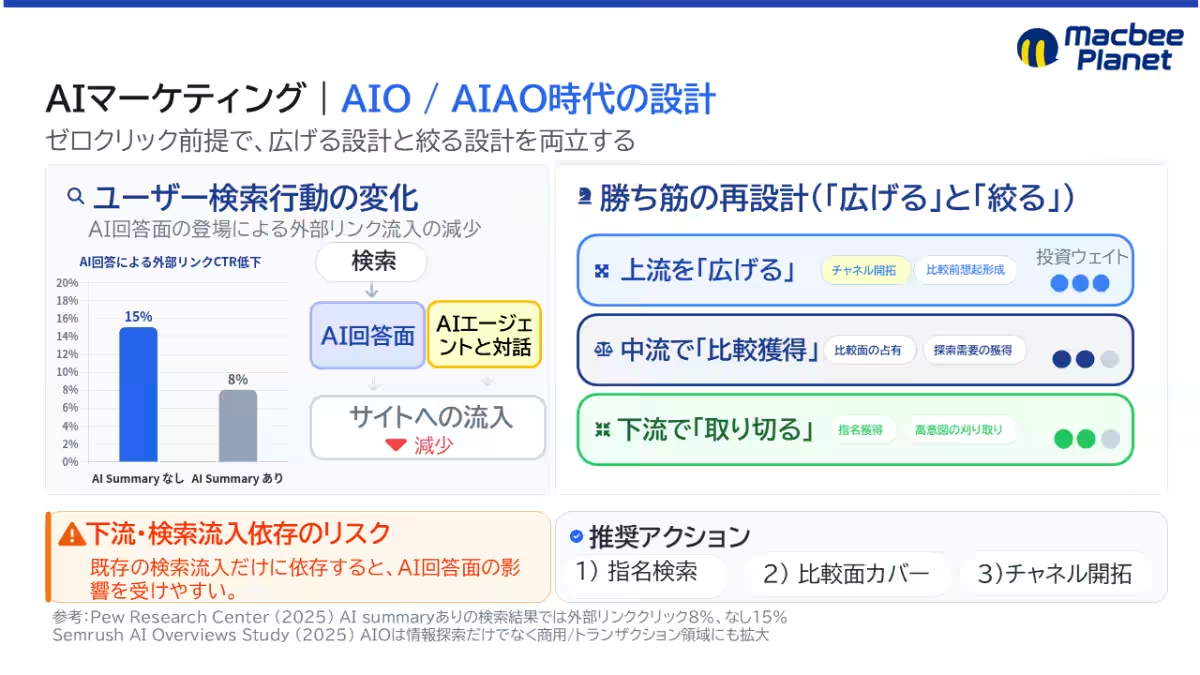
The final topic addressed was the impact of generative AI on marketing. With the growing prevalence of AI, consumer search behavior is changing, necessitating a two-pronged marketing strategy that both broadens engagement and narrows focus on key consumer touchpoints.
Fujiwara explained that brands must foster connections with potential customers outside of traditional search engine marketing, creating brand recall at the initial consideration phase. Simultaneously, it's critical to refine the approach toward media and content that is closer to purchase, ensuring high-intent users are effectively captured.
As the influence of AI continues to grow, understanding how brands are perceived across various platforms and information sources becomes essential. Rather than tracking search rankings alone, marketers must monitor how their brand is represented in AI responses and how it stands in comparison to competitors. This shift emphasized the need for an effective AIAO monitoring environment, with benchmarks to identify bottlenecks in customer acquisition and adjust strategies accordingly.
Conclusion
In summary, the Marketing Agenda 2026 highlighted the imperative for future marketers to embrace a strategic blend of data-driven insights, adaptability in operations, and a comprehensive understanding of evolving consumer behaviors influenced by AI. As the landscape continues to shift, those who can navigate these changes will lead the charge in successful, long-term business growth.


Topics Consumer Technology)
【About Using Articles】
You can freely use the title and article content by linking to the page where the article is posted.
※ Images cannot be used.
【About Links】
Links are free to use.