



Navigating the Challenges of Risk Management in Manufacturing Engineering Amid Work Style Reform
In a recent survey conducted by KUMU Works, a Tokyo-based company specializing in data platform sales, insights were uncovered regarding the experiences of manufacturing design and development engineers regarding the management of component risks amidst the push for work style reform. This reform, aimed at improving labor conditions, has inadvertently reduced working hours for many engineers, leading to significant challenges.
While work style reforms strive to enhance working conditions, manufacturing has faced a pressing need to manage component risks due to instabilities in the supply chain, such as supply disruptions and discontinuations. Engineers are increasingly finding it difficult to allocate sufficient time to verify these risks in the design phase, leading to higher rates of rework in later stages of production. This presents an increasingly heavy dilemma between sustaining quality and adhering to the principles of work style reform. By investigating the current state of risk verification and its implications on business, KUMU Works aims to bring clarity to this pressing issue.
The survey revealed several crucial findings:
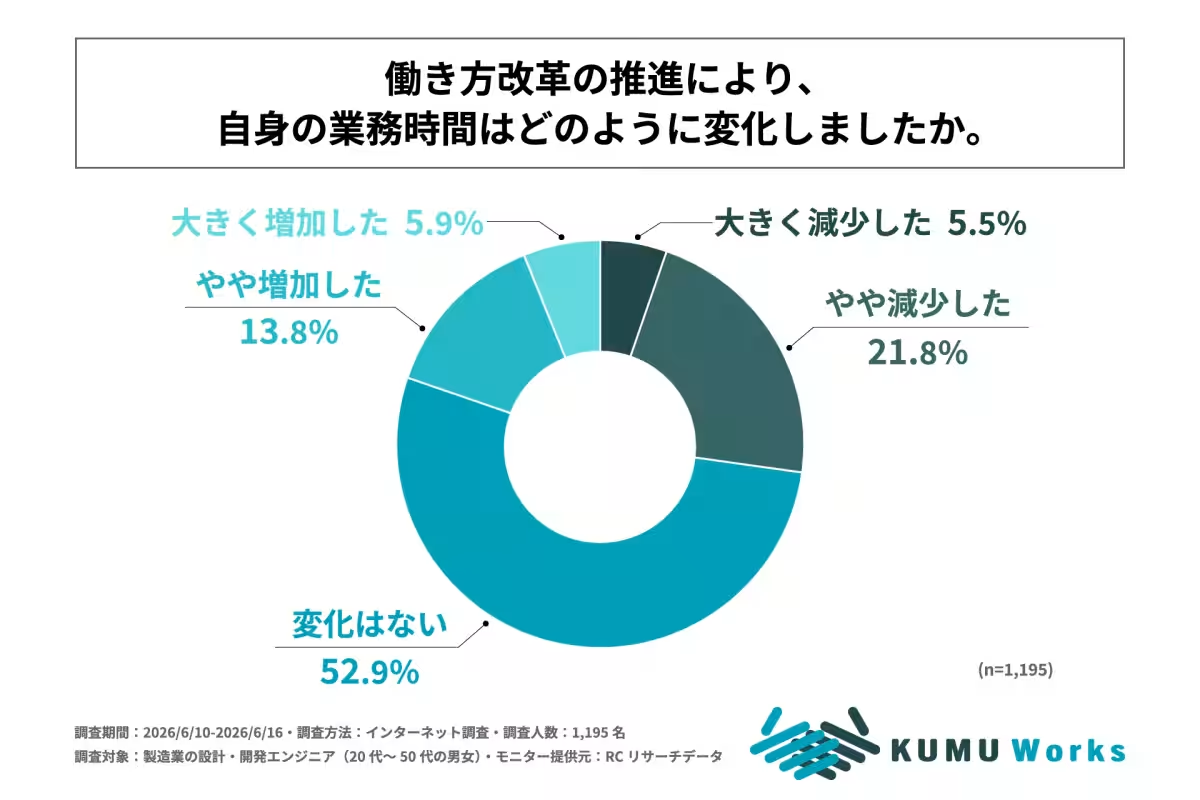
While more than half of respondents indicated no changes to their work hours following reforms, significant numbers reported reductions. Specifically, 21.8% reported a slight decrease, and 5.5% a substantial decrease, combining for an insightful 27.3% of engineers indicating a personal loss in time.
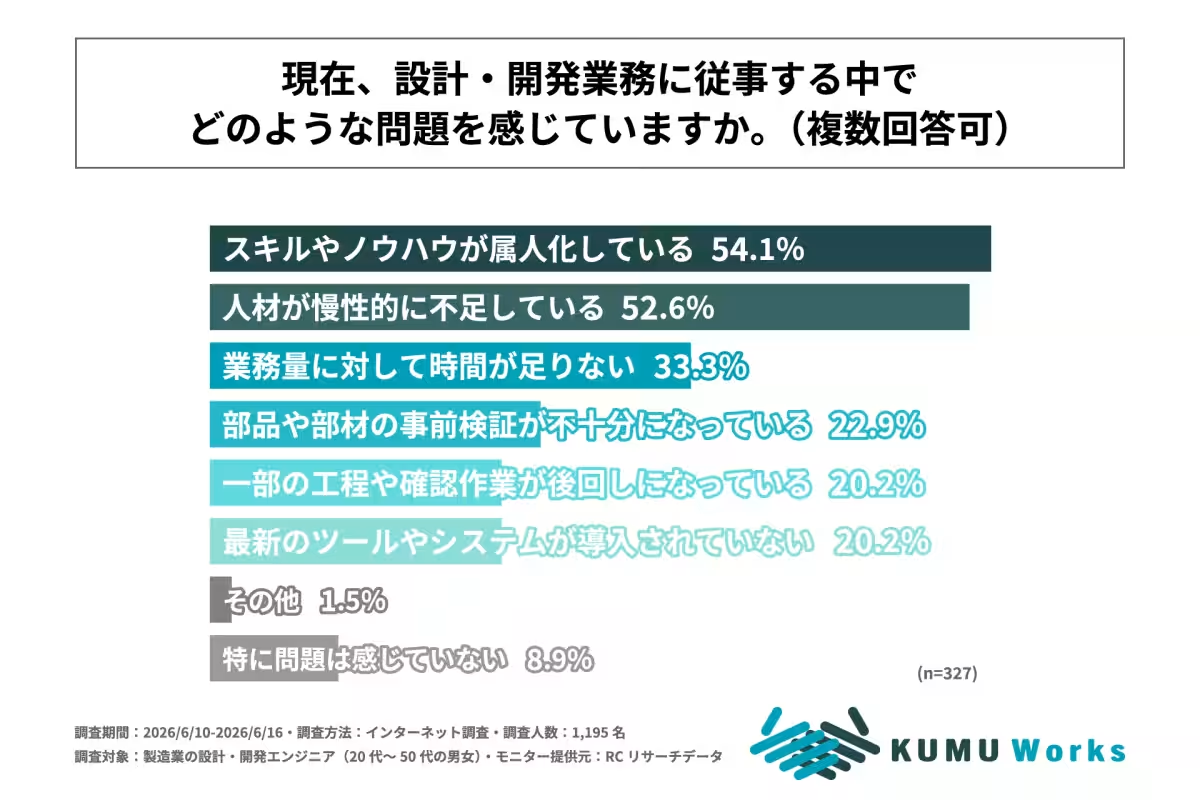
The survey also explored the primary challenges faced by engineers in manufacturing: the personal accumulation of skills (54.1%), ongoing staff shortages (52.6%), and insufficient time compared to workload (33.3%).
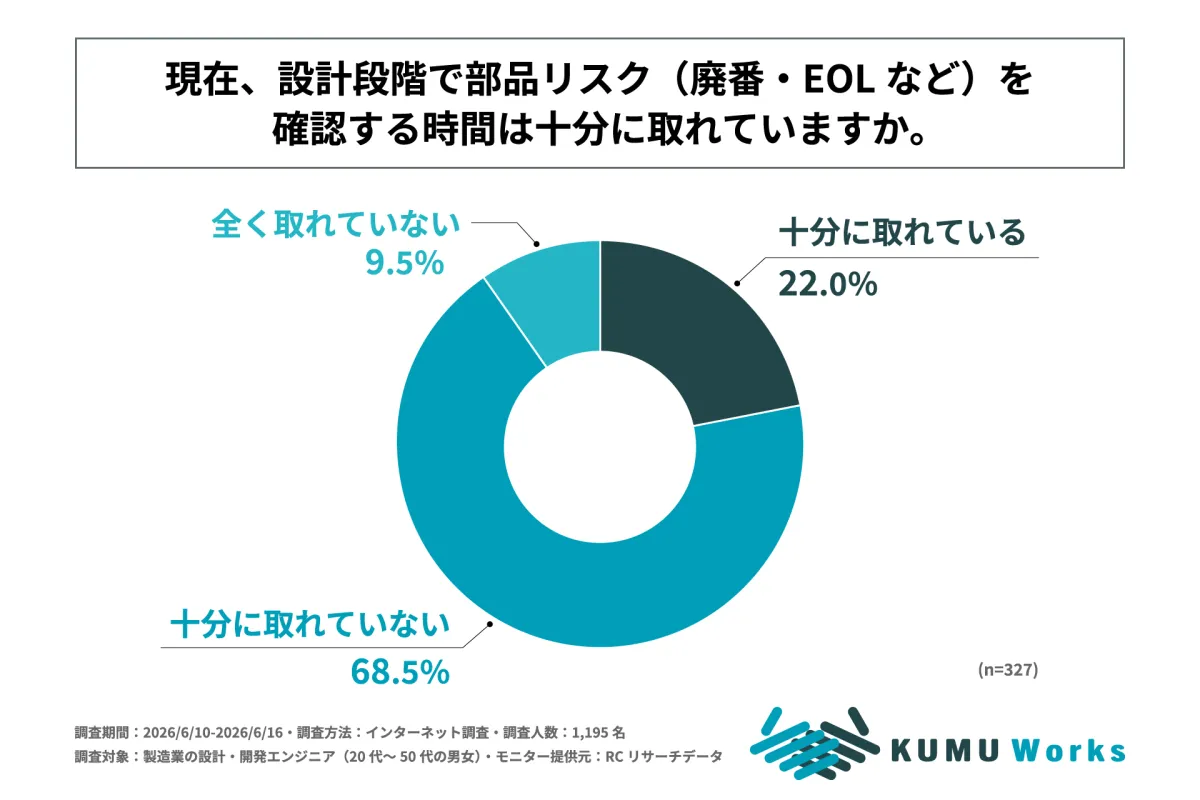
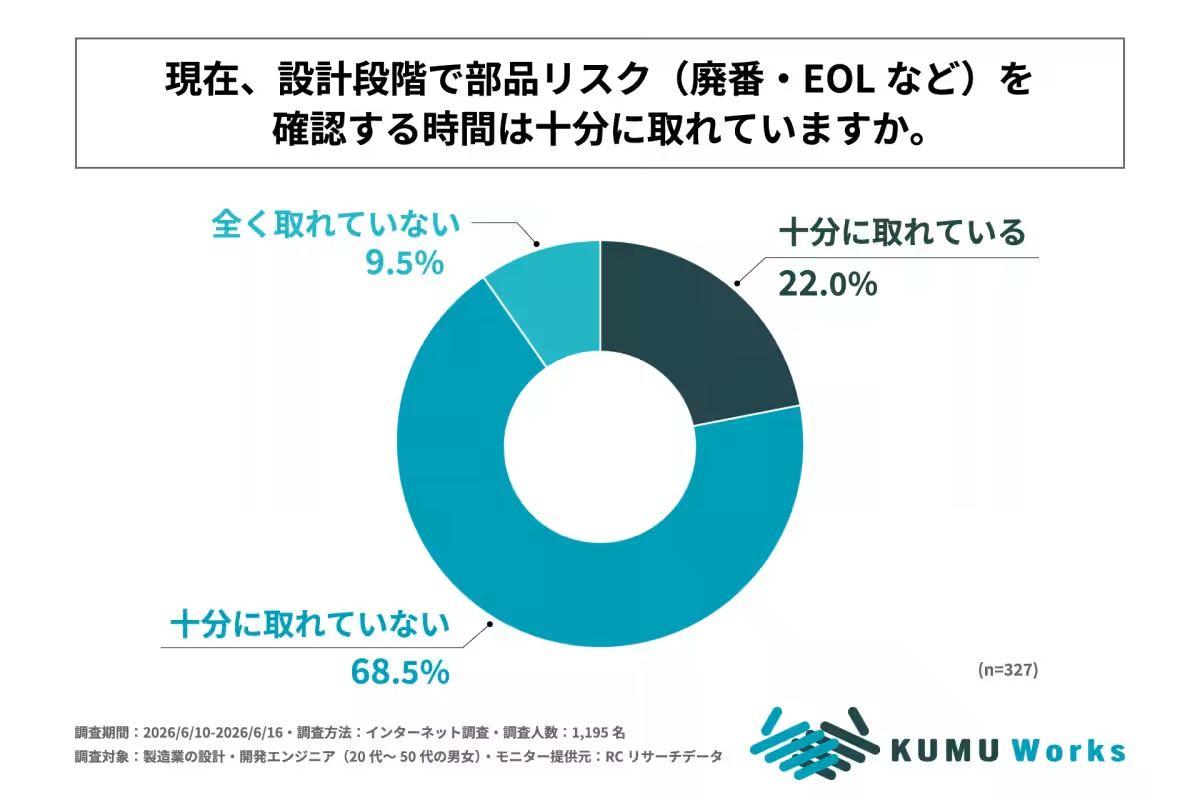
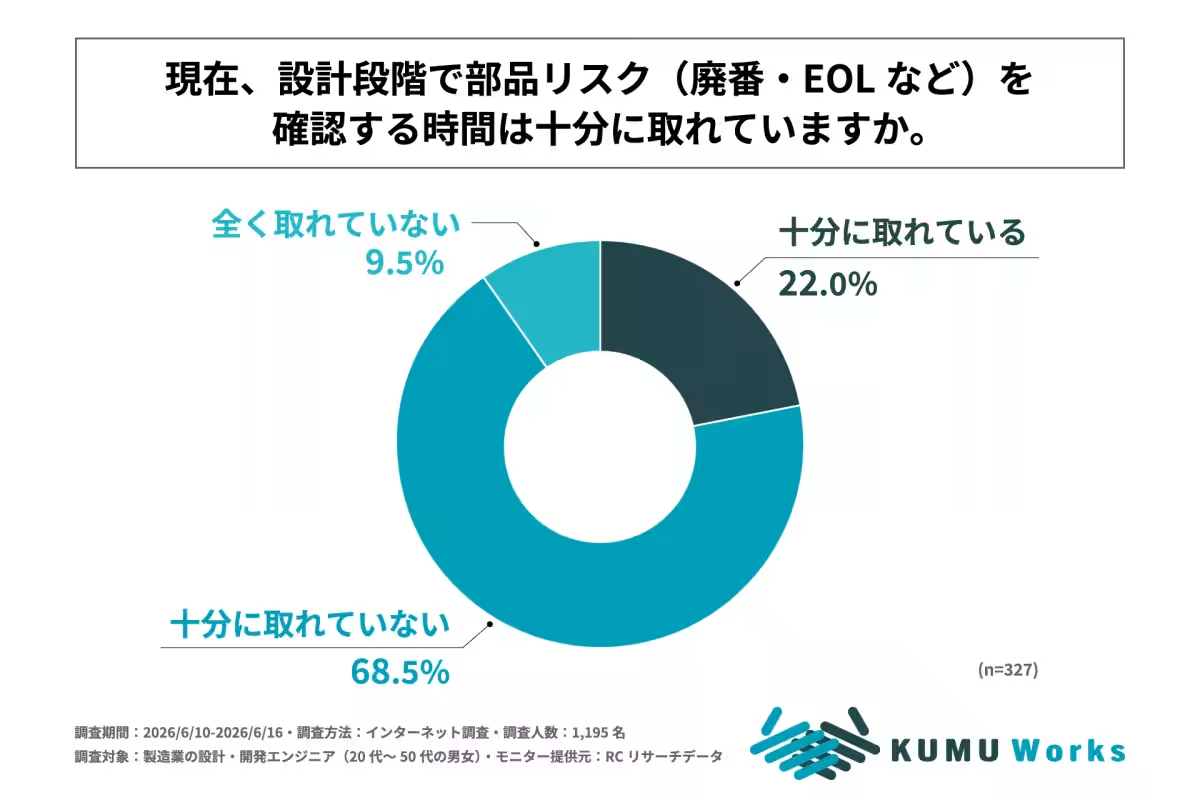
Concerning the critical aspect of component risk management, a staggering 68.5% of engineers acknowledged not having sufficient time to assess risks, with 9.5% indicating they had no time at all. Thus, about 78% of surveyed engineers currently cannot effectively validate component risks due to time constraints brought on by reform measures.
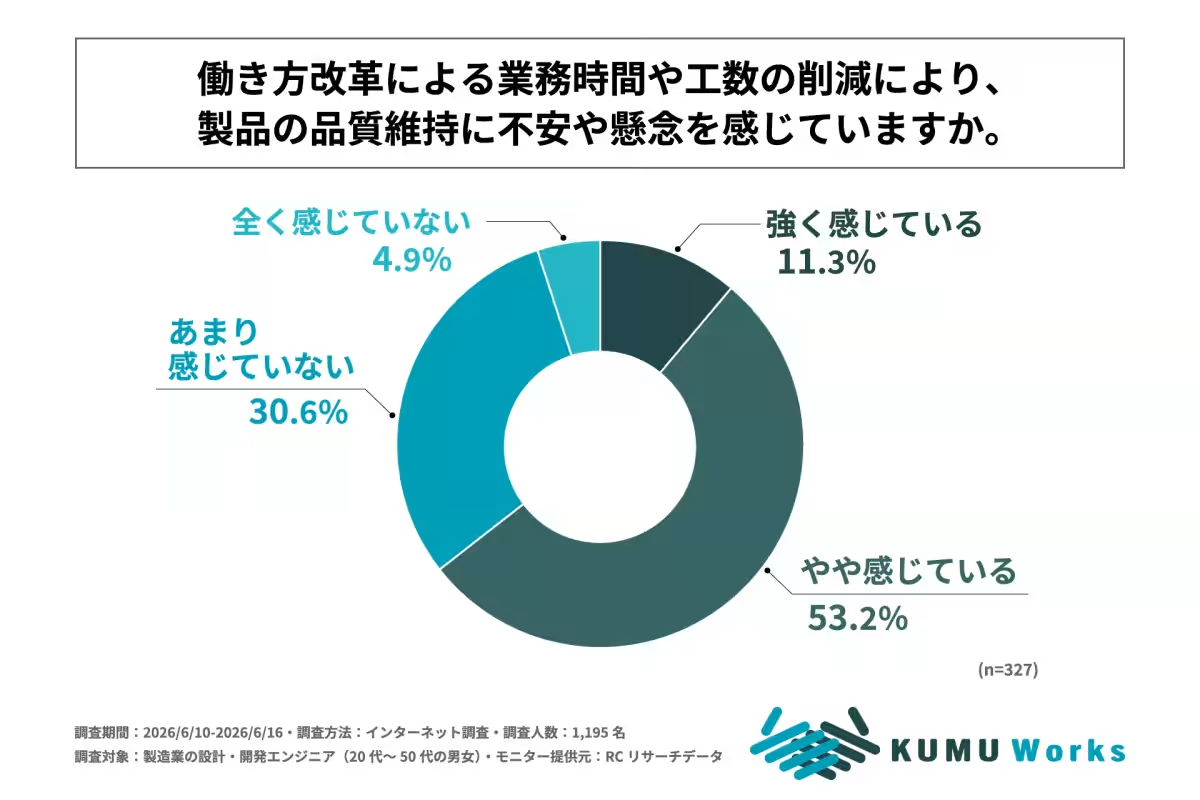
The quality apprehension was further exemplified where over 64% of engineers confirmed feelings of concern regarding product integrity in light of reduced hours.
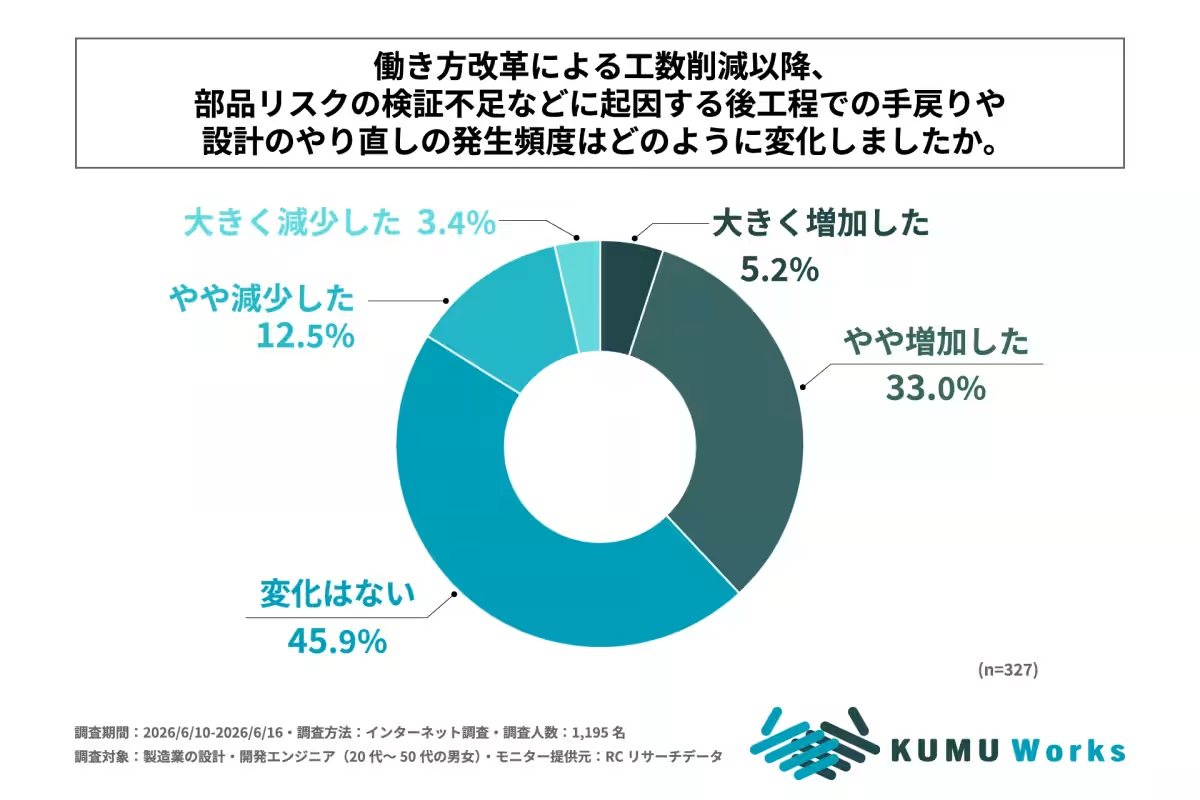
Approximately 40% reported an increase in errors resulting from this insufficient verification of part risks, significantly affecting later project stages.
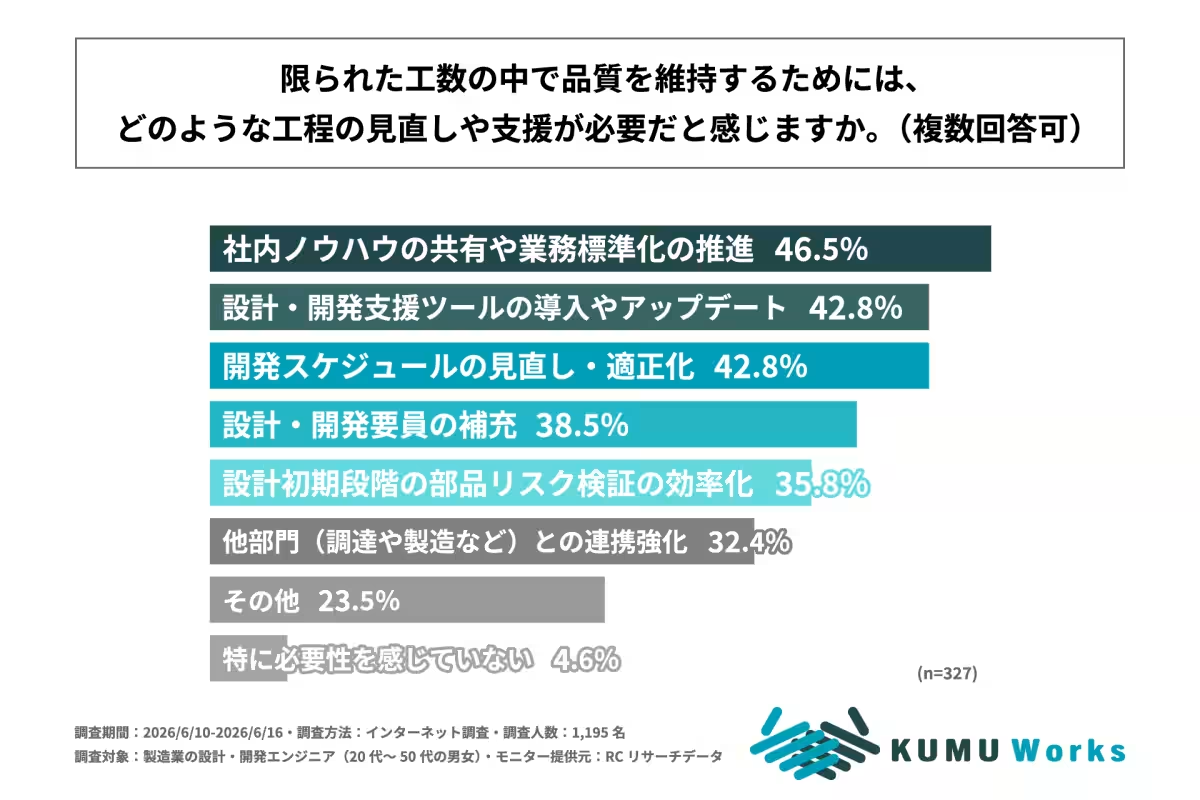
The engineers emphasized the need for internal process reviews to uphold quality, with a particular focus on standardizing internal knowledge and implementing updated development support tools as the answer to maintaining operational quality under constrained conditions.
While work style reforms have aimed to improve labor conditions, they have not come without complications in the manufacturing sector. The substantial reduction in hours for many design engineers poses difficulties in managing critical component risks. Given the current survey insights—over 25% of engineers indicating reduced working hours and nearly 80% struggling to verify risks—the challenges of ensuring quality amidst work style reforms will likely persist.
Amid these challenges, KUMU Works has introduced solutions like Z2Data, aimed at automating the verification of component risks during the design phase and providing a means for managing supply chain risk effectively. This platform establishes a pathway for enhancing the engineering workflow while safeguarding product quality in a dynamically evolving landscape. By leveraging a vast database of electronic components, Z2Data aids in visualizing supply chains, thus empowering engineers to make informed decisions under strict timelines.
In light of this survey, it becomes evident that the interplay between work style reform, quality assurance, and effective risk management is crucial for the manufacturing sector's future. KUMU Works aims to address these challenges and support engineers in navigating this complex environment through digital solutions like Z2Data.



Background of the Issue
While work style reforms strive to enhance working conditions, manufacturing has faced a pressing need to manage component risks due to instabilities in the supply chain, such as supply disruptions and discontinuations. Engineers are increasingly finding it difficult to allocate sufficient time to verify these risks in the design phase, leading to higher rates of rework in later stages of production. This presents an increasingly heavy dilemma between sustaining quality and adhering to the principles of work style reform. By investigating the current state of risk verification and its implications on business, KUMU Works aims to bring clarity to this pressing issue.
Survey Findings Summary
The survey revealed several crucial findings:
- - Over 25% of engineers reported a reduction in their work hours due to the push for reform.
- - Those who experienced reduced hours cited problems such as the personal accumulation of skills and knowledge and a persistent shortage of personnel.
- - About 80% of engineers expressed insufficient time to verify component risks during the design phase.
- - Over 60% felt concerned about maintaining product quality due to the constraints on time and resources caused by the reforms.
- - Approximately 40% reported an increase in rework and modifications due to a lack of component risk verification.
- - The top three solutions identified for maintaining quality with limited resources were promoting the sharing of internal knowledge, updating design support tools, and reviewing development schedules for optimization.
Details of the Survey
- - Survey Period: June 10 - June 16, 2026
- - Method: Internet survey
- - Participants: 1,195 engineers in designing and developing roles in manufacturing, aged between 20 and 50.
- - Provider: RC Research Data
While more than half of respondents indicated no changes to their work hours following reforms, significant numbers reported reductions. Specifically, 21.8% reported a slight decrease, and 5.5% a substantial decrease, combining for an insightful 27.3% of engineers indicating a personal loss in time.
The survey also explored the primary challenges faced by engineers in manufacturing: the personal accumulation of skills (54.1%), ongoing staff shortages (52.6%), and insufficient time compared to workload (33.3%).
Concerning the critical aspect of component risk management, a staggering 68.5% of engineers acknowledged not having sufficient time to assess risks, with 9.5% indicating they had no time at all. Thus, about 78% of surveyed engineers currently cannot effectively validate component risks due to time constraints brought on by reform measures.
The quality apprehension was further exemplified where over 64% of engineers confirmed feelings of concern regarding product integrity in light of reduced hours.
Approximately 40% reported an increase in errors resulting from this insufficient verification of part risks, significantly affecting later project stages.
The engineers emphasized the need for internal process reviews to uphold quality, with a particular focus on standardizing internal knowledge and implementing updated development support tools as the answer to maintaining operational quality under constrained conditions.
Summary of Findings
While work style reforms have aimed to improve labor conditions, they have not come without complications in the manufacturing sector. The substantial reduction in hours for many design engineers poses difficulties in managing critical component risks. Given the current survey insights—over 25% of engineers indicating reduced working hours and nearly 80% struggling to verify risks—the challenges of ensuring quality amidst work style reforms will likely persist.
Amid these challenges, KUMU Works has introduced solutions like Z2Data, aimed at automating the verification of component risks during the design phase and providing a means for managing supply chain risk effectively. This platform establishes a pathway for enhancing the engineering workflow while safeguarding product quality in a dynamically evolving landscape. By leveraging a vast database of electronic components, Z2Data aids in visualizing supply chains, thus empowering engineers to make informed decisions under strict timelines.
Conclusion
In light of this survey, it becomes evident that the interplay between work style reform, quality assurance, and effective risk management is crucial for the manufacturing sector's future. KUMU Works aims to address these challenges and support engineers in navigating this complex environment through digital solutions like Z2Data.
Topics Consumer Technology)
【About Using Articles】
You can freely use the title and article content by linking to the page where the article is posted.
※ Images cannot be used.
【About Links】
Links are free to use.