



The Shift Towards Telecommuting: Quality of Life Improves for 73.8% of Remote Workers in Suburban Areas
The Shift Towards Telecommuting: Quality of Life Improves for 73.8% of Remote Workers in Suburban Areas
In a recent study conducted by LASSIC, which runs the web media "Telework and Remote Work Comprehensive Research Institute (TeleRemo Research Institute)," noteworthy findings on telecommuting in suburban areas have emerged. The survey involved 1,004 teleworkers aged between 20 and 65 years old, focusing on those who live and work remotely in suburban areas compared to their counterparts in urban settings.
Key Findings from the Survey
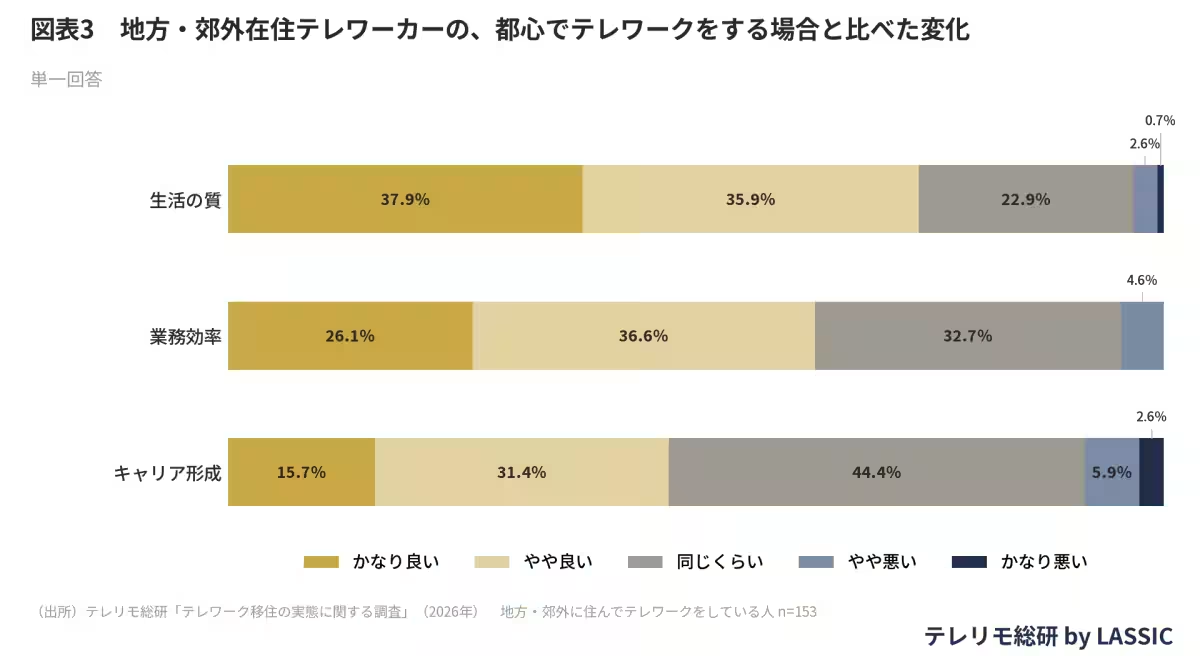
The survey aimed to explore the realities of telecommuting and the lifestyle changes it brings. An impressive 73.8% of respondents from suburban areas reported a better quality of life due to their remote work situation. Only 3.3% claimed a decline in their quality of life, while 62.7% felt their work efficiency had improved. However, when it came to career development, the majority (44.4%) felt it remained the same as before.
Telecommuting Lifestyle Choices
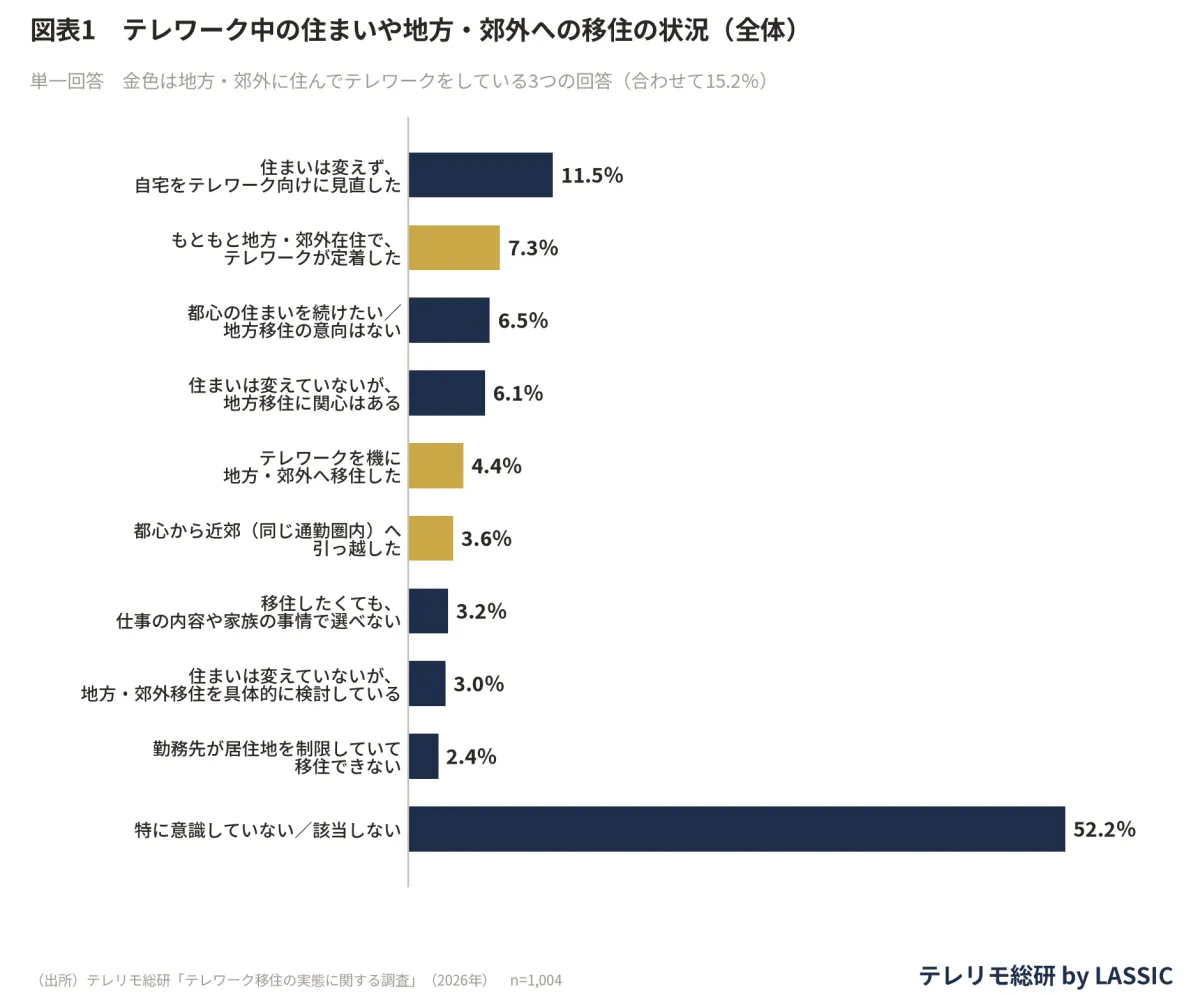
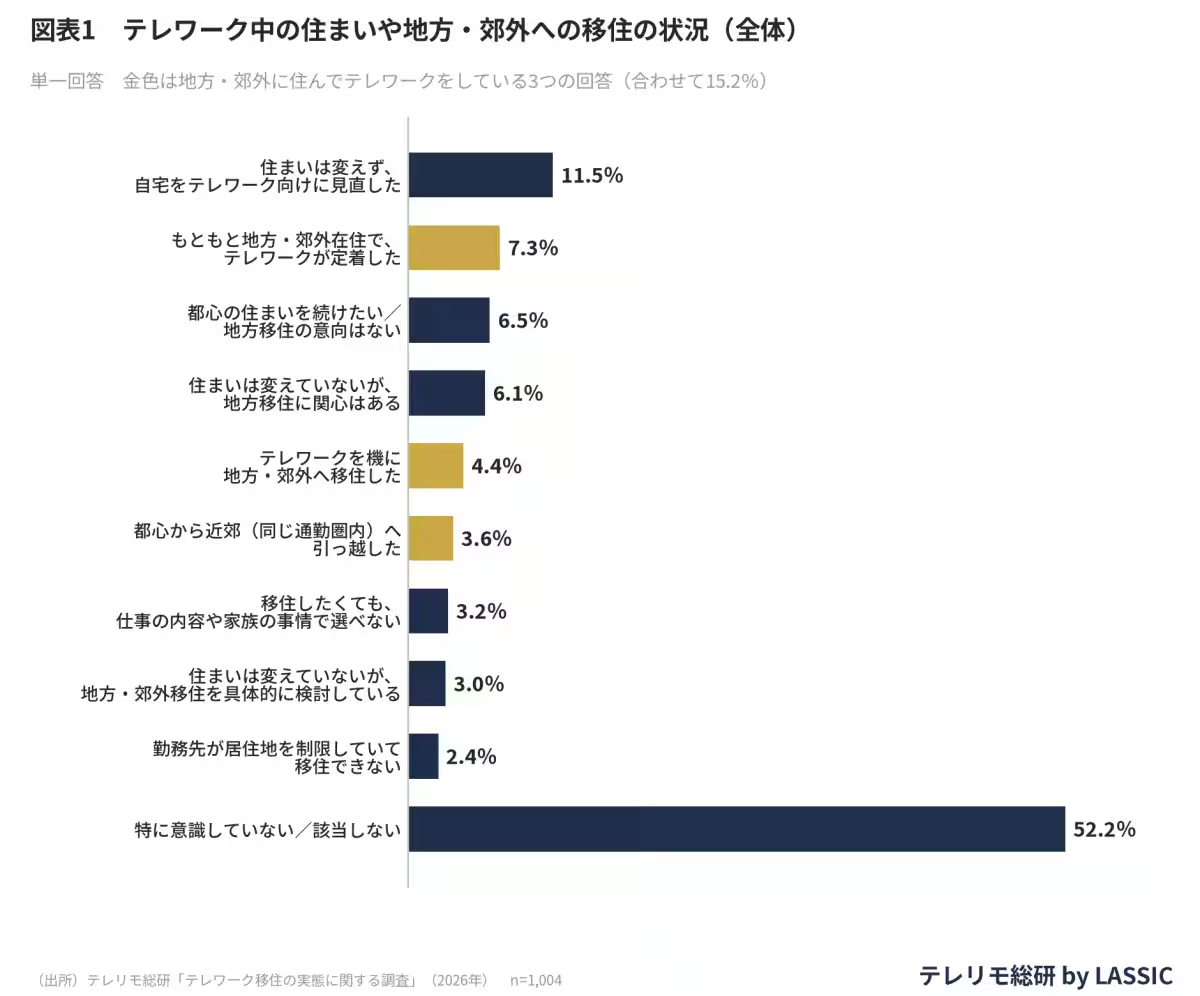
When asked about living arrangements influenced by telecommuting, 15.2% of participants identified with this shift. This demographic can be divided as follows: 7.3% had always lived in suburban areas and adapted to telecommuting, 4.4% moved to suburban areas due to telecommuting opportunities, and 3.6% relocated from urban settings to nearby suburbs.
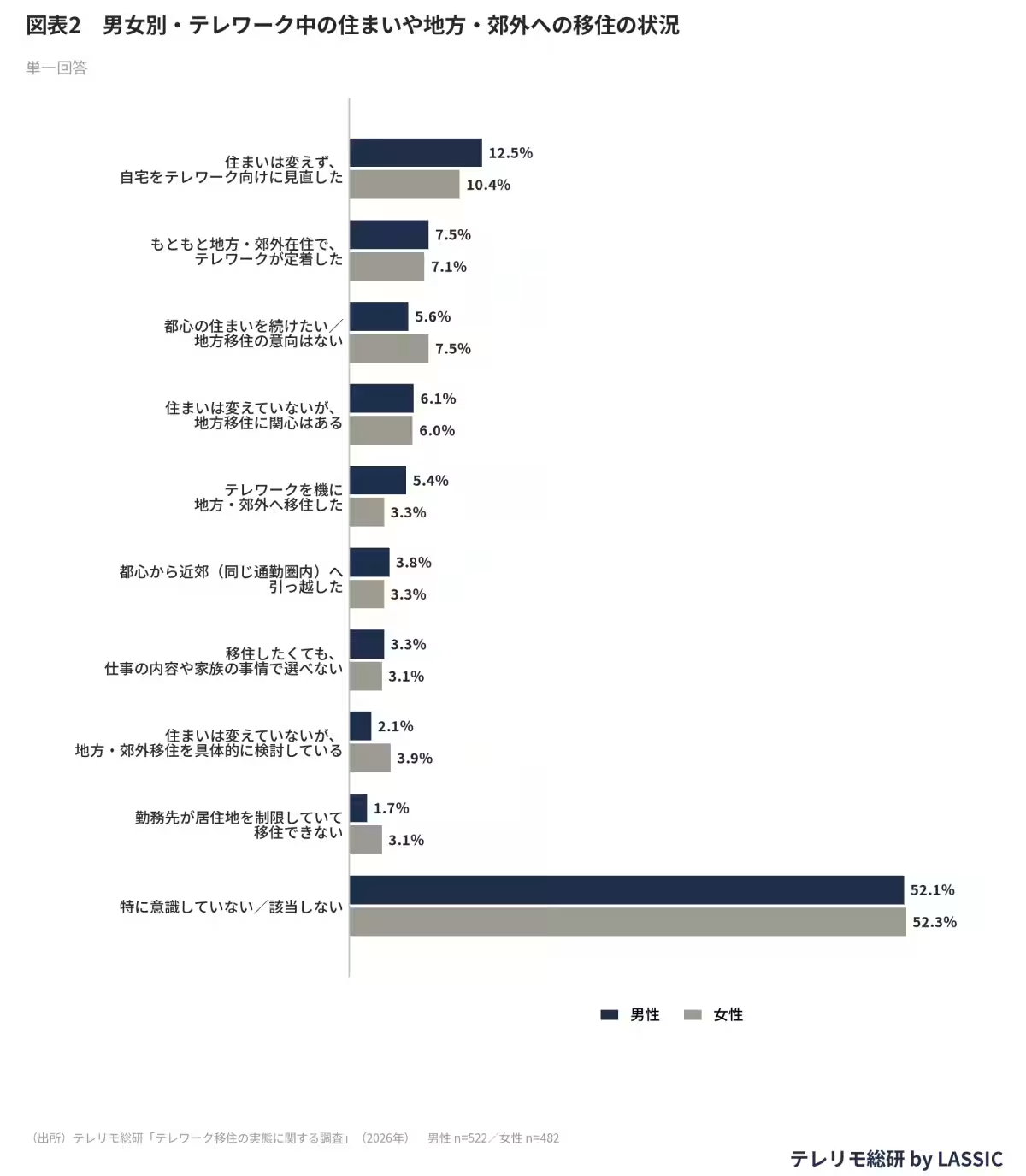
Interestingly, the survey showed a small gender gap; 16.7% of male respondents identified as suburban telecommuters compared to 13.7% of female respondents. The differences across responses were minimal, adhering to a margin of 2.1 percentage points.
Changes in Life Quality
Among the surveyed telecommuters, when comparing suburban and urban life, the top improvement noted was in the quality of life at 73.8%. This contrasts with a minimal percentage of respondents who reported a decline. Work efficiency also saw positive feedback, with 62.7% of telecommuters stating their productivity improved.
The insights into career development showed a significant number view their opportunities as relatively unchanged – a point of concern for many who wish to advance their careers while working remotely. The same number, 44.4%, almost half of respondents, indicated their career growth remained the same.
Strategies for Successful Remote Work
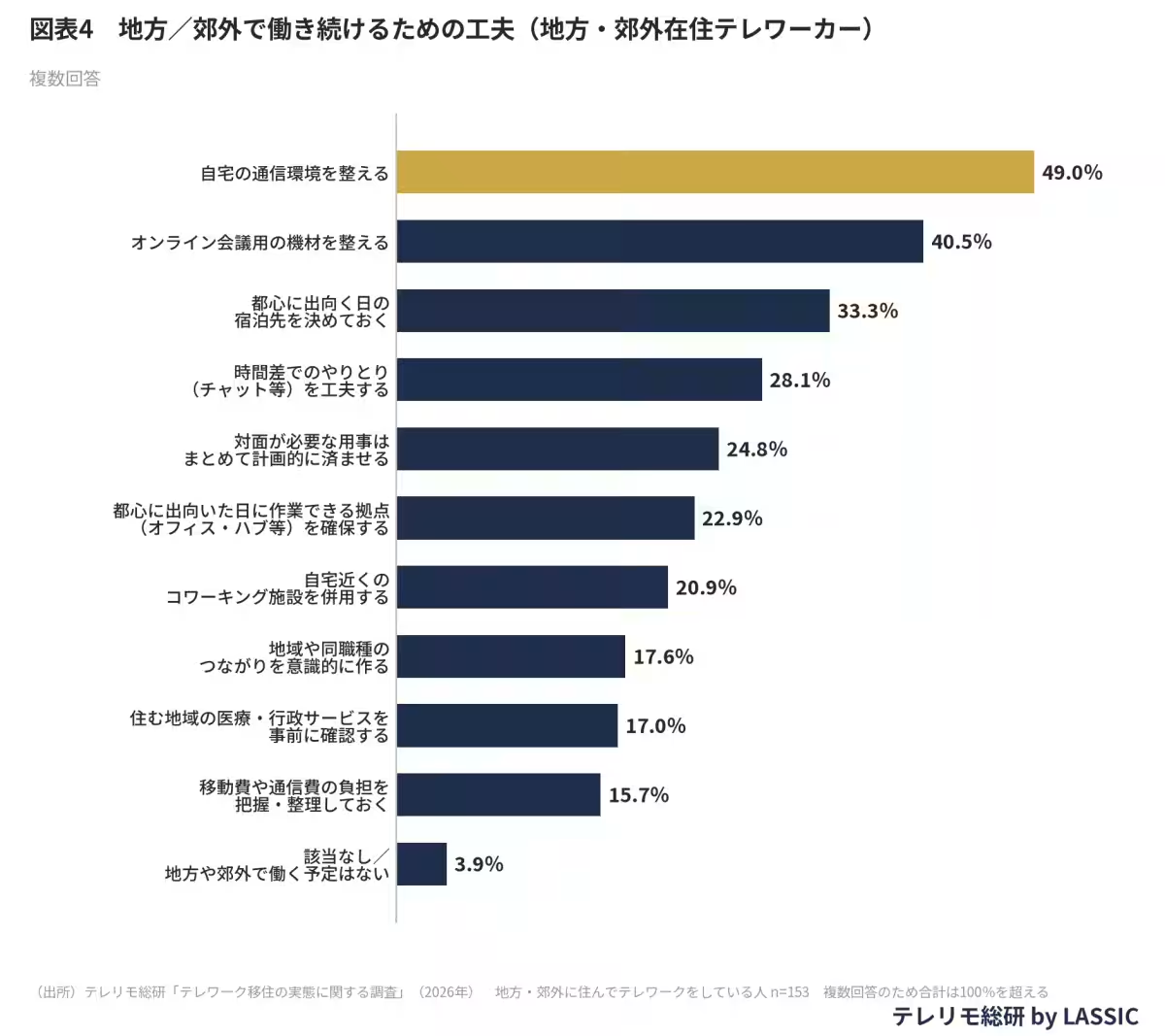
The respondents shared various strategies to maintain their telecommuting lifestyle. The most popular solution was improving home internet connectivity, chosen by about 49% of participants. Following this were enhancements for online meetings, selected by 40.5%. Deciding where to stay when commuting to urban areas was also a common thought, noted by 33.3% of respondents.
Other mentioned strategies included innovative scheduling for time differences, practical planning for necessary face-to-face meetings, securing available workspaces, and having local coworking facilities as backups. These strategies reveal a structured adaptability among suburban telecommuters.
Conclusion
The study indicates that telecommuters living in suburban regions experience a significant boost in their quality of life. The overwhelming response of 73.8% highlighting improvement marks a clear preference for suburban living amidst the teleworking shift. As remote work continues to evolve, understanding and optimizing this shift will be crucial for both employers and employees alike. Remote life, while presenting unique challenges, offers substantial rewards that can enhance personal well-being and productivity.
Some may still worry about career growth; however, the trend shows a promising indication of improvement in life quality. These findings may influence future urban planning and corporate policies regarding work-from-home initiatives.
The importance of equipping oneself with suitable working conditions cannot be overstated, as highlighted by the research findings from LASSIC. As organizations pivot towards more flexible workplace arrangements, understanding these implications will be essential for maximizing employee satisfaction and efficiency.


Topics People & Culture)
【About Using Articles】
You can freely use the title and article content by linking to the page where the article is posted.
※ Images cannot be used.
【About Links】
Links are free to use.