



YKK AP, Daio Paper, and Hokuriku Coca-Cola Collaborate on Joint Transportation in Japan
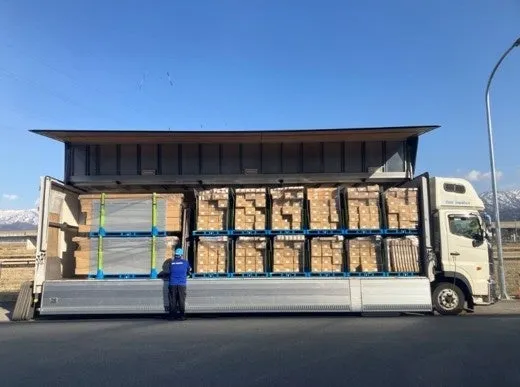
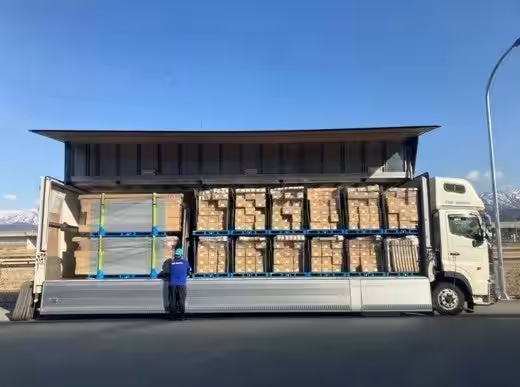
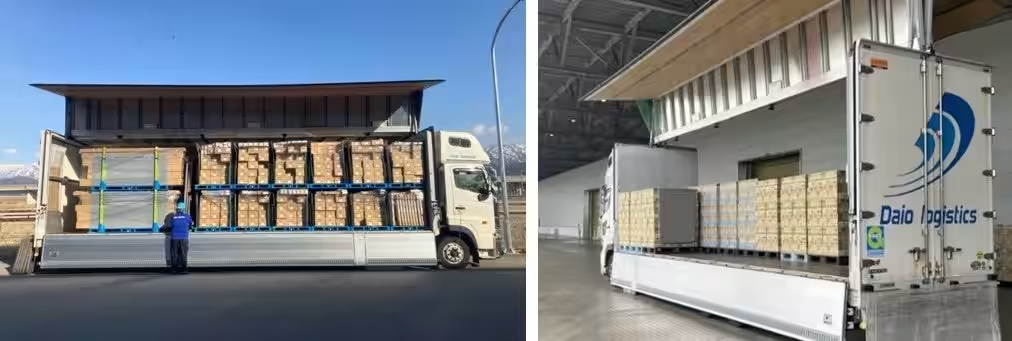
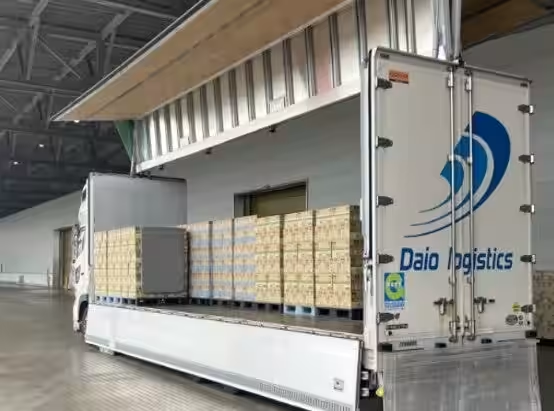
In August 2023, three companies—YKK AP, Daio Paper, and Hokuriku Coca-Cola—embarked on a unique collaboration aimed at enhancing transportation efficiency across various sectors. This initiative focuses on the collective transportation of products to minimize the logistical footprint that individual companies typically face. Previously, each company operated its own route for deliveries, resulting in what is known as "one-way transport," where trucks would return empty after delivering their loads. With Daio Logistics, a subsidiary of Daio Paper, taking over the logistics for all three companies, they have significantly optimized the transport routes, effectively decreasing the distance that trucks travel without cargo.
This newfound collaboration has not only streamlined operations, but has also led to a projected reduction of carbon dioxide emissions by 71.6 tons annually, equivalent to a 34% decrease. Furthermore, the reduction in driving hours for truck drivers is expected to reach 1,992 hours per year, or a remarkable 43%. The project has gained recognition and approval from the Ministry of Land, Infrastructure, Transport, and Tourism under Japan’s Logistics Efficiency Law, enabling the companies to implement their comprehensive efficiency plans and modal shift initiatives.
As part of the initiative, two main transport routes have been identified:
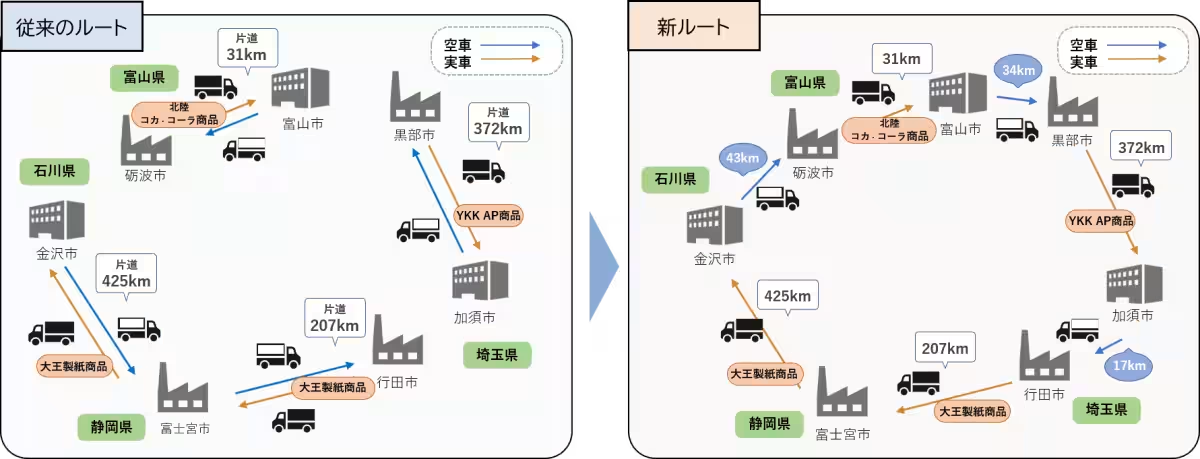
1. Hokuriku-Saitama-Shizuoka-Hokuriku Route: In this segment, YKK AP transports goods from Kurobe City in Toyama Prefecture to Kazo City in Saitama. Daio Paper moves products from Gyoda City in Saitama to Fuji City in Shizuoka, and then from Fuji City to Kanazawa City in Ishikawa Prefecture. Finally, Hokuriku Coca-Cola carries items from Tonami City to Toyama City. By consolidating truck allocations, the average transport efficiency—known as the "actual vehicle rate"—is expected to leap from 50% to an astounding 91.7%.
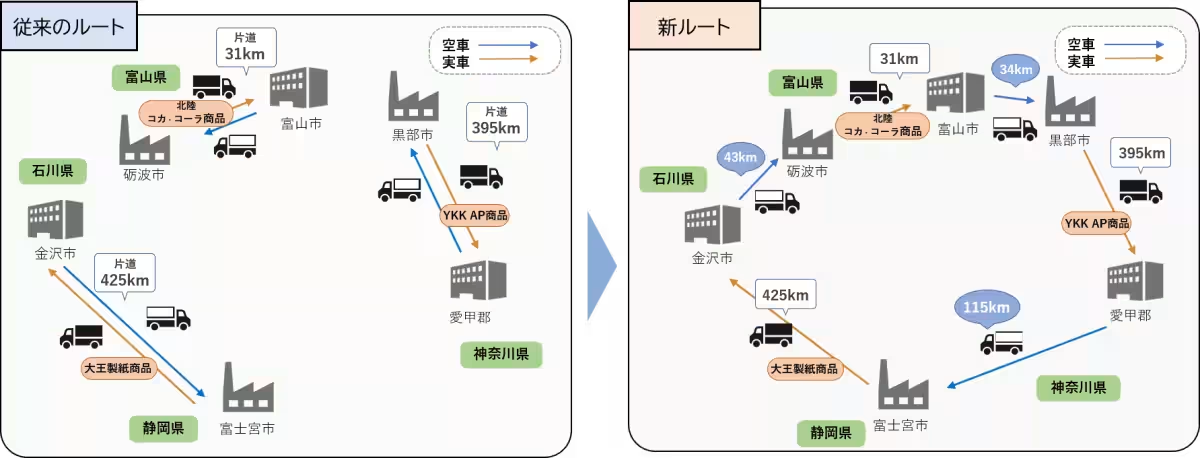
2. Hokuriku-Kanagawa-Shizuoka-Hokuriku Route: This route has YKK AP operating from Kurobe City to Aikou District in Kanagawa, while Daio Paper carries goods from Fuji City to Kanazawa, and Hokuriku Coca-Cola continues its delivery from Tonami City to Toyama. Similar to the first route, the actual vehicle rate will rise from 50% to 81.6% through the use of a single truck per company.
The commitment from YKK AP, Daio Paper, and Hokuriku Coca-Cola extends beyond just efficiency. Each company has been actively working on sustainability in its operations. YKK AP has developed a new type of transport pallet and enhanced its supply system in the Tokyo metropolitan region to reduce waiting times for truck drivers. The company sees this collaboration as a necessary step in addressing challenges such as a declining number of truck drivers and increasing CO2 emissions.
On the other hand, Daio Paper is guided by its mission to create a gentler future for people around the world through its focus on health, quality of life, and ecological sustainability. They aim not just to solve logistics challenges but also to establish and maintain environmentally friendly practices.
Meanwhile, Hokuriku Coca-Cola Bottling is dedicated to ensuring efficient delivery of beverages produced at its Tonami factory to Toyama City. By partnering with other businesses for joint logistics, they are addressing the pressing issue of truck shortages while improving the average load rates.
This strategic collaboration among YKK AP, Daio Paper, and Hokuriku Coca-Cola exemplifies a shared vision toward a more sustainable logistics framework, working towards reducing the environmental impact while enhancing operational efficiency. The three companies intend to continue pursuing innovative logistics solutions to foster sustainable practices and overcome social issues related to transportation and distribution.
This newfound collaboration has not only streamlined operations, but has also led to a projected reduction of carbon dioxide emissions by 71.6 tons annually, equivalent to a 34% decrease. Furthermore, the reduction in driving hours for truck drivers is expected to reach 1,992 hours per year, or a remarkable 43%. The project has gained recognition and approval from the Ministry of Land, Infrastructure, Transport, and Tourism under Japan’s Logistics Efficiency Law, enabling the companies to implement their comprehensive efficiency plans and modal shift initiatives.
As part of the initiative, two main transport routes have been identified:
1. Hokuriku-Saitama-Shizuoka-Hokuriku Route: In this segment, YKK AP transports goods from Kurobe City in Toyama Prefecture to Kazo City in Saitama. Daio Paper moves products from Gyoda City in Saitama to Fuji City in Shizuoka, and then from Fuji City to Kanazawa City in Ishikawa Prefecture. Finally, Hokuriku Coca-Cola carries items from Tonami City to Toyama City. By consolidating truck allocations, the average transport efficiency—known as the "actual vehicle rate"—is expected to leap from 50% to an astounding 91.7%.
2. Hokuriku-Kanagawa-Shizuoka-Hokuriku Route: This route has YKK AP operating from Kurobe City to Aikou District in Kanagawa, while Daio Paper carries goods from Fuji City to Kanazawa, and Hokuriku Coca-Cola continues its delivery from Tonami City to Toyama. Similar to the first route, the actual vehicle rate will rise from 50% to 81.6% through the use of a single truck per company.
The commitment from YKK AP, Daio Paper, and Hokuriku Coca-Cola extends beyond just efficiency. Each company has been actively working on sustainability in its operations. YKK AP has developed a new type of transport pallet and enhanced its supply system in the Tokyo metropolitan region to reduce waiting times for truck drivers. The company sees this collaboration as a necessary step in addressing challenges such as a declining number of truck drivers and increasing CO2 emissions.
On the other hand, Daio Paper is guided by its mission to create a gentler future for people around the world through its focus on health, quality of life, and ecological sustainability. They aim not just to solve logistics challenges but also to establish and maintain environmentally friendly practices.
Meanwhile, Hokuriku Coca-Cola Bottling is dedicated to ensuring efficient delivery of beverages produced at its Tonami factory to Toyama City. By partnering with other businesses for joint logistics, they are addressing the pressing issue of truck shortages while improving the average load rates.
This strategic collaboration among YKK AP, Daio Paper, and Hokuriku Coca-Cola exemplifies a shared vision toward a more sustainable logistics framework, working towards reducing the environmental impact while enhancing operational efficiency. The three companies intend to continue pursuing innovative logistics solutions to foster sustainable practices and overcome social issues related to transportation and distribution.
Topics Business Technology)

【About Using Articles】
You can freely use the title and article content by linking to the page where the article is posted.
※ Images cannot be used.
【About Links】
Links are free to use.