



Adapting to Declining Birth Rates: New Teaching Models in Education with AI Learning Tools
Introduction
In an era marked by declining birth rates, the landscape of education is shifting dramatically, particularly for learning institutions. Tanaka Gakushukai, a well-known tutoring service in the Hiroshima region, is pivoting towards an innovative solution—introducing adaptive learning tools via a new brand named GYUN. This comes amidst challenges such as reduced student populations and increasing education costs.
The Need for a New Educational Model
The recent backlash against traditional approaches in education calls for inklings of innovation. Families are financially strained, and the conventional individual guidance that comes with high fees is becoming less feasible. Therefore, it’s vital for tutoring centers to cater not just to high-achieving students but to a diverse range of learners, including those who might struggle academically.
The current educational climate also demands a re-thinking of operational strategies—mergers and acquisitions within the industry have led to a necessity for standardized instruction quality while still leveraging local educational strengths. Furthermore, increasing content demands have made it difficult to ensure adequate review time for subjects such as science and social studies in group settings.
Surala: The Adaptive Learning Solution
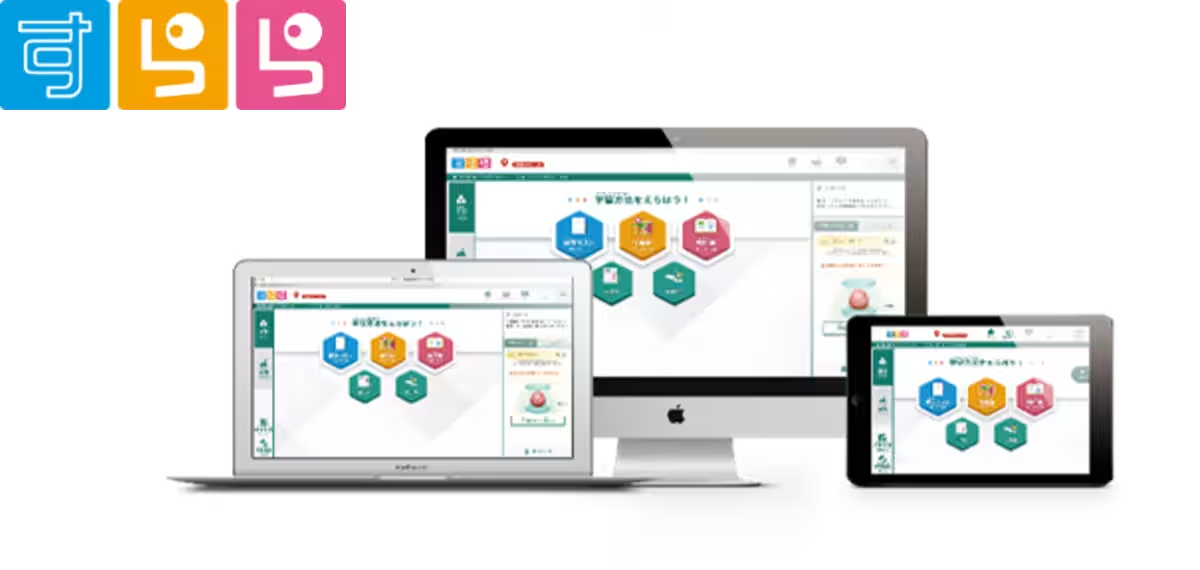
To address these challenges, Surala, a product of Surala Network, proposes a new teaching modality termed “self-directed individual instruction.” This strategy promotes student autonomy through learning via Surala’s AI tools, while instructors use gathered data to offer personalized assistance. The adoption of this innovative model within Tanaka Gakushukai’s new GYUN brand will formally kick off on September 1, 2026.
History of Implementation
Tanaka Gakushukai has historically operated under English Institute (Eishinkan), which has been integrating AI tools such as Surala since 2016. The momentum gained from implementing these tools has honed their operational capabilities significantly, enabling effective class management and incorporated flipped classrooms. During May 2026, a trial using Surala was conducted for ninth graders, revealing marked improvements in both academic performance and operational efficacy, leading to the official adoption of Surala in 50 GYUN locations.
GYUN's Vision and Approach
The term GYUN, symbolizing the aspiration for students to experience substantial growth in both their grades and learning eagerness, will cater to students from the first grade of elementary through the third year of junior high school. By leveraging Surala’s self-directed learning capabilities, each student will receive tailored education combined with timely support from instructors based on their learning data.
Insights from Management
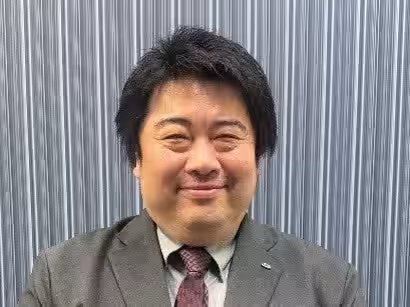
Shinji Matsuo, a board member of Tanaka Gakushukai, emphasizes the fundamental value of building trust in education. He advocates for a method where AI acts as a tool to help children learn at their own pace rather than replacing personal connections with instructors. In the context of a diversifying educational landscape due to declining birth rates and varied learning needs, he believes having innovative options such as self-directed learning is crucial.
A Model for the Future
Through this collaborative venture with Tanaka Gakushukai, Surala aims to present the self-directed individual instruction model not just as a unique initiative but as a potential solution to similar challenges faced by other tutoring organizations. Surala doesn't merely provide AI learning tools; it also offers comprehensive assistance in classroom management and standardization of teaching quality.
Tanaka Gakushukai: A Leader in Educational Innovation
With a robust presence in Hiroshima, Okayama, and Kagawa prefectures, Tanaka Gakushukai has established itself as a credible institution, housing approximately 12,000 students since its inception in 1985. The establishment of GYUN reflects the commitment to fostering tailored learning experiences that honor the trust and relationships nurtured over the years.
Conclusion
As educational institutions navigate through the complexities of modern dilemmas, models such as GYUN offer promising avenues for enhancing student learning experiences. By blending traditional instructor roles with technological advancements, the aim is to equip learners with the necessary tools to thrive in an adaptable learning environment. The future of education may very well depend on such novel approaches in response to evolving societal trends.


Topics Other)
【About Using Articles】
You can freely use the title and article content by linking to the page where the article is posted.
※ Images cannot be used.
【About Links】
Links are free to use.