



Revolutionary Technology for Reducing Floating Caisson Instability Launched at Toyama Port
Introduction
In a significant advancement for harbor construction, TOA Construction Co., Ltd. has introduced an innovative technology called the Anti-Sway Tank System into active port construction at Toyama Port, managed by the Hokuriku District Bureau of Ministry of Land, Infrastructure, Transport and Tourism. Developed through a collaboration with the National Research and Development Agency, this groundbreaking method aims to reduce the swaying of floating caissons, contributing to safer and more efficient construction processes.
Background of the Technology Development
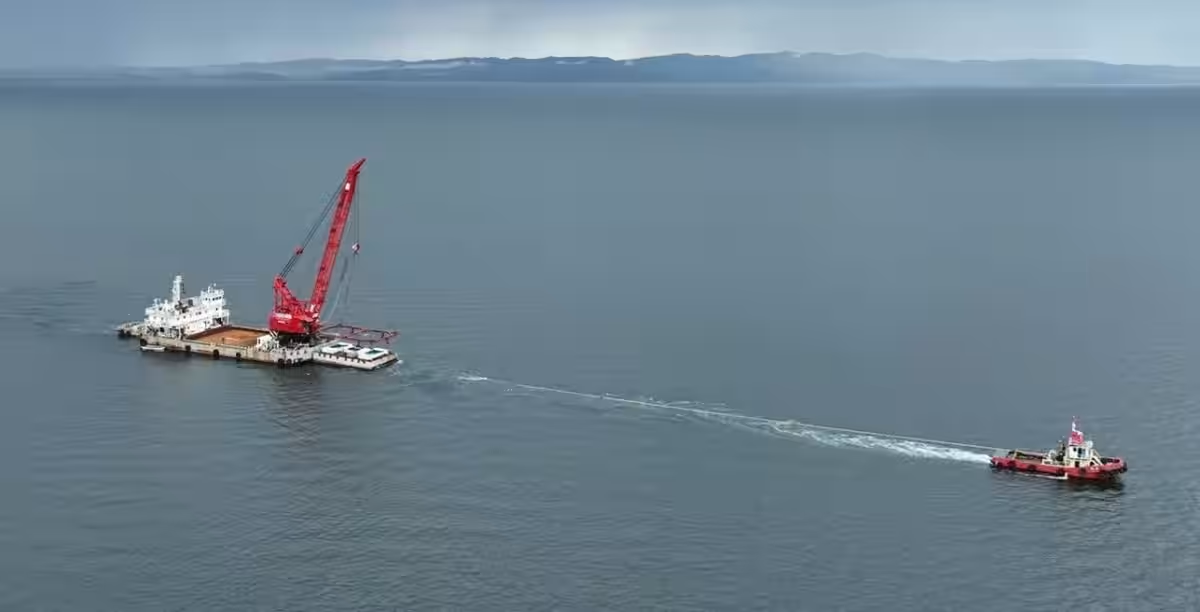
The demand for enhanced port facilities in Japan has surged due to the increase in maritime transport and the larger size of cargo ships. This has mandated the establishment of new international logistics terminals and the extension of wave barriers for disaster prevention. Traditionally, the installation of floating caissons, especially in coastal areas with considerable wave action, has encountered substantial challenges due to their swaying motions during towing. This posed threats to worker safety and hampered operational efficiency, resulting in extended equipment deployment times.
Addressing these challenges, TOA Construction leveraged the innovative research from the Maritime and Port Technology Research Institute, focusing on reducing the instability of floating caissons with the Anti-Sway Tank technology.
Mechanism of the Anti-Sway Tank
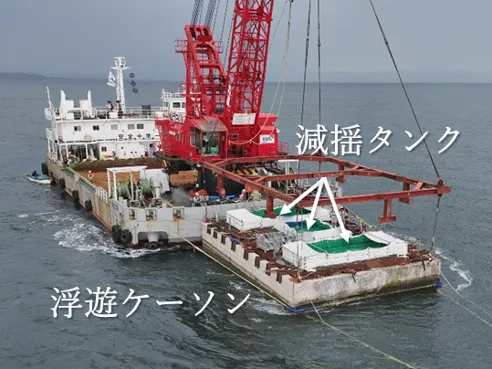
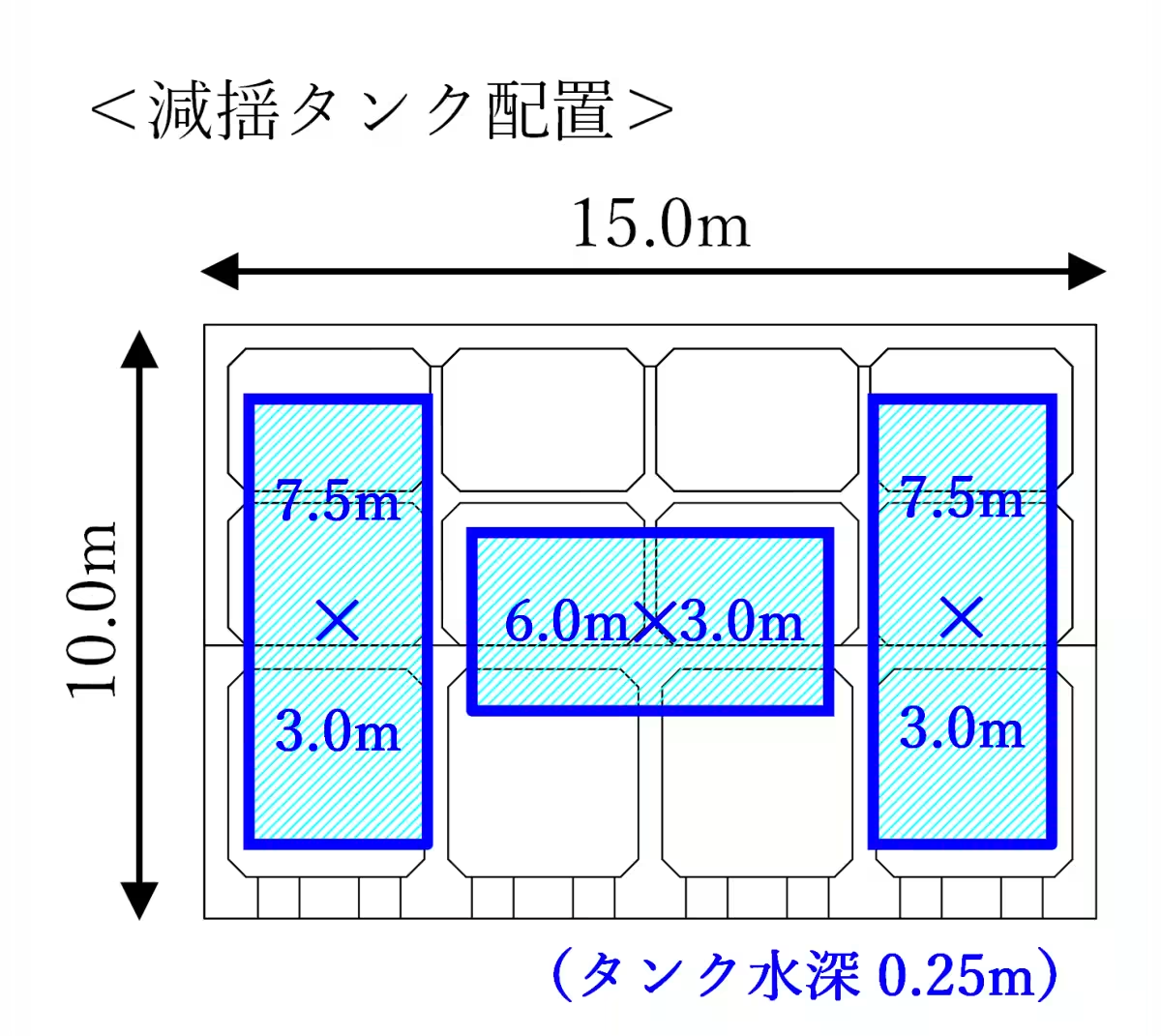
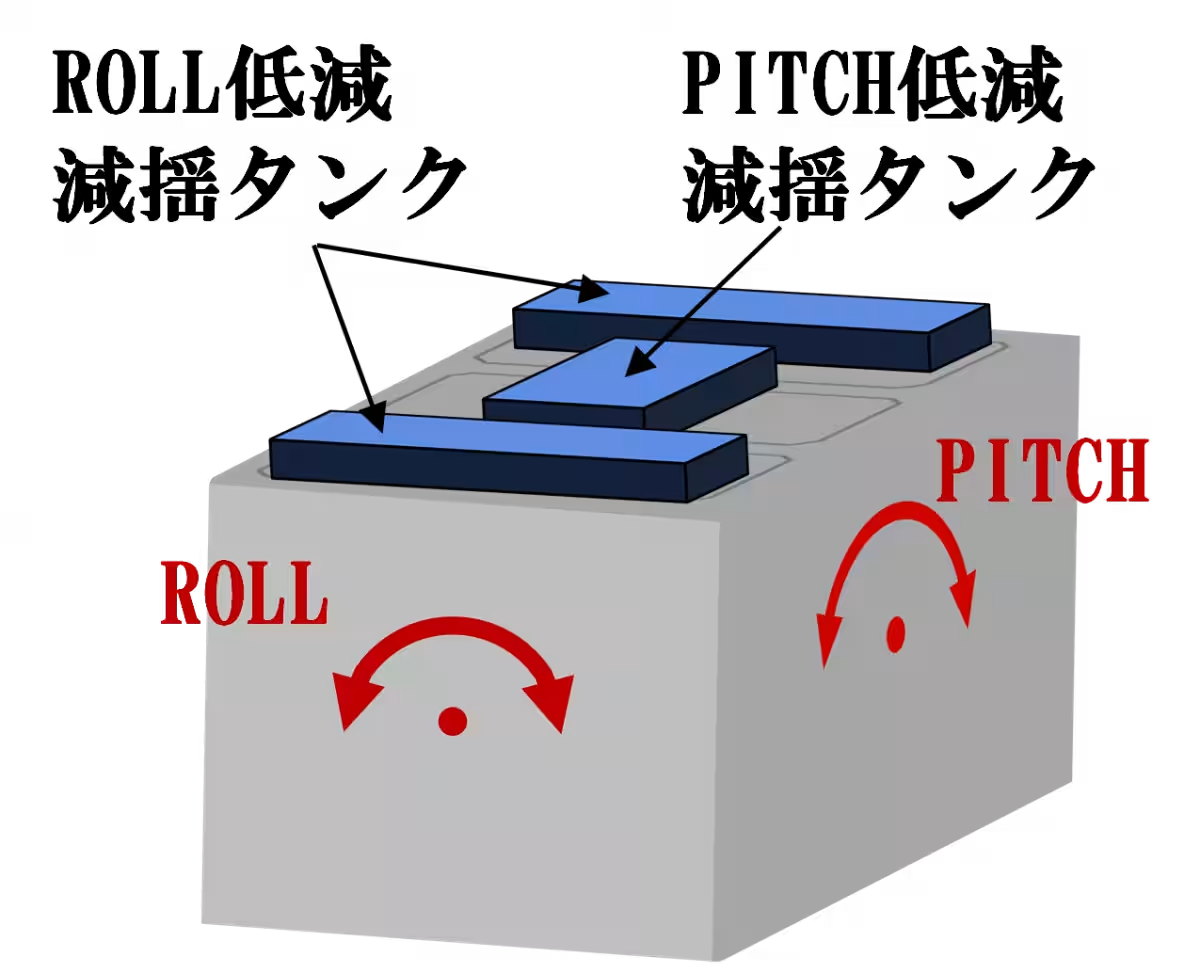
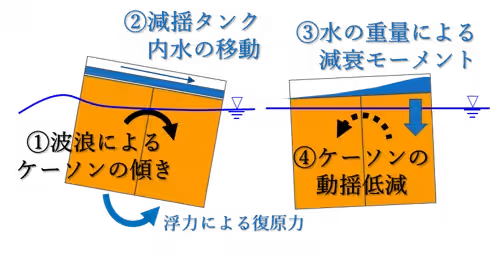
The Anti-Sway Tank setup involves strategically placing rectangular tanks filled with a thin layer of water on a floating caisson. These tanks are arranged in a grid-like pattern in two tiers. When waves tilt the caisson, the free water inside the tanks moves accordingly, generating a counterbalancing force that mitigates the caisson's movement. This design effectively stabilizes the caisson, paving the way for safer and more efficient installation.
Field Implementation and Modifications
In the recent phase of the project marked for the 2025 Toyama Region Wharf Construction, TOA Construction employed this innovative technology to improve the stability of floating caissons towed from Shinminato to the Toyama district. Collaborating with Sunlight Industry Co., Ltd., the company adopted lighter sheet material for the Anti-Sway Tanks instead of the traditional steel design, showcasing significant improvements in the installation process.
Benefits of Field Implementation
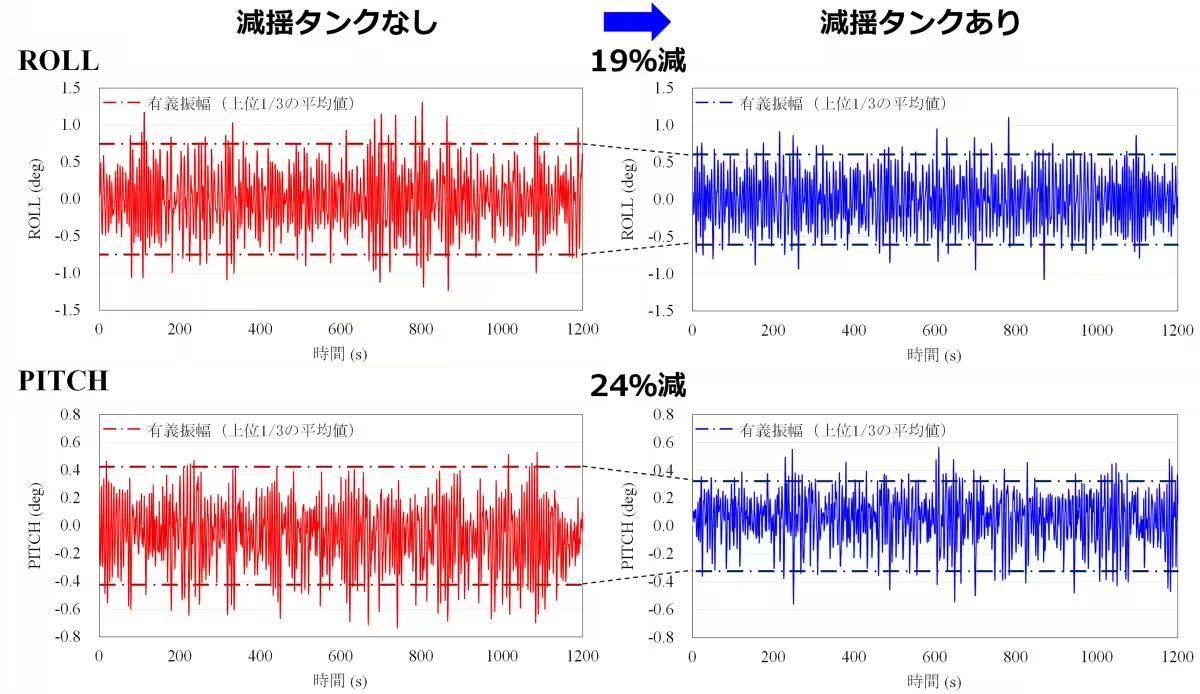
Testing in actual maritime conditions confirmed that the Anti-Sway Tank technology reduced the swaying motion of floating caissons by approximately 20% during towing, effectively enhancing safety standards on-site. The employment of the new sheet material also streamlined the setup and dismantling processes of the tanks, resulting in increased efficiency throughout the construction operation.
Future Prospects
The implementation of this technology is expected to significantly improve work efficiency in future projects involving floating caisson installations and long-distance tows, potentially shortening construction times. TOA Construction aims to continue utilizing and evolving this technology through further proposals and successful project implementations, ensuring a legacy of safer construction practices.
Related Information
For more insights about the Anti-Sway Tank technology, visit TOA Construction’s official website under the ‘Technology and Services’ section for civil engineering technologies.
The innovative technology originated from the Innovative Infrastructure Development Research and Development Promotion Project, which supports groundbreaking research aimed at improving infrastructure for resilience and enhanced productivity in public works undertakings.
Topics Other)
【About Using Articles】
You can freely use the title and article content by linking to the page where the article is posted.
※ Images cannot be used.
【About Links】
Links are free to use.