



Spot Work Labor Market Report: Demand and Wages Reach All-Time Highs in 2025
Overview of the Spot Work Market
The Tsunagu Group Holdings, based in Tokyo and led by President Mitsuhiro Yoneda, operates a dedicated research institute known as the Tsunagu Work Style Research Institute. This institute regularly monitors the evolving landscape of short-term and on-demand employment, known as spot work. In their recent publication, the Spot Work Market Data Report, they provide insightful findings regarding the labor market as of February 2025.
Key Highlights
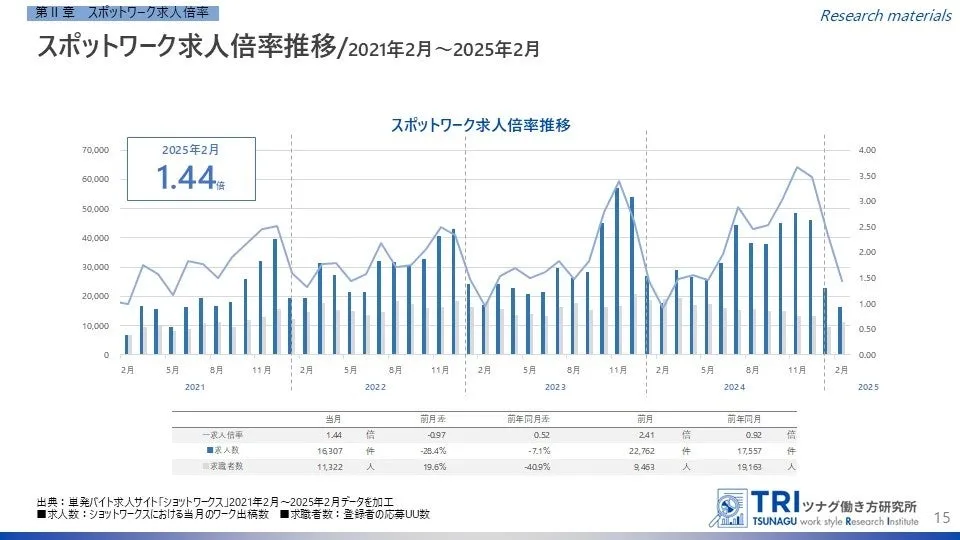
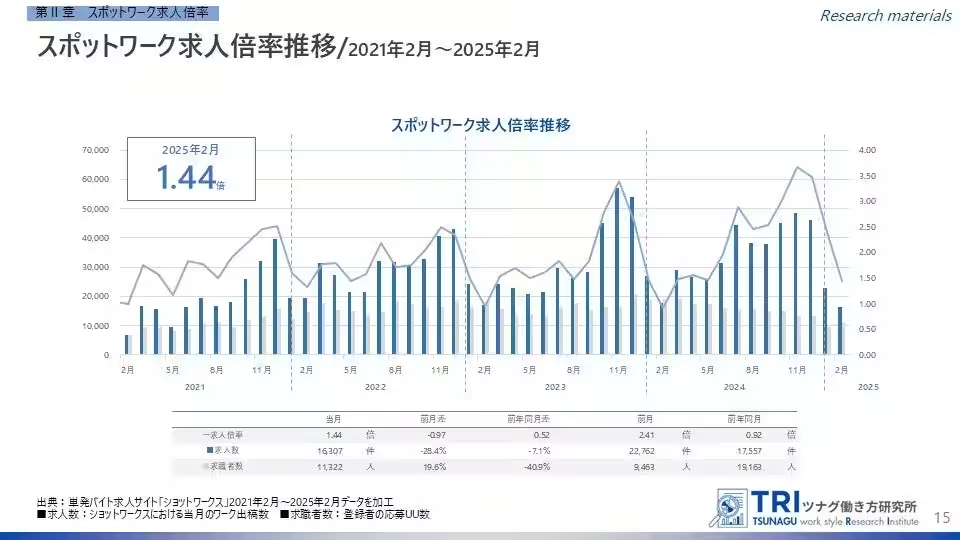
1. Job Availability: The job availability ratio for spot work reached 1.44, reflecting a significant increase compared to last year.
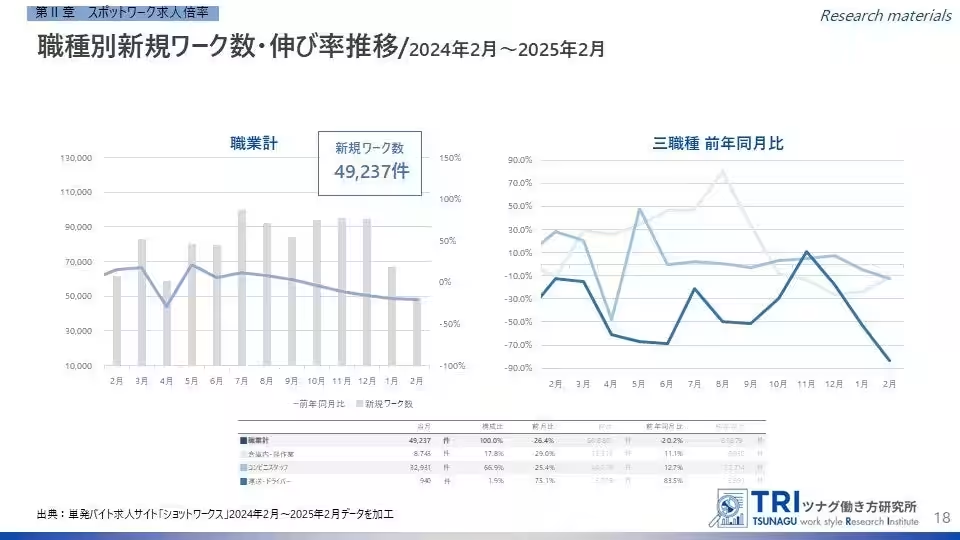
2. New Job Postings: New job postings numbered 49,237, demonstrating a decline of 20.2% compared to the same month last year.
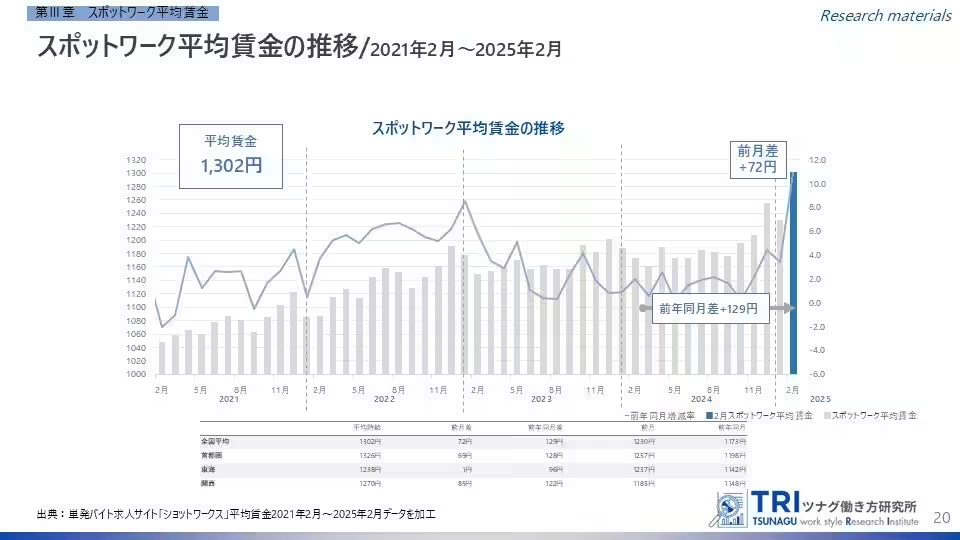
3. Average Wages: The average wage for spot workers climbed to 1,302 yen, marking a record high.
1. Job Availability Ratio
The job availability ratio for spot work in February 2025 stood at 1.44, a notable amount rising by 0.52 points over the previous year. It's typical for job openings in this sector to decrease in January and February; however, it saw a significant drop from 2.03 points compared to the peak demand month of December. Despite this, the job availability ratio showed a continuous rise over the last nine months.
2. Decline in New Job Postings
Despite the increased job availability ratio, February saw 49,237 new job postings for spot work, continuing a trend of declining figures over the past five months, down 20.2% year-over-year. Each of the three major job categories saw declines in new job postings, with transportation and driving roles experiencing an alarming reduction of 83.5%.
3. Record Average Wages
In February 2025, spot work average wages hit 1,302 yen, an increase of 72 yen from the previous month and up 129 yen from the year before. This is the first time wages have exceeded 1,300 yen since tracking began in January 2018. To put this in context, the typical part-time wage sits at 1,227 yen, making the spot work average 75 yen higher. The transportation and driving sector recorded the highest average wage at 1,292 yen.
Understanding Spot Work
Spot work refers to short-term and gig employment that does not establish long-term employer-employee relationships. It can be categorized into gig work—where no employment contracts are formed—and short-term contract work with single engagement agreements. Examples of gig work include roles like Uber Eats delivery personnel. The spot work market comprises individuals engaged in such work and the companies that hire them.
Current Market Trends
Since the onset of the pandemic, the number of spot workers has surged and is expected to grow further. This trend results from several factors:
- - Individual Motivation: Reforms in work practices and restrictions on overtime have increased workers' willingness to seek additional employment.
- - Corporate Demand: Companies are focusing on optimizing labor costs, employing the necessary number of workers only when needed to enhance productivity.
- - Technological Advancements: New job platforms providing timely and on-demand matching services for spot work have entered the market.
Purpose of Regular Monitoring
The significance of this market analysis lies in its ability to provide valuable insights into the labor force by measuring aspects like job availability and wage trends. According to the Ministry of Internal Affairs and Communications, the introduction of newly defined labor metrics since 2018 helps capture previously unutilized labor force statistics. This analysis is crucial, as enabling workers to engage in spot work can contribute to their income stability and improve unemployment rates. Additionally, it supports the identification of potential labor forces that can enhance the nation's strength.
About the Tsunagu Work Style Research Institute
Launched in 2015, the Tsunagu Work Style Research Institute focuses on diverse employment styles and labor law analytics. Partnering with experts in human resources and labor law, it aims to investigate the evolving landscape of labor regulations while informing policymakers of the expected outcomes. Tsunagu Group Holdings also actively seeks solutions to the pressing social issue of labor demand-supply gaps projected for 2030, using a multifaceted approach involving consulting and data-based strategies tailored for large enterprises.
For further details, visit Tsunagu Group.

Topics Business Technology)

【About Using Articles】
You can freely use the title and article content by linking to the page where the article is posted.
※ Images cannot be used.
【About Links】
Links are free to use.