




Reasons Behind Career Transitions in Food Processing and Dining Industries Revealed
Insights into Career Changes in the Food Sector
In the competitive landscape of the food processing and dining industries, new insights reveal that the primary reasons individuals seek to change jobs are closely related to working conditions and employee welfare. According to a study conducted by TYL, a Tokyo-based company, the data collected in 2025 from its career consultation service, 'Meal Agent,' sheds light on the motivations behind these transitions. The analysis, leveraging natural language processing technology, has yielded crucial findings that highlight both the challenges and aspirations of professionals in this vibrant sector.
The Survey Breakdown
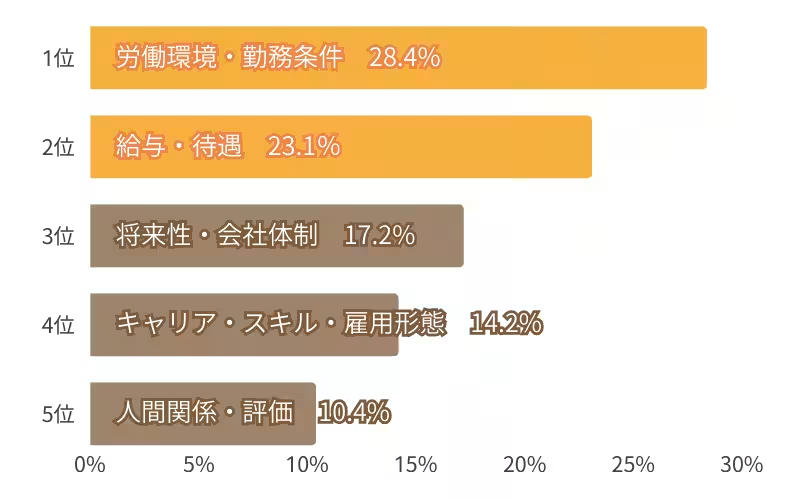
The report categorizes the reasons for job changes into various themes based on input from 224 candidates who consulted the Meal Agent service. Notably, the results indicate that 28.4% of respondents are inspired to leave their jobs due to unfavorable working environments and conditions, while 23.1% cite salary and compensation issues as motivational factors.
The report further reveals that uncertainties about the future—such as job security and company stability—also significantly impact the decision-making process for many professionals. This scenario is compounded by the need for individuals to develop their skills and advance their careers, which can often feel stifled in their current roles.
Key Reasons for Job Change
1. Working Conditions and Compensation
The majority of respondents have indicated that their desire to transition to new job opportunities stems from dissatisfaction with their working conditions. Long working hours, unpredictable shifts, and instances of pay cuts, especially for seasoned employees, contribute to a growing reluctance to remain in their current positions. This situation is particularly prevalent in the food industry, where employees often grapple with demanding environments that take a toll on their health and personal lives.
2. Concerns About Company Future and Workplace Dynamics
Another significant finding is the expressed concern about job security and organizational structure, which accounted for 17.2% and 10.4% of the responses respectively. Many professionals feel the burden growing heavier due to workforce shortages, which often leads to increased responsibilities without appropriate compensation or support. Additionally, some candidates report anxieties resulting from corporate restructuring or acquisition, which can disrupt internal dynamics and stability. The interpersonal conflicts that arise within the less socially interactive environments of kitchens and processing areas also contribute to the desire for a fresh start elsewhere.
3. Aspirations for Career Growth and Skill Acquisition
Interestingly, 14.2% of respondents highlight their ambitions to further their careers and refine their skills as a reason for job changes. Many express the frustration of being relegated to administrative tasks instead of engaging in hands-on processing work essential to their career development. There's a clear desire among professionals to acquire practical skills that enhance their efficiency and marketability in the food sector, such as fish and meat processing techniques, signaling a drive not just for job security but for personal growth as well.
Conclusion
The findings from TYL's report not only expose the underlying motivations behind job changes in the food processing and dining industries but also underscore a larger narrative of professionals yearning for improved working conditions and a clearer pathway to skill development. As the industry continues to evolve, stakeholders must address these concerns to foster an environment where employees feel valued, supported, and equipped to thrive.
About TYL
Established in 2017, TYL aims to enhance the quality of life for pets and their owners, while also supporting professionals within the pet care and food industry through their services. The company's commitment to understanding and improving the working landscape is evident in initiatives such as the 'Meal Agent,' which provides specialized support for job seekers in the food sector. For more information, visit TYL’s official site.

Topics Business Technology)
【About Using Articles】
You can freely use the title and article content by linking to the page where the article is posted.
※ Images cannot be used.
【About Links】
Links are free to use.