



Recent Surge in E-Commerce Payment Errors During Obon and Autumn Sales Seasons
Surging Payment Errors in the E-Commerce Sector
In a recent analysis conducted by YTGATE, a Tokyo-based company specializing in payment optimization SaaS, notable trends in payment errors during key shopping seasons were identified. The report focuses specifically on the period from June to October 2025, capturing data from approximately ten million transactions across various e-commerce platforms utilizing the YTGuard service.
Rising Error Rates
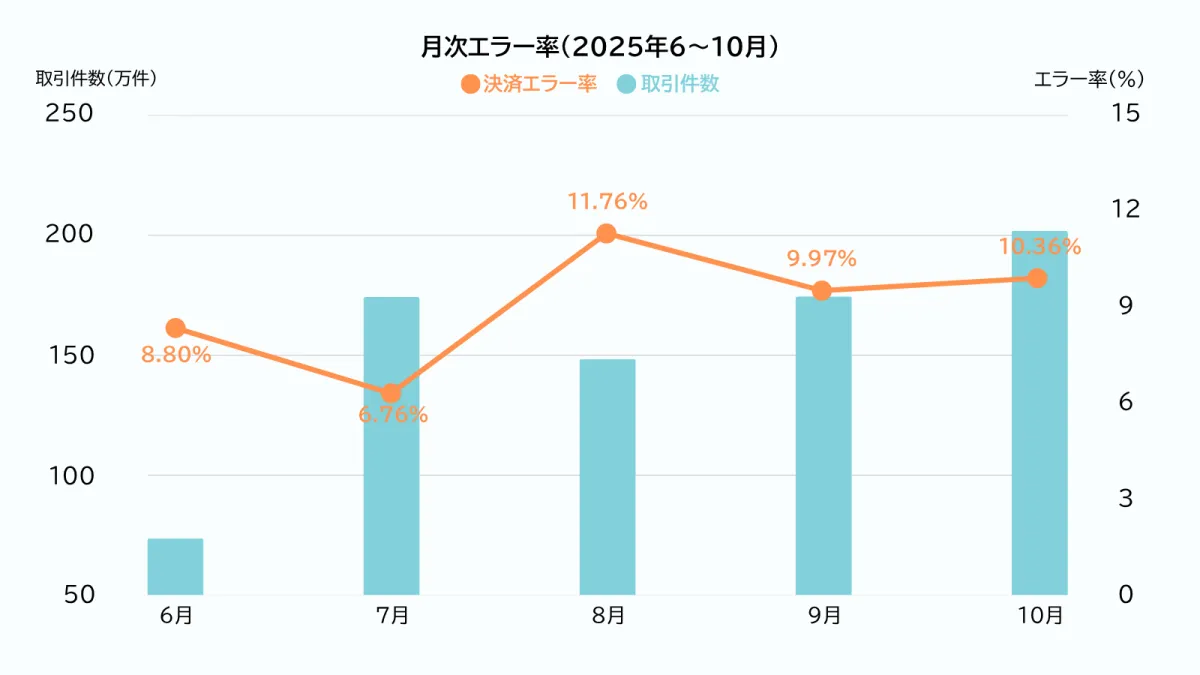
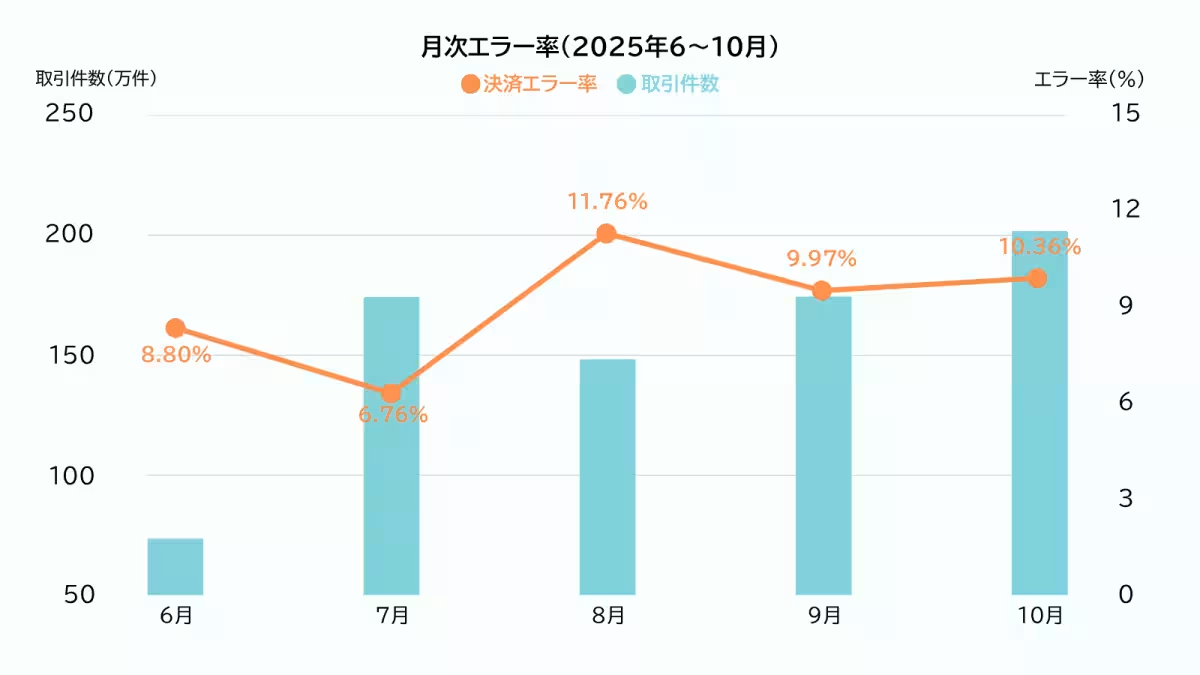
YTGATE's findings indicate that payment errors are significantly higher during the Obon festival and the autumn sales season compared to regular months. The data demonstrates a stark increase in error rates from July to August, with rates rising from 6.76% in July to 11.76% in August, peaking at 13.62% specifically during the Obon period, from August 13 to August 21. As the autumn sales peak approached on October 31, the error rate further escalated to 16.87%. This trend highlights a structural issue where increased transaction volumes lead to declining approval rates.
Daily Peak Trends
To better understand these increases, the report outlines daily error rates during Obon:
- - August 13: 16.47%
- - August 14: 13.52%
- - August 15: 10.11%
- - August 16: 16.52%
- - August 17: 15.04%
- - August 18: 12.40%
- - August 19: 10.63%
- - August 20: 14.66%
- - August 21: 14.29%
The overall average error rate for the Obon period stands at 13.62%, which is nearly double that of July. When looking at the error rates associated with the autumn season, daily peaks were similarly high:
- - October 25: 14.96%
- - October 26: 15.55%
- - October 27: 8.62%
- - October 28: 13.30%
- - October 29: 9.60%
- - October 30: 11.35%
- - October 31: 16.87%
Analyzing Error Causes
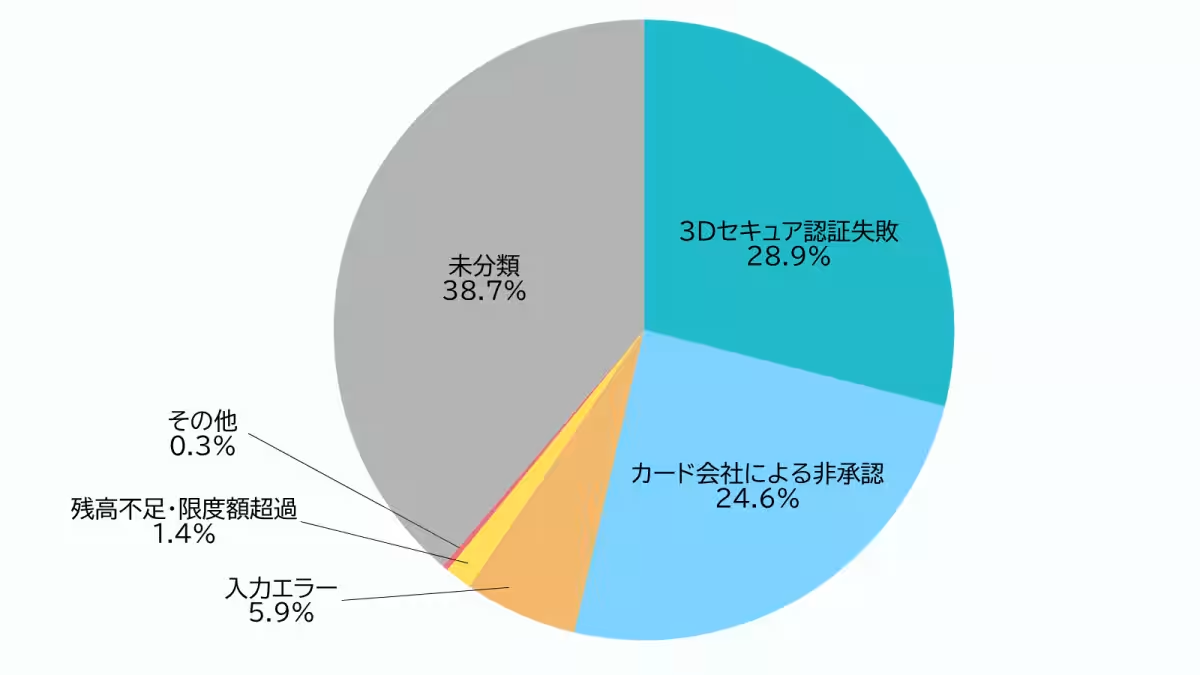
The analysis categorized the reasons for payment errors, revealing that a staggering 38.7% of errors were uncategorized. However, focusing on the identified causes, about 47% stemmed from failures in 3D Secure authentication. This highlights that errors related to identity verification are far more common than issues with card information entry or insufficient funds. Consequently, as new customers—often less familiar with e-commerce—join during busy shopping periods, the likelihood of errors increases due to inexperience.
Growth in Usage and Declining Rates
While the error rate for June 2025 was 8.80%, preliminary data suggests it dropped to 5.80% in June 2026. However, this decrease coincides with a rise in the number of enterprises using YTGuard by 2.4 times, indicating variations in the composition of participating merchants and their products. As a result, the analysis emphasizes that the focus should remain on comparing trends within the same population.
Conclusions
This analysis unmistakably illustrates that periods of concentrated e-commerce transactions, such as Obon and the autumn sales seasons, are accompanied by heightened payment error rates. Notably, nearly half of these errors can be attributed to failures in the 3D Secure authentication process. The root cause may stem from an influx of less experienced users during high-traffic periods, who tend to struggle more with complex verification processes.
Future improvements in the authentication design, transaction guidance, and overall payment environment are required to mitigate these issues. YTGATE sets a benchmark of above 95% for payment approval rates, underscoring that even a slight improvement in error rates can have a huge impact on revenue levels.
For businesses preparing for peak sales seasons, understanding their payment approval rates and areas for improvement is crucial. With proactive measures in place, a significant portion of these avoidable errors can be converted into sales opportunities.
In conclusion, the upcoming busy periods should prompt businesses to optimize their 3D Secure processes and overall transaction environments to minimize both losses and enhance user experience during crucial shopping seasons.

Topics Consumer Products & Retail)


【About Using Articles】
You can freely use the title and article content by linking to the page where the article is posted.
※ Images cannot be used.
【About Links】
Links are free to use.