



Exploring the Current State of Generative AI Utilization in Municipalities
The Current Landscape of Generative AI Adoption in Municipalities
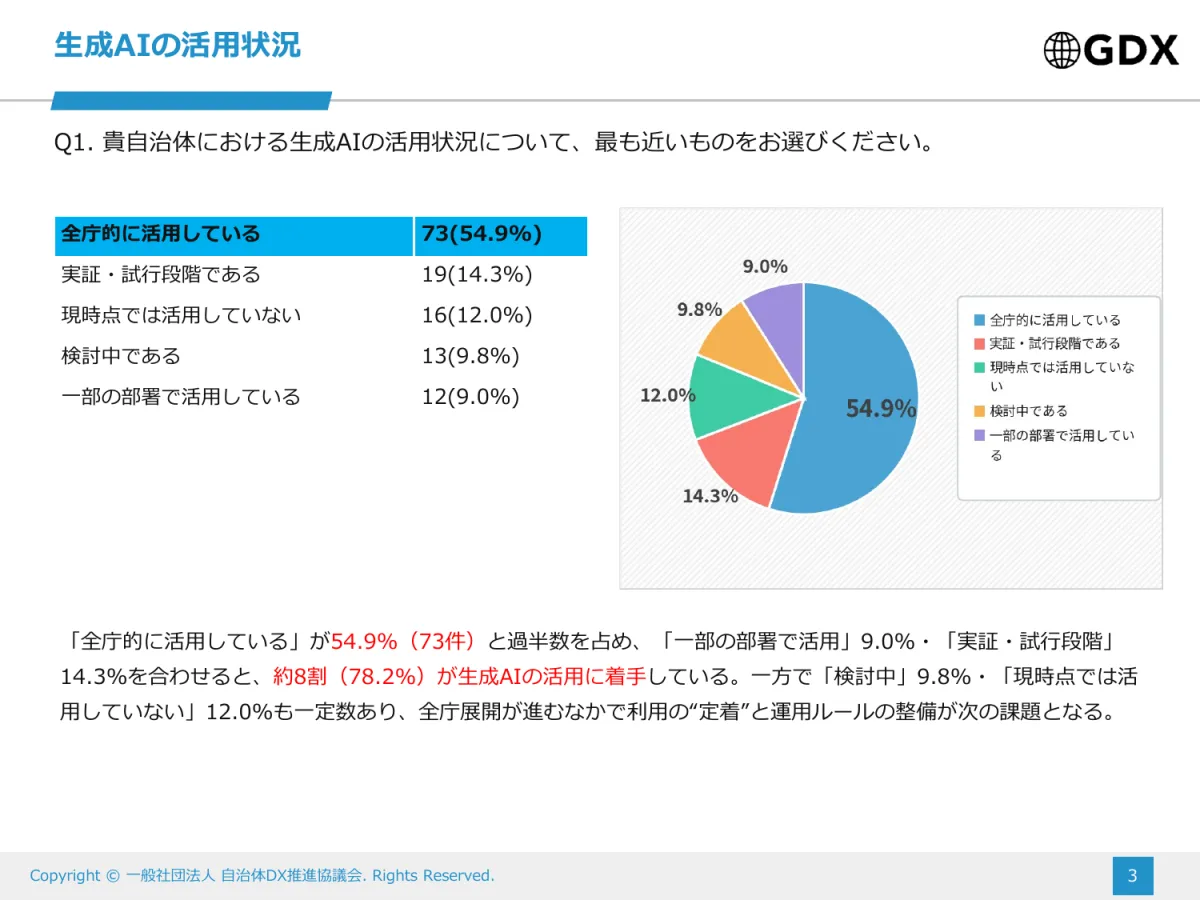
In recent findings from the General Association for Digital Transformation in Local Governments (GDX), a revealing survey indicates that 78.2% of municipalities are now actively engaging with generative AI technologies. The report, which focuses on the state of document and data management within these entities, highlights both advancements and significant challenges in the transition towards a digital-first framework.
Key Findings from the Survey
Conducted between June and July 2026, the survey captured responses from 133 municipalities across 41 prefectures. Key insights include:
- - 54.9% of municipalities report utilizing generative AI organization-wide.
- - 9.0% have implemented it in specific departments.
- - 14.3% are still in the experimental phase.
- - 9.8% are considering adoption, while 12.0% have not yet implemented any form of generative AI.
This highlights a pivotal shift where municipalities are not just deciding whether to adopt technology but are moving towards mastering its use effectively.
Major Challenges Faced
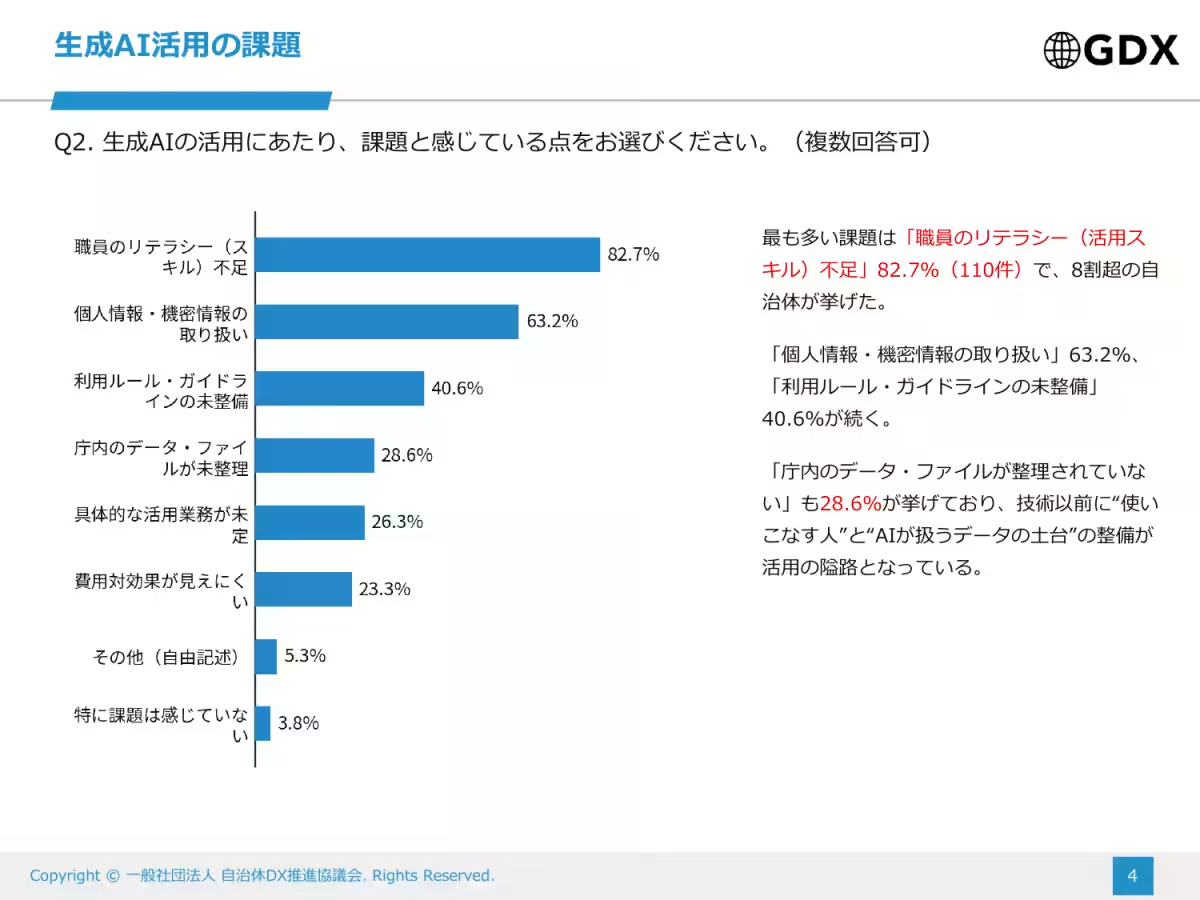
Despite the encouraging statistics regarding adoption, the survey also identified the primary hurdle: 82.7% of respondents cited staff literacy as a significant barrier to effective implementation. Other challenges included:
- - 63.2% concerned about managing personal and sensitive information.
- - 40.6% noted the absence of established guidelines.
- - 28.6% faced issues with data organization and clarity within internal systems.
This indicates that it is not merely the technology that requires a shift, but also the workforce's proficiency in leveraging these tools, as well as the foundational data environment in which they operate.
The Importance of Embracing Digital Transformation
An overwhelming 93.2% acknowledged the importance of advancing generative AI and digital transformation initiatives. However, a significant portion, 51.1%, admitted that their efforts were still marginally developed. This reflects a gap between recognition and action, where municipalities recognize the value in these tools but struggle to implement them effectively.
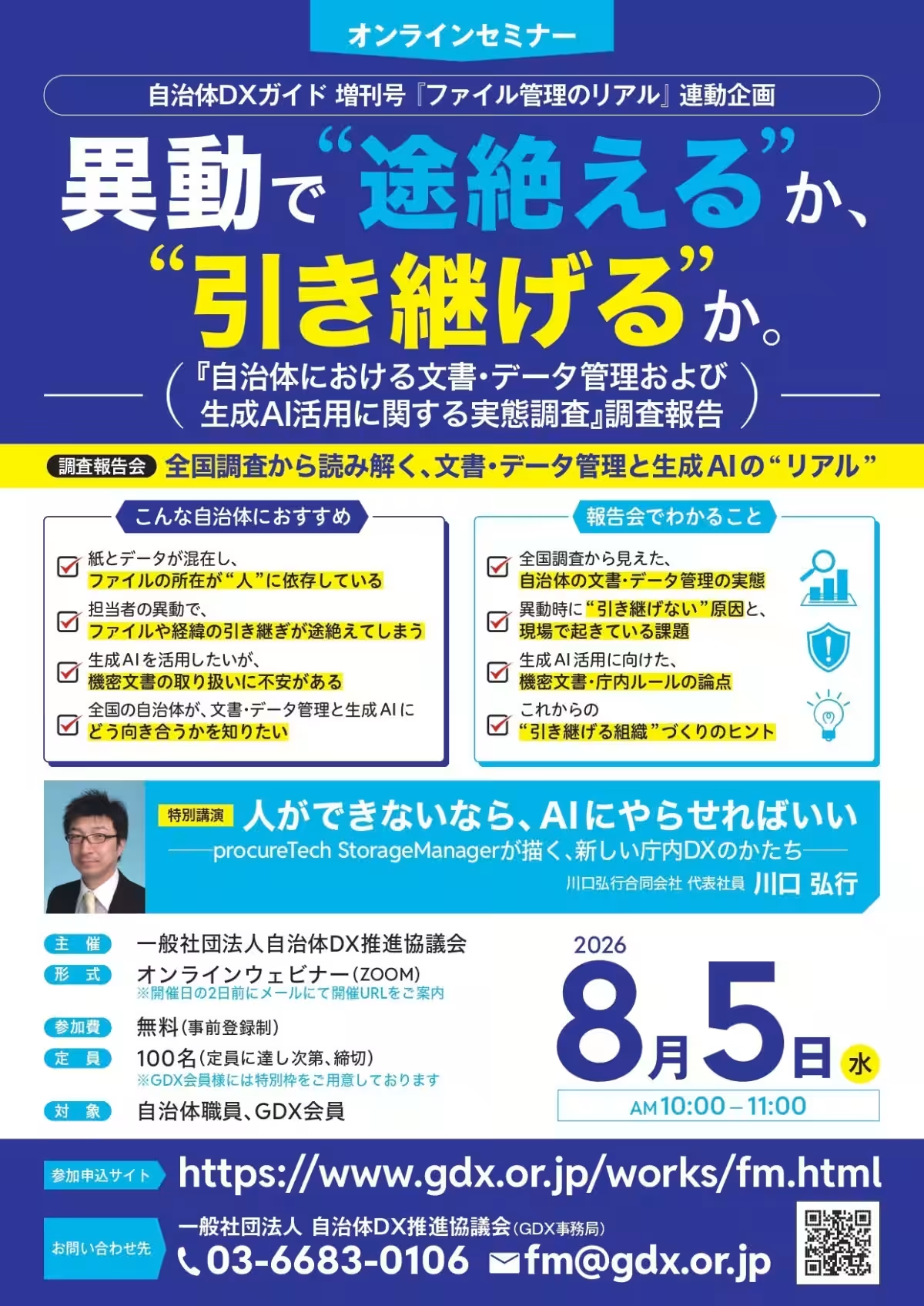
The upcoming report presentation scheduled for August 5, 2026, will delve deeper into these findings. Participants can expect a comprehensive overview of the survey results alongside expert insights into building a robust and sustainable digital environment within municipalities.
Understanding the Digital Landscape
The transition towards generative AI is a critical juncture for many municipalities. Feedback from staff indicates that expectations of a smooth operational transition have not always been met, often due to unorganized existing data frameworks. Many organizations face issues like overcrowded file systems, a lack of updated files, and mixed categories of sensitive and standard information, all of which complicate AI integration.
As responsibilities shift among staff, knowledge transfers become vital yet tenuous, highlighting the need to create resilient informational infrastructures. Addressing these challenges will not only facilitate generative AI applications but also underpin consistent governmental operations.
Expert Commentary
During the upcoming report, distinguished speaker Hiroyuki Kawaguchi from Kawaguchi Hiroyuki LLC will present on the topic of leveraging AI to enhance internal efficiency by automating file organization and indexing. His insights will shed light on potential pathways for municipalities to achieve a holistic and sustainable digital transformation.
Final Thoughts
The forthcoming report and discussions aim to illuminate the current landscape of generative AI adoption in municipalities and underscore the critical nature of staff training and data organization. As communities strive towards smarter operations, the role of thoughtful implementation strategies fueled by AI's potential is more essential than ever. Join us online for a comprehensive look at these transformative initiatives in local governance.

Topics General Business)
【About Using Articles】
You can freely use the title and article content by linking to the page where the article is posted.
※ Images cannot be used.
【About Links】
Links are free to use.