



Over 60% of Real Estate Companies Are Unprepared for Energy Conservation Law Changes
Survey on Readiness for Energy Conservation Law
A recent study conducted by ielove GROUP, a Tokyo-based digital transformation service provider focused on the real estate sector, revealed alarming statistics regarding the preparedness of real estate companies for the revised Energy Conservation Law set to take effect on April 2025. The survey encompassed responses from 141 real estate firms and 883 end-users, leading to 1,024 validated replies.
Context of the Study
The upcoming law mandates that nearly all new residential buildings and structures comply with national energy efficiency standards. This reform aims to enhance the energy consumption performance of buildings, which may have significant implications for real estate companies regarding their operations and property offerings. This study was essential to gauge how prepared real estate firms are for this legal transition and what end-users expect regarding energy efficiency features in homes.
Key Findings of the Survey
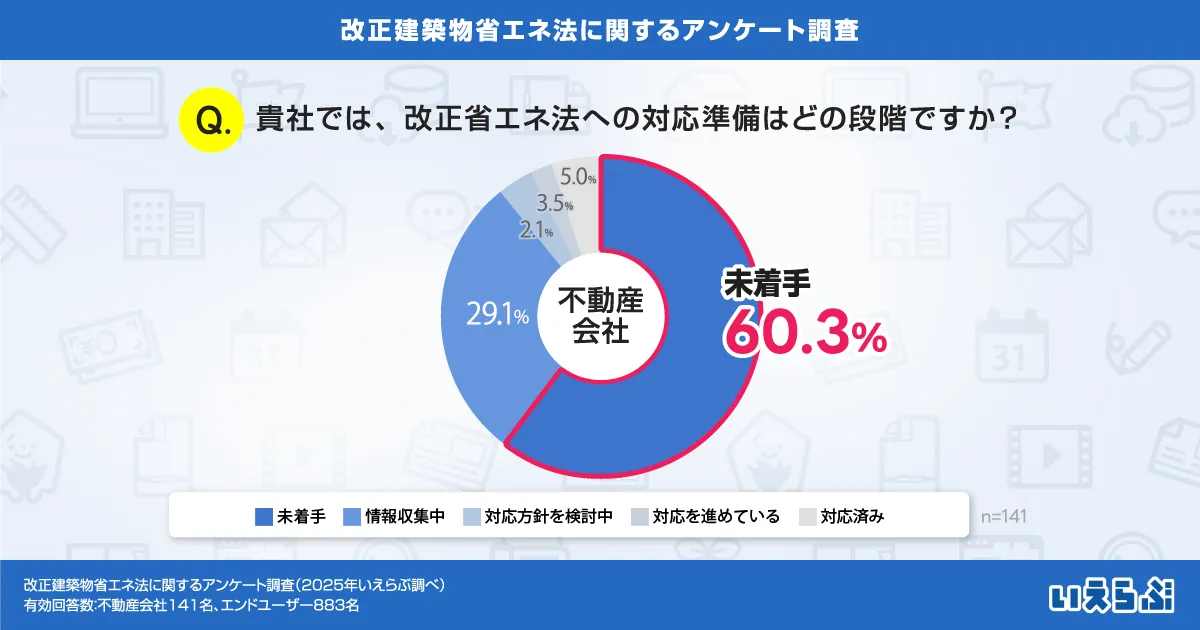
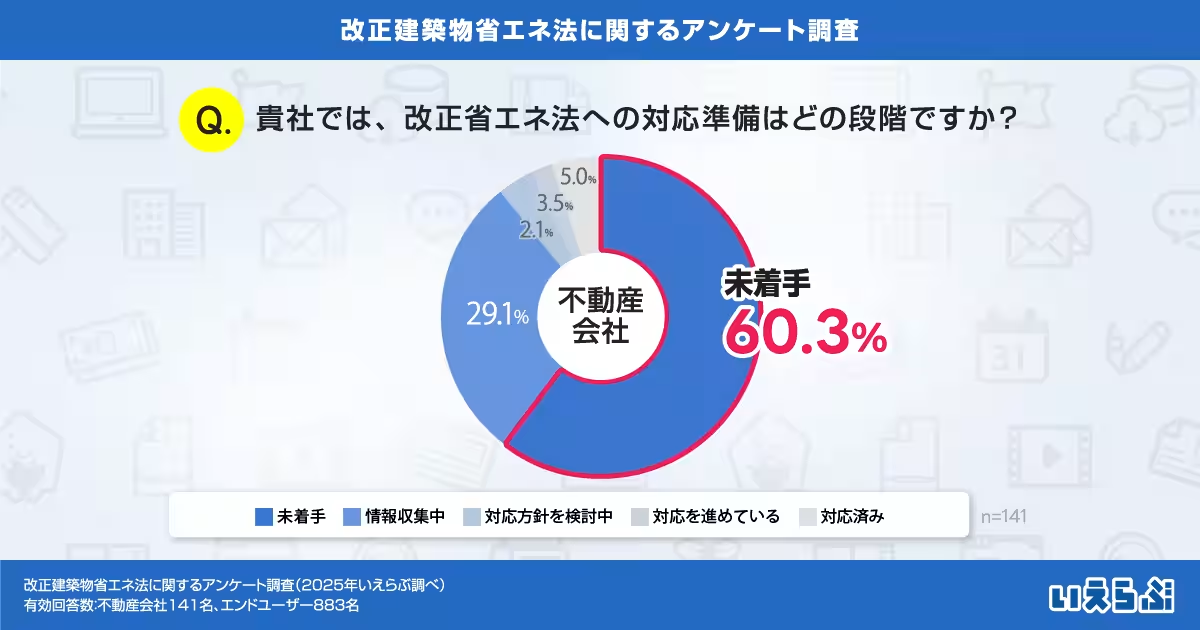
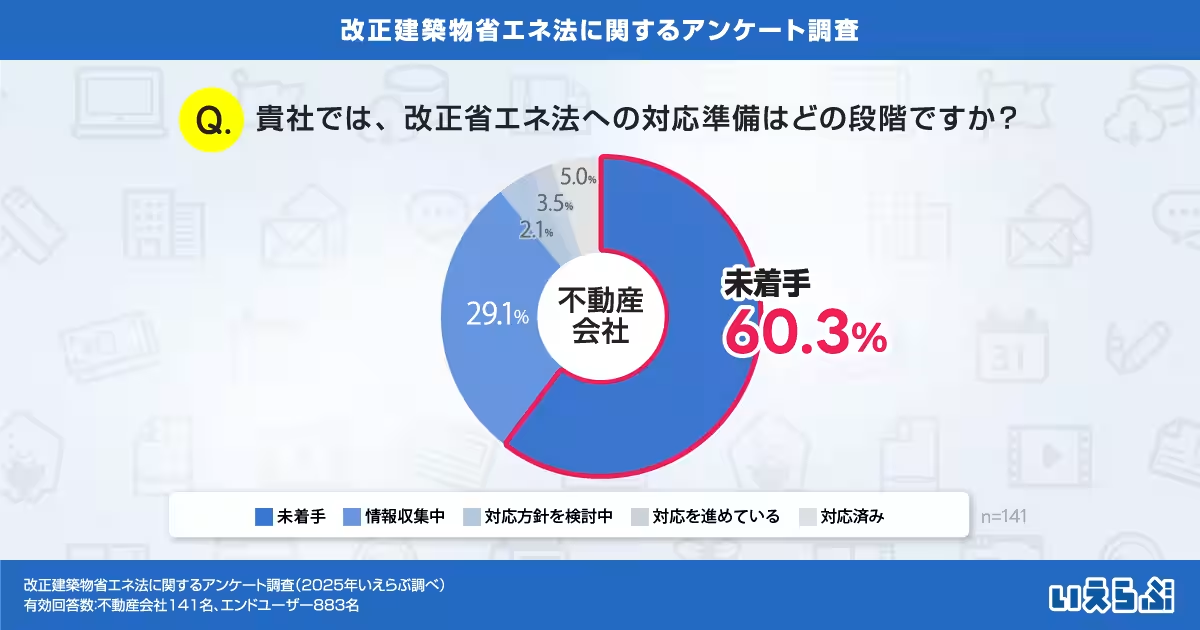
1. Lack of Preparedness Among Real Estate Companies: About 60.3% of real estate companies reported being unprepared for the revised energy conservation law. A further 29.1% indicated they were still gathering information, while only 5% claimed to have completed their preparations. This stark finding highlights that many firms have yet to take concrete action toward compliance.
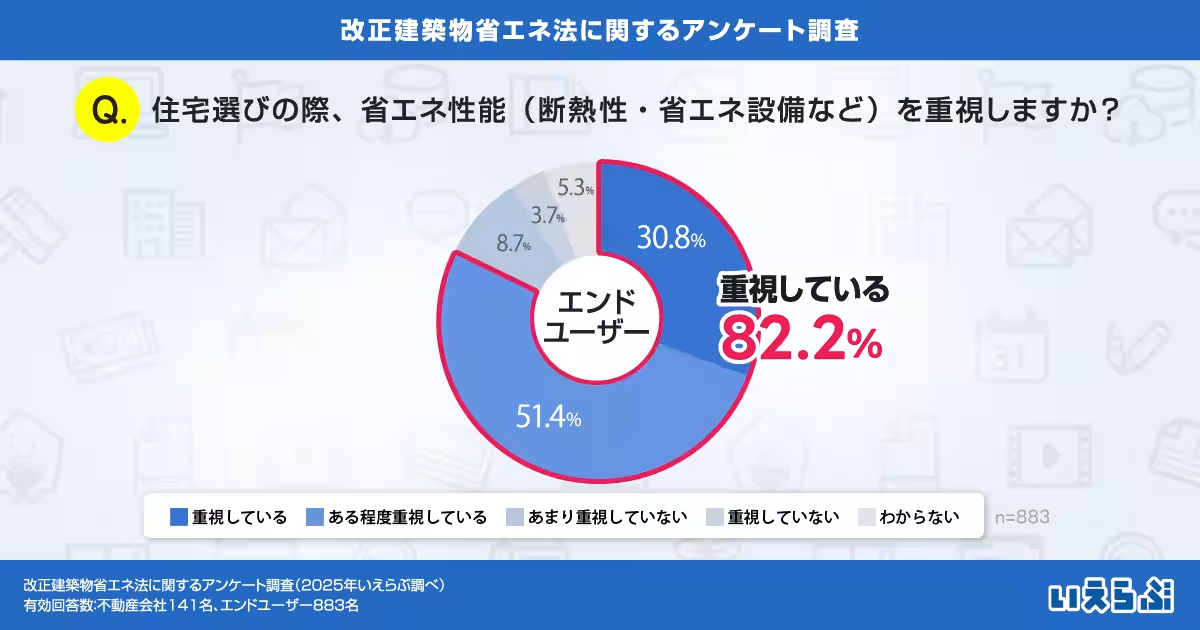
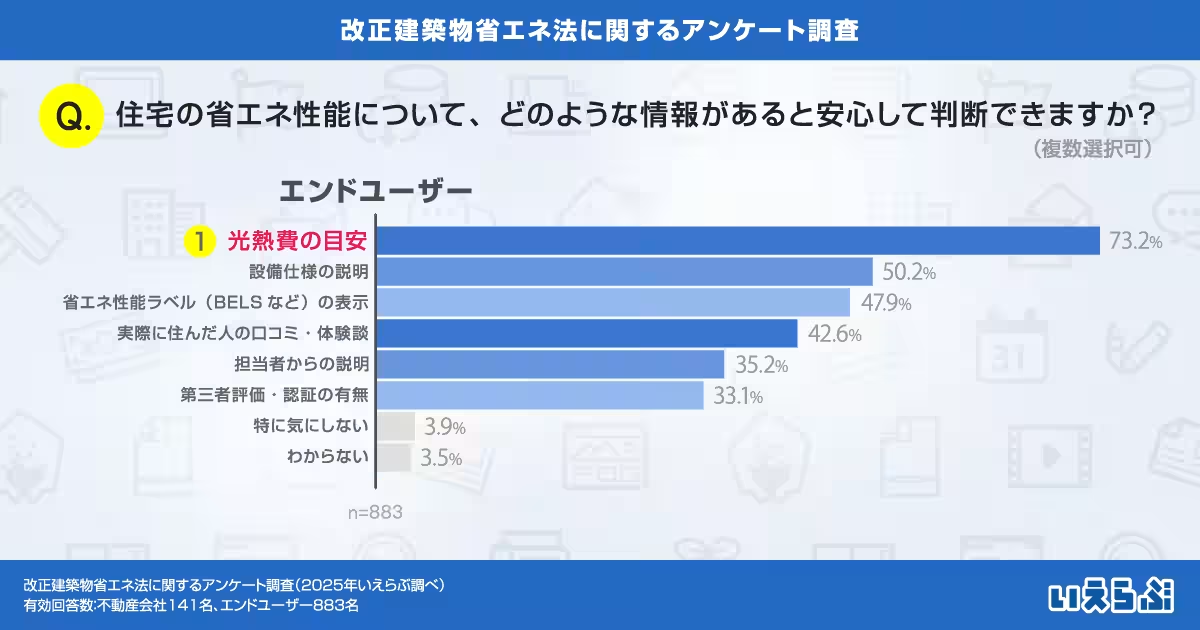
2. End-User Insights on Energy Efficiency: In contrast to the industry's lag, 82.2% of end-users emphasized the importance of energy efficiency when selecting a home. Notably, 73.2% of them expressed particular interest in knowing estimated utility costs. The growing concern about rising utility expenses and environmental sustainability appears to be a significant factor influencing consumers' choices in real estate.
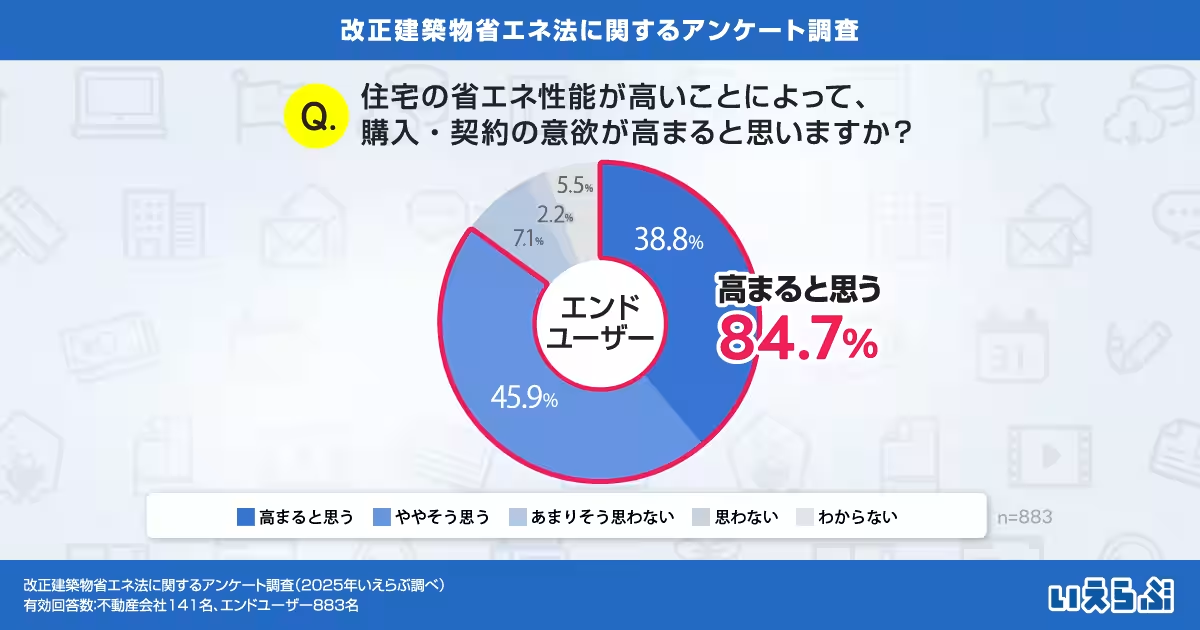
3. Purchase Intent Linked to Energy Efficiency: A substantial 84.7% of respondents stated that high energy efficiency would increase their willingness to purchase or contract for a home. This trend illustrates that energy-efficient homes are becoming a compelling aspect for consumers, potentially driving higher sales volumes for compliant properties.
In-Depth Analysis
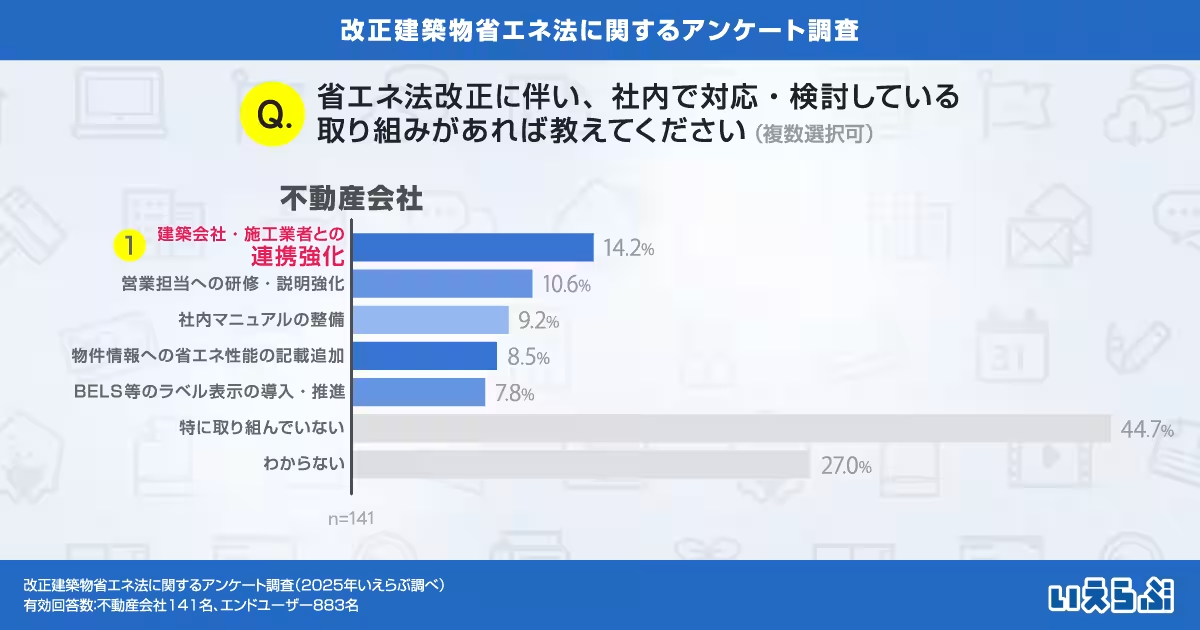
Despite the impending legal changes, the survey revealed a troubling disconnect between readiness among real estate firms and consumer expectations. When asked about their current stage of preparation, a staggering 60.3% of real estate companies admitted to being uninitiated. A closer examination revealed that 44.7% of respondents specifically noted that they had no initiatives underway to address the revised law. Conversely, a few companies reported taking proactive steps, such as strengthening cooperation with builders (14.2%) or enhancing training for sales teams (10.6%).
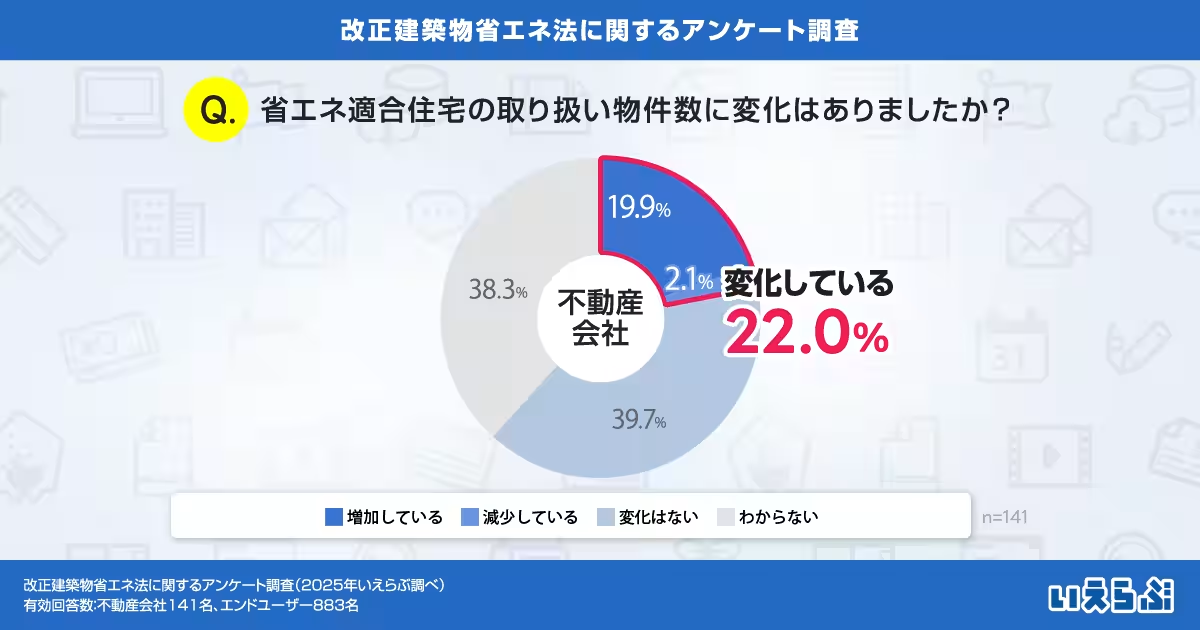
However, a significant proportion of companies (39.7%) indicated no observable changes in the number of energy-efficient properties they're handling, while 38.3% were uncertain about such changes. This indicates a lack of awareness among real estate agents concerning the evolving market trends and the availability of energy-efficient homes, possibly due to inadequate dissemination of information regarding the new law requirements.
Meanwhile, regarding the end-users, the data shows that a large fraction values energy efficiency significantly when choosing housing. Of those surveyed, 30.8% indicated that they heavily prioritize energy efficiency features, while 51.4% somewhat prioritized them during their selection process. The demand for lower energy bills and the increasing awareness of environmental concerns are evidently shaping buyer preferences in the current market landscape.
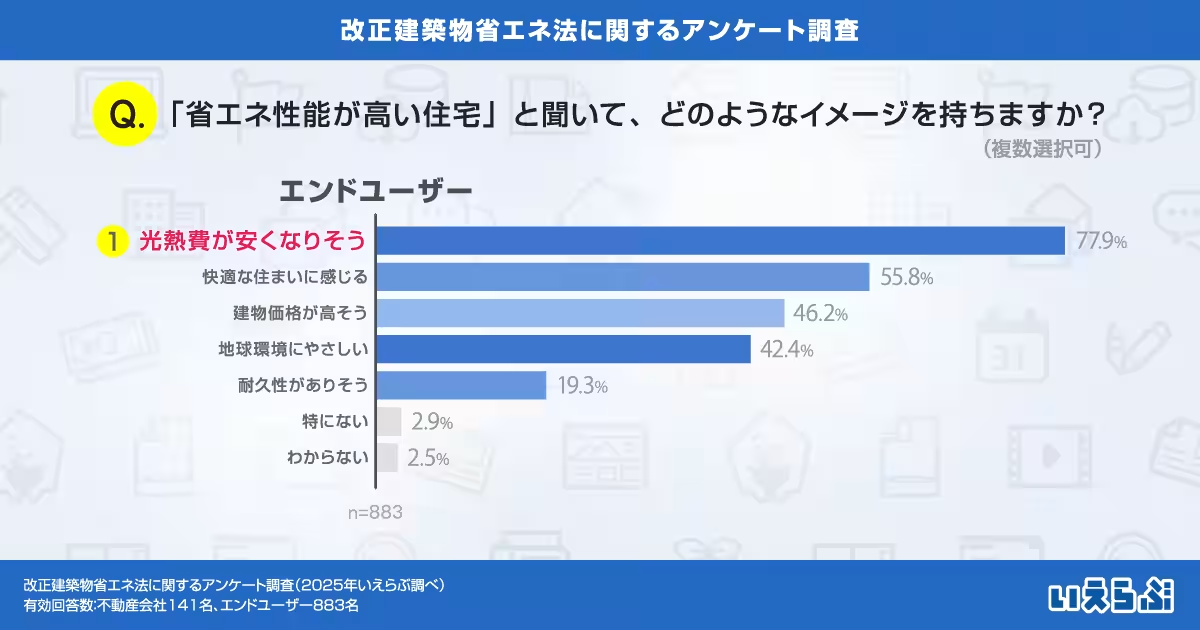
Furthermore, when end-users were asked about their perceptions of energy-efficient homes, an overwhelming 77.9% expected them to lower energy costs, while 55.8% associated them with increased comfort and 46.2% attributed a higher property value to energy-efficient homes. Although the upfront costs may be perceived as higher, consumers are clearly drawn to the long-term financial savings and enhanced quality of living that energy-efficient properties promise.
Conclusion
In light of these findings, Kenichi Niwayama, Executive Director at ielove GROUP, commented on the survey's implications, indicating that while many real estate firms remain unprepared for upcoming legislation, consumer interest in energy-efficient housing is on the rise. As they position themselves strategically, real estate companies can leverage the increasing demand for energy conservation compliance to innovate their offerings and enhance sales.
The study’s release underscores the urgency for real estate firms to implement strategies addressing these new regulations effectively. Those who adapt to these changes are likely to benefit significantly as consumer behaviors shift toward energy-efficient properties.
For further details regarding the survey or inquiries about ielove GROUP's services, please contact us at our corporate office or visit our website.

Topics Consumer Products & Retail)
【About Using Articles】
You can freely use the title and article content by linking to the page where the article is posted.
※ Images cannot be used.
【About Links】
Links are free to use.