




Understanding Teenage Struggles: Insights from a Recent Survey by Premaceed
Insights into the Challenges Faced by Today's Teenagers
In a world that seems to be ever more complex, the experiences of today's teenagers are drawing attention. A recent survey conducted by Premaceed, a company operating the online portal 'Go Tsushin Seiko,' has illuminated the various struggles adolescents face today. Running from May 15 to May 19, 2026, this survey gathered insights from 600 participants, including both teenagers aged 15 to 19 and parents aged 40 to 59, to analyze the perceptions surrounding the challenges faced by youth in contemporary society.
A Bewildering Time for Adolescents
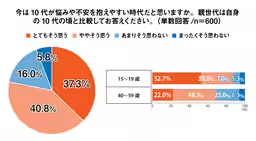
One of the critical findings from the survey reveals that a staggering 78.2% of respondents believe that this is a particularly troubling time for teenagers. Alarmingly, an even higher percentage, 87.7% of the youth themselves, express feeling more vulnerable to anxieties and uncertainties than previous generations.
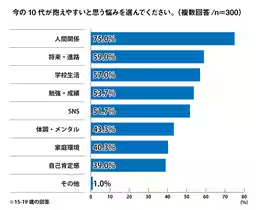
When asked about what issues teenagers believe they struggle with most, 75.0% pointed to 'relationships' as their foremost concern. Following closely behind were worries regarding 'future and career' at 59.0%, and 'school life' at 57.0%. Such responses underscore a worrisome trend: teens today are acutely aware of the pressing challenges they face in their immediate environment.
The Reality of Personal Struggles
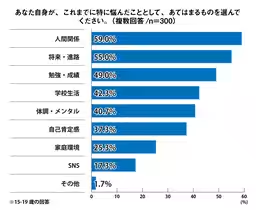
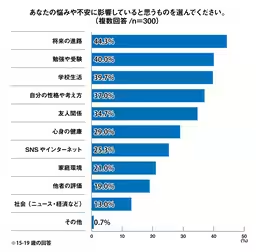
Delving deeper into personal experiences, the survey revealed that 59.0% of respondents had struggled with relationship-related issues, 55.0% faced challenges regarding their future, and 49.0% expressed concerns about their academic performance. Interestingly, while social media was perceived as a significant source of anxiety—cited by 51.7% in the previous question—only 17.3% identified it as a direct concern from their own experiences. This indicates a complicated relationship with social media, where it is both acknowledged as a potential source of anxiety yet not experienced directly by many.
Bridging Generational Gaps
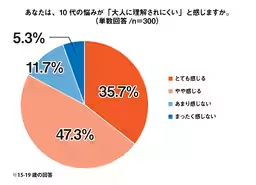
Comments from Premaceed's CEO, Akihito Iwata, highlight the connection across generations concerning teenage struggles. He notes that both the youth and their parents resonate with the challenges faced during adolescence. Despite this shared understanding, teenagers often feel their struggles aren't recognized by adults, with 83.0% indicating that they believe their issues are not thoroughly understood by older generations.
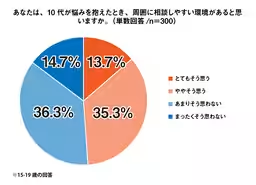
Additionally, less than half (49.0%) of the respondents believed there is an accessible environment for them to seek help when facing difficulties. This gap indicates a pressing need for more supportive spaces where adolescents feel safe to express their concerns and queries.
The Importance of Supportive Environments
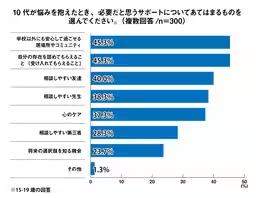
When it comes to the support teenagers feel they need, their requirements emphasize the desire for safe spaces and communities outside of school. Around 45.3% stressed the importance of having a place where they feel secure and accepted, paralleling the need for an increase in supportive environments over merely having more people to talk to.
The results show a significant trend: teenagers are looking for affirmations of their existence and community rather than just a listening ear. The findings suggest that fostering environments where teenagers feel they belong is essential for addressing their mental and emotional health.
Conclusion: Navigating the Future
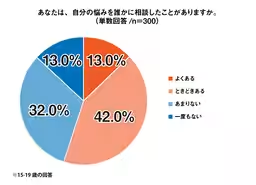
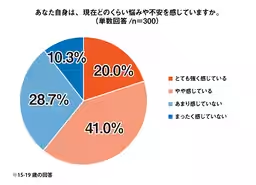
Over 60% of teenagers participating in the survey reported feeling overwhelmed by their problems. Their anxieties stem from immediate issues, including academic pressures, school life, and worries about their futures. Yet, despite this distress, many are hesitant to discuss their concerns. The findings underscore the importance of creating safe spaces where individuals feel acknowledged.
As society evolves, the methods of addressing and supporting teenage struggles must adapt to meet the current generation's needs. The rise in enrollment in flexible education options, such as alternative schools and online learning platforms, might reflect a growing understanding of diverse needs in education and mental health support. The creation of these 'third places'—safe havens outside traditional educational environments—can play a crucial role in helping today’s youth navigate their challenges effectively.
In a time where individuality and diversity are celebrated, the educational frameworks that mold adolescents must begin to reflect these values, recognizing that there is no singular path for every student. By focusing on creating environments that validate and acknowledge each student’s unique experiences, we move closer to fostering a more supportive and understanding society for our youth.



Topics People & Culture)


【About Using Articles】
You can freely use the title and article content by linking to the page where the article is posted.
※ Images cannot be used.
【About Links】
Links are free to use.