



Understanding the Demand for Telework Policies During Inclement Weather Conditions
Understanding the Demand for Telework Policies During Inclement Weather Conditions
Recent findings from LASSIC, a company specializing in promoting flexible work arrangements, indicate a significant demand for workplace policies regarding telework during adverse weather conditions. The survey involved 1,004 working individuals who have experienced telework or remote work, focusing on their preferences for support systems when facing bad weather.
Survey Insights
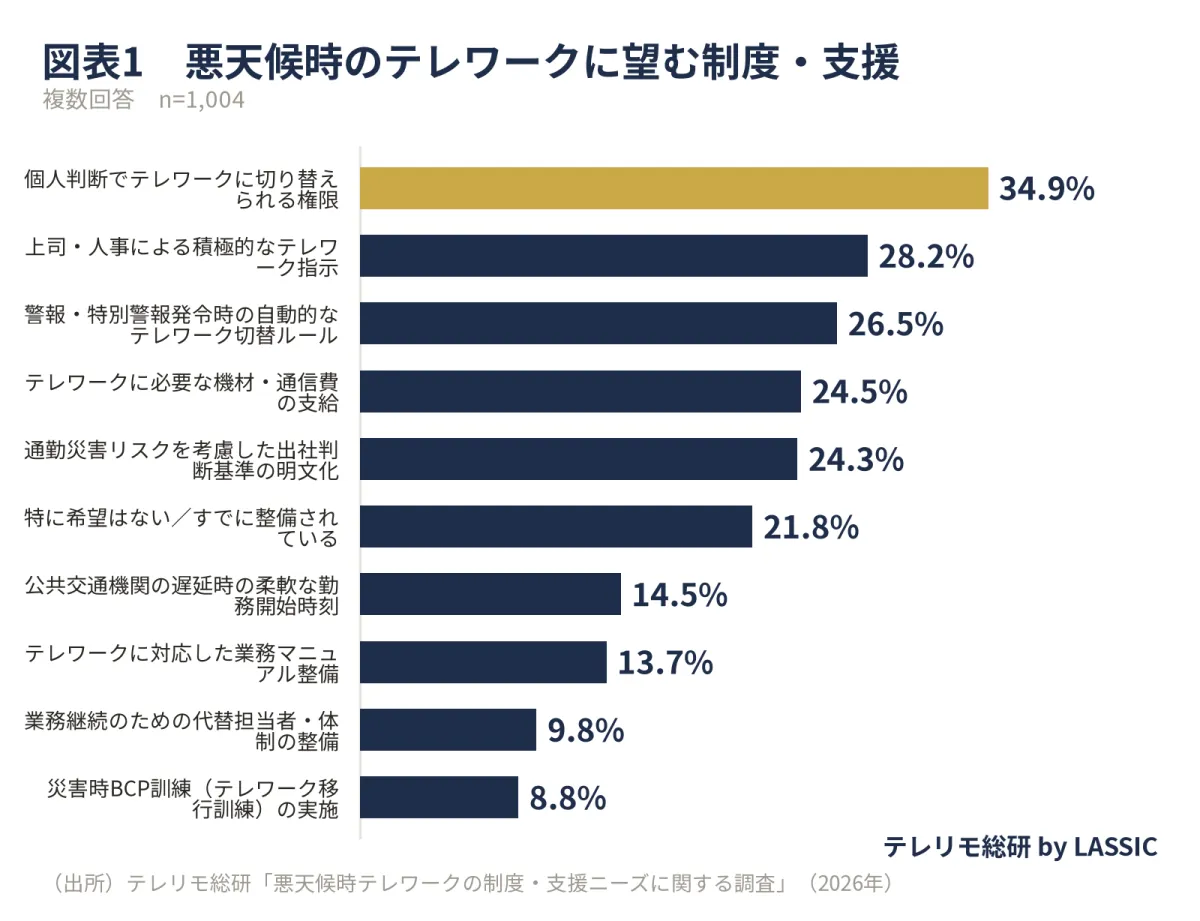
The survey conducted by LASSIC's Telework Research Institute (テレリモ総研) from June 15 to June 17, 2026, examined various elements of telework preferences among employees. The most notable preference reported was the desire for the authority to switch to telework based on personal judgment, which garnered 34.9% of the responses. This highlights a growing emphasis on autonomy within the workforce when it comes to making telework decisions.
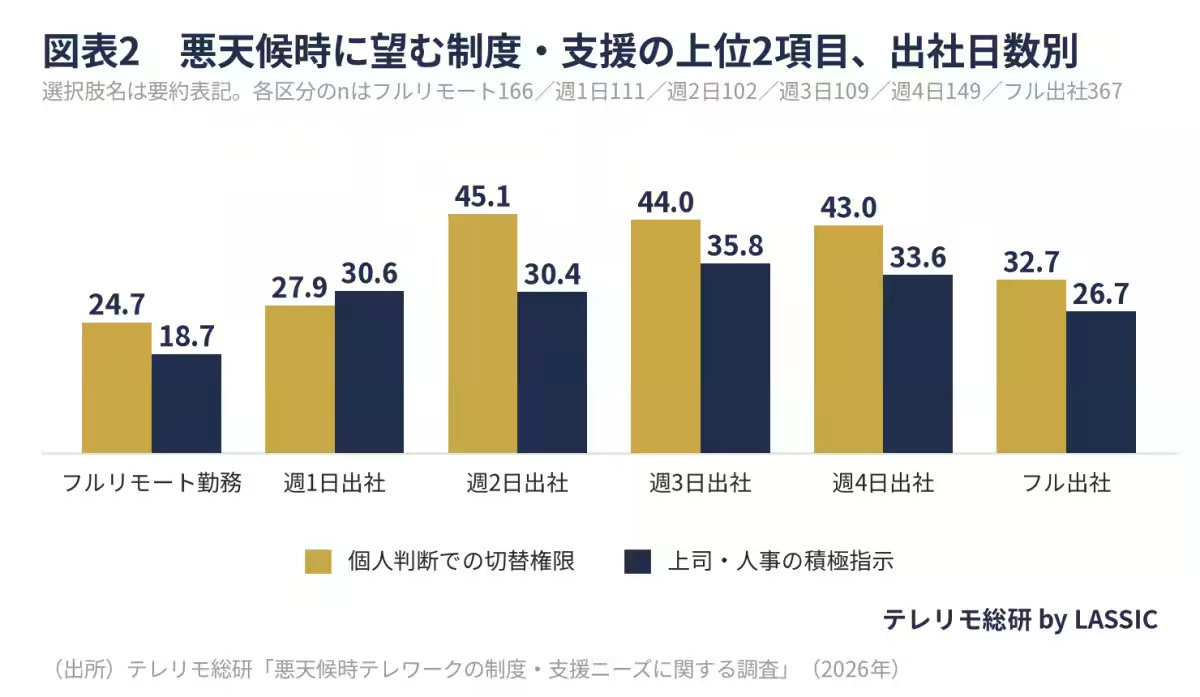
In particular, this preference was especially pronounced among employees who work in-person 2 to 4 days a week, with 43% to 45.1% of respondents favoring this option. In contrast, only 24.7% of full-time remote workers indicated a similar preference. This disparity suggests that individuals who regularly commute might be more affected by inclement weather and thus more inclined to seek flexible arrangements.
Other Notable Preferences
Following the demand for personal telework authority, the second-ranked request was for proactive telework instructions from supervisors or HR departments, capturing 28.2% of responses. Additionally, 26.5% requested automatic telework switch rules during weather alerts and emergencies. These findings reinforce the notion that employees seek clarity and support from their employers during adverse weather events.
Interestingly, 21.8% of participants expressed that they either had no special requests or that their companies already had adequate policies in place. This indicates that while many are calling for improvements, there is a substantial portion of employees who feel supported by existing structures.
Gender and Age Demographics
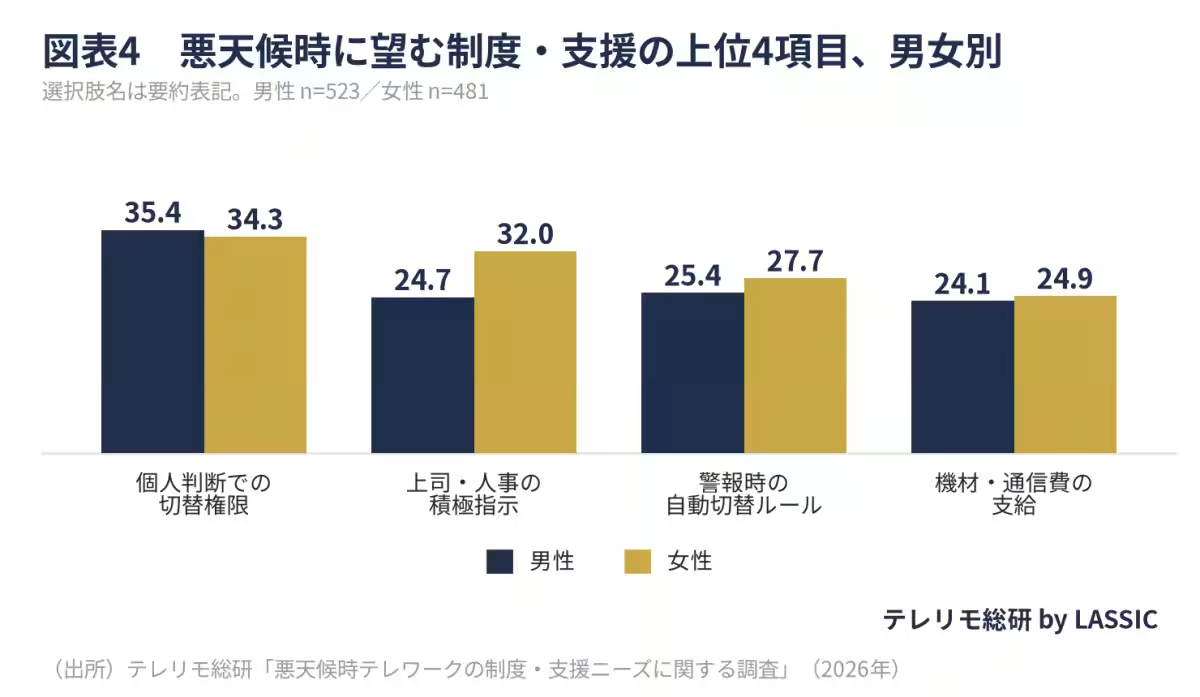
When analyzing the responses by gender, a notable difference emerged in the preference for proactive telework instructions, with 32% of women favoring this option compared to 24.7% of men, marking a 7.3-point gap. This aspect may reflect differing workplace experiences and expectations between genders.
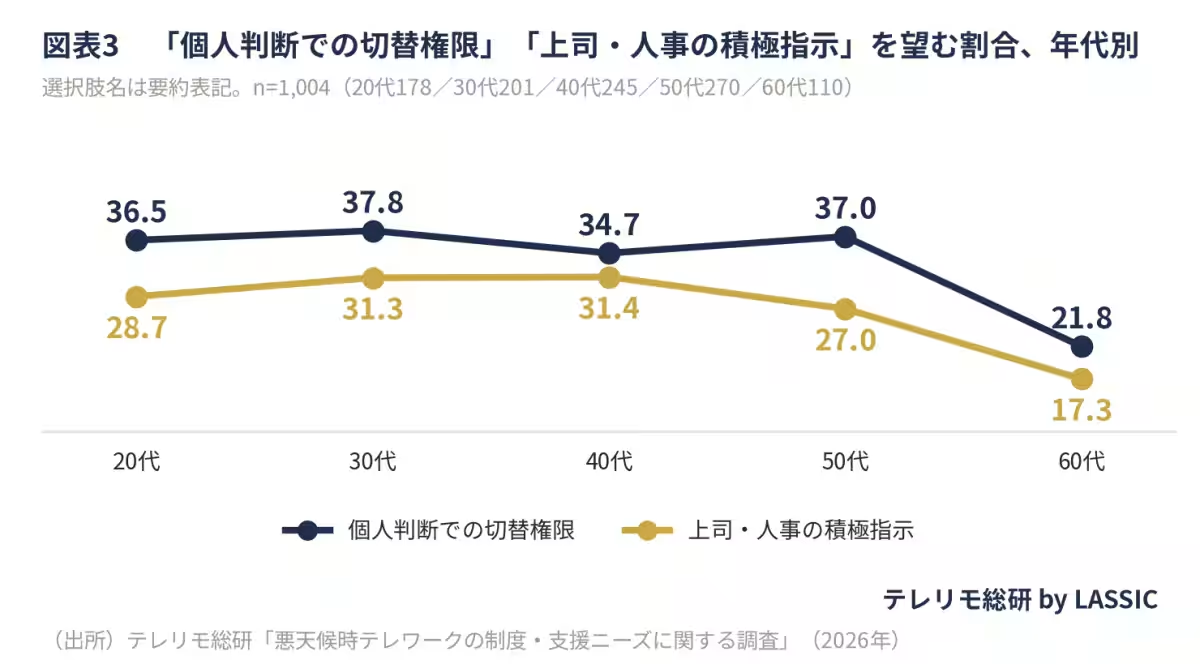
Age demographics also revealed intriguing insights. Employees aged 60 and above showed the lowest demand for both personal telework authority (21.8%) and proactive telework instructions from management (17.3%). Meanwhile, younger age groups (20s to 50s) reported a higher inclination towards these measures.
Conclusion
Through this survey, LASSIC illustrates a clear trend among workers favoring policies that afford them the flexibility to switch to telework during bad weather. The data underscores a desire for more employee autonomy in decision-making while simultaneously seeking support from management. As remote work continues to evolve, understanding these preferences will be crucial for companies aiming to create effective and supportive work environments.
For further information regarding this research and deeper insights into telework trends, LASSIC invites interested parties to access their detailed reports, available on their official website here.


Topics Consumer Products & Retail)



【About Using Articles】
You can freely use the title and article content by linking to the page where the article is posted.
※ Images cannot be used.
【About Links】
Links are free to use.