



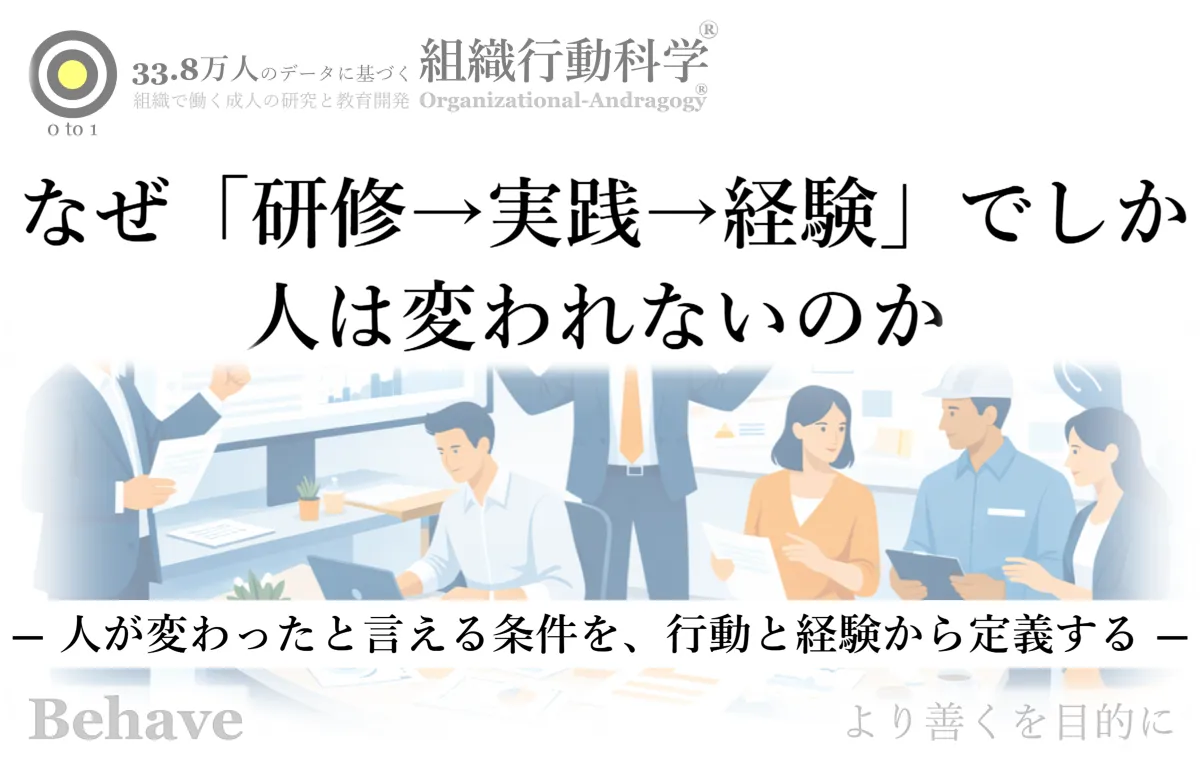
The Importance of Experience in Transforming Human Behavior in Organizations
Why Can’t Training Alone Change Human Behavior?
In today’s fast-paced corporate environment, organizations often invest heavily in training programs aimed at improving employee skills and behaviors. However, despite undergoing extensive training, many companies experience a disconnect between the training delivered and the actual changes in workplace behavior. This has led to rising concerns about the efficacy of these initiatives, prompting a new report by Request Inc., which operates the Human Capital Development Planning Center. The report, titled "Why Can’t People Change Without Training, Practice, and Experience?" analyzes data from 338,000 individuals across 980 companies to reveal key insights into human behavior transformation.
The Disconnect Between Training and Real-World Application
Many organizations have made significant strides in enhancing the sophistication of their training programs. However, a common feedback loop persists: employees often feel that understanding the material and even completing the training does not lead to meaningful changes in on-the-job behavior. The report seeks to investigate this paradox more deeply, questioning what it truly means for someone to have changed and why traditional training methods may fall short.
Change Through Experience, Not Just Understanding
One of the primary conclusions of the report is clear: change does not occur merely through understanding or agreeing with concepts presented during training sessions. A person can only be considered to have changed when they:
1. Apply a specific perspective to their actions,
2. Observe a change in others' reactions as a result of these actions,
3. Accept these reactions as real and impactful.
Such transformations should not be quantified by subjective measures such as motivation or satisfaction; rather, they should be acknowledged as observable shifts in behavior, defined by updated roles and newly recognized success metrics.
Three Stages of Change: Training, Practice, Experience
The report categorizes the transitions individuals go through into three distinct stages:
1. Training: Learning the 'lens' or perspective necessary for viewing work tasks.
2. Practice: Utilizing this perspective to independently verify facts and experiences in real-world scenarios.
3. Experience: Embracing identifiable changes in one's role and resulting performance metrics.
The findings suggest that it is not the training itself that fails; rather, unrealistic expectations are placed upon training to produce transformations that it was never designed to achieve. This misconception can stall necessary behavioral changes within organizations.
Shifting the Focus on Human Resource Development
The report aims to liberate the discussions surrounding human resource development from the confines of merely increasing training sessions or enhancing employee engagement. Instead, it advocates for designing tangible, measurable changes produced by individuals. The criteria for evaluating whether a person has truly changed should focus not on the amount learned, but on shifts in decision-making styles, behavioral standards, and accepted roles.
Report Overview
Title: Why can’t people change without training, practice, and experience?
Issued by: Human Capital Development Planning Center
Format: PDF report, 15 pages
Cost: Free
Target Audience: HR and talent development personnel, division leaders, training coordinators, and corporate executives.
This report presents a critical framework that highlights why change is more complex than the act of training alone. It encourages organizations to rethink their approach to employee development, emphasizing real-life applications and experiences to foster genuine transformation in behavior and performance.
By using the principles of organizational behavior science, Request Inc. stands committed to enhancing the value created by individuals within their workplaces. With a focus on actionable insights derived from empirical data, they aim to supply businesses with the tools for designing effective human capital strategies.
For further inquiries about the report, you can reach out to the Human Capital Development Planning Center via email at [email protected].

Topics People & Culture)

【About Using Articles】
You can freely use the title and article content by linking to the page where the article is posted.
※ Images cannot be used.
【About Links】
Links are free to use.