



MetLife Announces Important Executive Reshuffle for Strategic Development
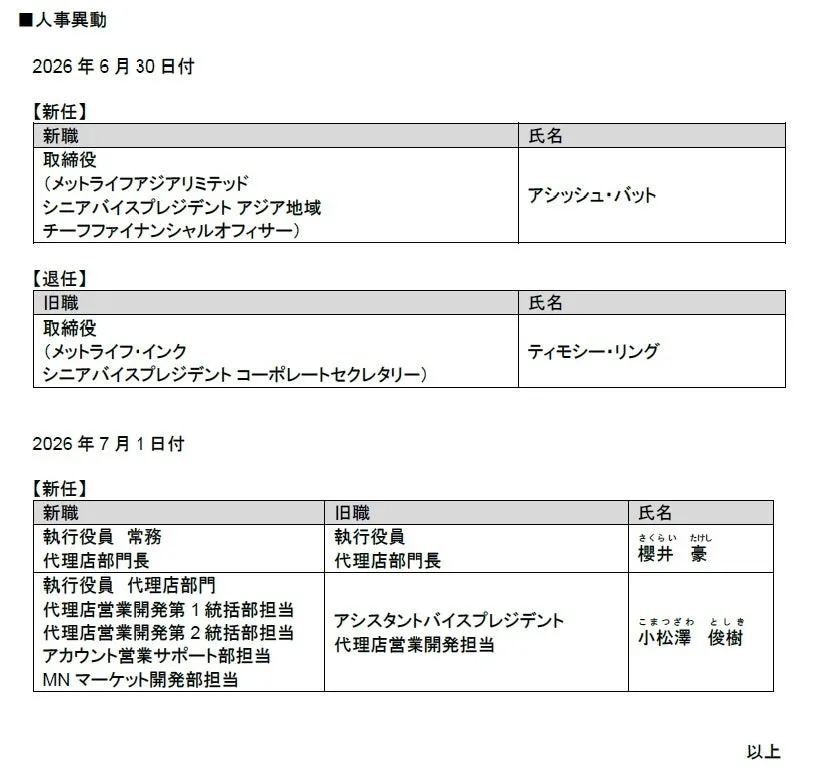
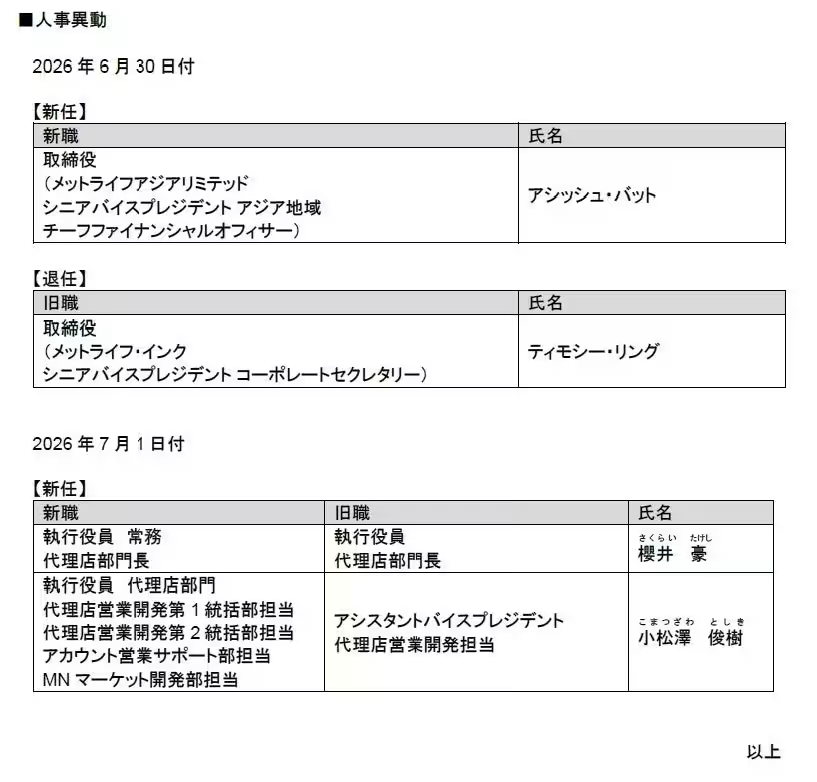
Executive Changes at MetLife Life Insurance
MetLife Life Insurance Company, under the leadership of Dirk Oskam, who holds the titles of Chairman, President, and CEO, has announced significant changes to its executive team. This decision is part of their ongoing strategy to bolster the company’s operational framework and enhance its competitive edge in the market.
In a move that reflects both the company's growth ambitions and the evolving nature of the insurance industry, MetLife has outlined a series of executive appointments that are expected to bring fresh perspectives and innovative strategies. These changes are pending the necessary approvals as stipulated by corporate regulations, indicating a structured approach to leadership transitions.
The New Executive Team
The reshuffling involves several key positions. While specific names and roles have yet to be fully disclosed, the announcement establishes the company’s commitment to ensuring robust leadership. Each executive chosen will be expected to bring unique skills and insights, aligning their respective departments with MetLife’s overarching objectives.
Strategic Goals
The strategic goals accompanying this executive restructuring underline the company’s focus on improving operational efficiency and enhancing customer satisfaction. The insurance landscape has been undergoing rapid transformations, influenced by technological advancements and changing consumer expectations. In this context, MetLife’s leadership believes that effective executive management is crucial for navigating these challenges and leveraging new opportunities.
Industry Impact
Industry experts suggest that such strategic leadership changes are vital for capturing market share in a highly competitive sector. They emphasize that the agility of corporate governance and executive decision-making can significantly impact a company’s trajectory, particularly in the insurance domain where trust and reliability are paramount.
Looking Forward
As MetLife progresses with the planned executive transitions, stakeholders are keenly observing the implications for future business directions and strategy implementation. This move could potentially reshape not only the internal dynamics of MetLife but also influence broader industry trends as companies adjust to operate more effectively in a fast-paced environment.
In conclusion, MetLife’s executive changes signify a proactive approach towards managing challenges and harnessing new opportunities in the ever-evolving insurance market. The forthcoming transitions highlight the importance of strategic leadership and its potential to enable sustainable growth and success.
MetLife is committed to keeping its stakeholders informed as the changes unfold and anticipates a smooth transition that aligns with its mission to innovate and lead in the insurance sector.
Topics Business Technology)

【About Using Articles】
You can freely use the title and article content by linking to the page where the article is posted.
※ Images cannot be used.
【About Links】
Links are free to use.