



AI's Role as a Catalyst in IT Engineer Skills Development: Insights from a Recent Survey
The Role of AI in the Evolution of IT Engineering Skills
The recent report by paiza, a platform dedicated to employment and learning for IT engineers, sheds light on the changing landscape of programming skills amid the rise of generative AI. Conducted with 629 paiza registered engineers, the survey emphasizes a notable fact: more than 70% of IT engineers believe that programming skills will not become obsolete.
AI: A Supportive Catalyst, Not a Replacement
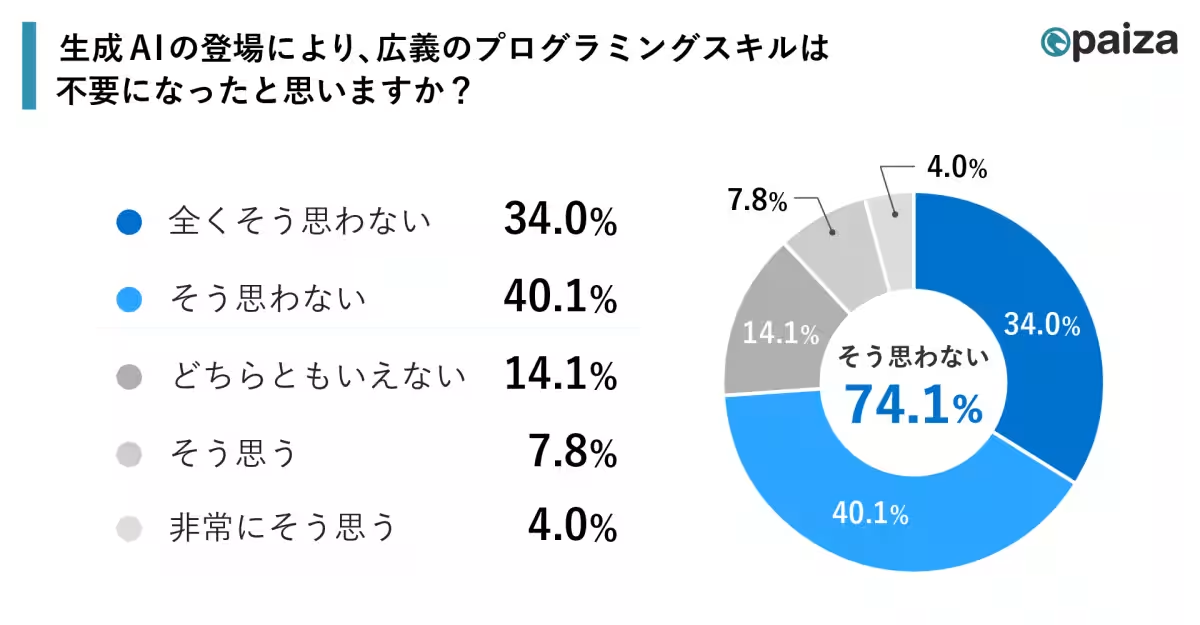
When asked whether they believe programming skills are now unnecessary due to the emergence of generative AI, a resounding 74.1% of respondents disagreed. This highlights a common misconception that AI could potentially replace programming skills. Instead, IT engineers view generative AI as an adept assistant that aids in coding and enhances productivity. However, the complexity of tasks like requirement definition, design, and review still necessitates the unique expertise of engineers—demonstrating that AI cannot entirely replace human involvement in these areas.
A Return to Fundamental Knowledge
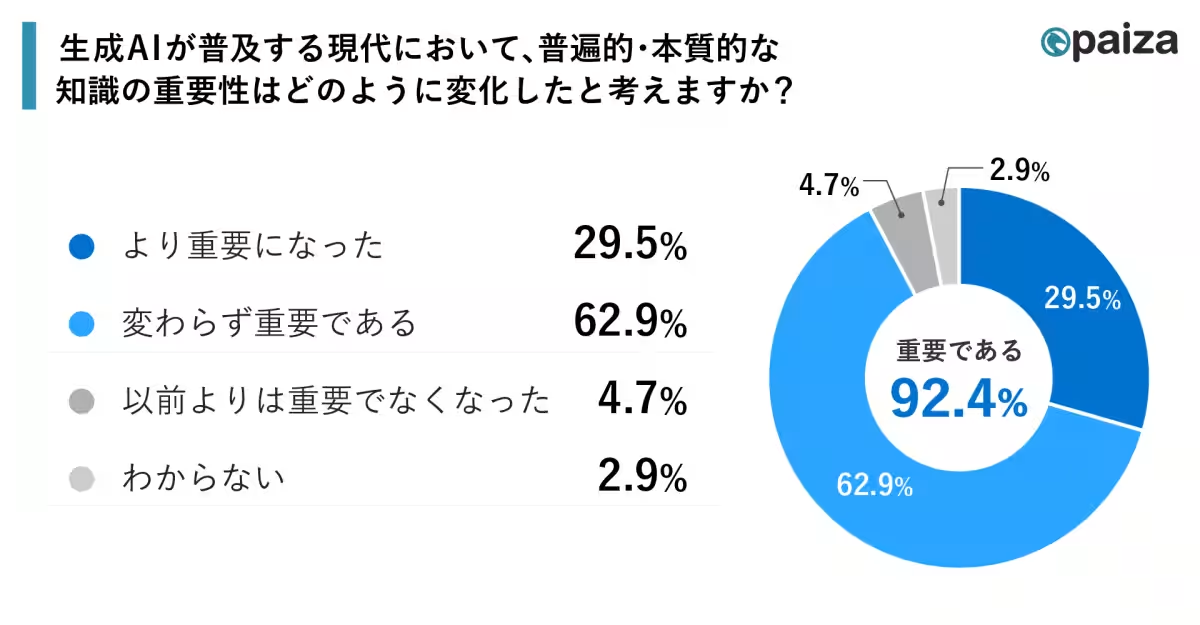
Another intriguing outcome of the survey revealed that many IT engineers are recognizing the importance of foundational knowledge. In response to the question about how the importance of universal knowledge, such as computer science basics and software engineering principles, has changed, 29.5% said it has become more important, while 62.9% stated it remains critically important. In total, 92.4% acknowledge the importance of foundational skills crucial for their roles.
Thus, as generative AI develops into a powerful tool for development, engineers must possess a strong grasp of concepts such as algorithms and databases to effectively harness its potential. This understanding aligns with the necessity to examine and improve code generated by AI, ensuring it meets optimal standards.
Generative AI Sparks Increased Learning Motivation
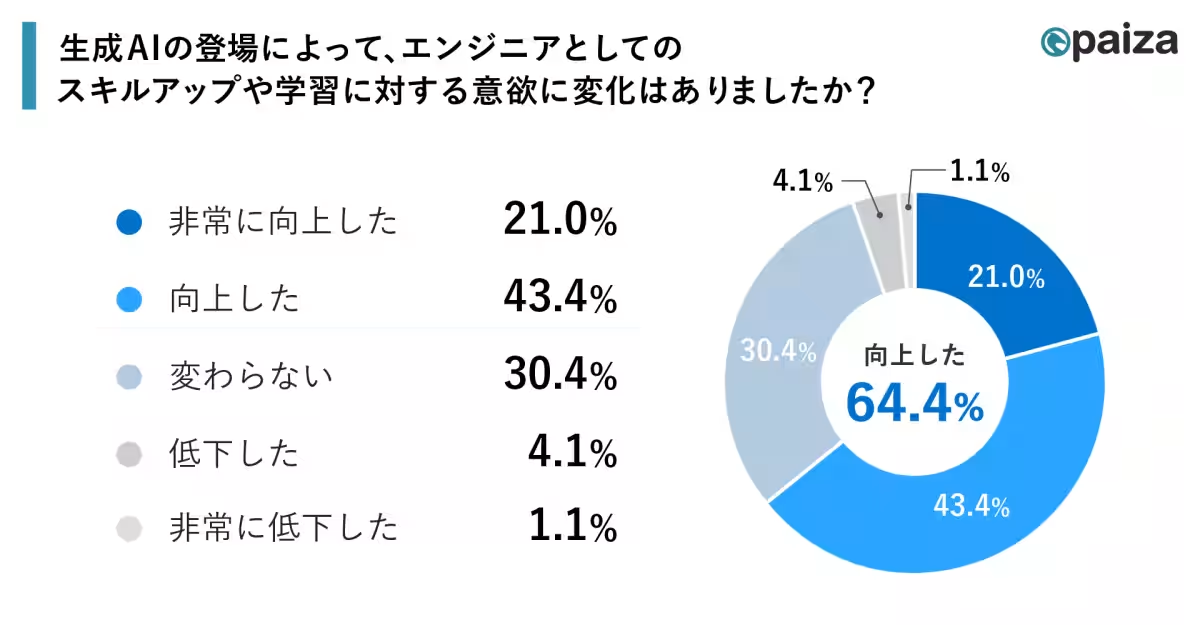
The emergence of generative AI has positively impacted learning motivation among IT engineers. The survey found that 64.4% of respondents reported an increase in their desire to learn due to AI. Contrarily, only 5.5% felt that their motivation had decreased, emphasizing a significant shift toward positive adaptation in light of new technology.
The top three reasons for the increase in motivation included:
1. The ease of venturing into new technologies due to generative AI (75.8%).
2. Exposure to new technologies and possibilities igniting intellectual curiosity (66.1%).
3. The need for deeper knowledge and skills to evaluate and improve code generated by AI (62.4%).
Many engineers see generative AI as a challenge that lowers barriers to learning new skills, rather than a threat to their current roles. This change reveals a proactive attitude toward professional development.
Learning as a Lifelong Journey
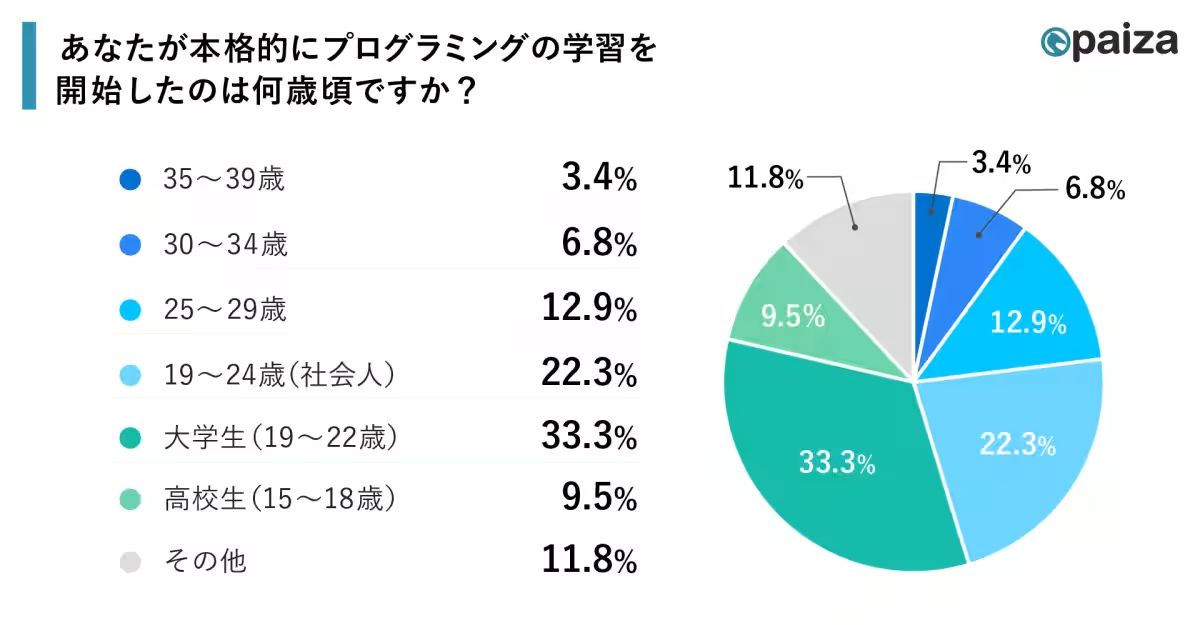
The survey also found that nearly half of the IT engineers began their programming learning after entering the workforce. The results indicate that:
- - 33.3% began learning while in university (ages 19-22).
- - 22.3% started during their early career phase (ages 19-24).
- - 12.9% began learning between the ages of 25-29.
This data emphasizes that careers in IT are not solely defined by one’s academic background, but by the ability to change paths and adapt. The ability to nurture individuals transitioning into IT roles will be critical for future recruitment.
The Real Timeframe for Career Transition
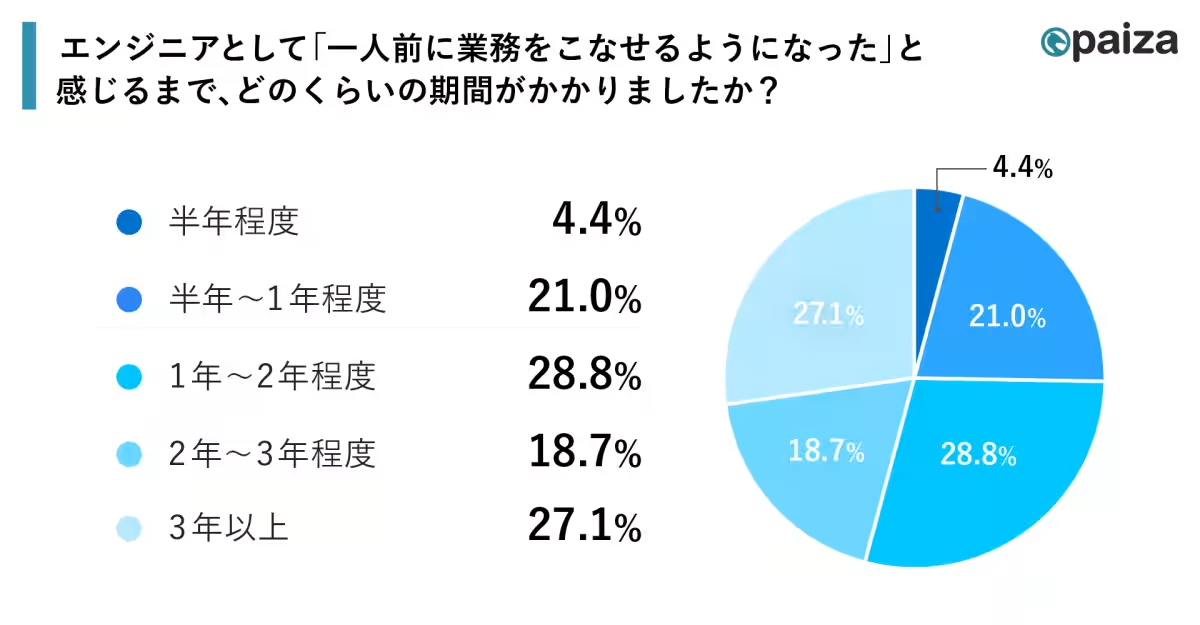
A significant finding surfaced regarding the duration it takes to become a proficient IT engineer. Approximately 28.8% reported it takes between one to two years to feel competent in a new role. This indicates that motivated individuals can reach a working level within a relatively short timeframe, transforming the landscape of IT talent acquisition.
This insight presents a hopeful outlook for companies struggling with a talent shortage, as fostering potential candidates can effectively bridge the gap between experience and skill requirements. Companies must evaluate individuals based on their motivation and skills rather than predefined pathways.
CEO Ryohei Katayama’s Perspective
Ryohei Katayama, the CEO of paiza, expressed that these findings reinforce the belief that IT engineers are perpetually in a state of learning and evolution. The emergence of generative AI represents not the end of programming, but the dawn of a new era that thrives on understanding foundational knowledge and adapting to new challenges. AI is not here to replace but to augment the intrinsic abilities of IT engineers, allowing them to focus on creative and value-driven tasks. Therefore, investing in learning opportunities for staff is essential for modern organizations.
Overall, the trend illustrates the importance of continual learning and the profound impact of generative AI in shaping the future of IT skills. As companies take advantage of these changes, they can build a more adept and responsive workforce eager to meet technological advancements head-on.
Topics Business Technology)
【About Using Articles】
You can freely use the title and article content by linking to the page where the article is posted.
※ Images cannot be used.
【About Links】
Links are free to use.