



Stripe's Report Reveals Latest Trends in Pricing Strategies for Agile Growth Businesses
Introduction
In a rapidly evolving business landscape, pricing strategies play a crucial role in determining the success and growth of companies. Recently, Stripe, a leader in programmable financial services, conducted a comprehensive survey involving approximately 2,000 business leaders worldwide. This investigation was particularly focused on the latest trends in pricing strategies, shedding light on how agile pricing can serve as a keystone for revenue growth.
Key Findings from the Report
The report unveiled a significant correlation between pricing agility and revenue growth. A remarkable 84% of the leaders surveyed considered frequent adaptations to monetization strategies as a fundamental competitive advantage. This highlights the necessity for businesses to innovate and remain flexible in their pricing approaches.
Modern Pricing Models Adopted by Agile Growth Companies
The analysis illustrated a variety of pricing models embraced by thriving entities, such as:
1. Hybrid Pricing Model: This model combines multiple pricing strategies, such as a fixed monthly subscription alongside usage-based charges. It allows companies to secure predictable revenue while offering flexibility.
2. Usage-Based Pricing: Customers only pay for what they use, making it an attractive option for those cautious about upfront costs.
3. User-Based Pricing: Costs are determined based on the number of individual users accessing products or services, offering scalability and accommodating varying business sizes.
4. Outcome-Based Pricing: This model charges customers based on the results achieved from using the product or service, aligning pricing with value delivered.
5. Dynamic Pricing: Prices fluctuate based on real-time market demand, allowing companies to optimize revenue potential based on varying consumer behaviors.
Distinctive Traits of Agile Growth Enterprises
The report identified several notable characteristics that set apart fast-growing companies in their approach to pricing:
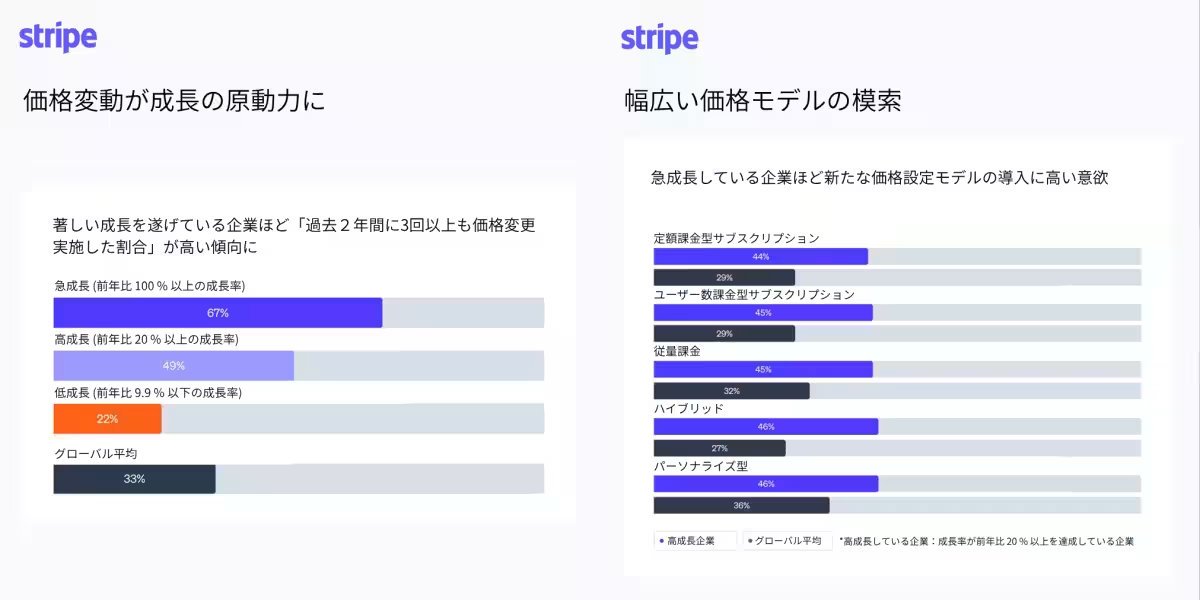
- - Predominance of Hybrid Pricing: Agile businesses are transitioning from pure subscription models to hybrid strategies, with 57% employing such approaches, significantly higher than the global average of 36%. A notable example is Figma, which combines traditional user-based subscription pricing with usage-based credits for its new AI capabilities.
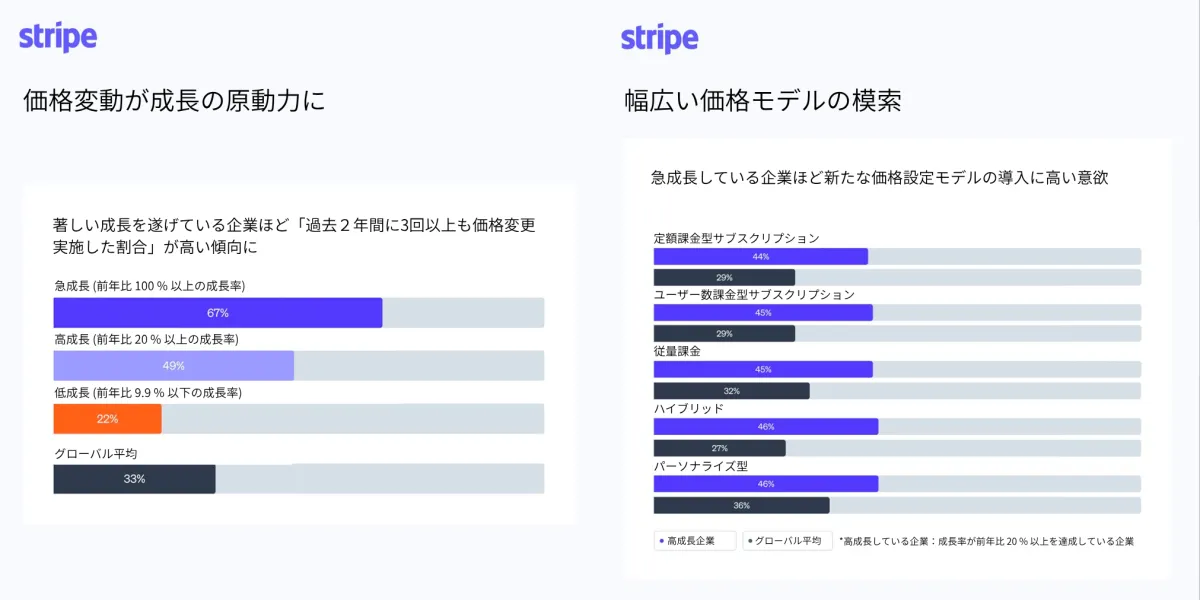
- - Continuous Experimentation in Pricing: Successful firms perceive pricing not as a one-time decision but as an ongoing experimental process. The study noted that 67% of respondents had changed prices more than three times in the past two years, double the global average of 33%.
- - Aligning Pricing with Customer Outcomes: A considerable 77% of business leaders acknowledged the demand for outcome-based pricing, although only 32% currently offer such models. Agile companies continually refine their definition of
Topics Other)
【About Using Articles】
You can freely use the title and article content by linking to the page where the article is posted.
※ Images cannot be used.
【About Links】
Links are free to use.