



The True Challenges of Employee Engagement Revealed by AI and Investment Analysis in Japan
Insights from the 4th National Employee Engagement Survey 2026: A Detailed Analysis
A recent report, developed by Agile HR Inc. and Intage Inc. in collaboration with the University of Tokyo, presents further insights into employee engagement in Japan. This second report builds upon initial findings by investigating the influence of psychological safety, career outlook, management engagement in human capital investment, and the opportunities for utilizing AI tools among employees.
Strong Correlation Between Individual Factors and Engagement
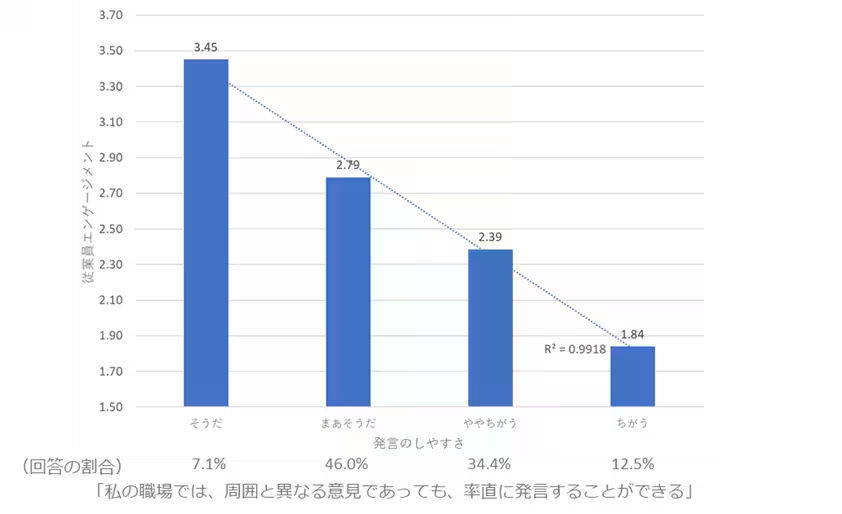
The analysis reveals a robust positive correlation between employee engagement and all four key factors: psychological safety, career outlook, human capital investment, and AI utilization opportunities. For instance, employees who reported a positive feeling towards psychological safety had an engagement score of 3.45, contrasted with a score of just 1.84 for those who felt negatively. This significant difference underscores the importance of these factors in enhancing overall engagement levels within organizations.

Industry-Based Analysis: Variations in AI and Human Capital Investment
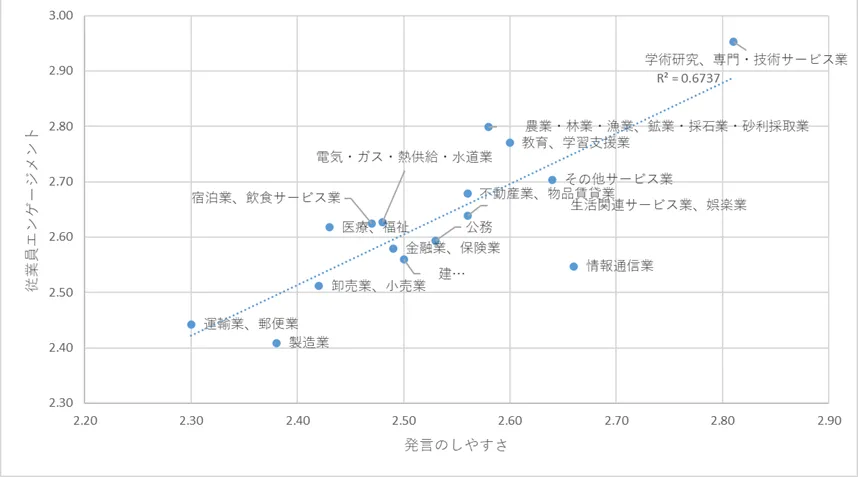
When analyzing data across different sectors, intriguing patterns emerged. The average values related to psychological safety and career outlook displayed a positive correlation with employee engagement, highlighting that these aspects are more tied to the quality of organizational management and culture rather than industry characteristics.

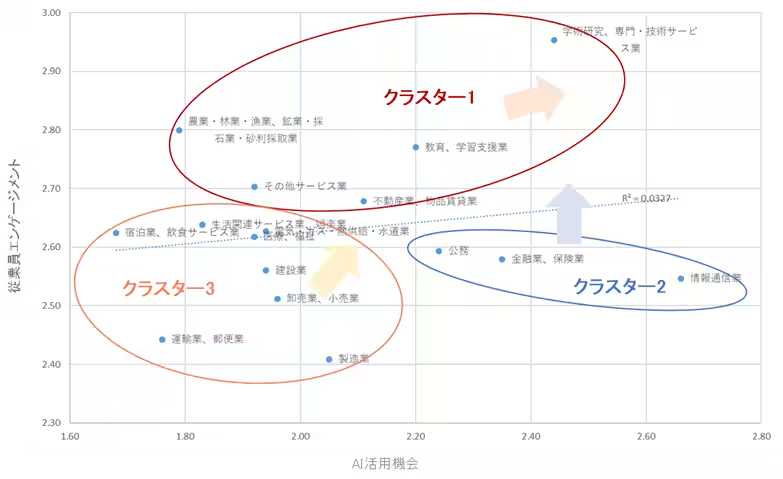
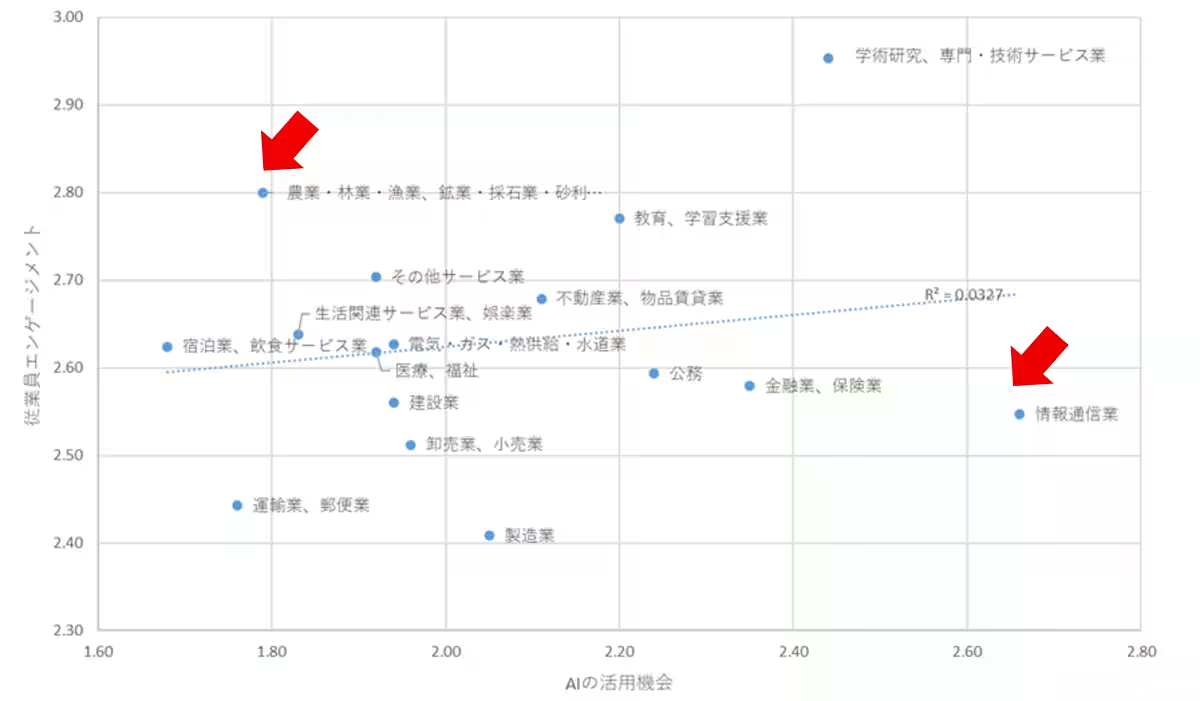
In contrast, the average values concerning human capital investment and AI utilization opportunities showed no clear correlation with employee engagement. This disconnect suggests that the abundance of these resources varies significantly from one sector to another—industries heavily reliant on AI and investment may not necessarily lead to higher engagement levels.
For example, while the Information and Communication sector leads in human capital investment and AI opportunities, employees in this sector often prioritize personal growth over organizational commitment, leading to lower engagement. Conversely, sectors like Agriculture and Forestry may lack AI opportunities yet show higher engagement due to a strong sense of social contribution and measurable outcomes.

Cluster Analysis of 16 Industries and Improvement Approaches
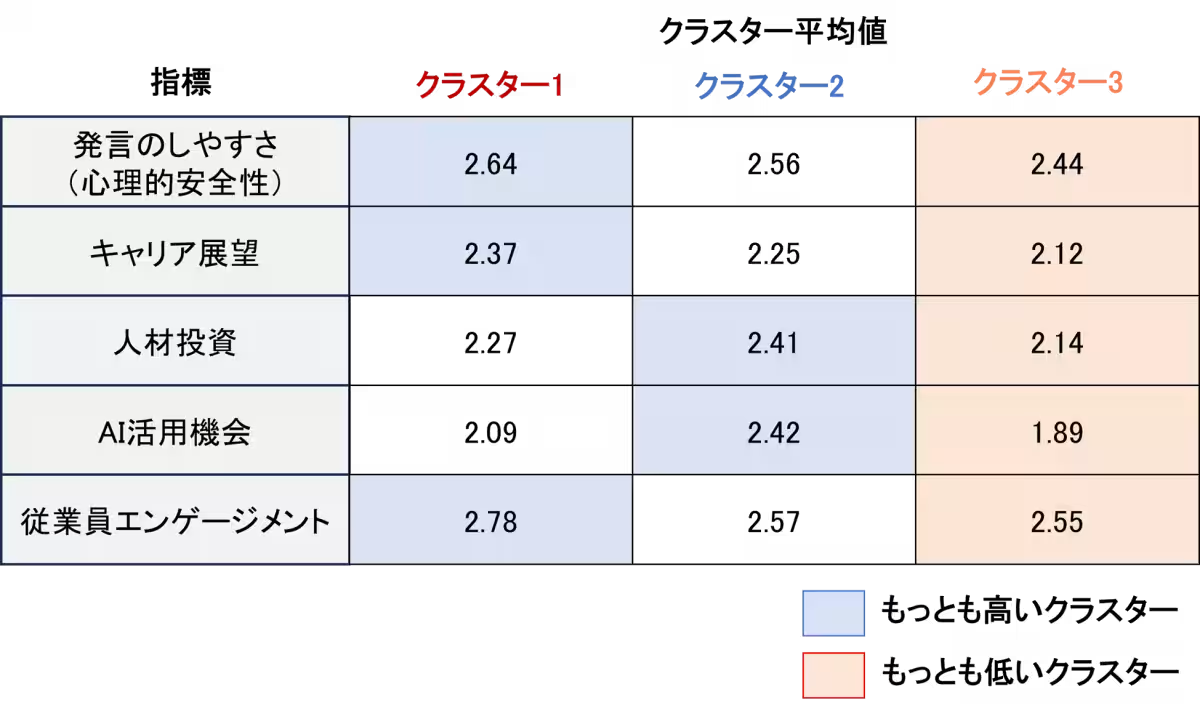
Using cluster analysis based on the additional inquiries and employee engagement scores, 16 industries were classified into three main clusters, each with unique challenges and improvement pathways.

Cluster 1: High Engagement
- - Industries: Academia, Education, Real Estate, Agriculture
Cluster 2: Moderate Engagement with High Investment
- - Industries: Information and Communication, Finance, Public Services
Cluster 3: Low Engagement but High Potential
- - Industries: Manufacturing, Transportation, Retail, Hospitality

The full national survey report is available for download here. Details regarding related seminars can be found here.
About the 4th National Employee Engagement Survey
- - Survey Period: March 16 - March 23, 2026
- - Methodology: Internet Survey
- - Sample Size: 10,576 individuals aged 15-79 across Japan (from Intage Mighty Monitor)
About the Author
Keiji Matsuoka, President of Agile HR Inc., has a rich background in human resources, having graduated from the University of Tokyo and worked with various organizations to support human and organizational transformation. His work in performance management has contributed significantly to the HR field, making him a widely recognized author and speaker.
About Agile HR Inc.
Agile HR Inc. provides innovative performance management and career management solutions leveraging cloud services like WAKUAS, along with comprehensive support for OKR, 1-on-1 training, and engagement surveys.
For further information on the A&I Engagement Standard Survey, visit here.
For inquiries, please reach out to Agile HR Inc. at 5-4-6-503 Minami Aoyama, Minato-ku, Tokyo 107-0062, Phone: 03-6452-6115, or visit our website at Agile HR.
Topics People & Culture)
【About Using Articles】
You can freely use the title and article content by linking to the page where the article is posted.
※ Images cannot be used.
【About Links】
Links are free to use.