



GLOBIS Proposes Well-Being Management to Enhance Corporate Value with Six Companies
GLOBIS Proposes Well-Being Management for Enhanced Corporate Value
In a groundbreaking initiative, GLOBIS Corporation, based in Chiyoda, Tokyo, along with six other notable enterprises including Asahi Kasei, SCSK, Persol Tempstaff, Marui Group, Mizuho Financial Group, and Rakuten Group, has released a report titled "CHRO Roundtable Report: Organizational Development and Human Resource Strategies for Realizing Well-Being Management." This report encapsulates discussions aimed at promoting well-being management, an innovative approach that focuses on enhancing the mental and physical health of employees.
What is Well-Being Management?
Well-being management is defined as a corporate strategy that respects the individual health and job satisfaction of employees, ultimately leading to increased productivity and sustainable growth for the entire organization. As companies face a changing business landscape, adopting this management approach is becoming increasingly essential.
The "CHRO Roundtable Report" derives insights from a series of discussions held during the CHRO Roundtable, which took place over six sessions from April 2024. These discussions involved executives in charge of human resources from the participating companies, each bringing their unique business contexts and organizational cultures into the conversation. The report aims to provide a comprehensive guide on integrating business strategies with well-being initiatives in tangible ways.
Context Behind the Initiative
For companies to achieve sustainable growth in today's world, they must address three significant trends: heightened concern for social issues, changing perspectives among investors, and the diversification of employee values.
1. Addressing Social Issues and Sustainability:
Global challenges like environmental degradation and food insecurity have heightened the need for businesses to extend beyond mere profit-making. Both the United Nations and the Japanese government recognize the increasingly critical importance of advancing individual well-being as part of post-SDG strategies. Companies are gradually shifting their focus from shareholder capitalism to a multi-stakeholder capitalism model that considers customers, employees, communities, and environmental impacts.
2. Changing Investor Perspectives:
Investors are now placing a heavier emphasis on non-financial metrics including environmental, social, and governance (ESG) factors, employee satisfaction, skills, and brand value, rather than solely on financial indicators. There is a growing recognition of human capital management as a powerful driver of corporate value, and well-being management is increasingly viewed as a pragmatic approach to harnessing this power.
3. Diverse Employee Values:
Particularly among younger generations like Millennials and Gen Z, the focus is shifting from purely corporate growth to prioritizing life quality. There is a rising demand for work-life balance, personal fulfillment in career choices, and a clearer sense of purpose associated with corporate identity. Organizations are now tasked with defining their purpose in ways that resonate with individual employee aspirations, making it vital for them to answer the question: "Why work here?" This aspect directly impacts recruitment and employee retention.
Key Highlights from the CHRO Roundtable
During the CHRO Roundtable, GLOBIS facilitated discussions around vital themes related to well-being management. Key topics included human resource strategies and their design, the role of leadership in promoting well-being, and how to effectively communicate data related to human capital to various stakeholders. Each participating CHRO shared practical experiences, leading to a multifaceted evaluation of challenges and solutions. Consequently, the report illustrates paths that reconcile employee happiness with enduring corporate growth, incorporating case studies from the participating firms.
Overview of the CHRO Roundtable
- - Duration: April 2024 to March 2025
- - Participants:
- Eri Kabe, Executive Officer, SCSK
- Yoko Kase, Head of HR, Persol Tempstaff
- Tomoo Ishii, CHRO, Marui Group
- Nobuhiro Uenoyama, Group CHRO & CDO, Mizuho Financial Group
- Masatada Kobayashi, Chief Well-Being Officer, Rakuten Group
- - Moderator: Keisuke Uchida, Managing Director, GLOBIS Corporate Education
- - Activities: Discussions and exchanges of insights throughout the roundtable sessions.
Summary of the Report
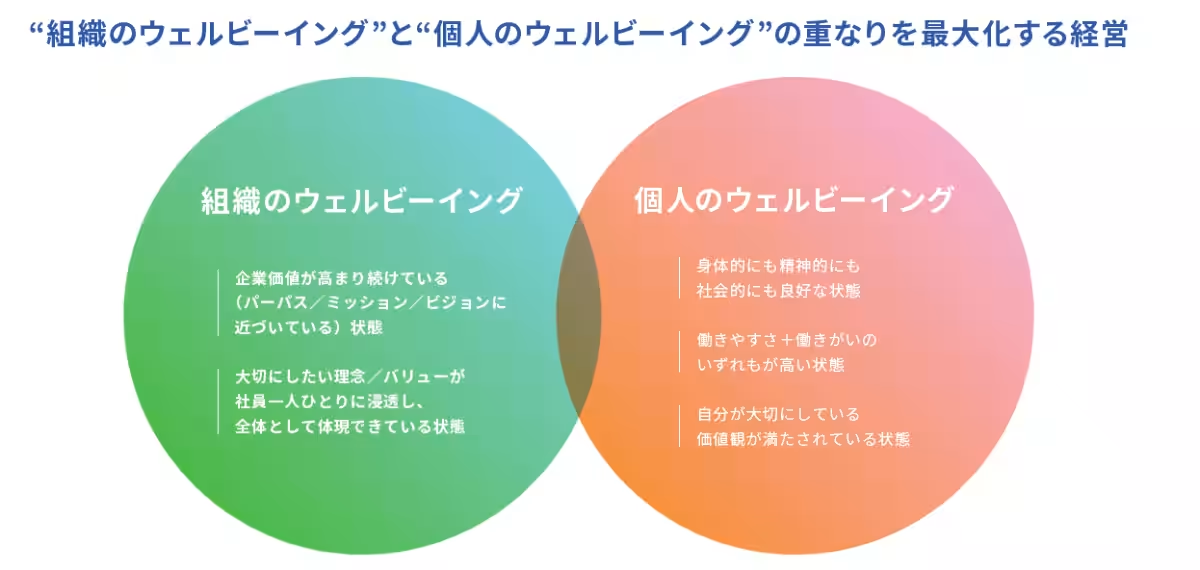
The report outlines the principles of well-being management, the common pitfalls organizations may face in its implementation, and practical case studies aimed at guiding companies striving for well-being-oriented organizational development. Well-being management is defined as maximizing the overlap between organizational and individual well-being. Companies that successfully implement this approach can build sustainable business models that balance economic gains with social value, ultimately leading to long-term growth.
Six specific challenges to effective well-being management are highlighted, complete with case studies demonstrating how participating companies have navigated these obstacles.
GLOBIS aims for the report to contribute positively to the realization of well-being management across many organizations, promoting transformative change in talent development and organizational strategy to support the sustainable growth of enterprises.
Special Initiative
To commemorate the release of the report, GLOBIS is hosting a closed meetup for readers interested in deeper engagement with the report's findings. Attendees selected via a survey found at the report's conclusion will have the opportunity for in-depth discussions and tailored insights into their challenges in implementing well-being strategies.
- ---
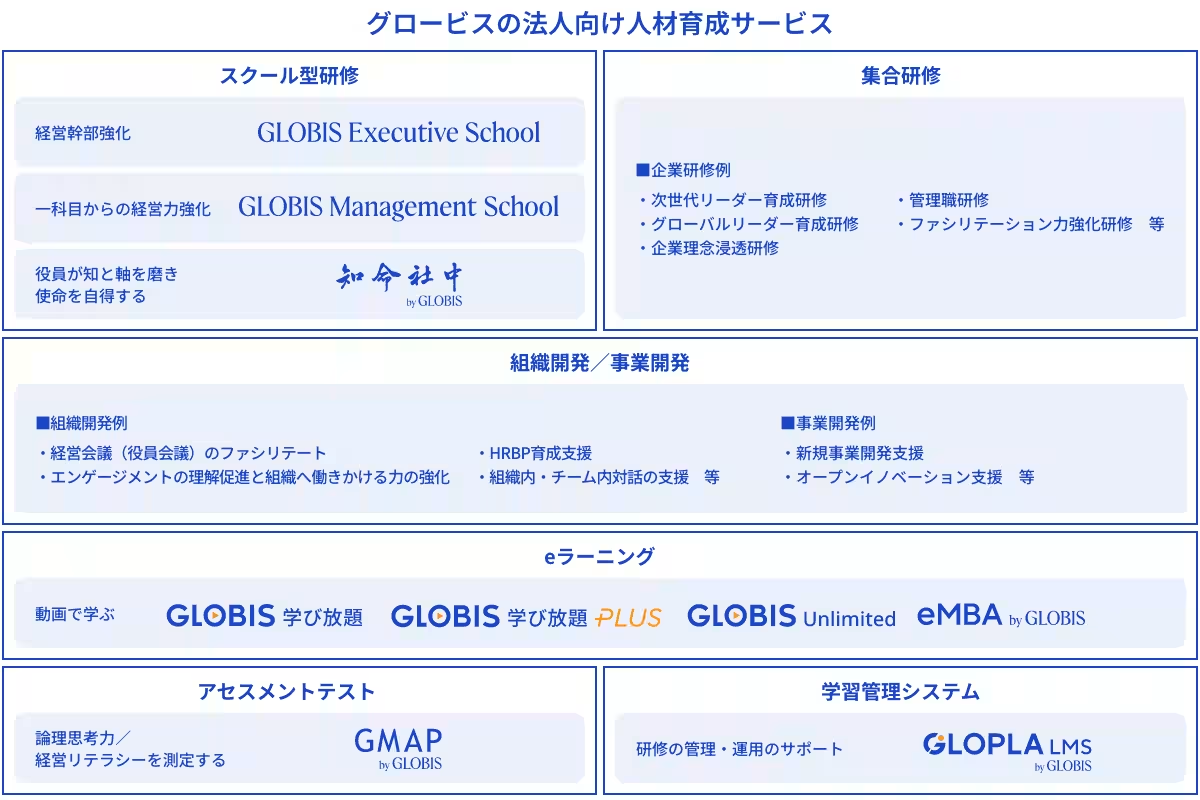
For more information about GLOBIS's corporate training services, visit GLOBIS Corporate Education. Since 1992, GLOBIS has been committed to fostering a transformative ecosystem in management through diverse educational and training solutions.
Topics Business Technology)
【About Using Articles】
You can freely use the title and article content by linking to the page where the article is posted.
※ Images cannot be used.
【About Links】
Links are free to use.