




Collaborative Transport Schemes to Tackle Driver Shortage in Apparel Logistics
Collaborative Transport Schemes to Tackle Driver Shortage in Apparel Logistics
In October 2023, a group of prominent apparel companies including Andst HD, Baroque Japan Limited, TSI Holdings, United Arrows, BEAMS, and Toyoshima jointly launched the Apparel Logistics Study Group. This initiative aims to identify common challenges in logistics while promoting efficiency and a sustainable model within the fashion industry.
The study group was formed to address significant issues in logistics that have emerged due to the scarcity of drivers in the transportation sector. As of now, the number of operational vehicles in Japan has decreased by approximately 35% since 2011, highlighting the ever-worsening situation of an aging workforce in logistics. The average age of drivers has reached 52.6 years, leading to heightened concerns about future capacity and challenges in maintaining supply chains.
With a vision to create a sustainable domestic transportation network, the Apparel Logistics Study Group leverages resources across competitive and collaborative factions in the industry, thus enabling optimization and shared logistics frameworks. The group aims not only to combat the impending driver shortage but also to tackle rising transportation costs, which are forecasted to continue increasing from 2023 to 2025.
Addressing the Driver Shortage
The group's principal goal is to tackle the pressing issue of driver shortages, particularly in procurement logistics connecting ports to distribution centers. This segment has witnessed significant impacts from the ongoing driver shortage, high shipping costs, and difficulties in securing vehicles. Collaborating on transport practices is essential to preserve and improve logistics efficiency in these areas.
Introduction of Collaborative Transport Schemes
Two innovative collaborative transport schemes have been designed to eliminate inefficiencies in transportation:
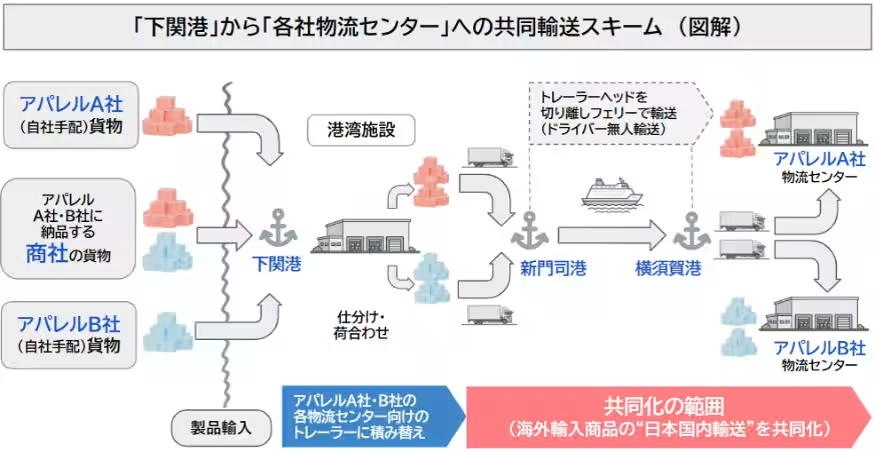
1. Joint Transport from Shimonoseki Port: This scheme gathers import cargo from East and North China at Shimonoseki Port and combines it with ferry transport methods to deliver goods to various logistics centers.
- Vehicle Reduction: Consolidating cargo at Shimonoseki reduces the number of operating vehicles.
- Time Efficiency: Utilizing ferries allows for unmanned transport which decreases overall transit times.
- Maintained Speed: The lead time remains consistent with current standards.
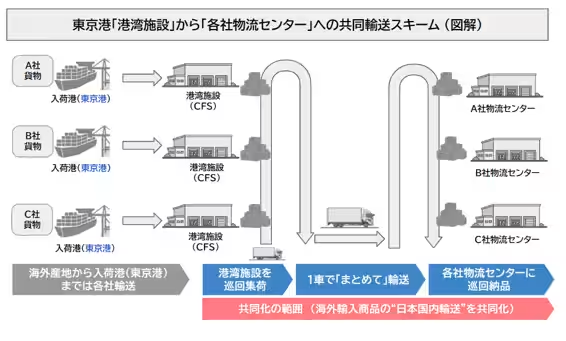
2. Joint Transport from Tokyo Port: Cargo arriving at Tokyo Port is collected through a circuit collection system and jointly transported to logistics centers.
- Vehicle Reduction: Like the Shimonoseki model, cargo collection at Tokyo Port allows for fewer vehicles on the road.
- Maintained Speed: The efficiency and timing of delivery are preserved, ensuring seamless service.
Impact of Collaborative Transport Experiment
From March 2026, the group has implemented a pilot of these collaborative transport schemes and obtained significant results. They managed to maintain traditional lead times while optimizing transport networks through modal shifts. The experiment demonstrated a capability to reduce driver hours and CO2 emissions while blending logistics efficiency with environmental considerations.
- - Driver Hour Reduction:
- From Tokyo: A reduction of around 50% in driver hours was achieved when compared to formerly practiced individual transport methods.
- - CO2 Emission Reduction:
- From Tokyo: While the emission reduction effects remained comparable to current practices, plans to improve vehicle loading efficiency are in the pipeline to further lessen environmental footprints.
Future Outlook
The Apparel Logistics Study Group is poised to capitalize on its findings to expand the scope of cooperative transportation initiatives. As collaborative schemes grow with increasing participation, there is immense potential for enhanced network efficiency. The study group will continue to seek new contributors aiming at sustainable logistics, reinforcing their commitment to addressing societal issues such as the looming driver shortage.
By fostering an adaptable infrastructure for collaborative transport, the group aims to solidify sustainable logistics solutions that transcend industry boundaries, thereby becoming a key influencer in shaping best practices within the apparel logistics domain.
About the Apparel Logistics Study Group
- - Founded: October 2023
- - Participating Companies (as of July 2026):
- Baroque Japan Limited
- BEAMS
- Toyoshima
- TSI Holdings
- United Arrows
This coalition symbolizes a forward-thinking approach to logistics collaboration, marking a pivotal step towards ensuring the future viability of the apparel industry by effectively addressing its logistical challenges.







Topics Consumer Products & Retail)
【About Using Articles】
You can freely use the title and article content by linking to the page where the article is posted.
※ Images cannot be used.
【About Links】
Links are free to use.