



Freelancers Support Japanese Sake Quality Improvement in Kyushu and Okinawa
Freelancers Supporting Japanese Sake Quality Improvement
In an innovative collaboration between freelancers and higher education institutions, Kyushu and Okinawa's 18 universities are embarking on an exciting journey to enhance the quality of traditional Japanese sake and shochu. Leveraging the unique skills of freelance professionals, particularly through HiPro Direct, this initiative reflects a commitment to fostering local culture and the food industry.
The Role of HiPro Direct
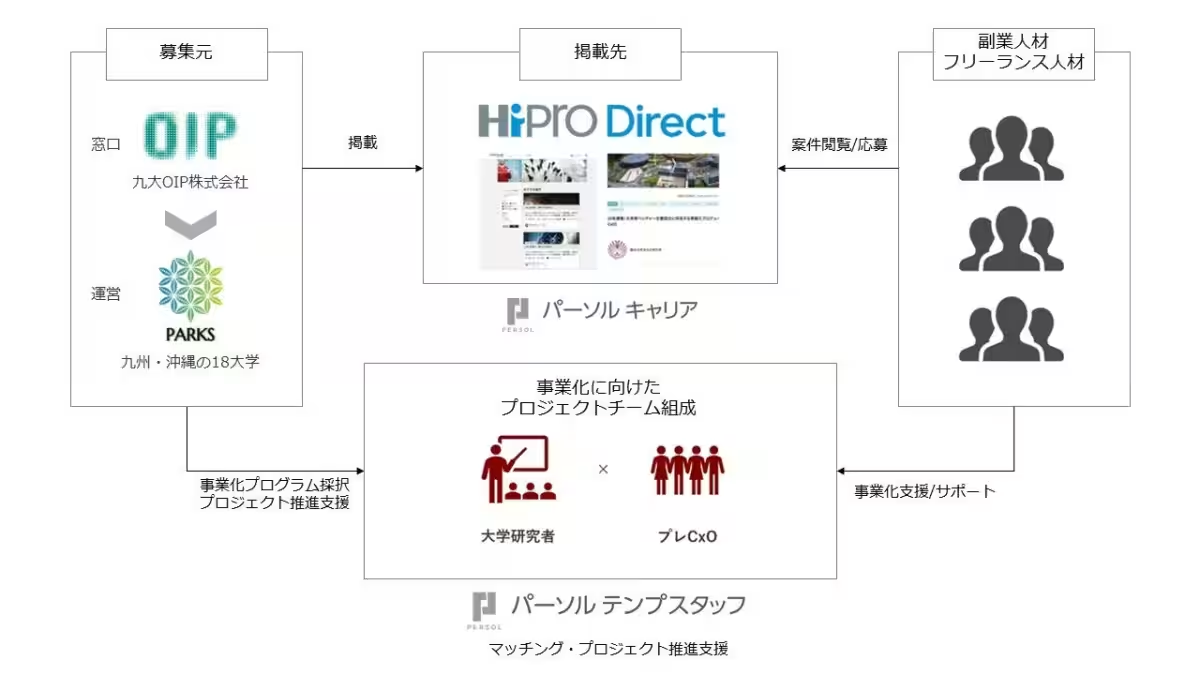
HiPro Direct, a platform developed by Persol Career, aims to connect freelance professionals with businesses requiring specialized expertise. In this case, the platform is facilitating the recruitment of プレCxO (executive-level freelancers) to support the business development of ventures originating in academic settings. The recent collaboration has thus moved into a proof of concept phase, focusing specifically on improving the quality of Japanese sake.
Academic Backing from Kyushu University
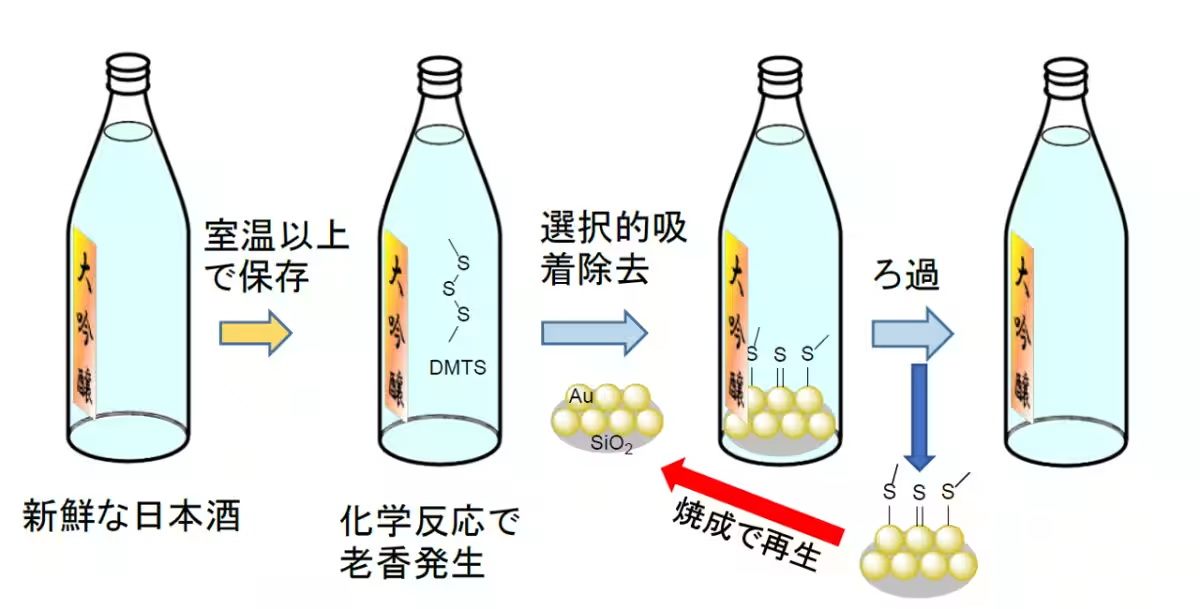
Under the guidance of Professor Nobu Tokunaga from Kyushu University's Graduate School of Science, research is being conducted on a groundbreaking technique involving supported gold nanoparticles. This technology effectively removes foul odors associated with aging sake, known as 'hinekha', and unwanted sulfur smells that detract from the enjoyment of shochu and awamori.
The implications of this research are significant. By revitalizing the original aromas of alcoholic beverages, this method offers immense potential in reducing food waste while simultaneously paving the way for innovative types of sake—such as aged sake that retains only the pleasant aromas without the associated off-flavors.
Versatile Applications for the New Technology
The experimental technology is expected to find applications in several areas, including:
1. Desulfurization equipment for sake breweries
2. Cap-style desulfurization tools for retail and export
3. Drip-style devices for restaurants
4. Desulfurization apparatuses used in shochu distillation
By adopting these innovative solutions, local breweries can enhance product quality and sustainability.
Collaborative Efforts for Business Development
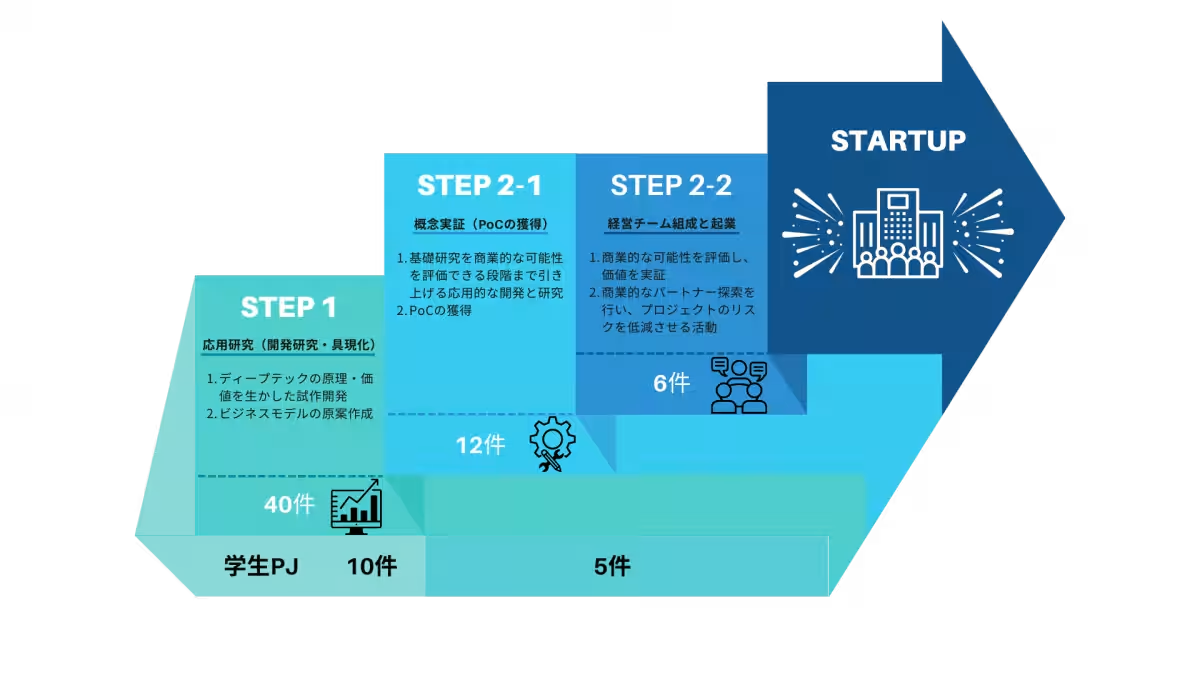
The freelance professionals involved in this initiative bring experience from various sectors, including food business consultancy and previous collaborations with sake breweries. Over a span of about nine months, they have diligently worked on refining business plans and conducting outreach activities necessary for real-world testing of these technologies. This major effort led to the adoption of Phase 2-1 of the startup creation program in FY2025, setting the stage for further validation of the technology through active demonstrations with sake breweries.
Professor Tokunaga highlighted the significance of including experienced CxO talents like Kaoru Fukuyama in enhancing the project's progress. The fragmented nature of the sake industry, with thousands of breweries, makes it overly challenging for busy university researchers to connect with key industry players; thus, the role of specialized freelancers proves invaluable in driving this initiative forward.
Looking Ahead: Project Goals and Future Prospects
One of the initiative’s aims is to facilitate the completion of prototypes for new desulfurization equipment tailored for sake production by the end of FY 2026. The plan will involve expanding the network for proof of concept through multiple sake companies to ensure comprehensive data collection.
General collaboration follows a structured pathway:
1. Requirements Definition: Identification of necessary skills and experience required for each project.
2. Talent Recruitment: Listing projects and soliciting nationwide talent through the HiPro Direct platform.
3. Matching Process: Selecting candidates that best fit the project needs.
4. Project Team Formation: Assembling the matched freelancers with university researchers.
5. Project Support: Ongoing support from both PARKS and Persol Tempstaff to drive the business development efforts.
The introduction of this innovative technology may redefine the landscape for Japanese alcoholic beverages as global distribution and quality standards improve. As expressed by Fukuyama, the prospect of implementing such advancements holds great promise for both the community and the sake industry.
Conclusion
This initiative signifies a transformative step for both the Japanese sake industry and local economic development. As Japan's traditional brewing culture modernizes, the integration of cutting-edge technology combined with the expertise of freelance professionals could enhance the global reputation of Japanese beverages and contribute to the sustainability and revitalization of the sake industry.
Topics Consumer Products & Retail)
【About Using Articles】
You can freely use the title and article content by linking to the page where the article is posted.
※ Images cannot be used.
【About Links】
Links are free to use.