



The 2025 Survey on Closet Transition for Solo Living
Exploring the Transition of Clothing for Solo Living in Japan
In a recent survey conducted by the Hitogura Lab, a brand managed by Able Holdings, insights were gathered regarding the clothing transition habits among individuals living alone in Japan. This survey, named the "2025 Clothing Transition Awareness Survey for Solo Living," was executed between September 15-30, 2025, involving a total of 1,011 respondents aged 20 to 59 residing in Japan. The findings reveal fascinating trends about how people prepare for the autumn and winter seasons.
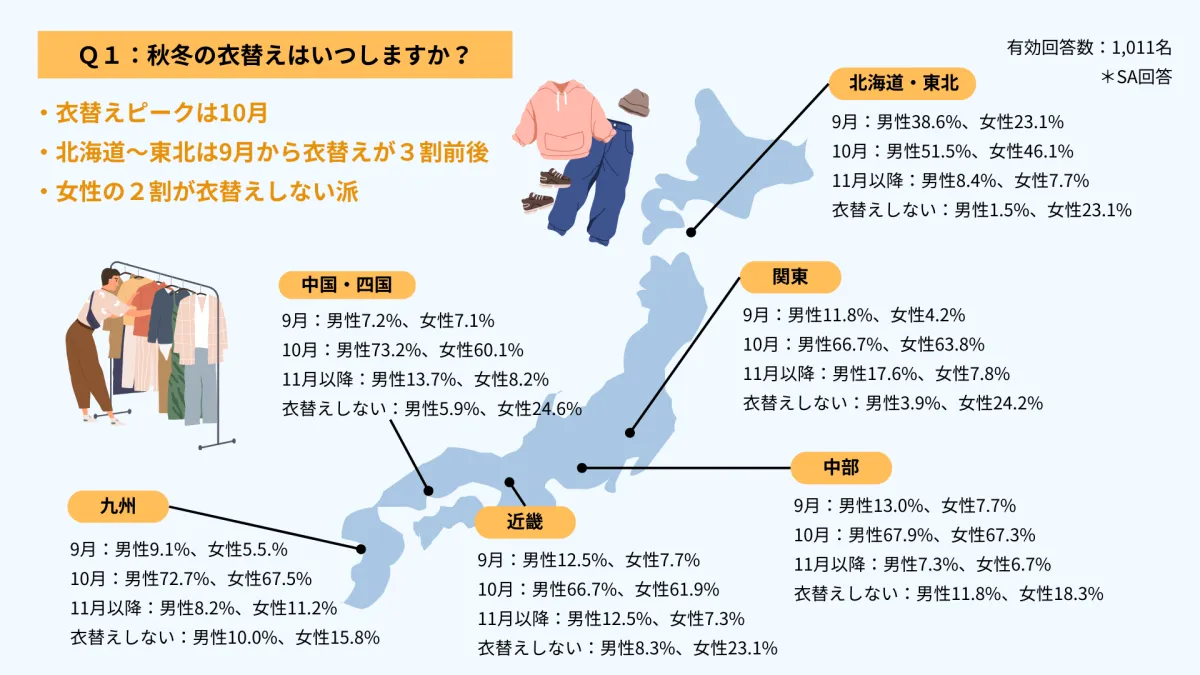
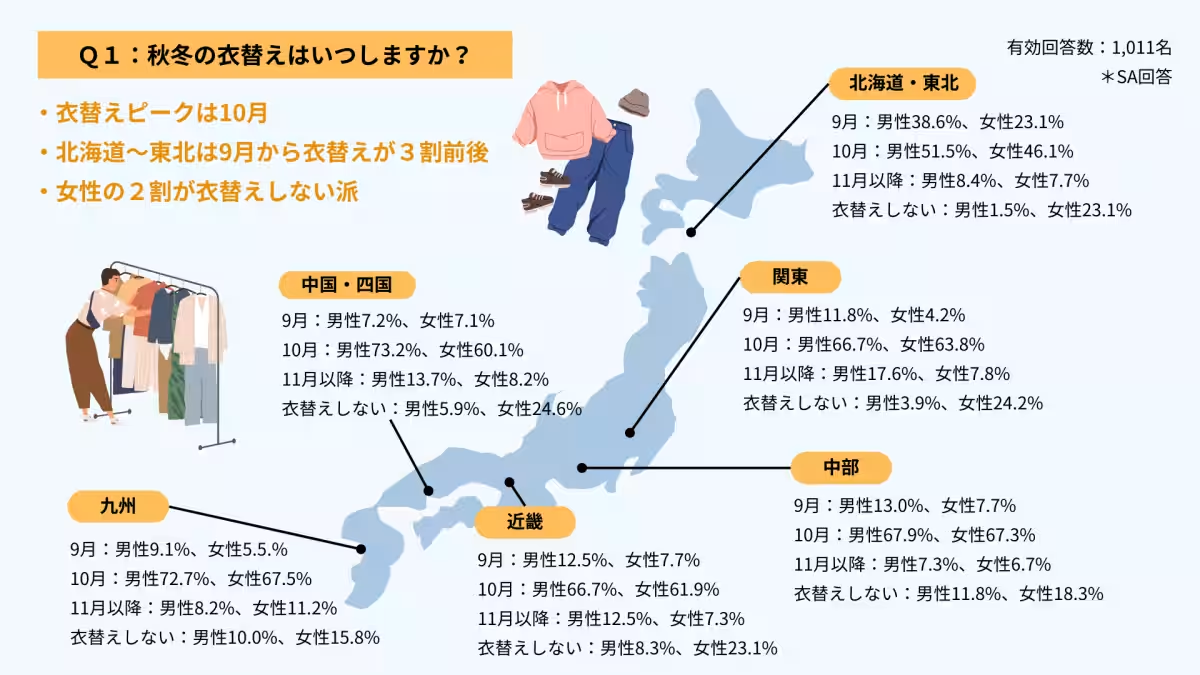
Key Findings on Clothing Transition Timing
While October is generally recognized as the month for seasonal clothing changes throughout Japan, the survey highlights that many northern regions, particularly Hokkaido and Tohoku, often begin their transitions as early as September. Respondents from these colder areas showed a strong tendency to prepare winter clothing in September, signifying a heightened awareness of the approaching cold. Interestingly, the data indicates that men tend to transition their wardrobes earlier than women. Approximately 20% of women reported being part of the "no transition" group, suggesting a growing trend amongst women who may prefer not to transition their clothing closets seasonally.
Analyzing Closet Contents
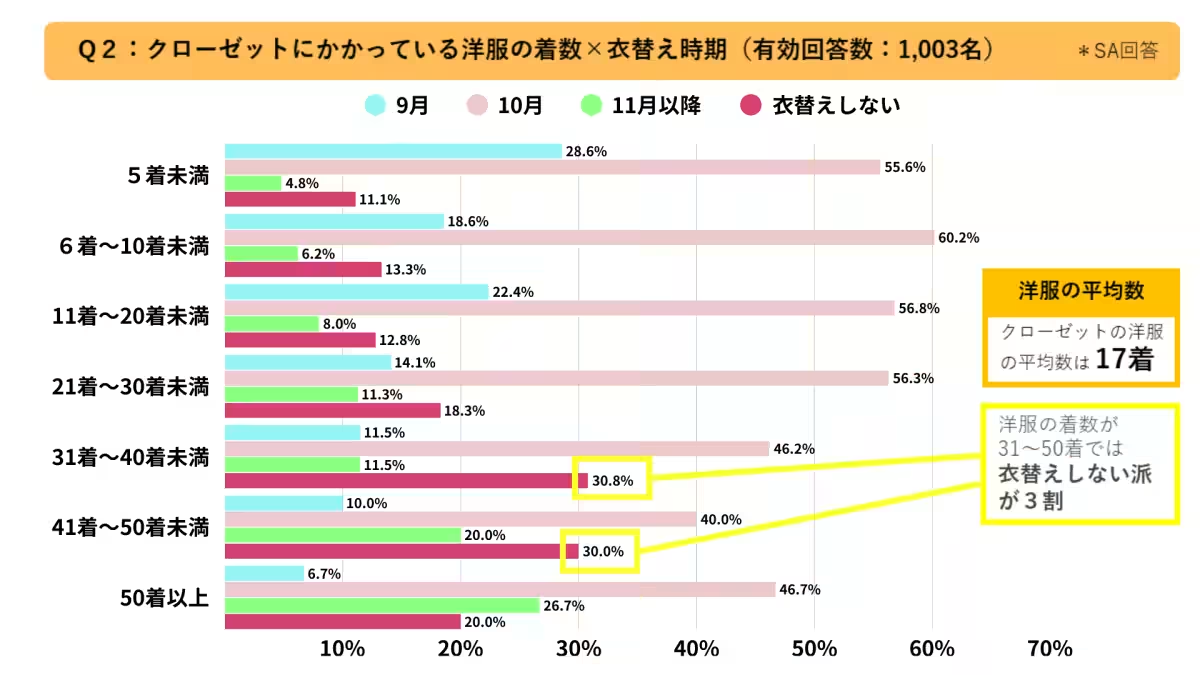
On average, individuals living alone own approximately 17.3 clothing items. The divide between genders is striking: men average around 11.2 items, while women boast a collection of 22.8 items. This data also correlates with the transition habits; those with 31 to 50 items were found to be more likely to skip seasonal transitions. Many attributed this choice to the challenges of securing storage space (31.4%) and the perceived hassle of preparing summer attire for storage, such as cleaning (21.2%). This adds an insightful layer to the motivations behind clothing management among solitary dwellers.
Decluttering Habits During Transitions
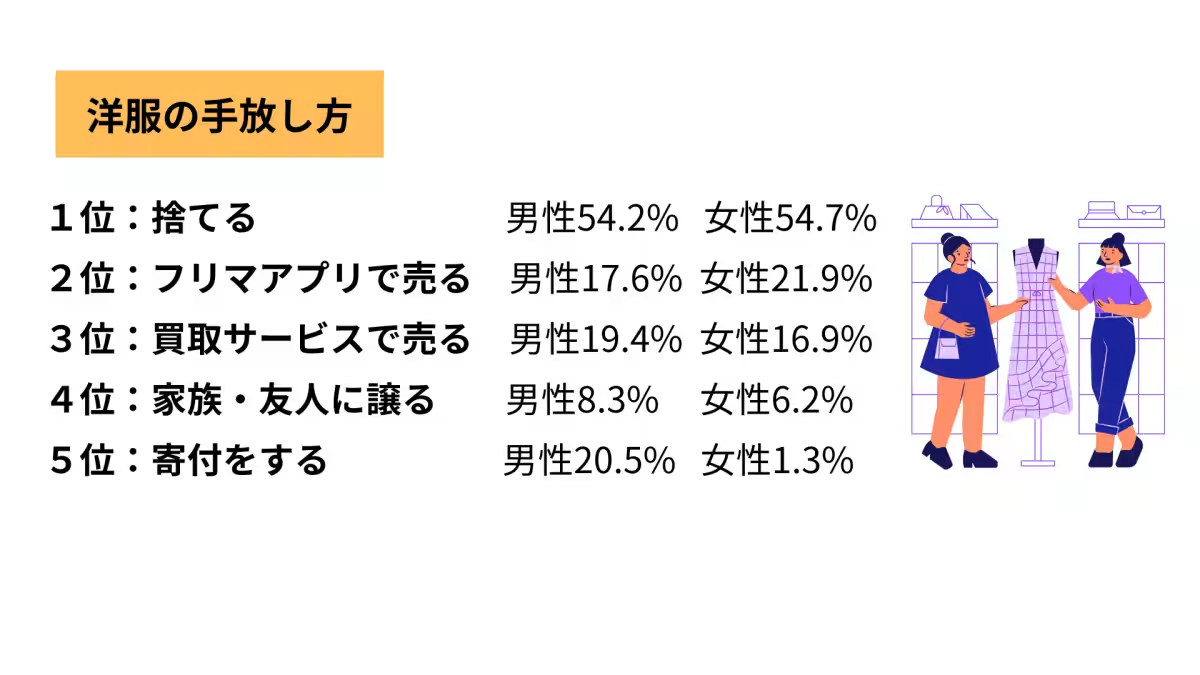
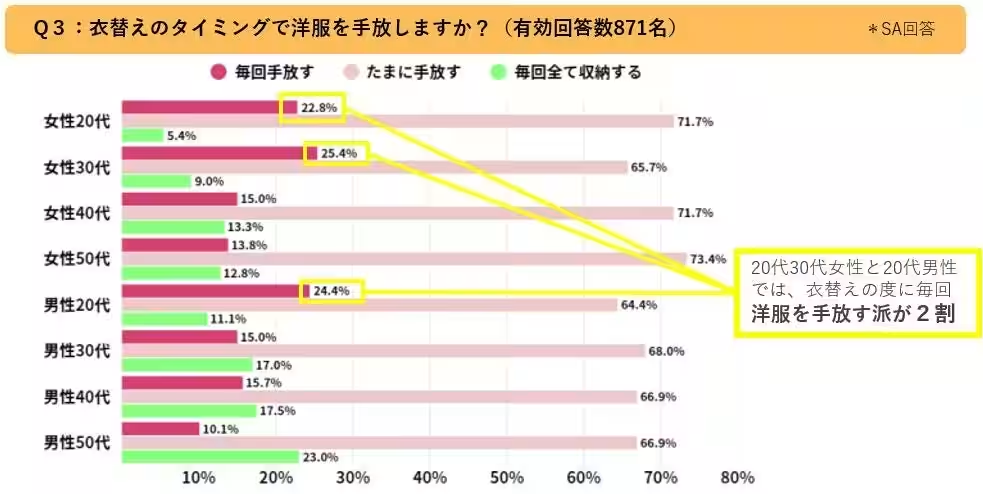
The seasonal change is often accompanied by decluttering. Notably, around 25% of women in their 20s and 30s, alongside a similar percentage of men in their 20s, indicated that they regularly part with clothes during their seasonal wardrobe transitions. The most common method of decluttering involved simply discarding items, with over 50% of respondents opting for this route. However, among the younger crowds, alternative methods such as selling clothes through flea market apps (28.3%) or thrift store buy-back services (23.3%) were popular options.
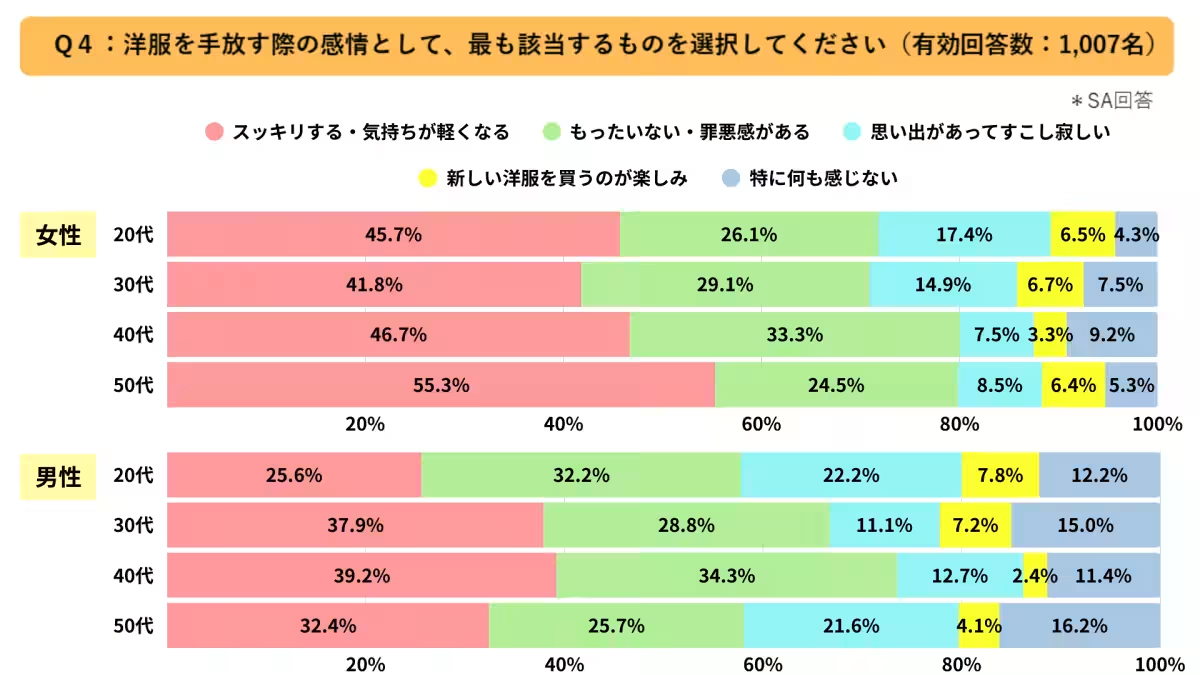
Moreover, emotional responses to relinquishing clothing reveal a gendered disparity. A larger portion of women reported feelings of relief and lightness upon parting with clothing, especially among women in their 50s; indeed, more than half of them expressed this sentiment. On the other hand, men were more likely to report feeling indifferent about the process. Among those who felt emotional ties to their clothing, a notable trend emerged: they preferred to sell their items to thrift services (28.4%) over flea market apps (12.4%).
Regional Differences in Preparations
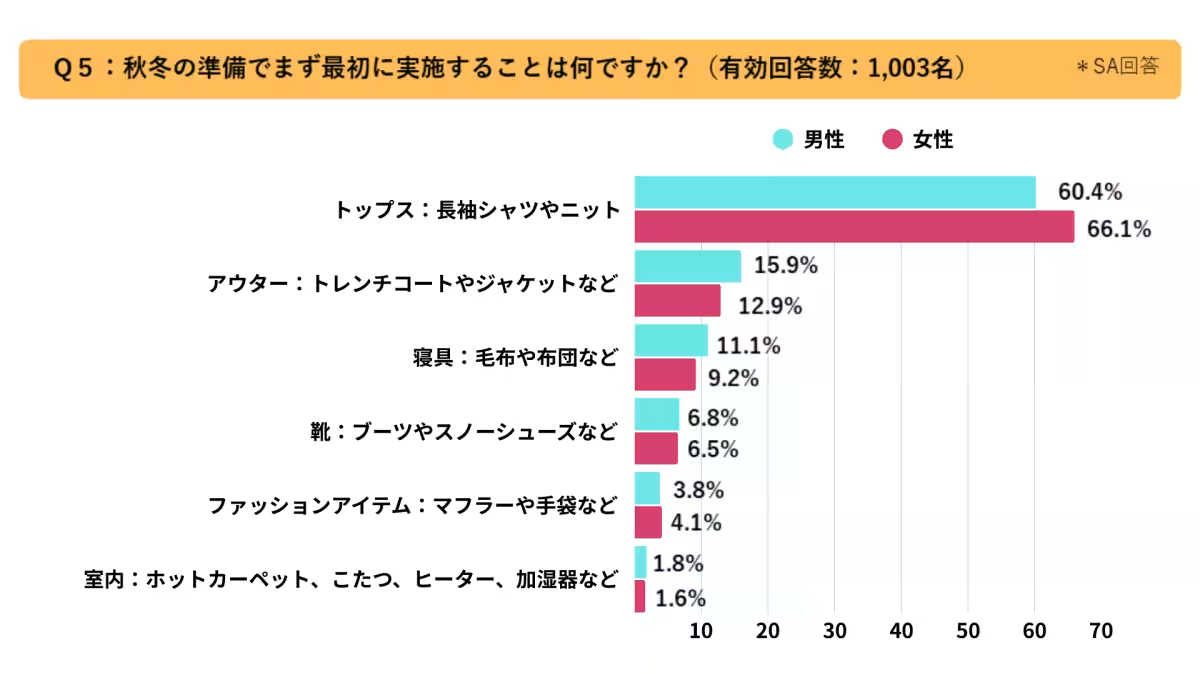
When it comes to the initial steps of preparing for the colder months, the most common action taken is to sort through and retrieve long-sleeved tops and knitwear, with about 60% of respondents indicating this. Interestingly, this action was more prevalent among women. Next in line were preparations involving outerwear and bedding. Regional variations were noteworthy; for instance, in Hokkaido, there’s a notable emphasis on acquiring outerwear (27.5%) and footwear (15.1%). In contrast, respondents from Kyushu prioritized retrieving tops (70.7%), highlighting regional differences in clothing needs.
Cultural Reflections of Seasonal Changes
This survey has unveiled deep insights into the clothing transition practices of individuals living alone. It underlines that a significant portion of women (20%) belong to the "no transition" category and that younger individuals tend to undertake decluttering more frequently. While many continue to favor the practice of discarding items, there remains an evident desire to ensure that cherished pieces find new homes, demonstrating an appreciation for sustainable practices.
Ultimately, the act of seasonal clothing transition is far more than a mere exchange of wardrobe items; it serves as a cultural reflection of varying lifestyles and values shaped by regional characteristics and generational differences within Japan.
For more detailed findings from this survey, please visit the official Hitogura Lab website.

Topics Consumer Products & Retail)
【About Using Articles】
You can freely use the title and article content by linking to the page where the article is posted.
※ Images cannot be used.
【About Links】
Links are free to use.