



WOTA Collaborates with Toyama Prefecture to Establish Water Circulation Disaster Response Platform
WOTA's New Disaster Response Agreement with Toyama Prefecture
WOTA Inc., headquartered in Chuo-ku, Tokyo, has entered into an agreement with Toyama Prefecture, marking the first collaboration in the Chubu region aimed at establishing a mutual assistance platform for water resources during emergencies. This agreement focuses on ensuring the availability of domestic water supply during disasters, thereby strengthening the systems required for sanitation and hygiene in evacuation centers.
Background of the Agreement
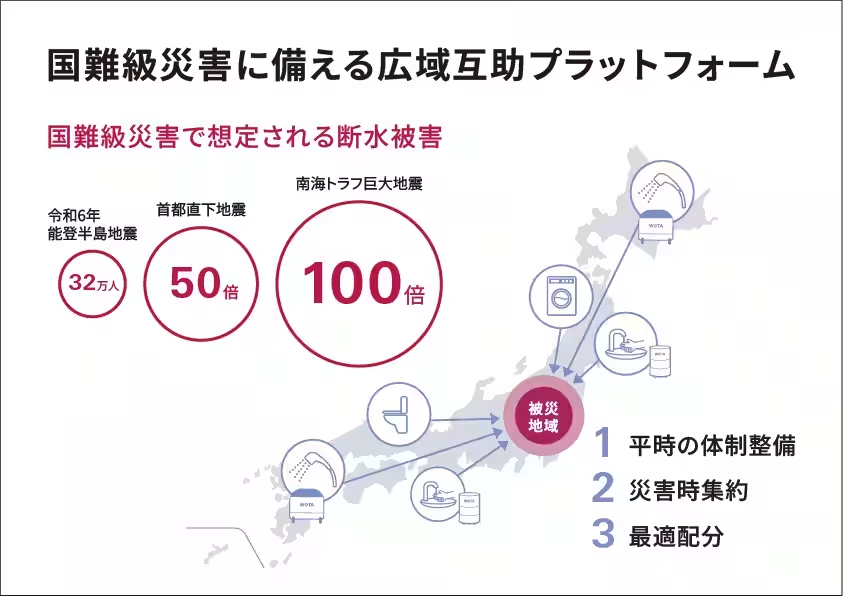
The agreement was inspired by the experiences from the Noto Peninsula Earthquake that occurred in 2024. During this disaster, water infrastructure faced significant disruptions, resulting in over 100,000 residents experiencing prolonged water shortages. The need for effective management of water resources before, during, and after such calamities has been accentuated by these events.
To address this, WOTA's platform will facilitate a national inter-municipal support system that can respond flexibly and promptly to large-scale disasters, ensuring that essential water supply is maintained in affected areas.
Key Points of the Agreement
The framework of the collaboration includes various specific measures:
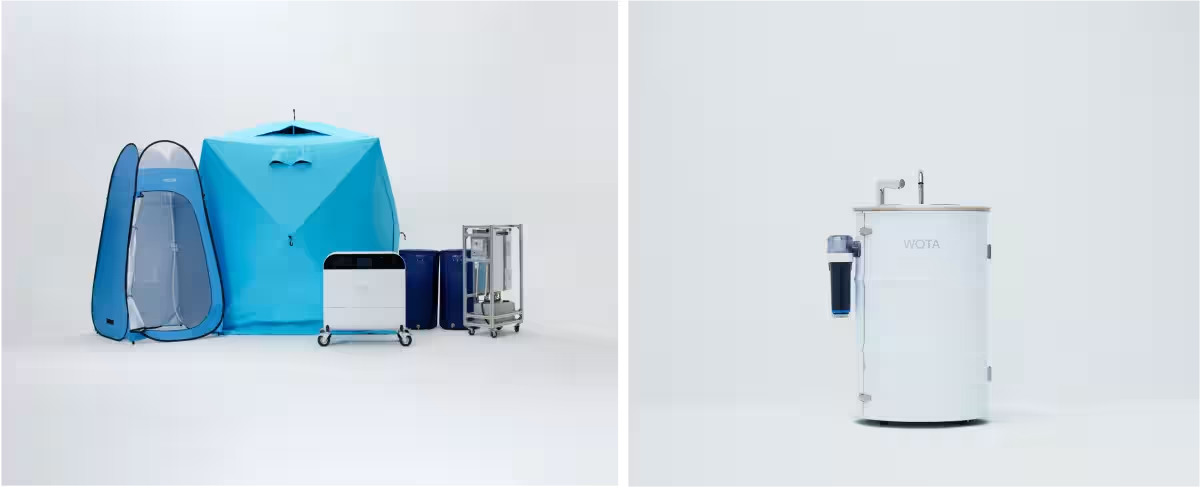
- - Mutual Support of Water Resources: During emergencies, water supply equipment (like the 'WOTA BOX' and 'WOSH') will be provided by unaffected municipalities to those in crisis.
- - Coordination by WOTA: The platform will act as a central hub, receiving requests for assistance and coordinating support among municipalities.
- - Rapid Information Sharing: Real-time updates regarding the situation and resource needs will be communicated between stakeholders, facilitating effective response coordination.
- - Pre-Disaster Planning: Preparation and strategic deployment of equipment will be emphasized in non-crisis periods to ensure readiness.
Importance of Water Supply Management
The necessity of securing domestic water during disasters cannot be overstated. While drinking water can be relatively easily obtained through alternatives like bottled water, the challenge lies in securing enough water for daily activities, which can demand volumes significantly higher than for drinking. Without efficient water supply systems for bathing, handwashing, and sanitation, public health can be severely impacted.
Lessons from Past Disasters
Following the Noto Peninsula Earthquake, WOTA launched emergency water supply activities, providing systems capable of offering showers and handwashing facilities even when conventional water services were down. This initiative, supported by The Nippon Foundation and multiple partners, enabled WOTA to deploy approximately 300 systems across the Noto Peninsula, achieving remarkable coverage in evacuation centers under prolonged water outages.
However, the mobilization of resources took more than one month, highlighting the critical need for pre-established mutual support systems among municipalities to expedite response times.
Future Developments
WOTA plans to broaden the nationwide implementation of the platform through further agreements with prefectures across Japan. This proactive strategy aims not only to provide a reliable response framework for large-scale disasters but also to foster overall community resilience. With natural disasters growing in frequency and severity, building such frameworks is now an urgent priority.
In summary, this agreement is a significant step towards enhancing the capability and readiness of local governments to respond to disasters, ensuring that communities are better prepared for whatever challenges lie ahead.
For more information, visit WOTA's official website.
Topics Other)
【About Using Articles】
You can freely use the title and article content by linking to the page where the article is posted.
※ Images cannot be used.
【About Links】
Links are free to use.