



Understanding the Demand for Battery-Equipped ZEH Homes in Japan
Survey Report on Battery-Equipped ZEH Homes
The LIXIL Housing Research Institute has conducted a survey analyzing the growing awareness and acceptance of battery-equipped Zero Energy Homes (ZEH) among married women across Japan. This research reflects their willingness to bear the additional costs of implementation and their expectations for cost savings on utility bills after moving into such homes.
The survey was executed over two days, from August 5 to August 6, 2025, and garnered responses from 550 participants nationwide (excluding Okinawa). Respondents included married women who had either recently purchased or were contemplating purchasing single-family homes.
Summary of Findings
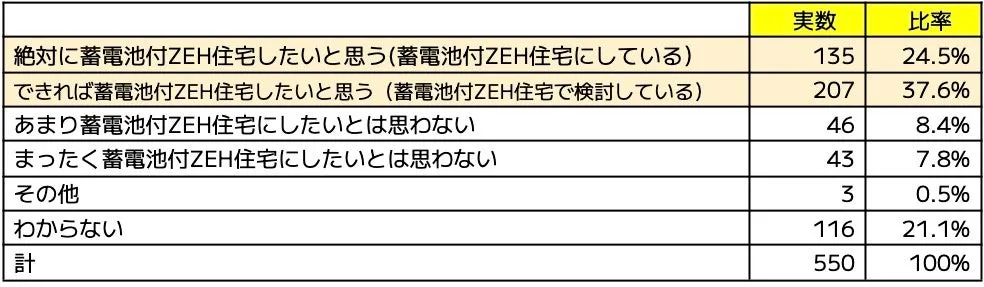
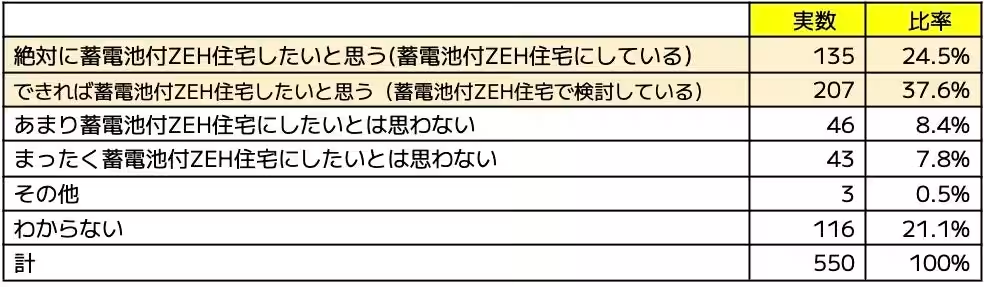
The survey focused on individuals who have recently moved into single-family housing or are considering doing so. Participants were asked their opinions on battery-equipped ZEH homes. The findings revealed that 62.1% of respondents support the adoption of battery-equipped ZEH homes, with 24.5% stating they would definitely want one and 37.6% indicating they would like to consider it.
The main motivations for this preference include:
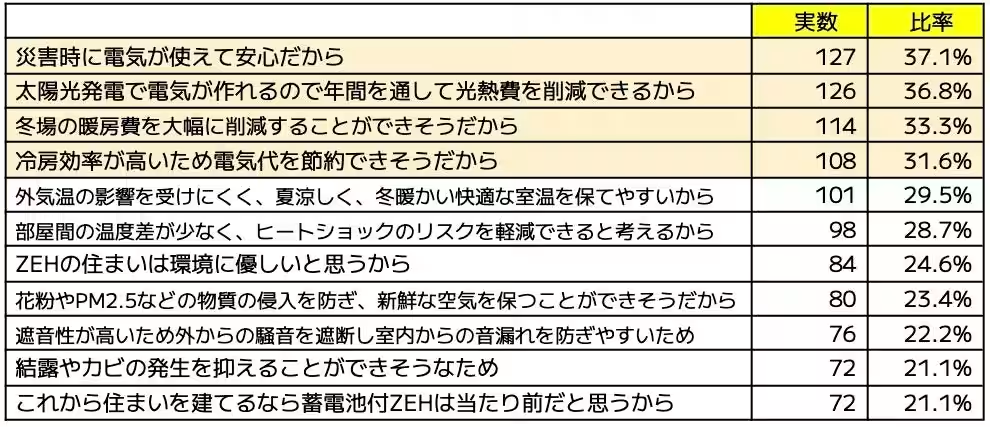
1. Safety during emergencies: 37.1% believe having electricity available during disasters offers peace of mind.
2. Cost savings on utility bills: 36.8% appreciate the potential for annual savings through solar energy generation.
3. Reduced heating costs: 33.3% feel that the winter heating expenses could be significantly lowered.
4. Energy efficiency: 31.6% foresee savings due to improved cooling efficiency.
These findings indicate that safety during emergencies and anticipated reductions in utility costs are key drivers of interest in battery-equipped ZEH housing.
Acceptable Initial Costs
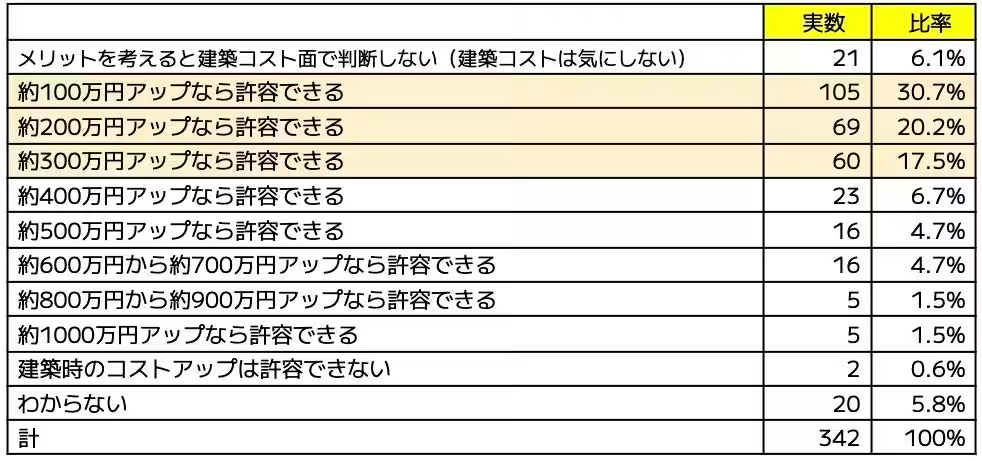
Regarding the upfront costs associated with installing battery-equipped ZEH homes, respondents indicated that they would tolerate increases of about 1 million yen (30.7%) or 2 million yen (20.2%). Notably, over half of the participants (50.9%) stated that an increase of up to 2 million yen would be acceptable.
Expected Savings on Utility Bills
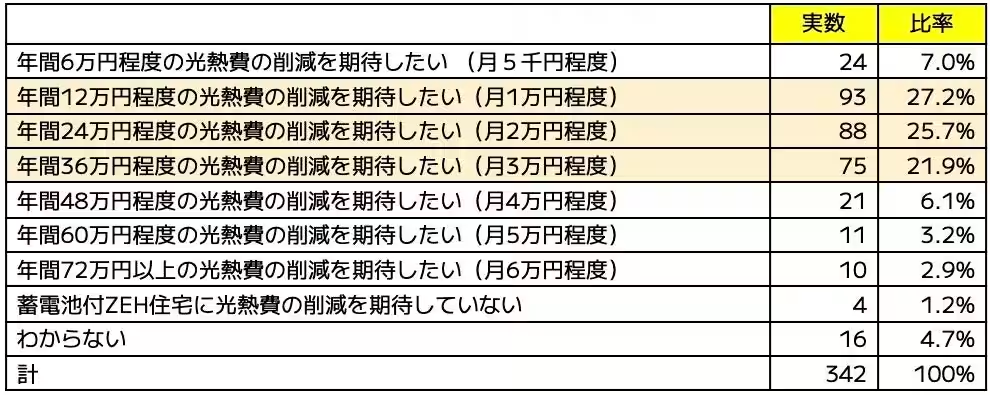
When asked about their anticipated savings on utility bills, 27.2% aim to reduce expenses by about 10,000 yen per month, while 25.7% aim for about 20,000 yen, and 21.9% desire to save around 30,000 yen per month. In total, 74.8% expect savings ranging from 10,000 to 30,000 yen per month.
Detailed Findings
Background Survey
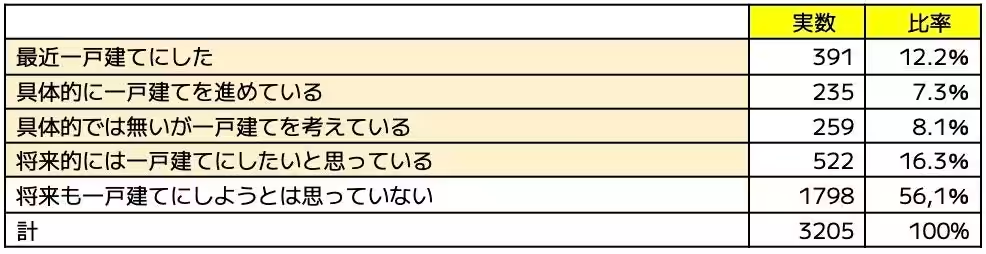
Q1: Are you considering moving from your current residence to a newly built or replacement single-family home?
This preliminary survey was conducted to identify recent homeowners and potential future buyers. A total of 1,407 individuals responded.
Main Survey
- - Total responses: 550
- - Q2: Do you wish to consider a battery-equipped ZEH home in your future housing decisions?
Key Highlights of Respondents' Preferences
Reasons for desiring a battery-equipped ZEH home (respondents could select multiple answers):
- - 37.1% for emergency electricity availability.
- - 36.8% for potential annual energy cost savings.
- - 33.3% for reduced winter heating costs.
- - 31.6% for higher cooling efficiency.
Acceptable increases in initial costs:
- - Up to 1 million yen: 30.7%
- - Up to 2 million yen: 20.2%
- - Up to 3 million yen: 17.5%
- - Acceptable within 2 million yen: 50.9%
Expected savings on utility costs:
- - Monthly savings of around 10,000 yen: 27.2%
- - Monthly savings of around 20,000 yen: 25.7%
- - Monthly savings of around 30,000 yen: 21.9%
About ZEH Homes
Zero Energy Homes (ZEH) aim to achieve a net energy consumption of zero or less through enhanced insulation, efficient systems, and renewable energy sources like solar power.
About Residential Energy Storage
Residential battery systems work alongside solar setups to store excess electricity generated and facilitate the use of cheaper energy during off-peak times, helping to reduce costs and serve as backup during outages.
Conclusion
The results of this survey emphasize the burgeoning interest among married women in Japan regarding battery-equipped ZEH homes, driven largely by safety during emergencies and the promise of lowered utility costs. As energy costs rise globally, these factors position battery-equipped ZEH homes as an increasingly attractive option for homeowners.

Topics Consumer Products & Retail)
【About Using Articles】
You can freely use the title and article content by linking to the page where the article is posted.
※ Images cannot be used.
【About Links】
Links are free to use.