



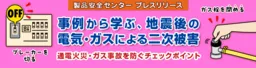
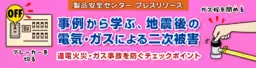
Learning from Past Disasters to Prevent Secondary Damage from Earthquakes and Gas Accidents
Learning from Past Disasters to Prevent Secondary Damage from Earthquakes and Gas Accidents
Since the Great East Japan Earthquake in 2011, Japan has experienced several major earthquakes, such as the Kumamoto Earthquake in 2016, the Hokkaido Eastern Iburi Earthquake in 2018, and the Noto Peninsula Earthquake in 2024. Following the aftermath of these major seismic events, it has become evident that the dangers do not end with the tremblers themselves. In fact, a significant number of secondary accidents have occurred due to electrical appliances and gas devices post-quake. To mitigate these risks, the National Institute of Technology and Evaluation (NITE), led by Chairman Fumihiko Hasegawa, has put forth key points to prevent product accidents during and following earthquakes.
The Timing of Product Accidents
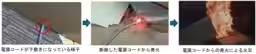
Research has shown that product accidents predominantly arise either immediately after an earthquake occurs or during the subsequent recovery phase. Natural disasters usually present both direct hazards, such as shaking and flooding, as well as substantial secondary hazards involving the restoration of electrical and gas services. Particularly in the context of electricity restoration, damaged or submerged wiring and devices can lead to electrical fires. Likewise, gas restoration can trigger severe accidents through gas leaks and ignitions from damaged or deformed gas equipment.
Given that natural disasters can strike without warning, it is crucial to prioritize personal safety during such events. However, it is equally important to be prepared in order to avoid secondary accidents stemming from product failures. Regularly checking and understanding safety measures for earthquakes, both upon occurrence and during recovery, is essential.
Tips for Daily Safety
1. Maintain Cleanth: Regularly clean power plugs and strips to prevent moisture from accumulating.
2. Inspect Equipment: Check that power plugs are not deformed and that power cords aren't subject to excessive tension or pressure from furniture.
3. Confirm Proper Gas Connections: Ensure that the gas socket is free from debris and that connections are firm and secure.
4. Secure Your Furniture: Fix furniture to walls to prevent tipping, keep flammable materials away from heating devices, and consider installing an earthquake breaker.
Safety Measures During an Earthquake
- - Post-Tremble Protocol: Once the shaking stops, ensure to turn off any gas appliances. If you have the time, shut the main gas valve before evacuating.
- - Cut Off Electricity: Disconnect all electrical devices from the power source after ensuring it’s safe to do so. If evacuating, turn off the breaker.
Recovery Procedures to Follow
- - Assess Your Systems: Before restoring power, confirm that the circuit breaker is off. Ensure that no systems have been damaged or submerged and check for any operational abnormalities.
By remaining vigilant and adhering to these guidelines, individuals can significantly minimize the risks associated with secondary damage after earthquakes. Being prepared not only safeguards oneself but also helps in ensuring safety for the wider community.
For more information on safety practices in line with disaster preparedness, visit the NITE website at NITE Homepage.
Topics Other)
【About Using Articles】
You can freely use the title and article content by linking to the page where the article is posted.
※ Images cannot be used.
【About Links】
Links are free to use.