



Unraveling Cadherin Complex Dynamics on Artificial Membranes via High-Speed AFM
Unraveling Cadherin Complex Dynamics on Artificial Membranes via High-Speed AFM
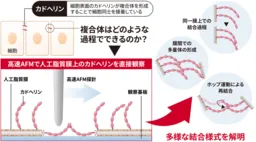
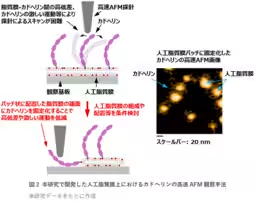
Recent advancements in molecular biology have allowed researchers to capture the dynamic interactions of cadherin complexes, which play a critical role in holding adjacent cells together, on artificial lipid membranes. A collaborative team from the National Institute of Advanced Industrial Science and Technology, Tokyo University of Science, and Nagoya University made significant strides in this area by employing high-speed atomic force microscopy (AFM) to observe cadherin interactions at the molecular level.
Background on Cadherins and Cell Adhesion
Cadherins are membrane proteins situated on cell surfaces that are essential for cell-cell adhesion. They form complexes with neighboring cadherins to stabilize the connections between cells, preserving tissue structure and organization. Understanding how these cadherin complexes form and dissociate is vital, not only for basic biological processes but also due to their link to developmental disorders and diseases such as cancer.
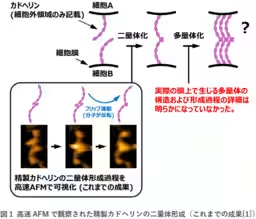
For years, cadherin binding mechanisms have been studied, yet direct observations of how these proteins dynamically connect and disconnect in real time on the cell membrane have remained elusive. The research team aimed to fill this gap by using artificial lipid membranes that mimic the natural cellular environment, facilitating direct observations of the cadherin binding process.
Research Methodology
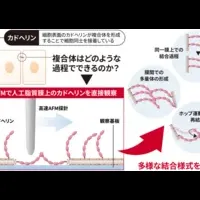
To achieve their goals, the researchers utilized artificial lipid membranes to create an environment where cadherin could be arranged and observed under conditions closely resembling those found in living cells. With the aid of high-speed AFM, they captured the dynamic binding and unbinding processes of cadherin complexes at nanometer-scale resolution, providing unprecedented insights into their behavior.
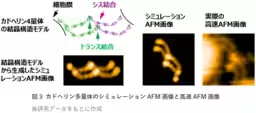
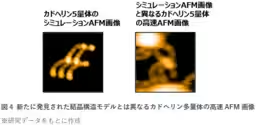
Previously, cadherin structures had been analyzed primarily in static, crystallized forms, limiting the understanding of their dynamic nature. By employing high-speed imaging, the team observed the myriad ways in which cadherins can associate with each other, revealing complex interaction pathways that traditional models could not explain adequately.
Findings and Implications
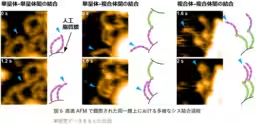
The research yielded groundbreaking insights into cadherin dynamics. Notably, the findings showed that cadherins do not just engage in mutual binding; they exhibit multiple binding styles, which can alter depending on their environmental conditions. This novel understanding of cadherin interactions could inform research concerning various diseases, particularly those related to abnormal cellular adhesion such as cancer metastasis.
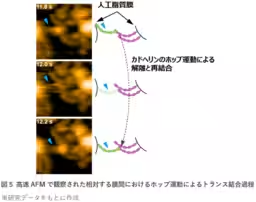
Significantly, the researchers discovered two primary methods of cadherin association: a traditional mechanism involving 'flipping' motions that allow for binding between counterparts, and a newly identified 'hopping' mechanism that occurs without prior flipping, demonstrating that cadherins can connect in more versatile ways than previously thought.
This research not only enhances our comprehension of the fundamental principles of cell adhesion but may also pave the way for new therapeutic strategies targeting cadherin-related disruptions. The implications of this work extend to evaluating drug interactions aimed at correcting adhesion mechanisms in diseases, supporting the ongoing pursuit of therapeutic innovation in cellular biology.
Future Directions
Moving forward, the team hopes to extend their research to include interactions between various cell adhesion proteins beyond cadherins. This broader application of their observational techniques may yield important breakthroughs in understanding the adhesion mechanisms of other proteins involved in cellular communications. Advances in this area could enhance the understanding of numerous diseases and aid in the development of new treatment options.
Conclusion
The research encapsulates a pivotal step in molecular biology, revealing the intricacies of cadherin dynamics in contexts that closely resemble living systems. The advancements in high-speed AFM enable scientists to delve deeper into cellular interactions, potentially revolutionizing the landscape of cell biology and disease treatment.
The research findings are published in the Proceedings of the National Academy of Sciences of the United States of America (PNAS) and are available for further exploration. The paper titled “Trans- and cis-interaction dynamics of cadherin complexes on membranes visualized by high-speed atomic force microscopy” offers a comprehensive look at the study and its implications.
For further details, visit the publication here.
Topics Health)
【About Using Articles】
You can freely use the title and article content by linking to the page where the article is posted.
※ Images cannot be used.
【About Links】
Links are free to use.