




Unlocking the Future of Low-Dielectric Materials for AI: A Comprehensive Guide to Implementation, Regulations, and Economic Security
Comprehensive Overview of Low-Dielectric Materials in the AI Era
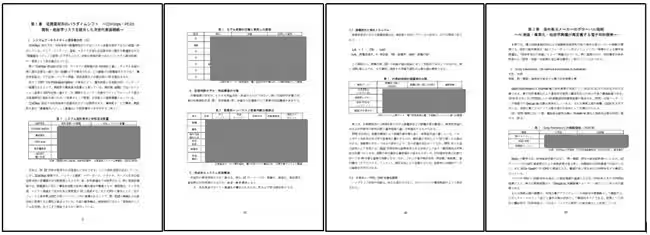
As the demand for AI infrastructure surges, low-dielectric materials are reshaping their role from mere electronic components to strategic resources essential for the AI era. The recently published book, The Compendium of Low-Dielectric Materials for the Semiconductor and AI Era, dives deep into the pivotal themes influencing this transformation.
The Shift in Low-Dielectric Materials' Strategic Importance
Traditionally categorized as high-frequency functional materials, low-dielectric options have gained strategic relevance with advancements in AI servers, edge computing, physical AI, autonomous vehicles, and next-generation communication infrastructures. This shift is evident in the pressing need to handle high-speed transmissions exceeding 224Gbps, where dielectric loss significantly impacts system performance. As transmission frequencies rise, losses become non-linear and increasingly problematic with conventional wiring, potentially destabilizing power consumption and signal integrity.
To address these challenges responsibly, the book highlights an integrated approach to selecting materials that influence overall system architecture, moving beyond simple component optimization. Innovations like Co-Packaged Optics (CPO) reveal the importance of polymer waveguides alongside low-dielectric materials in achieving effective interconnectivity.
Regulatory Challenges and Market Dynamics
The evolution of electronic materials is also being molded by stringent regulations surrounding PFAS, drastically altering development considerations. Historically favored for their performance, fluorinated materials are now facing escalating pressures to transition to alternatives due to environmental regulations. This paradigm-shifting scenario necessitates a multidimensional optimization perspective, balancing performance, costs, and regulatory compliance while addressing supply chain constraints.
Moreover, geopolitical dynamics, particularly amidst US-China tensions, are prompting significant shifts in the supply structures of electronic materials. Export restrictions and national semiconductor policies underline the increasing necessity for materials manufacturers to adapt not only to the evolving competitive landscape but also to newer dimensions of supply chain resilience and regulatory compliance.
Market Forecasts and Technological Innovations
The comprehensive analysis presented in the book leverages the effect of the threefold amplification model to predict market trajectories up to 2035. This includes focusing on materials' roles across various applications from data centers to edge computing environments, where an overarching focus on material efficiency and sustainability is encouraged. The book discusses technological drivers like the growing utilization of Materials Informatics (MI) to streamline material development processes and maximize yield amidst restrictions.
Navigating the Complicated Terrain of Investment Opportunities
As intelligent systems proliferate, the costs associated with transmission losses and power consumption are accelerating, prompting a full-scale transition from traditional electronic materials to low-dielectric options characterized as strategic resources. This necessitates a solid understanding of market viability through quantitative analyses of investment and business risks reflective of materials market trajectories leading up to 2035.
By evaluating broad trends such as technological advancements, regulatory changes, and geopolitical adaptations, the book serves as a vital resource for materials firms, semiconductor companies, electronics manufacturers, chemical producers, and investment strategy teams. It aims to arm stakeholders with practical guidance for navigating the complexities of next-generation electronic materials and their markets.
This indispensable resource will clarify competitive structures vital for those innovating within the industry and those making investment decisions. Coupling insights into integration strategies among startups and established companies, a clear picture of a rapidly evolving materials landscape emerges.
Conclusion
In today's climate of rapid technological change and heightened regulatory awareness, low-dielectric materials are not merely components but are central to shaping efficient infrastructures for AI and its associated technologies. As demonstrated in this comprehensive publication, understanding the interplay of technological advancements, regulatory requirements, and market demands will be crucial in developing resilient strategies for the future.
The full breadth of insights is available in the publication from CMC Research, underscoring its commitment to supporting the advancement of semiconductor and material technologies in the midst of transformative market dynamics.

Topics Consumer Technology)
【About Using Articles】
You can freely use the title and article content by linking to the page where the article is posted.
※ Images cannot be used.
【About Links】
Links are free to use.