



Exploring Insights from Monthly Financial Reports: Bridging the Gap Between Accounting and Management
Exploring Insights from Monthly Financial Reports: Bridging the Gap Between Accounting and Management
In a recent survey conducted by YK Planning, they analyzed the perspectives of accounting personnel and management regarding monthly financial reports. The results highlighted a significant gap between the burdens faced by accountants during report generation and the expectations of top executives who rely on these reports for strategic decision-making.
Background of the Survey
The study involved a sample size of 1,006 participants, including accounting staff responsible for preparing monthly financial reports and executives requiring these reports for their assessments. Conducted between March 6-7, 2025, using the PRIZMA platform, the survey aimed to identify key areas where improvements could streamline the reporting process while meeting management's needs.
Importance of Monthly Financial Reports
Monthly financial reports serve as essential tools for understanding a company's financial health and making informed strategic decisions. However, this process often places a considerable burden on accounting departments, leading to inefficiencies in timely reporting.
Key Findings from the Survey
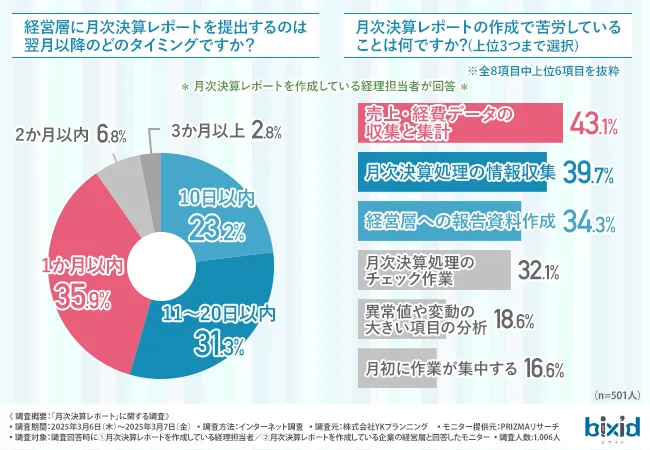
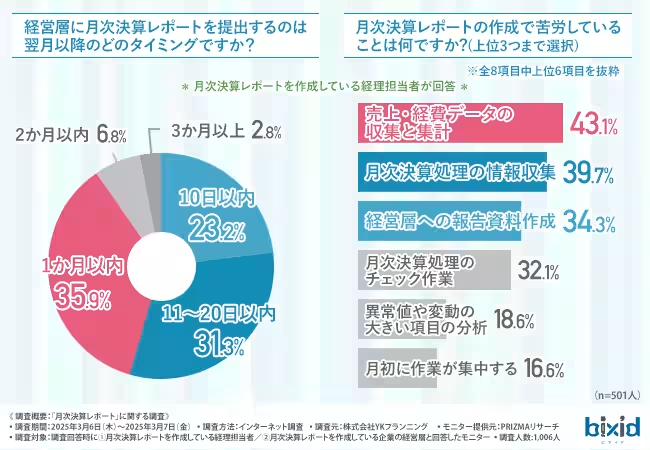
When participants were asked about the submission timeline for monthly financial reports, over 35% indicated that reports were submitted within a month, with a significant proportion preferring a submission within ten days.
In their responses about challenges faced in the preparation of these reports, the majority indicated that gathering sales and expense data was the most taxing task, followed closely by processing monthly accounting information and preparing reports for management.
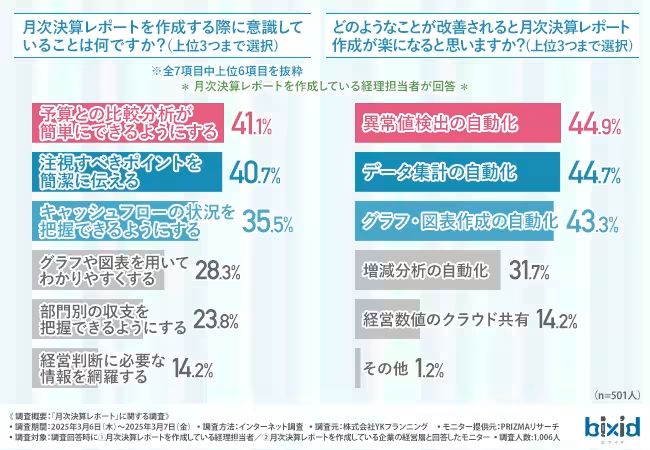
Interestingly, accounting personnel expressed their priorities while preparing these reports, emphasizing the need for easy comparisons to budgets, clarity on key points, and visibility into cash flow status.
Automating Financial Reporting
The survey also questioned how the report creation process could be improved. Over 44% of respondents highlighted the need for automation in identifying anomalies, aggregating data, and creating graphs and charts to minimize manual effort. They shared various insights into how automation would significantly ease the reporting process, notably reducing the time spent on data collection, thereby enabling quicker report generation.
Management's Use of Monthly Reports
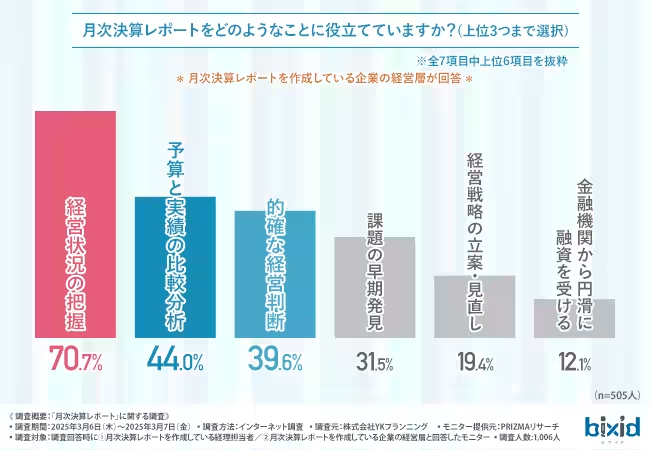
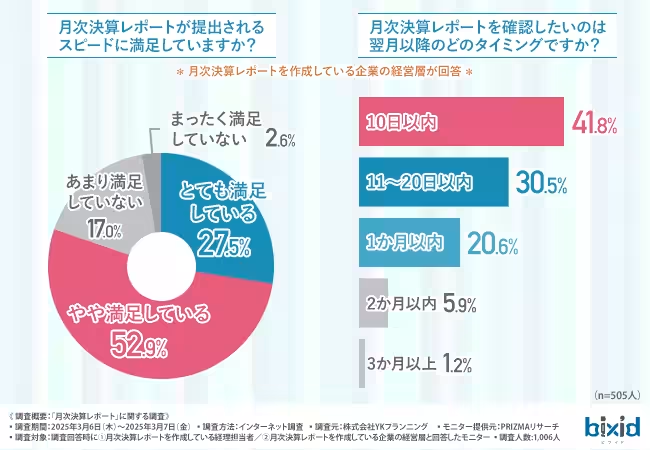
On the management side, about 70% of executives stated they primarily used these reports to assess the company's financial status. Despite nearly 80% expressing satisfaction with the speed of report submissions, the feedback indicated a clear desire for quicker access—specifically within ten days—demonstrating a discrepancy between executive expectations and the reality of submission timelines.
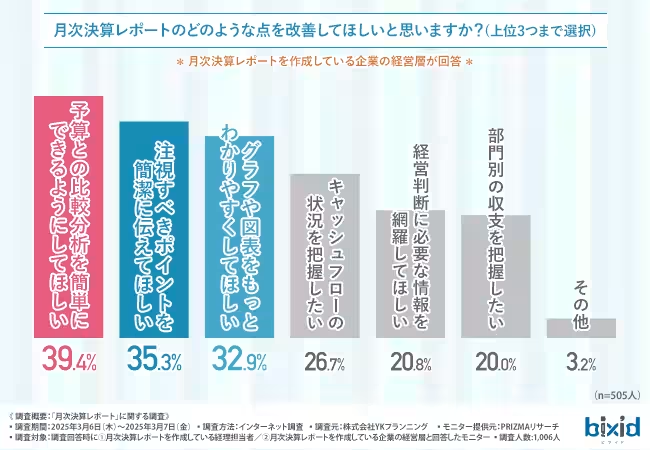
Moreover, executives suggested several improvements for financial reports, including more straightforward budget comparisons, concise communication of critical points, and enhanced clarity in graphs and charts. These points echo the feedback received from accounting staff, indicating a mutual recognition of necessary changes but diverging levels of satisfaction.
Bridging the Gap
Both accounting and management perspectives reveal a gap in the understanding of monthly financial reports, which can be narrowed by introducing automation tools. As the survey findings suggest, automating critical elements of report creation and refining the presentation of financial data can enable both accounting teams to lessen their workload and fulfill management's expectations more effectively.
Conclusion
Ultimately, the survey conducted by YK Planning emphasizes the importance of automation and efficient processes in financial reporting. The integration of tools such as the bixid management support cloud can not only streamline the reporting processes but also enhance the decision-making capabilities of management by providing timely and accurate financial insights. As organizations increasingly rely on these reports, embracing automation will be essential for reducing burdens on accounting staff and ensuring strategic alignment between departments.
For more information on how to implement an efficient management strategy with bixid, visit YK Planning's official site.

Topics Business Technology)


【About Using Articles】
You can freely use the title and article content by linking to the page where the article is posted.
※ Images cannot be used.
【About Links】
Links are free to use.