




Understanding the Rise of Sandals: Fashion Item Trends Revealed Through Data Analysis
The Rise of Sandals: Insights from Yahoo Data Solutions
In a recent report released by Yahoo Data Solutions, valuable insights into the increasing popularity of sandals as everyday fashion items have been analyzed through search and purchase big data. With scorching summer temperatures on the rise, sandals, which were initially reserved for beaches and pools, are now becoming a staple in urban fashion. The report titled "Why Are Sandals Becoming Everyday Wear?" utilizes data from Yahoo Search and Yahoo Shopping to analyze this phenomenon.
Search Trends for Sandals
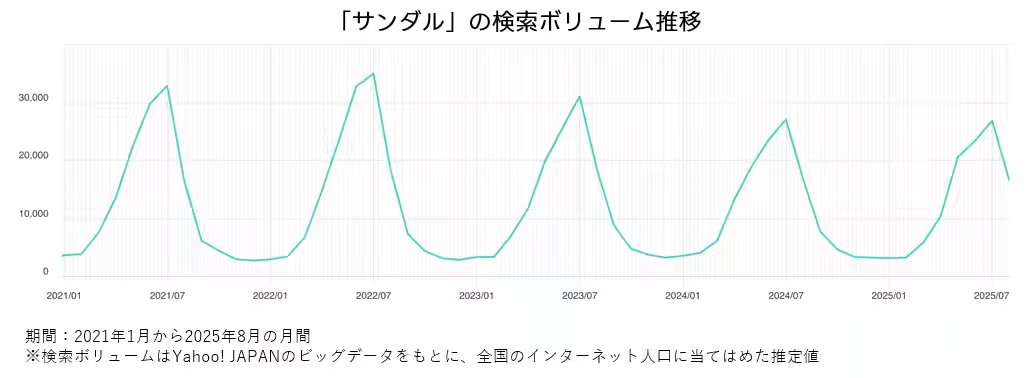
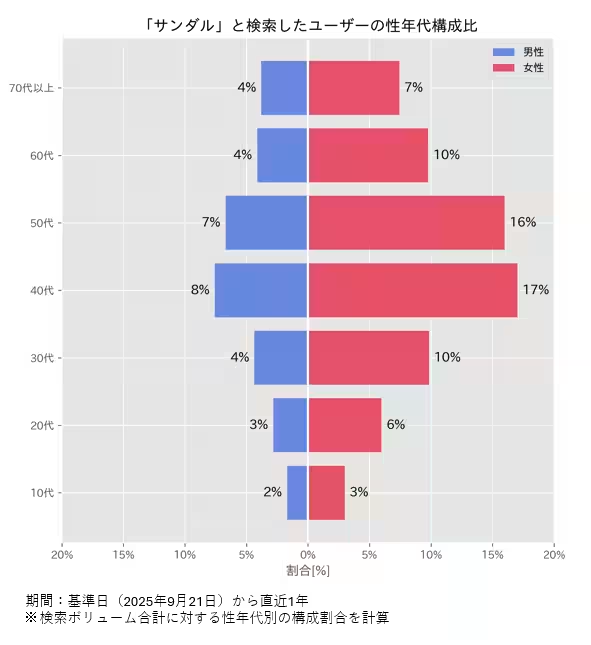
The data reveals a consistent trend where searches for the term "sandals" peak annually in July. While overall search volume has shown some slight decline since peaking in July 2022, it remains significantly substantial, indicating that sandals have established themselves as a seasonal favorite. The demographic analysis shows that searches are predominantly coming from individuals in their 40s and 50s, with female users accounting for more than double the searches compared to their male counterparts. This suggests a broad acceptance of sandals among the middle-aged demographic.
Sales Growth in 2023
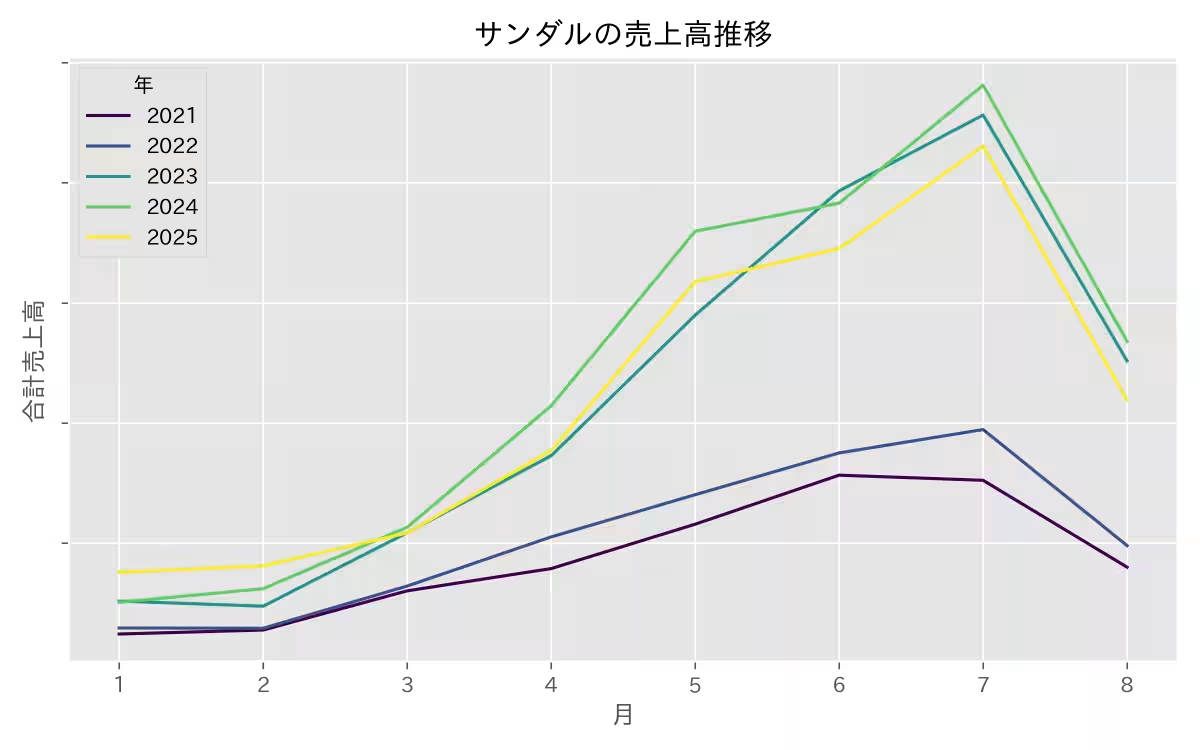
An analysis of purchasing data from Yahoo Shopping reveals a notable increase in sandal sales, particularly during the month of July, which aligns with search trends. Since 2023, there has been a marked surge in overall sales, especially in the women's category, where months from May to August often exceeded the total sales of previous years. This trend highlights that the female demographic is greatly driving market expansion.
Influential Factors Behind Sandal Popularity
Several factors contribute to the rising prominence of sandals:
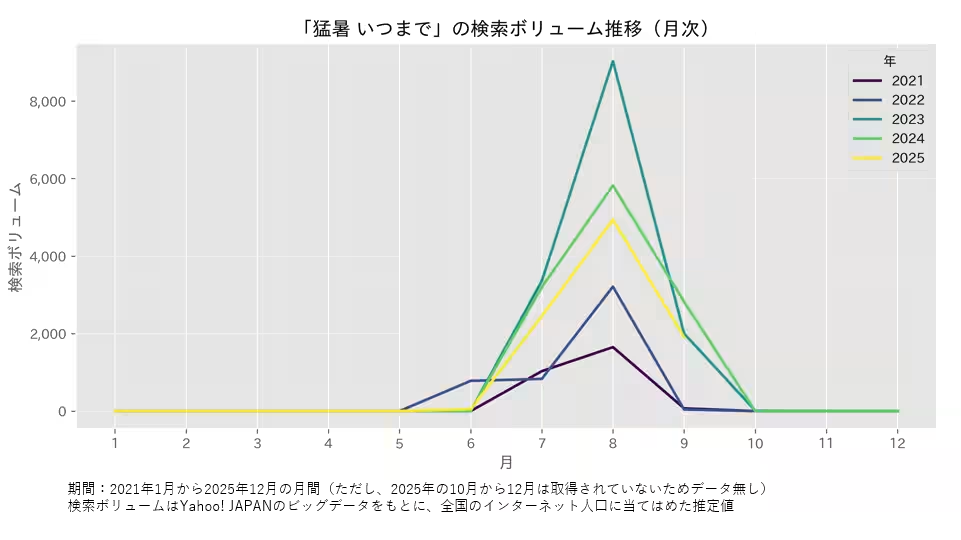
1. Rising Temperatures: According to the Japan Meteorological Agency, the average maximum temperature in Tokyo has increased, with July recording a rise of 1.3°C and August 1.7°C from 2022 to 2023. This climatic change has resulted in more scorching days, correlating with increased searches around terms like "How long will this heat last?" between July and September, indicating that consumers feel the warmth persists longer. This trend suggests that the demand for sandals, known for their comfort and breathability, is on the rise as a coping mechanism for enduring heat.
2. Recovery from COVID-19: Data from Yahoo Shopping sheds light on the impact of external factors on purchasing behavior, showing a decline in sandal purchases during the pandemic's state of emergency from 2021 to 2022. However, after the lifting of restrictions in 2023, purchasing numbers have rebounded significantly, suggesting that an increase in outdoor activities has rekindled consumer interest in sandals, reflecting a trend also seen with sneakers.
3. Everyday Wear: Keyword analysis related to "sandals" shows an uptick in searches for terms like "recovery sandals" and "comfortable" focusing on wearability and functionality, especially post-2023. This indicates a growing preference for sandals that can be worn comfortably for long periods, seamlessly transitioning them into daily attire.
Thus, by analyzing a wide array of big data, the report suggests that the proliferation of sandals in everyday fashion is a byproduct of a combination of societal factors: climate change, a resurgence in outdoor activity post-pandemic, and an increasing need for comfort in daily wear.
For more detailed insights, please refer to the full report: Yahoo Data Solutions Report.
Yahoo Data Solutions will continue to showcase the power and intriguing nature of big data while striving to return its value to society through various initiatives.
About Yahoo Data Solutions
Yahoo Data Solutions harnesses big data obtained from the diverse services provided by LINE Yahoo to offer insights that foster business creation, growth support, and problem-solving for companies and municipalities. The service provides a desk research tool called "DS.INSIGHT" that allows users to analyze data based on searches and foot traffic. Notably, the service deals exclusively with aggregated data, and no personally identifiable information is included.
- - Official Site: Yahoo Data Solutions

Topics Consumer Products & Retail)
【About Using Articles】
You can freely use the title and article content by linking to the page where the article is posted.
※ Images cannot be used.
【About Links】
Links are free to use.