



Huawei Unveils Top 10 Trends in Smart PV and ESS Sectors for 2026
Huawei Unveils Top 10 Trends in Smart PV and ESS Sectors for 2026
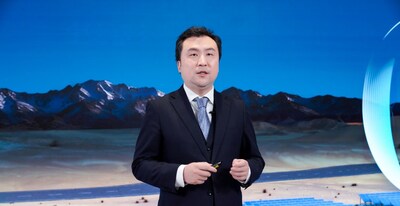
Huawei Digital Power recently hosted the "Top 10 Trends of Smart PV & ESS Launch 2026" event, focusing on creating a grid for all scenarios, harnessing AI potential, and advancing renewable sources to play a pivotal role in the energy landscape. Eric Zhong, the Vice President and Marketing Director of the Smart PV & ESS product line at Huawei Digital Power, introduced the ten key trends alongside a comprehensive white paper.
Zhong emphasized that the sector is transitioning into a phase of deeper value creation, moving from isolated innovations to integrated improvements. Drawing from Huawei's substantial experience in photovoltaic technology and energy storage, these ten trends are crucial for accelerating the deployment of photovoltaics (PV), wind energy, and energy storage systems (ESS). The goal is to establish them as primary sources within renewable energy frameworks while supporting the sector's quality development.
The Top 10 Trends
1. Synergy of PV + Wind + ESS: Future large-scale power plants combining PV, wind, and ESS must exhibit key features that enhance predictability and controllability, ensuring stable energy production and manageable costs.
2. Network-Forming ESS: As network-forming ESS become commonplace, they will stabilize power networks by smoothing out the fluctuations of renewable energy production and enhancing supply stability.
3. Integration of Production, Network, Consumption, and Storage: AI-driven smart dispatch management will foster closer cooperation and efficiency across the entire electricity supply chain, enhancing both regional and global coordination.
4. AI-Native PV + ESS Solutions: In household scenarios, energy solutions will evolve from AI-enabled to AI-native, with artificial intelligence being an integral part of design, user experience, and operational management, thus optimizing energy experiences.
5. Higher Frequency and Density: The power density of PV inverters and Power Conversion Systems (PCS) is expected to increase significantly, enhancing the quality and efficiency of PV + ESS systems.
6. High Voltage and Reliability: Improved resilience of key components to voltage and advancements in insulation materials will promote the adoption of high-voltage architectures, shifting from reactive to proactive safety approaches.
7. System-Level Battery Management: Effective battery management across the entire system will ensure safer, more reliable, and durable operations of ESS, becoming a critical requirement for high-quality systems.
8. Mature Network Technology Systems: Networking technologies are transitioning from passive supporters to active architects in the electricity sector, enabling a more systematic integration into energy systems.
9. AI Agents Automating Renewable Power Plants: AI agents will be increasingly integrated into renewable resource management, facilitated by synergy between cloud, edge, and devices to enable automation in power plants.
10. Quantifying Safety for Energy Storage: The approach to ESS safety is evolving from sample inspections to comprehensive system evaluations throughout their lifecycle, establishing measurable safety metrics essential for long-term sector resolution.
These trends signify Huawei's commitment to developing advanced solutions in the renewable energy sector, which are poised to transform how energy is generated, stored, and consumed in the coming years. By highlighting these changing dynamics, Huawei aims to encourage proactive adaptation and innovation in energy technologies, ensuring a sustainable and efficient energy future.
Topics Energy)
【About Using Articles】
You can freely use the title and article content by linking to the page where the article is posted.
※ Images cannot be used.
【About Links】
Links are free to use.