



Kewpie and Tokyo University Innovate with Upcycled Fertilizer Solutions for Sustainability
Kewpie's Innovative Approach to Sustainable Agriculture
In a groundbreaking collaboration, Kewpie Corporation, alongside Tokyo University of Agriculture and Well Create, has made significant strides towards solving pressing issues in agriculture by turning food waste into sustainable fertilizer. This joint study, presented at the 2025 Niigata Conference of the Japanese Society of Soil Science and Plant Nutrition, confirms that compost derived from unused vegetable parts and chicken waste outperforms traditional fertilizers such as phosphate-based chemical ones.
Purpose of the Research
Kewpie, which manufactures packaged salads through its subsidiary Salad Club, has committed to utilizing unused parts of vegetables, a byproduct of its production process, as feed and compost. This research aims to explore the potential of creating organic fertilizers using these vegetable scraps. By combining them with nutrient-rich chicken manure, they studied the resulting compost — referred to as vegetable-chicken manure compost — for its effects on plant growth.
Overview of Findings
The results from this research are promising:
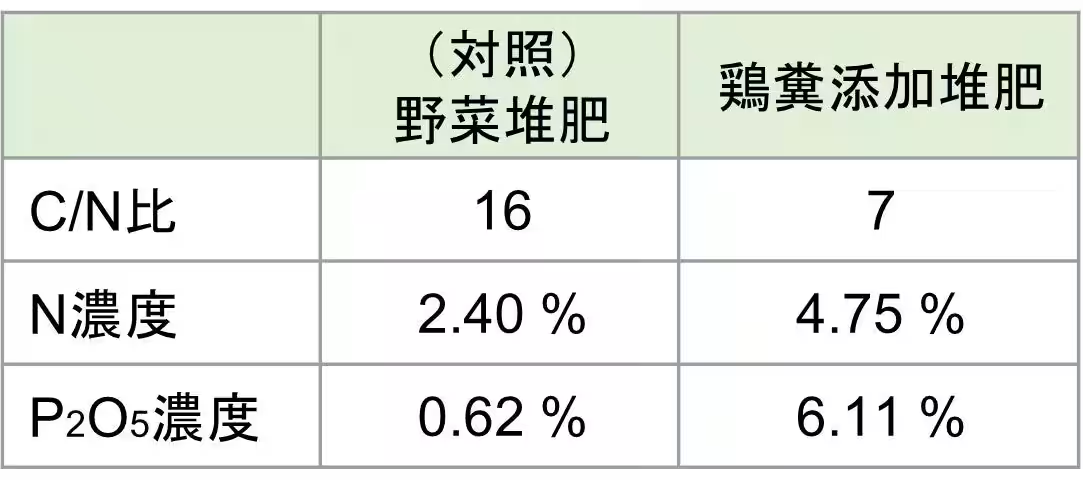
1. The vegetable-chicken manure compost demonstrated higher concentrations of nitrogen and phosphorus compared to compost made from vegetables alone.
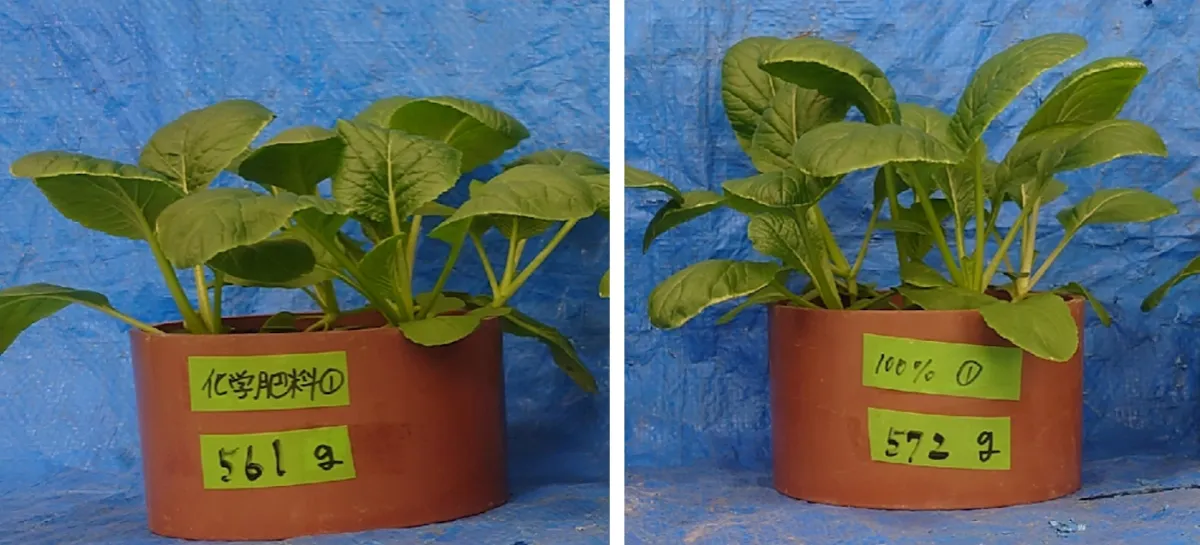
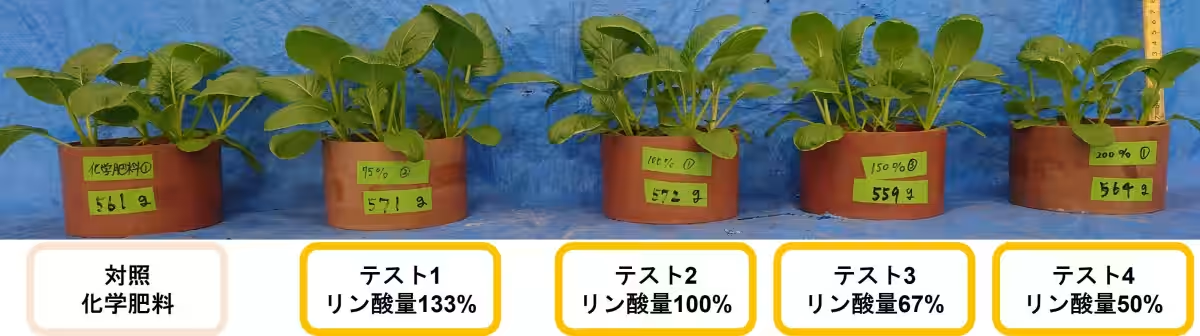
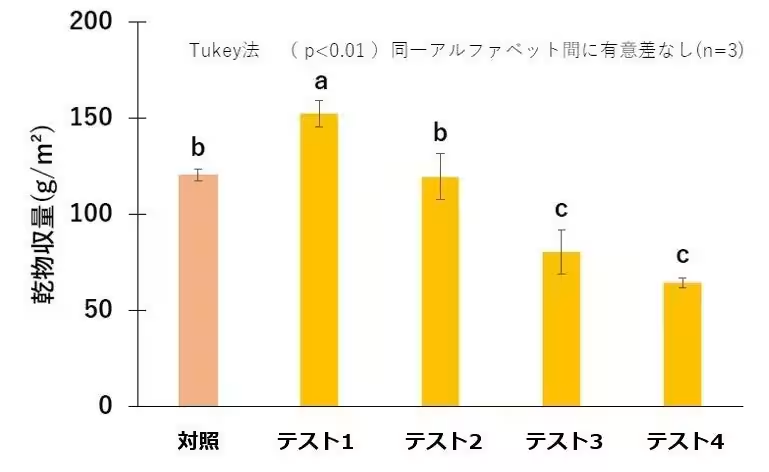
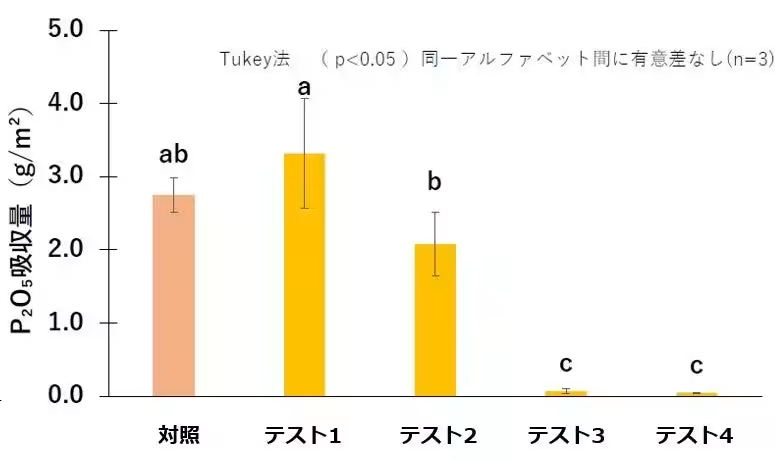
2. In trials with Komatsuna (Japanese mustard spinach), the vegetable-chicken manure compost showed effective phosphate efficiency equivalent to that of chemical fertilizers, yielding results comparable to traditional fertilization methods.
3. When mixed with chemical fertilizers, the compost improved the utilization rate of phosphates derived from those chemicals.
These findings suggest that vegetable-chicken manure compost can serve as an effective organic phosphate fertilizer. Kewpie aims to continue research in hopes of developing new organic fertilizers that can enhance sustainable practices in agriculture.
Sustainability Goals
Kewpie Group is dedicated to sustainability and has set a goal of utilizing over 90% of unused vegetables by 2030. Their efforts focus not only on recycling resources but also on improving the conditions of the chicken farming industry by reducing waste and exploring new uses for chicken manure.
The Broader Context
Japan relies heavily on imported chemical fertilizers, exposing its agriculture to international fluctuations in price and supply. With food waste in Japan estimated at approximately 4.64 million tons annually — over half originating from commercial activities — the potential for reusing these materials provides a dual solution: reducing waste while improving agricultural practices.
Moreover, Kewpie handles around 250,000 tons of chicken eggs annually, which generates a substantial amount of chicken manure — reported to be about twice the volume of eggs produced. While efforts are already underway to use chicken manure as fertilizer, challenges like excess production, odor, and disposal costs persist. This research aims to leverage Kewpie's position as a significant player in both the vegetable and chicken industries to maximize the value of these byproducts and contribute to sustainable farming.
Research Methodology
Samples
Compost was created from vegetable scraps collected at Kewpie's packaged salad factories via microbial fermentation. Using chicken manure from Hanazono Tamaya for additional nutrients, a 60-40 mixture of chicken manure to vegetable compost was crafted and utilized for testing.
Test 1: Assessing Chemical Properties
The study began with measurements of essential components for plant growth, namely nitrogen (N) and phosphorus (P2O5), alongside carbon-to-nitrogen ratios. It was discovered that the resulting vegetable-chicken manure compost contained higher levels of nitrogen and phosphorus compared to straight vegetable compost.
Test 2: Evaluating Phosphate Fertilizer Potential
Researchers adjusted the application rate of the vegetable-chicken manure compost to assess its phosphate effectiveness. Differences in yield and phosphate absorption were monitored in treated plots with variations in compost application rate against controls utilizing chemical fertilizers. Outcomes demonstrated that, under similar conditions, compost achieved about 100% phosphate efficiency, indicating strong potential as a fertilizer.
Future Directions
Professor Kato from Tokyo University emphasizes the potential in unutilized resources like food waste, advocating for continuous innovation in resource recovery while aiming for sustainability in agriculture. The Kewpie group's commitment to further research in the fertilizer effects of vegetable-chicken manure compost highlights their dedication not only to corporate sustainability goals but also to addressing broader environmental challenges.
These efforts pave the way for creating innovative solutions that align with a more sustainable agricultural future in Japan and beyond.

Topics Consumer Products & Retail)
【About Using Articles】
You can freely use the title and article content by linking to the page where the article is posted.
※ Images cannot be used.
【About Links】
Links are free to use.