



Exploring the Frontiers of Showa Japan: A Special Exhibition
Exploring the Frontiers of Showa Japan: A Special Exhibition
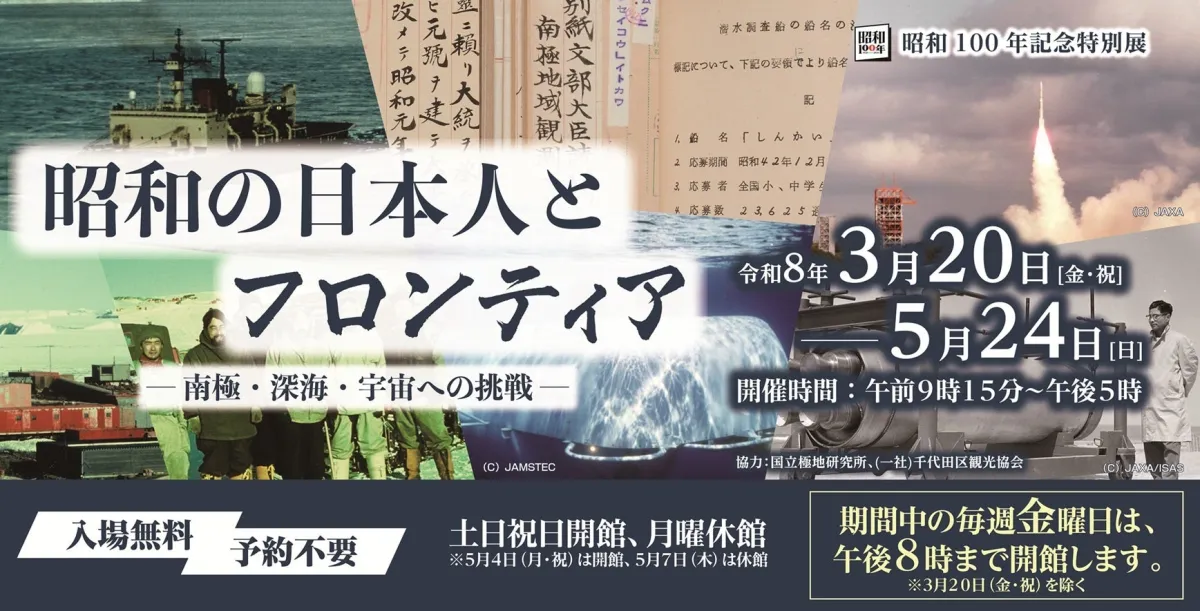
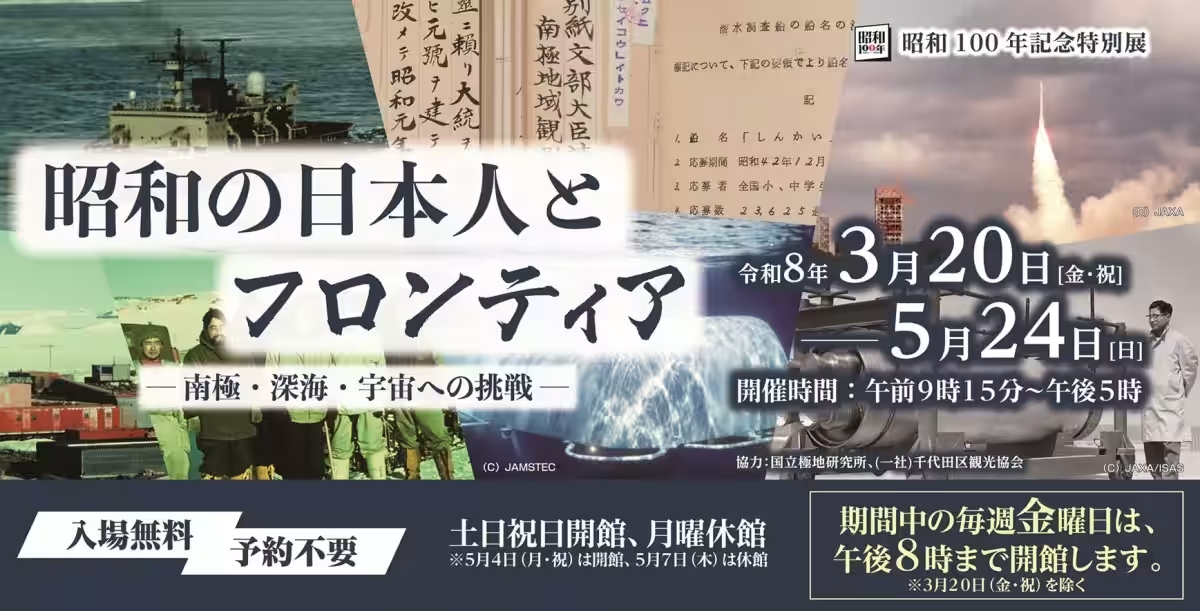
The National Archives of Japan, located in Chiyoda, Tokyo, is hosting a special exhibition titled "Showa 100-Year Commemorative Exhibition: The Japanese of Showa and Frontiers -- Challenges to Antarctica, the Deep Sea, and Space," from March 20 to May 24, 2023. This exhibit seeks to reflect on what the Japanese people sought as their frontiers during the Showa era.
When the era name changed to Showa, it was inspired by the phrase "Hyakusho Sho-Mei, Kyo-Wa Ban-Po," emphasizing harmony with foreign nations. During this time, inspired by Western countries, the Japanese pursued the unknown territories and cutting-edge technology, focusing on military advancements and external expansion. However, the defeat in World War II brought about serious limitations to Japan's military technology.
With the end of the occupation by Allied forces in 1952, Japan faced the world once again. What frontiers did the Japanese identify, and what did they seek? This exhibition presents materials from the Archives relating to Japan's explorations into Antarctica, the deep sea, and outer space.
As we celebrate the 100th anniversary of Showa, we find that technological progress and the internet have significantly reduced the unknowns in our lives, leading to a decline in the motivation to explore frontiers. Yet, the efforts made by Showa-era Japanese individuals who ventured into uncharted territories can serve as a source of inspiration for us today.
Highlights of the Exhibition
Antarctic Exploration
In the early 20th century, many countries began investigating the previously uncharted territory of Antarctica. Japan's first foray was led by Nobu Shirase with the Shirase Expedition, which reached Antarctica in 1912. However, there was a long hiatus before Japan resumed its Antarctic explorations.
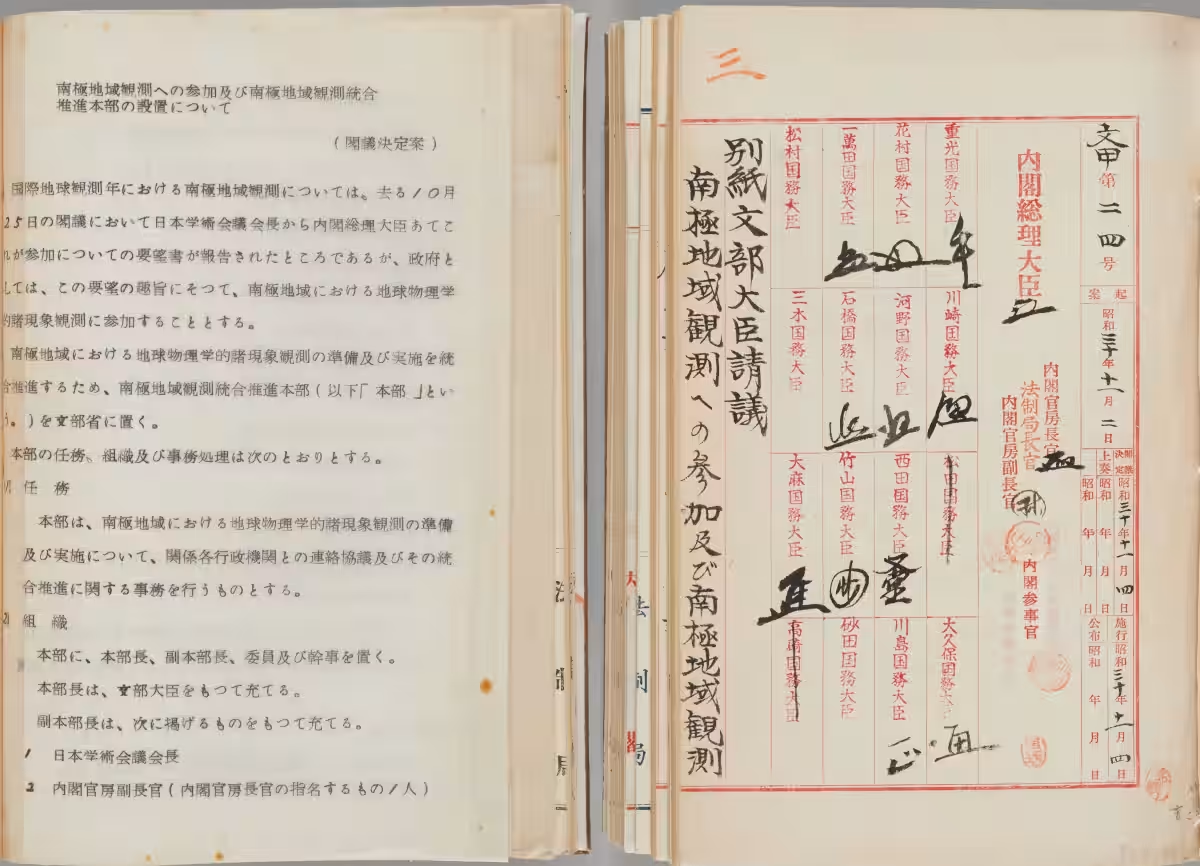
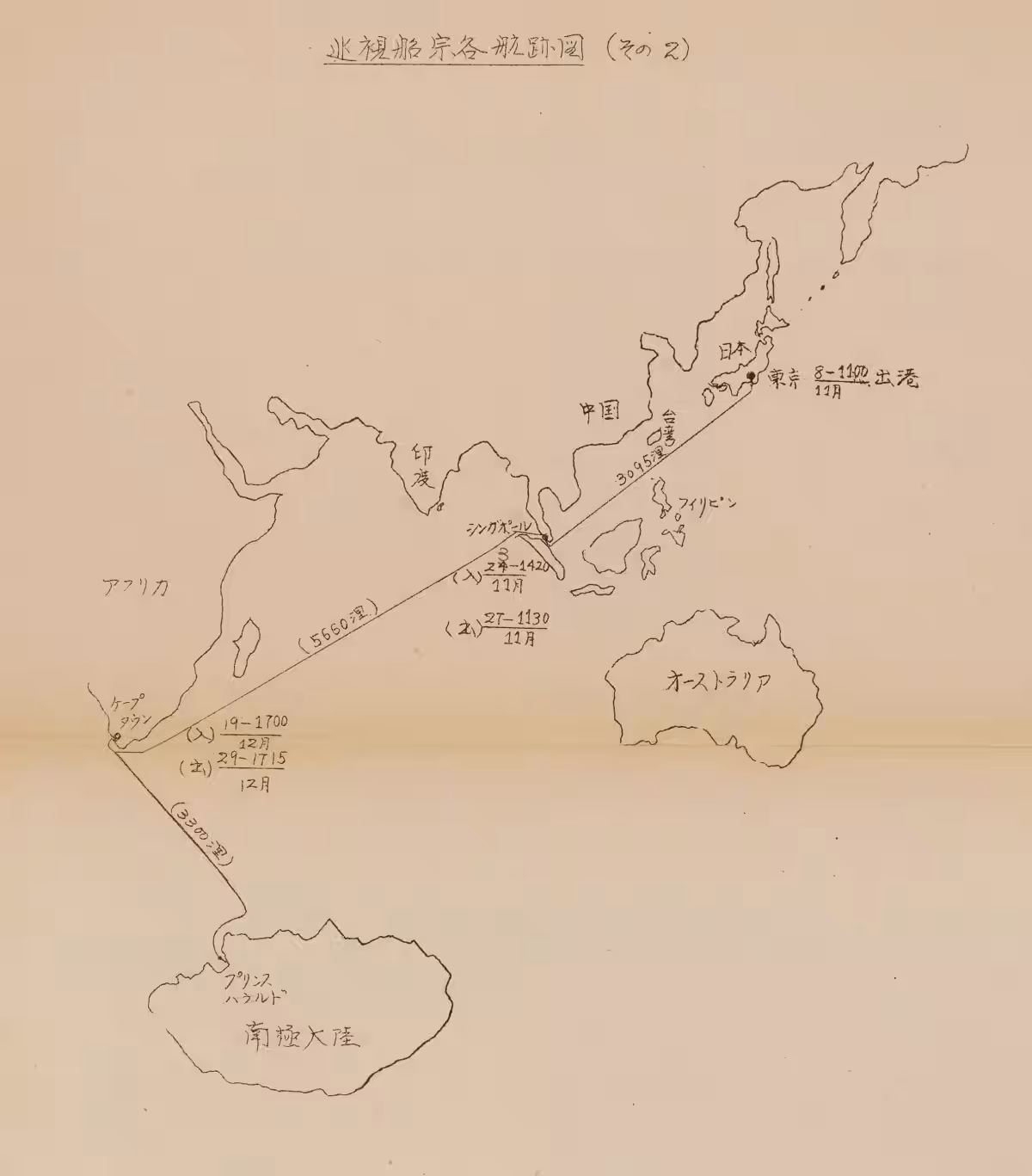
In 1955, after World War II, Japan set its sights on Antarctica once more with a Cabinet decision to participate in the International Geophysical Year from 1957 to 1958. The research vessel "Souya" left Japan in November 1956, and in January 1957, the expedition team landed on Ongul Island, establishing Showa Station and succeeding in wintering there.
However, by 1962, the fifth Antarctic expedition decided to halt further research, and Showa Station faced closure by 1962. Following this, voices rose for the resumption of research, and the government approved the restart in 1963. The seventh expedition began using the newly constructed research vessel "Fuji," marking a significant commitment to Antarctic exploration since then, resulting in ongoing research and achievements.
Deep Sea Research
After World War II, the exploration of marine oil resources commenced, with significant ocean development taking place worldwide. Japan, initially behind in ocean science and technology compared to other nations, reacted by establishing the Ocean Science and Technology Council in 1961. This council developed policies to advance ocean science and technology, outlining necessary measures and specific research topics.
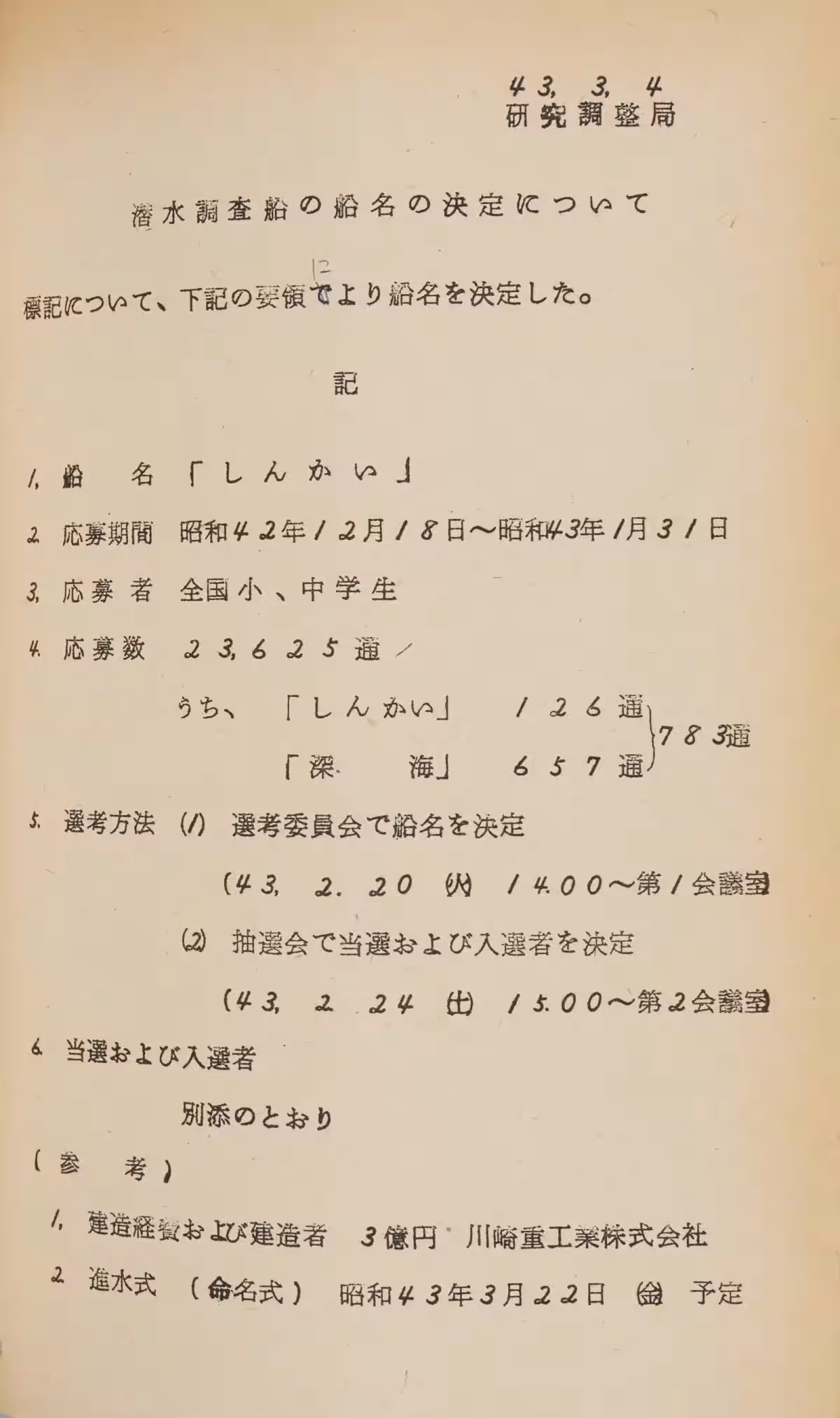
In 1966, efforts began to build deep-sea submersibles capable of diving to 600 meters, with the first successful vessel, "Shinkai," completed in 1968. This marked the beginning of serious deep-sea exploration for Japan. By 1976, the new submersible, "Shinkai 2000," proved essential for discovering deep-sea organisms and hydrothermal phenomena, significantly contributing to deep-sea research.
Space Development
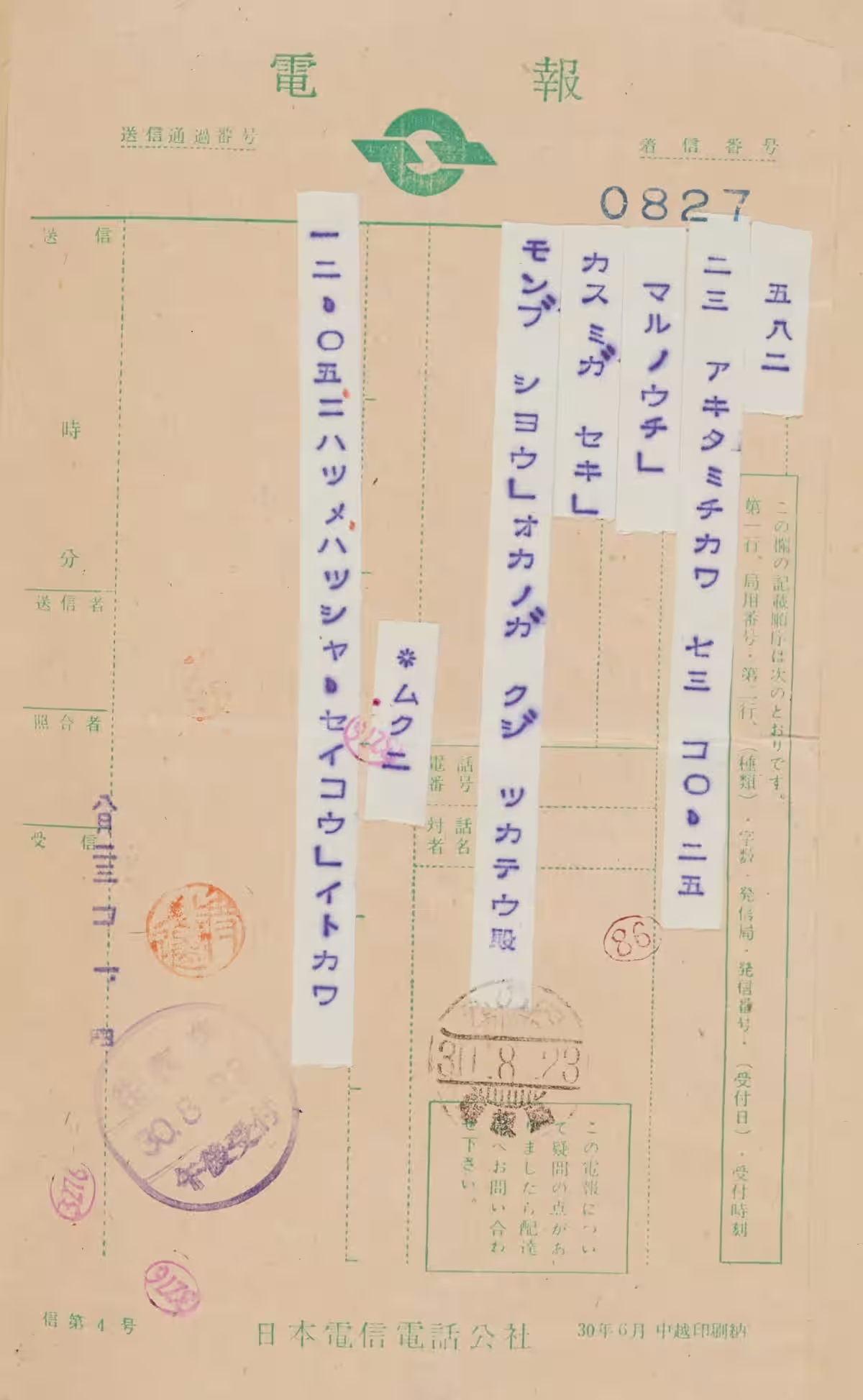
Hideo Itokawa from the University of Tokyo led Japan's rocket development. Originally studying aeronautics and working on fighter aircraft during the war, Itokawa focused on rockets as an alternative launch method when research in aviation was banned after the defeat. In 1958, his rockets contributed to observations for the International Geophysical Year.
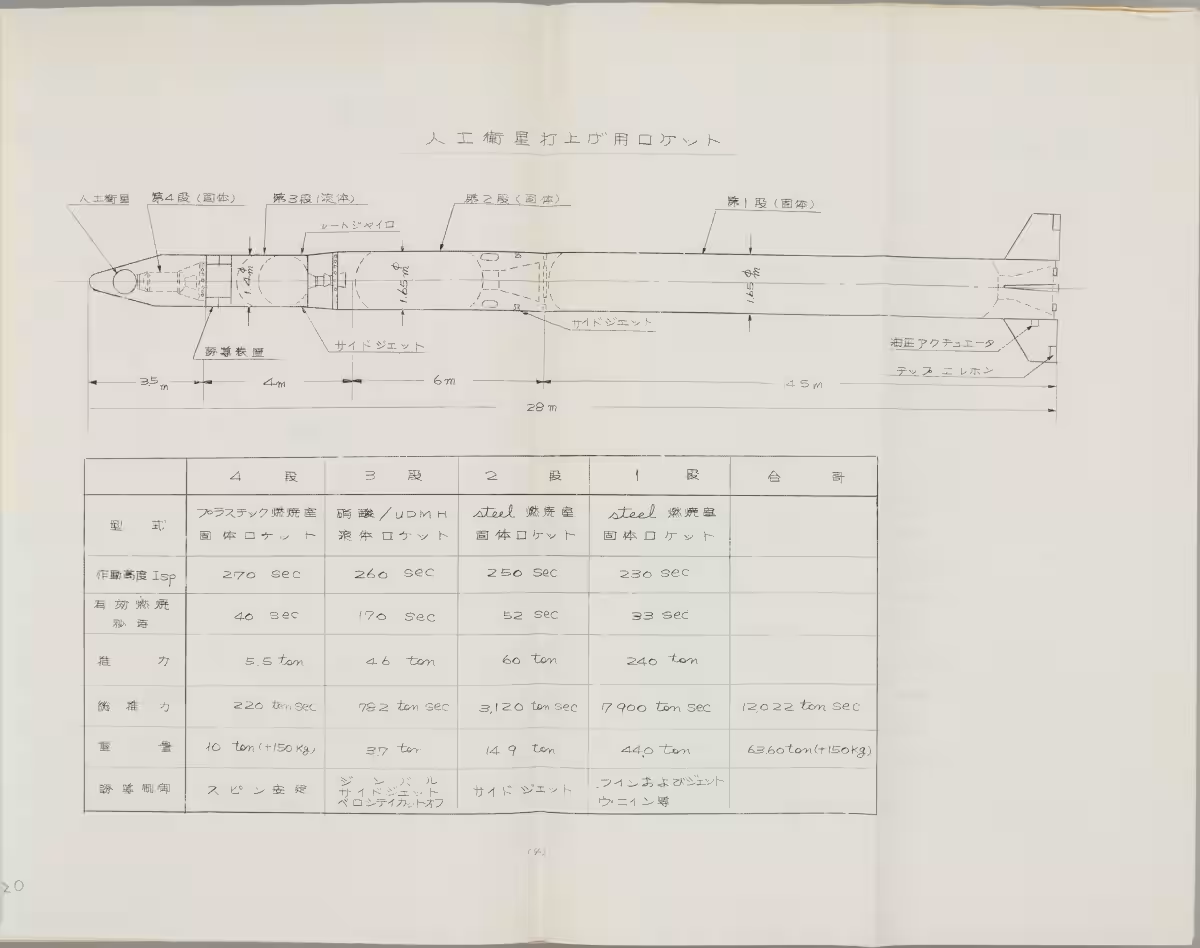
Developments in government-sponsored rocket projects emerged in the 1960s, leading to Japan's first artificial satellite, "Osumi," successfully launched in 1970. The National Space Development Agency was initiated, and eventually combined efforts led to the establishment of the Japan Aerospace Exploration Agency (JAXA), now playing a pivotal role in Japan’s space endeavors.
Related Events
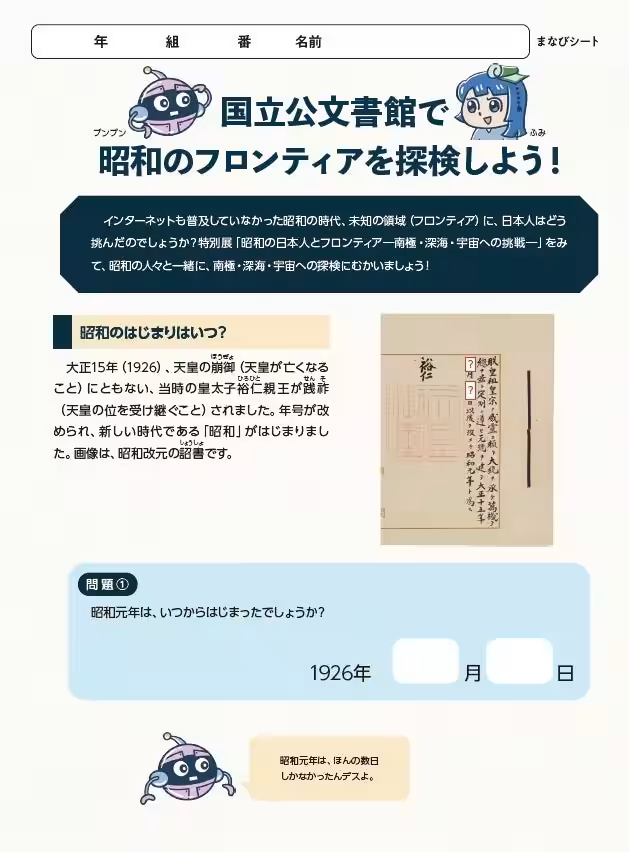
The exhibition features interactive learning materials such as "Manabi Sheets," available for participants to explore the highlights of the exhibition. Free events will also be held to deepen understanding of the special exhibition. Stay tuned via the National Archives’ website or social media for updates on event details.
Exhibition Details
- - Title: "Showa 100-Year Commemorative Exhibition: The Japanese of Showa and Frontiers -- Challenges to Antarctica, the Deep Sea, and Space."
- - Cooperation with: National Institute of Polar Research, Chiyoda City Tourism Association
- - Exhibition Period: March 20 - May 24, 2023 (Open Saturdays, Sundays, and public holidays; closed Mondays and May 7)
- - Location: National Archives of Japan, Tokyo Main Building, 1st Floor Exhibit Hall, 3-2 Kitamura Park, Chiyoda, Tokyo, 102-0091
- - Access: 5-minute walk from Takebashi Station on the Tokyo Metro Tozai Line
- - Opening Hours: 9:15 AM - 5:00 PM
- - National Archives Website: National Archives
Topics Entertainment & Media)
【About Using Articles】
You can freely use the title and article content by linking to the page where the article is posted.
※ Images cannot be used.
【About Links】
Links are free to use.