




RIT and dTosh Launch AI-Driven BPR Package to Transform Operations
RIT and dTosh Collaborate to Deliver AI-Driven BPR Package
In a remarkable partnership that promises to revolutionize workplace efficiency, RIT, an ICT company under Taiyo Holdings, and dTosh, a Kyoto-based firm, have launched an innovative product known as the AI-Driven Business Process Reengineering (BPR) Package. This package is designed to streamline operations and support continuous improvement by effectively utilizing artificial intelligence technology.
Understanding the Need for Transformation
The collaboration arises from a pressing challenge faced by many industries today; the aging workforce and talent shortages make it increasingly difficult for companies to transfer knowledge from experienced employees to newer generations. Particularly in manufacturing, workers are often so engrossed in daily responsibilities that they lack the time or resources to document processes or create manuals for their tasks. As a result, organizations often find themselves relying on the variable skills of consultants, leading to unclear results in terms of cost-effectiveness and reproducibility.
Many businesses continue to overlook labor-intensive manual processes that heavily depend on individual expertise, creating a significant barrier to sustainable improvement and knowledge transfer.
Overview of the AI-Driven BPR Package
The newly developed AI-Driven BPR Package is structured to support operational improvements through four key steps:
1. AI-Driven Process Analysis
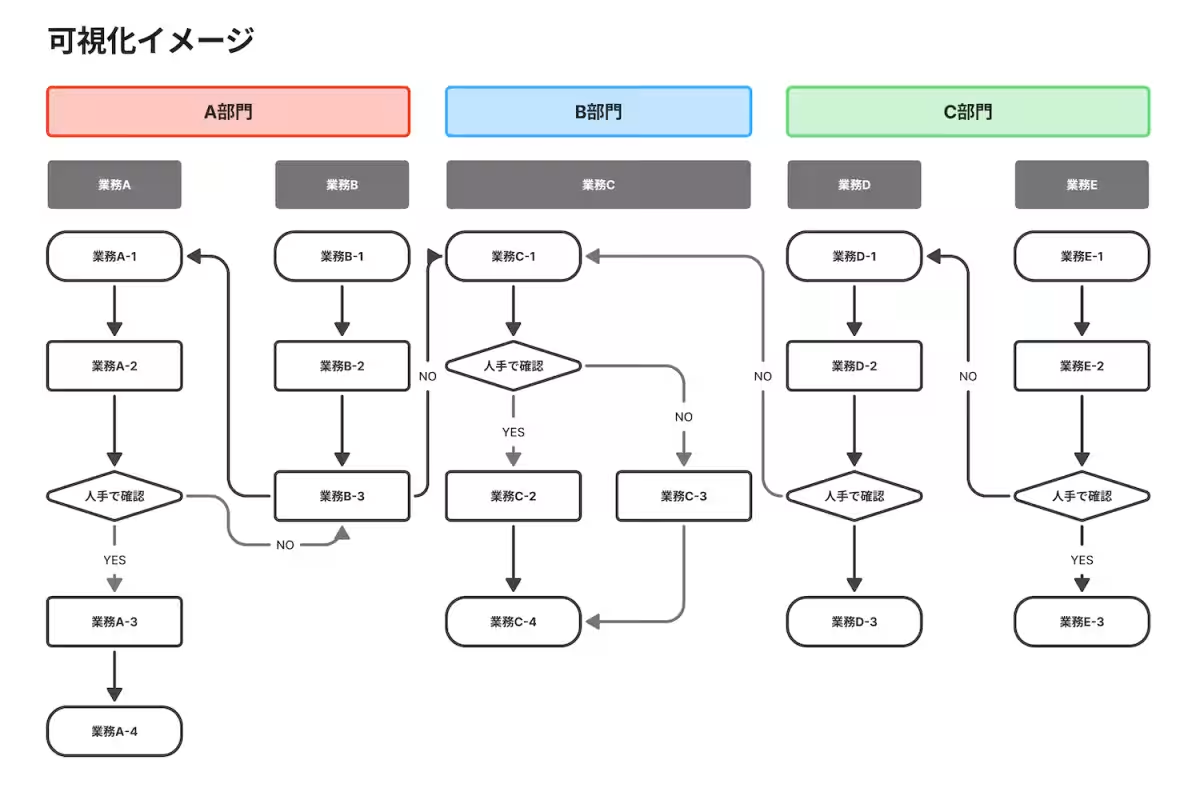
The package begins by utilizing generative AI to identify and visualize workflows across the organization. By applying advanced analytics, traditionally subjective process analyses become data-driven and efficient, paving the way for more precise operational insights.
2. Automatic Structuring of Workflows and Problem Analysis
With the help of Large Language Models (LLMs) and AI, the workflows are organized, and performance metrics such as wait times, error rates, and resource allocation are quantified. This process allows for the identification of priority areas for improvement based on extensive historical data, ensuring that resources are directed effectively.
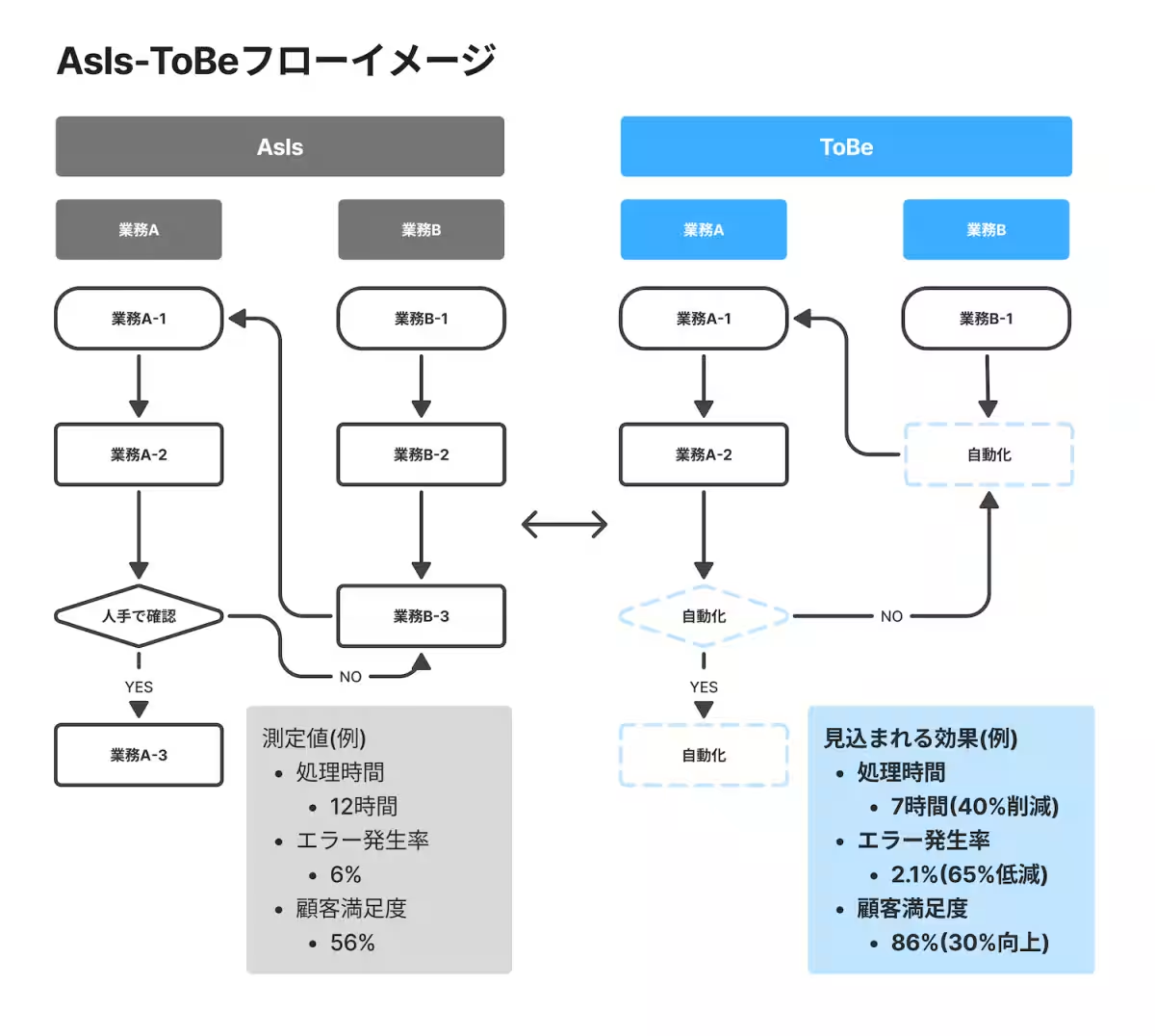
3. Effectiveness Prediction (As-Is-To-Be Analysis)
This stage involves comparing the current state (As-Is) with the ideal state (To-Be) as derived from generative AI. The objective here is to estimate the anticipated improvements in BPR outcomes, such as reducing task completion times and enhancing overall quality. The analysis also allows businesses to assess the potential return on investment (ROI) before making significant expenditures.
4. Development of AI Agent Pre-PoC
The final step includes developing a prototype tool with integrated AI capabilities that will undergo trial runs in real working environments. This phase is crucial in validating usability and predicted improvement impacts, thereby providing a level of effectiveness not typically experienced in traditional BPR.
Insights from Developers
In a recent statement, Takashi Kanda, a board member of RIT, highlighted the urgency of visualizing operations in Japan’s manufacturing sector, emphasizing the societal importance of addressing this issue. He described the package as a significant step towards that goal and expressed optimism about the insights gained from practical implementations within the Taiyo Holdings group, aimed at uplifting productivity and addressing talent shortages in the industry.
Similarly, Toshiki Hirao, CEO of dTosh, remarked on the evolution of BPR support, transitioning from a model reliant on individual expertise to one that is systematic and non-subjective through the integration of generative AI and AI agents. His vision includes broadening access to effective BPR methodologies across various companies, thus ensuring sustainable upgrades.
Looking Ahead
In the coming months, Taiyo Holdings plans to initiate pilot testing focused on operational visualization and the incorporation of AI agents. The initiative's ambitious scope does not limit itself to the manufacturing sector but aims to extend assistance to a variety of industries, reinforcing the framework of sustainable practices and reproducible implementation models.
With the combined strengths of RIT and dTosh, this innovative AI-driven BPR package is expected to usher in a new era of operational enhancements, ensuring companies not only navigate current challenges but also thrive in an increasingly competitive market.

Topics Business Technology)
【About Using Articles】
You can freely use the title and article content by linking to the page where the article is posted.
※ Images cannot be used.
【About Links】
Links are free to use.