


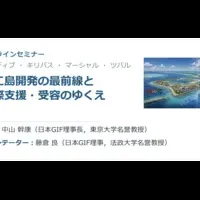
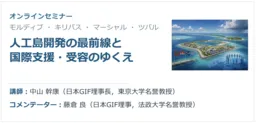
Exploring Artificial Island Development in Maldives and Pacific Nations
Seminar on Artificial Island Development
A recent seminar hosted by the Japan Global Infrastructure Foundation (Japan GIF) focused on the pressing issue of artificial island development amidst the rising threats posed by climate change in nations like Maldives, Kiribati, Marshall Islands, and Tuvalu. Conducted online via Zoom on July 31, 2026, the event featured Michiyasu Nakayama, Japan GIF Chairman and Professor Emeritus at the University of Tokyo, along with commentator Yoshiyuki Fujikura, Professor Emeritus at Hosei University.
Purpose of the Seminar
The purpose was to address the critical situation faced by coral reef nations that are threatened by climate change. With entire national territories being low-lying, elevated artificial islands have emerged as a viable adaptation strategy. The seminar provided a multifaceted review of the latest developments, policies, and future prospects regarding artificial island construction in these four nations. Michiyasu Nakayama elaborated on trends, potential benefits, and challenges, while Fujikura offered insights based on on-ground research.
Key Content Discussed
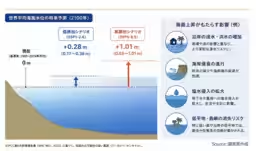
1. Climate Change and Atoll Nations: The four nations of Maldives, Kiribati, Marshall Islands, and Tuvalu are uniquely vulnerable to rising sea levels, where the average height is less than 2 meters. Predictions indicate that sea levels could rise by as much as 1.01 meters by the end of the century, making residence nearly impossible in some areas due to flooding and salinization of freshwater aquifers. Leaders in these countries are advocating for the 'Right to Stay' and sovereignty rather than viewing migration as a primary solution.
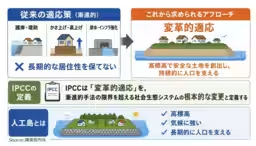
2. Artificial Islands as a Solution: Traditional adaptation methods such as shoreline protection and elevation are proving inadequate for long-term habitation. The development of artificial islands, created by dredging sand from lagoons, presents a construction solution, though concerns exist regarding environmental impacts, including degradation of coral reefs. Under the United Nations Convention on the Law of the Sea (UNCLOS), artificial islands do not generate new territorial waters or Exclusive Economic Zones (EEZ), complicating their legal status.
3. Case Studies: The seminar showcased varying efforts across the nations. For instance, since 1997, the Maldives has been constructing the artificial island 'Furumaale,' while Kiribati devised the 'Temaiku Plan' to relocate 35,000 residents. However, funding issues from New Zealand have stalled this project. In the Marshall Islands, traditional land ownership systems obstruct international funding for artificial island projects. Tuvalu has undertaken limited reclamation projects under the Tuvalu Coastal Adaptation Project (TCAP).
4. Conclusions: While the technical feasibility of artificial islands is recognized, obstacles persist in regulatory frameworks, financial management, and environmental considerations. Establishing effective land ownership laws and ensuring access to international funding while engaging local communities are critical to the projects' success.
5. Comments from the Field: Fujikura provided insights into the geopolitical and fiscal dynamics affecting these initiatives. For instance, in Tuvalu, the development of land for community ownership is hindered by a lack of funding, causing delays in project phases. Similarly, the public debt in the Maldives has become an impediment, with significant portions owned by foreign lenders.
Engaging Discussions
Post-seminar discussions raised various pertinent points concerning land ownership post-reclamation, financing for urban development, and the community's acceptance of artificial islands versus migration options. Participants expressed the need to consider historical, cultural, and environmental factors associated with land reclamation.
Closing Remarks
Audience feedback indicated that all 19 respondents found the seminar engaging, with a heightened interest in topics such as the potential of artificial islands, Fujikura’s commentary, and the implications of climate change for atoll nations. The depth of discussions reflected a collective urgency and seeking cross-national examples that transcend technological and financial concerns.
Overall, the seminar underscored the interconnected challenges surrounding climate adaptability for atoll nations and highlighted the road ahead in turning artificial island concepts into sustainable realities without exacerbating existing socio-economic tensions.



Topics Policy & Public Interest)

【About Using Articles】
You can freely use the title and article content by linking to the page where the article is posted.
※ Images cannot be used.
【About Links】
Links are free to use.