



Analyzing Shareholder Proposals Trends for 2025: Insights from EY-Parthenon
Understanding the Trends of Shareholder Proposals for 2025
EY-Parthenon, a consultancy under EY Strategy and Consulting in Tokyo, has published a thorough analysis of the shareholder proposals trends observed in the first half of 2025. This report highlights significant changes in both the quantity and quality of proposals made by activist shareholders, urging companies to strategically adapt to this evolving landscape.
Key Findings
1. Increase in Proposals for Companies with a PBR Over 1.0
Historically, companies with a Price-to-Book Ratio (PBR) of less than 1.0 were the primary targets for activist proposals. However, in the first half of 2025, proposals have broadened to include companies with a PBR exceeding 1.0 and a market capitalization of more than 100 billion yen. The trend indicates that even companies with improved capital efficiency but inadequate cash allocation strategies are now becoming prime targets for shareholder activism.
2. Activist Proposals Intended to Influence Strategic Decisions
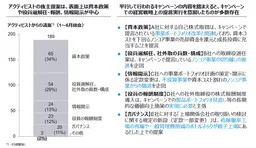
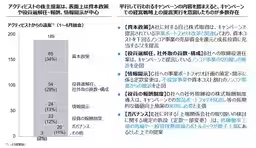
While many activist proposals seem to revolve around capital policies, executive removals, and information disclosures, they are often tied to broader campaigns aimed at prompting companies to reconsider their business portfolios and execute strategic recommendations. This indicates a deeper level of engagement with companies, pushing for substantial changes rather than superficial adjustments.
3. ISS's Recommendations on Proposals
Institutional Shareholder Services (ISS), a prominent advisory firm, has recommended support for approximately 40% of activist shareholder proposals. Breaking it down by proposal type, nearly 80% of proposals related to executive compensation systems received favorable recommendations, while about 60% regarding capital policies were also encouraged by ISS. This highlights the changing dynamics of shareholder power and the growing pushback against traditional corporate governance practices.
4. Trends in Approval Rates for Activist Proposals
Compared to last year, there has been a slight decline in the proportion of proposals receiving more than 20% approval rates. However, outside of information disclosure requests, 30-50% of the proposals still managed to secure over 20% approval, underscoring the significant influence of activists in shaping shareholder expectations. Notably, proposals relating to capital policies are often backed by companies hesitant to invest actively, while those on executive compensation are more likely to arise from firms unable to generate sufficient returns for shareholders.
Implications for Companies
Given these findings, EY-Parthenon suggests that companies need to devise strategies that prioritize maximizing corporate value to gain support from the market. The expansion of proposals targeting firms with a PBR exceeding 1.0 necessitates a shift from merely improving PBR to fundamentally enhancing corporate value. Companies are encouraged to undertake rigorous evaluations of their business portfolios, enabling them to allocate resources strategically toward long-term growth sectors while managing excess cash for dividends or share repurchases to prevent the decline of shareholder value.
Moreover, to ensure the effectiveness of these strategies, it is essential to bolster governance by appointing directors with significant business insights and enhancing the oversight capabilities of boards. Communicating these initiatives effectively as part of an equity story is critical, as engagement with the capital markets will play a crucial role in fostering corporate value improvement.
Comments from EY-Parthenon's Partner
Masanori Shinohara, the Strategy and Execution Leader Partner of EY-Parthenon, stated, “The Tokyo Stock Exchange is tightening maintenance standards, pushing firms that fail to enhance long-term corporate value near the standards of institutional investors to exit the market. The demand for management conscious of capital costs and stock prices is now in its third year. The findings suggest a widening gap in the perception of corporate value between companies and activists, indicating the growing importance of dialogue with the capital markets.”
For more details on this analysis and EY's strategic shareholder engagement support services aimed at enhancing corporate value for clients, please visit EY Japan’s website.
About EY
EY is committed to creating new value for clients, members, society, and the planet while building trust in the capital markets to contribute to a better working world. Through the application of data, AI, and advanced technologies, EY teams are here to help clients confidently shape their future by addressing pressing current and future challenges. EY operates across all domains of assurance, consulting, tax, strategy, and transaction, leveraging deep industry knowledge, global collaboration, and diverse ecosystems to deliver services in over 150 countries and regions.
About EY-Parthenon
EY-Parthenon uniquely combines transformation strategies, transactions, and corporate finance to deliver actionable solutions. In an increasingly complex world, our strategic consulting framework adapts to future needs using EY's comprehensive service offerings. Our team's deep functional knowledge and sector expertise enhance partnerships with C-suite executives, investment institutions, and governmental bodies to craft a confident future together. EY-Parthenon is a brand under EY, offering strategic consulting services through EY member firms globally.
Topics Business Technology)

【About Using Articles】
You can freely use the title and article content by linking to the page where the article is posted.
※ Images cannot be used.
【About Links】
Links are free to use.