



GSMA Unveils User Experience Specifications for AI-Driven Phone Calls at MWC 2026
GSMA Unveils User Experience Specifications for AI-Driven Phone Calls at MWC 2026
During the highly anticipated MWC 2026, the GSMA introduced a groundbreaking white paper titled "Gigauplink, Deterministic Latency and Network Evolution in the Era of Mobile AI" at the 5G Futures Summit in Barcelona. This document lays out the future trajectory of communication technology, focusing on evolving native voice services within the framework of artificial intelligence.
The white paper emphasizes the synergy between 5G technology and artificial intelligence, marking the dawn of what they term the "Mobile AI Era". Telecommunication operators are in the process of transforming traditional voice services into AI-driven communication methods. The integration of AI algorithms with native voice networks is set to enhance traditional calls into innovative, next-generation services. Users can expect more stable, high-quality, and interactive communication experiences sculpted by AI functionalities.
Among the technological advancements highlighted is AI-powered noise reduction. This feature utilizes cutting-edge algorithms to minimize background noise in a range of environments, greatly improving the quality of native calls. The noise reduction techniques can be deployed in various settings, from busy office spaces to loud construction sites, enabling users to maintain conversations devoid of distractions irrespective of their surroundings.
Moreover, real-time translation powered by AI represents another significant leap in interactive call capabilities. This technology aims to dismantle language barriers, facilitating seamless communication for professionals during international meetings, aiding tourists navigating foreign locales, and assisting individuals with hearing impairments. This advancement implies a realignment of user expectations and the redefinition of what constitutes a valuable telecommunication experience.
The GSMA reports a shift in business models tied to these innovations, where operators can offer AI-based features as part of user subscriptions. Such a transformation encourages a multicentric monetization approach, transitioning from solely traffic-based revenue to more sophisticated experience-centered monetization strategies.
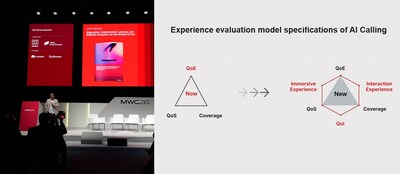
The white paper outlines a comprehensive framework for measuring user experience in AI-enhanced call scenarios. Traditionally, user experience metrics in voice services have relied on three indicators: QoE (Quality of Experience), QoS (Quality of Service), and coverage. The new model introduces three additional immersive experience indicators: immersive AI experiences, interactive AI experiences, and QoI (Quality of Intelligence). These new metrics are designed to capture the nuances of AI-enhanced interactions, ensuring that users not only receive a connection but an enriched, feedback-oriented experience.
For instance, immersive connections enable significant improvements in metrics such as the Mean Opinion Score (MOS) and Signal-to-Noise Ratio (SNR), enhancing basic call quality vastly. On the other hand, interactive connections necessitate enhanced network capabilities and new interaction avenues, such as video channels and data connections, allowing for features like screen sharing and real-time translation.
Furthermore, the ITU has initiated a project known as P.AI-MOS, dedicated to evaluating user experiences in multimodal AI applications. As research progresses regarding standards for AI-assisted voice calling, GSMA highlights the importance of collaborative efforts with industry partners to establish metrics that effectively translate key indicators of user experience into actionable network performance indicators.
In conclusion, the GSMA's white paper offers a clear roadmap towards an enriched, AI-led future of telecommunication. By embracing this innovative shift, operators have the opportunity to elevate user experiences beyond expectations, fostering a landscape where interaction is meaningful, immersive, and intelligent. This pivotal moment at MWC 2026 could very well shape the future of mobile AI technology, promising a new era of enhanced connectivity and communication.
Topics Telecommunications)
【About Using Articles】
You can freely use the title and article content by linking to the page where the article is posted.
※ Images cannot be used.
【About Links】
Links are free to use.