



Okayama University Develops Photonic Sensor to Detect Electrostatic Charge in Satellites
Detection of Electrostatic Charge in Satellites by Photonic Sensors
In a groundbreaking development, researchers from Okayama University have successfully designed a cutting-edge photonic sensor aimed at detecting electrostatic charges in satellites. This innovative technology, emerging from the university's collaboration with academic institutions and industries, addresses a significant challenge in the burgeoning field of space exploration and satellite deployment.
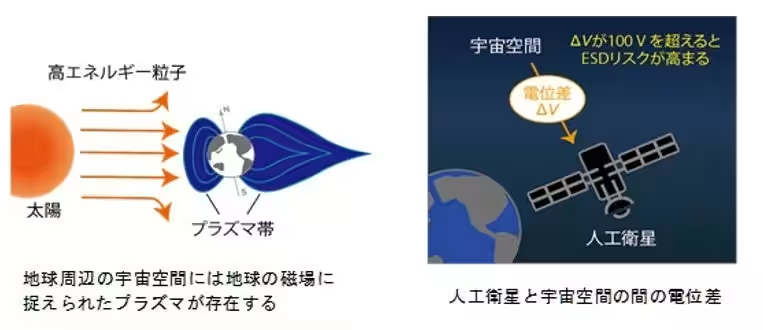
Electrostatic issues are one of the leading causes of satellite malfunctions and operational disruptions in space, particularly as the number of small satellite networks continues to rise. This predicament is spurred by the increasing demand for advanced satellite capabilities and the corresponding need for reliable systems to prevent failures that can lead to catastrophic events, including the rise of space debris.
The research team, led by Professor Kazu Takahashi from Okayama University, has integrated silicon photonics to create a compact and lightweight sensor that utilizes light technologies for charge detection while avoiding conventional electronic circuits. This approach not only enhances the sensor's durability against radiation and static discharges but also contributes to lower energy consumption.
The advancement is particularly timely as new space ventures, such as lunar base construction and debris removal missions, call for innovative systems to monitor electrostatic risks in space. As satellites encountering charged environments face a high probability of electrical discharge incidents, the development of this photonic sensor represents a transformative leap in ensuring operational reliability.
A New Era in Space Technology
This innovative sensor is expected to find applications in various areas, ranging from fault prediction and prevention in satellites to applications in space insurance and lunar or Martian exploration. The research team aims to utilize the insights gained from this technology in creating startup opportunities that can pave the way for an era of safer and more efficient space ventures.
The results of this significant research were published in npj Nanophotonics, a renowned scientific journal, marking a proud milestone for Okayama University. The publication outlines their methodologies and findings that highlight the potential of photonic technology in addressing the inherent problems faced by satellite operators.
Professor Takahashi emphasized the importance of practical applications for the technology, revealing the journey that led to leveraging their expertise in photonics toward solving real-world issues in space. He shared his experience of conducting numerous interviews with potential stakeholders and presenting at international exhibitions, which refined their understanding of industry pain points, particularly from Japan Aerospace Exploration Agency (JAXA) researchers regarding electrostatic issues in space.
The Future of Electrostatic Detection in Space
Looking ahead, the team is now seeking partnerships to validate this technology in space environments. By fostering collaborations that can support the implementation and testing of the sensor in operational settings, they aim to enhance the groundwork for various applications. In the near future, the implementation might significantly mitigate risks associated with satellite operations, thereby contributing to the sustainability of space exploration efforts.
As investment in space technology surges with the increasing participation of private enterprises and global interest in cosmic challenges, the demand for reliable monitoring systems like this photonic sensor could become critical. This breakthrough not only opens avenues for commercial space initiatives but also embodies a proactive step toward maintaining the integrity and safety of our increasingly crowded orbital paths.
With ongoing support from various organizations, including the Japan Science and Technology Agency's University Startup Creation Program, the research team is determined to continue evolving their development. Overall, this pioneering sensor stands as a testament to how innovative technologies can transform our understanding and management of space environments, ensuring safer navigation and operation of satellites as we venture further into the cosmos.
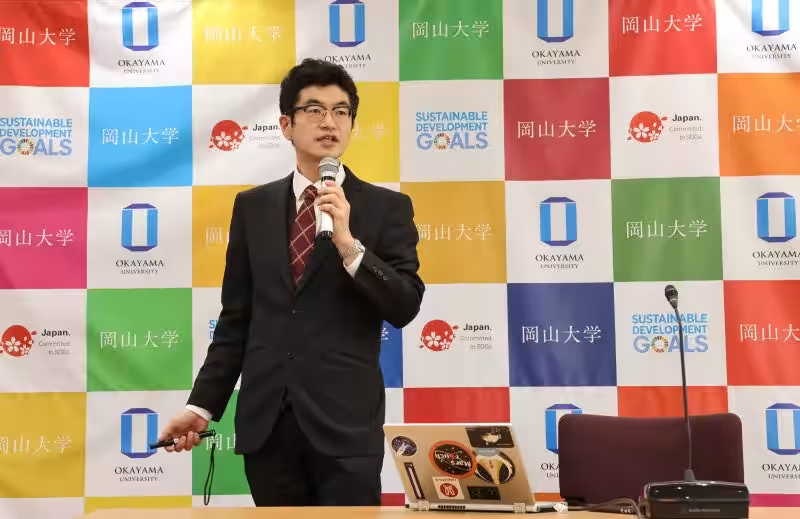
The announcement was made during Okayama University’s regular press conference on February 19, 2026, emphasizing the university's dedication to contributing to space technologies that can positively impact society and the environment.




Topics Consumer Technology)
【About Using Articles】
You can freely use the title and article content by linking to the page where the article is posted.
※ Images cannot be used.
【About Links】
Links are free to use.